Dumbbell Goblet Lunge
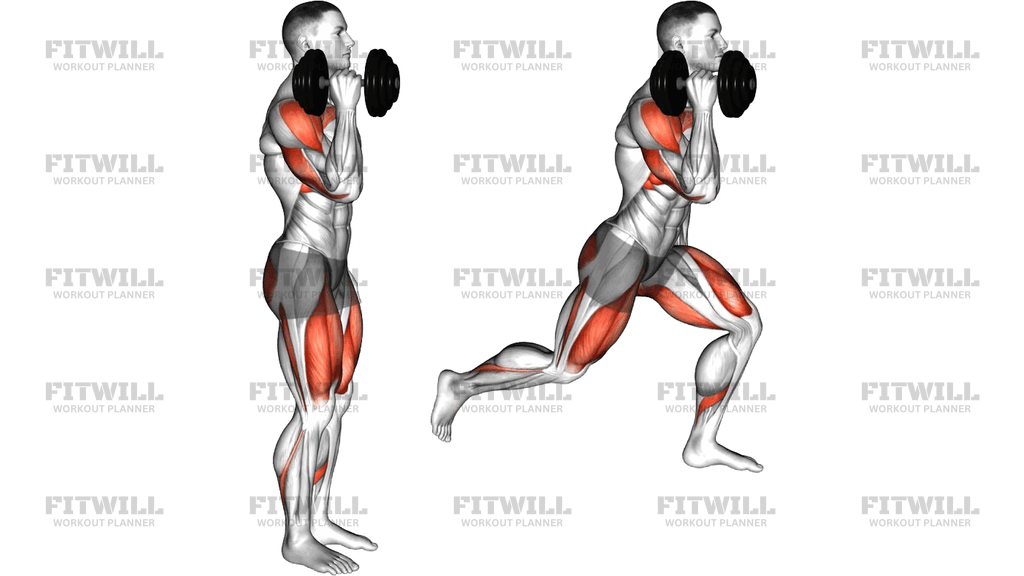
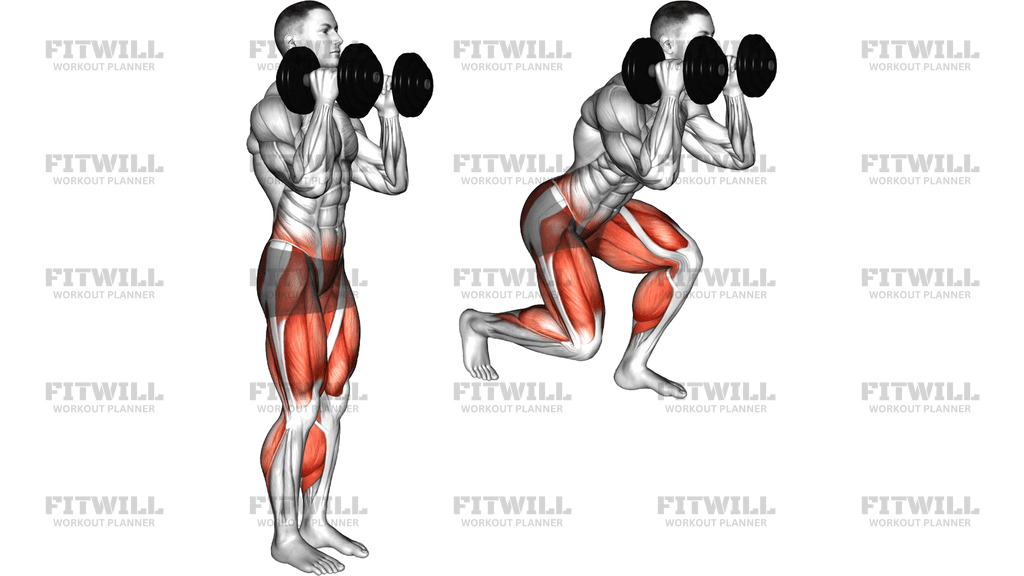
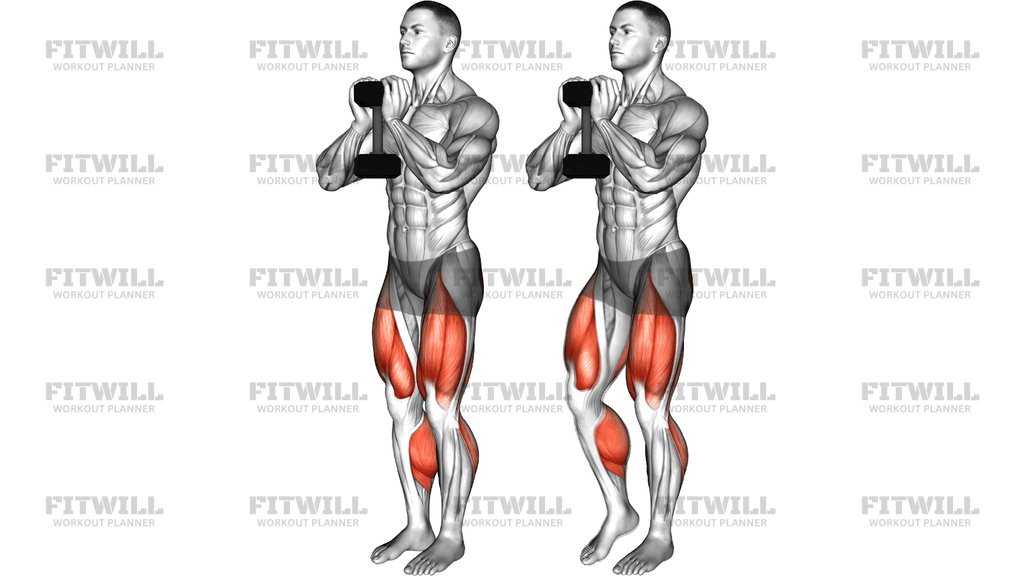
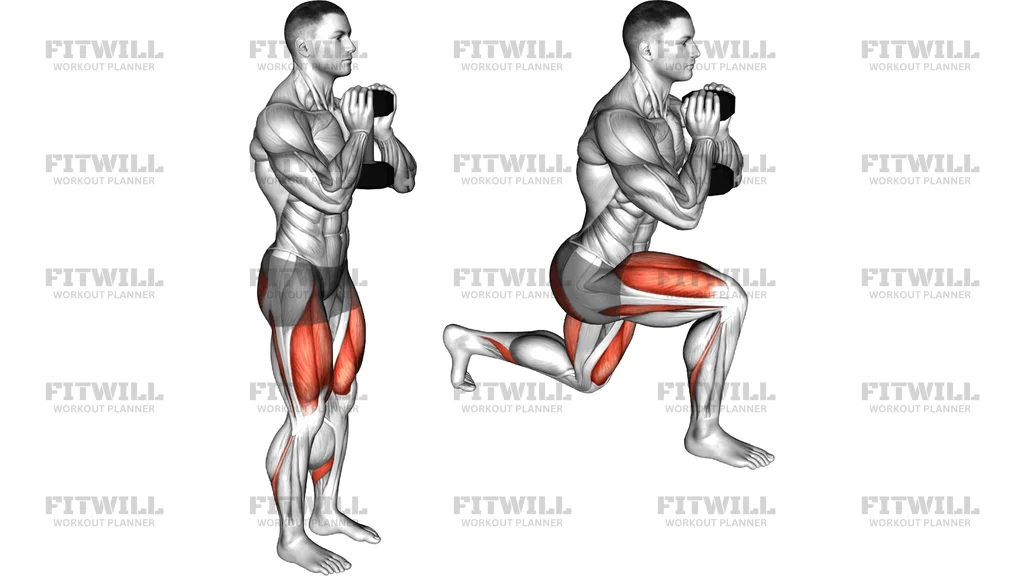
The Dumbbell Goblet Lunge is a single-leg lower body exercise where you hold one dumbbell vertically against your chest with both hands, cupping the top head of the weight, and step into a lunge. Holding the weight at the sternum instead of at your sides changes the feel of the movement completely: it shifts your center of mass forward, keeps your torso upright, and forces your core to work to stop you from folding over your front leg.
This is one of the most beginner-friendly ways to load a lunge. Because the dumbbell sits against your chest, it acts as a constant positional cue—if your torso starts to drift or collapse, you feel it immediately. That makes the goblet position ideal for people learning lunge mechanics for the first time, as well as for experienced lifters who want extra quad emphasis without the balance challenge of holding two separate weights.
The primary work comes from the quadriceps of the front leg, especially as you drive back up to standing. The glutes and hamstrings of both legs contribute strongly—the front leg's glutes extend the hip to stand you up, while the rear leg's hip flexors and adductors control the split position. Your calves and ankle stabilizers handle the balance demands, and the deep core works isometrically to keep your ribcage stacked over your pelvis throughout the step.
Setup matters more here than in most lunge variations. The dumbbell should rest against your upper chest and sternum with elbows tucked down rather than flared wide, and your feet should start under your hips. If the weight drifts away from your body mid-rep, your leverage changes and your lower back starts doing jobs that belong to your legs.
To execute well, step one leg back into a long split, lower until your rear knee hovers just above the floor, and keep most of your weight over the front foot's mid-foot. Drive through the front heel to return to standing, then alternate legs or complete all reps on one side before switching. Move deliberately—the eccentric (lowering) portion is where most of the muscle-building and control work happens.
Use this exercise as your main lower body lift on days when squats aren't available, as a teaching tool before progressing to barbell lunges or split squats, or as a higher-rep finisher to fatigue the legs and glutes. Because it loads one leg at a time, it also exposes and helps correct left-to-right strength differences that bilateral squats can hide.
[ Workout Log & Planner ]
Put your next workout in Fitwill
Keep your plan and training log ready when you are.


Instructions
- Stand tall with your feet hip-width apart and hold one dumbbell vertically at your chest, cupping the top head with both hands so the weight sits against your sternum.
- Tuck your elbows down and in so they point toward the floor rather than out to the sides, and squeeze the dumbbell firmly against your chest.
- Brace your abs as if preparing for a light push to the stomach, keep your chest tall, and look at a point on the wall at eye level.
- Step one foot straight back into a long split stance, landing with your weight balanced mostly over the front foot.
- Lower straight down by bending both knees until your rear knee is just above the floor and your front thigh is at or near parallel to the ground.
- Check your positions at the bottom: front shin roughly vertical, torso upright, and the dumbbell still glued to your chest rather than pulling you forward.
- Drive through your front heel and mid-foot to push back up to a full standing position, bringing the rear leg back in beside the other.
- Exhale as you lower into the lunge or as you drive up—pick one pattern and keep it consistent; never hold your breath through the rep.
- Repeat on the same leg for all planned reps, then switch sides, or alternate legs rep by rep if balance is your priority.
- Reset your grip on the dumbbell and your stance between sets, and set the weight down before your hold position breaks down.
Tips & Tricks
- The most common mistake in the Dumbbell Goblet Lunge is taking too short a step back, which pushes the front knee far past the toes and turns the rep into a knee-dominant grind. Take a longer step and drop straight down instead of sliding forward.
- If the dumbbell pulls you forward and your chest drops toward your thigh, your elbows have flared or your grip has loosened. Re-cup the top of the dumbbell and pin it to your sternum before continuing.
- Push off with the back leg only enough to return it—the front leg should do the lifting. If you find yourself springing off the rear toe every rep, shift more weight into the front foot.
- Keep your front foot flat and fully planted. Letting the heel rise or the arch collapse inward is a sign the step is too long or the load is too heavy.
- Alternate legs every rep if you wobble in the split position; the rhythm of stepping back and forth actually steadies the movement for most people.
- Control the lowering phase for two to three seconds. Rushing down into the lunge is where the torso tips forward and the knee tracks inward.
- Choose a weight you can hold at your chest for all reps with straight arms—not a weight you have to rest on your belly by the last few reps.
- If your standing knee aches at the bottom, shorten the range so the rear knee just grazes the floor and focus on keeping the front shin closer to vertical.
- Do this exercise on a hard, non-slippery surface. Lunging on a slick floor or thick soft mat makes the split stance unstable under load.
Frequently Asked Questions
What muscles does the Dumbbell Goblet Lunge work?
The front leg's quadriceps do the largest share of the work, with strong contributions from the glutes and hamstrings to extend the hip as you stand up. The adductors stabilize the split stance, the calves handle balance, and your core works isometrically to keep the dumbbell held upright at your chest.
Why hold the dumbbell at my chest instead of at my sides?
The goblet position shifts the load forward, which naturally encourages an upright torso and increases the demand on the quads and core. Holding weights at the sides makes it easier to lean over the front leg and offers less feedback on torso position.
Is the Dumbbell Goblet Lunge good for beginners?
Yes, and it's arguably the best loaded lunge variation to start with. The weight against your chest gives you instant feedback when your posture breaks, and using a single dumbbell keeps your hands free to catch yourself if balance slips.
Should I alternate legs or do all reps on one side?
Complete all reps on one leg, rest, then switch, if your goal is strength and muscle. Alternating rep by rep adds a small cardio element and helps with balance, but it fatigues the stabilizing muscles before the main leg muscles.
How do I know if my lunge stance is too narrow?
If your front knee travels well past your toes and your back knee bends sharply early in the descent, your split is too short. Step farther back so you can drop straight down with your front shin close to vertical.
Can I do reverse lunges instead of forward lunges with the goblet hold?
Absolutely—the setup and chest position are identical, and stepping back is usually easier on the knees because the front foot stays planted. The version shown uses the rear-step pattern, and it's the safer choice if forward stepping bothers your front knee.
What should I do if I lose balance during the Dumbbell Goblet Lunge?
Set the dumbbell down safely rather than fighting to save a wobbling rep under load. Then practice the movement with body weight or a lighter dumbbell, slowing the lowering phase down until the split position feels stable.
How heavy should the dumbbell be?
Start with a weight you can hold at your chest with nearly straight arms for all your reps—grip and upper back fatigue usually show up before leg fatigue. Once your hold position is solid, progress the load gradually while keeping your torso upright.
Is it safe for my knees?
When performed with a long enough stance, an upright torso, and a knee that tracks over the toes rather than caving inward, the lunge is a well-tolerated leg exercise for most people. If you have a current knee issue or pain during the movement, reduce the depth and range and consult a qualified professional before continuing.