Alternating Back Toe Tap Walk
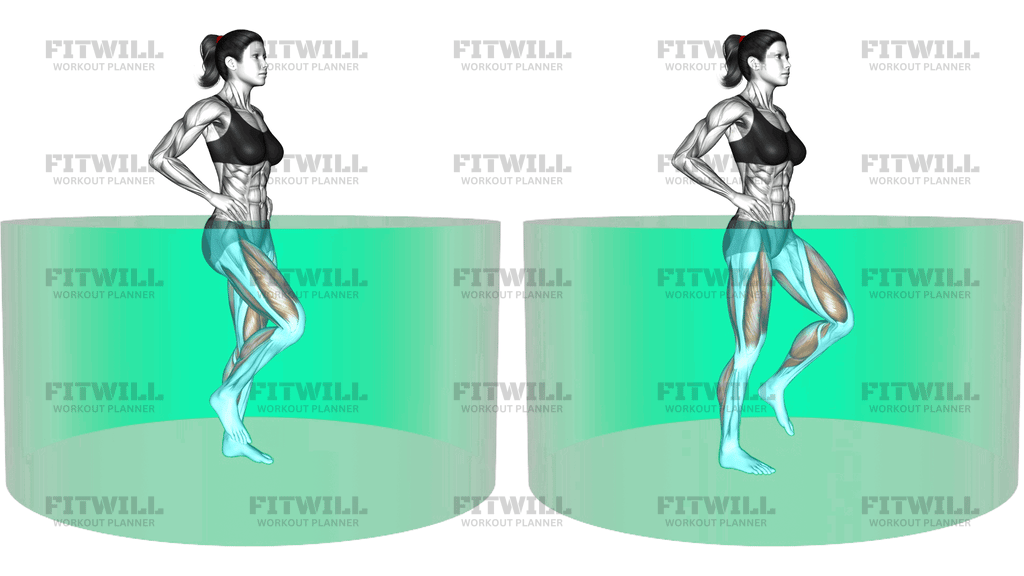
The Alternating Back Toe Tap Walk is a standing body weight drill where you step one foot behind you, lightly tap your toe to the floor, then return to standing and repeat on the other side, continuing in an alternating rhythm as if walking backward in place or while traveling. It looks simple, but the combination of single leg balance, a controlled reach behind the body, and a steady alternating cadence makes it a genuinely useful lower body and coordination exercise.
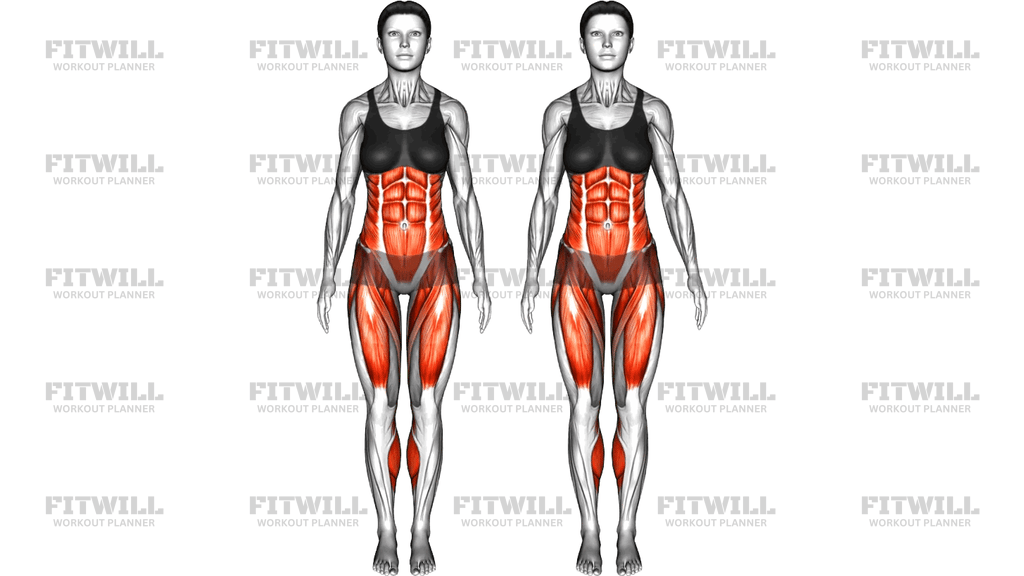
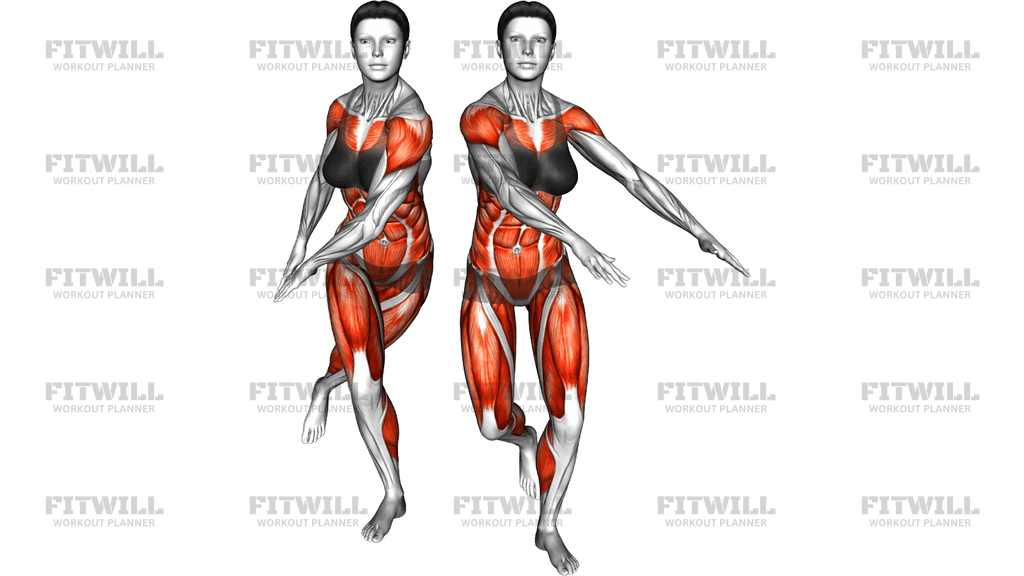
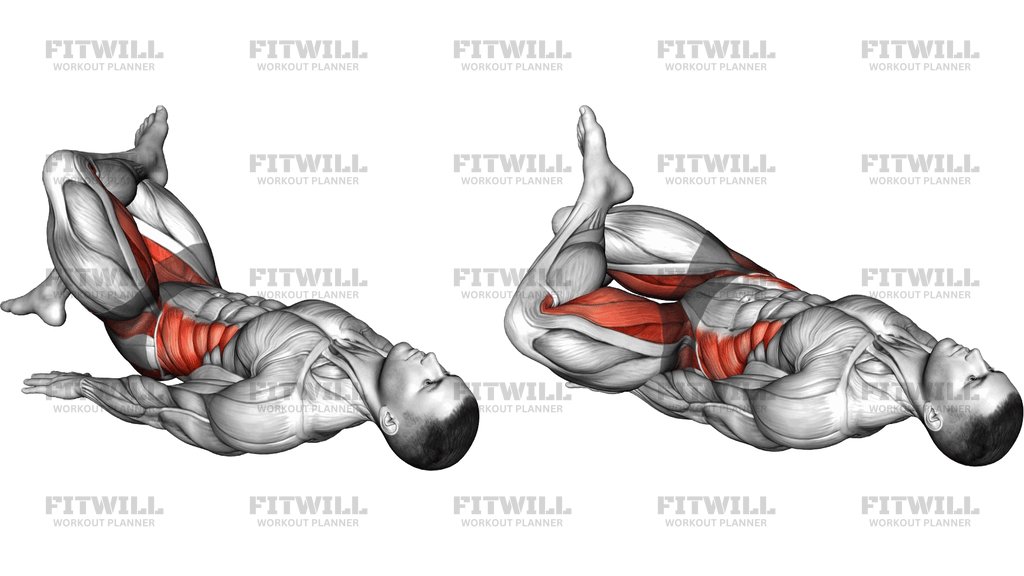
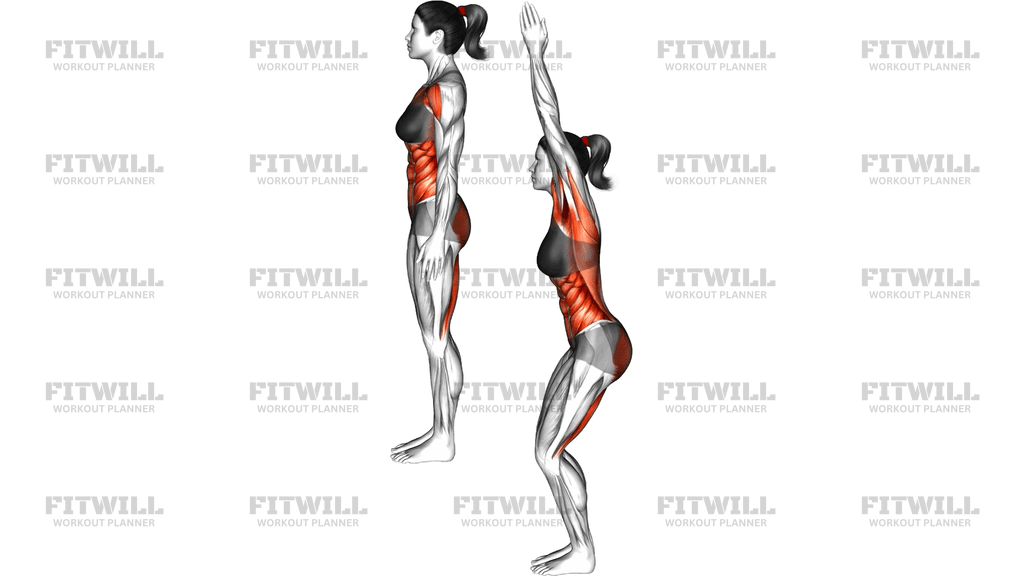
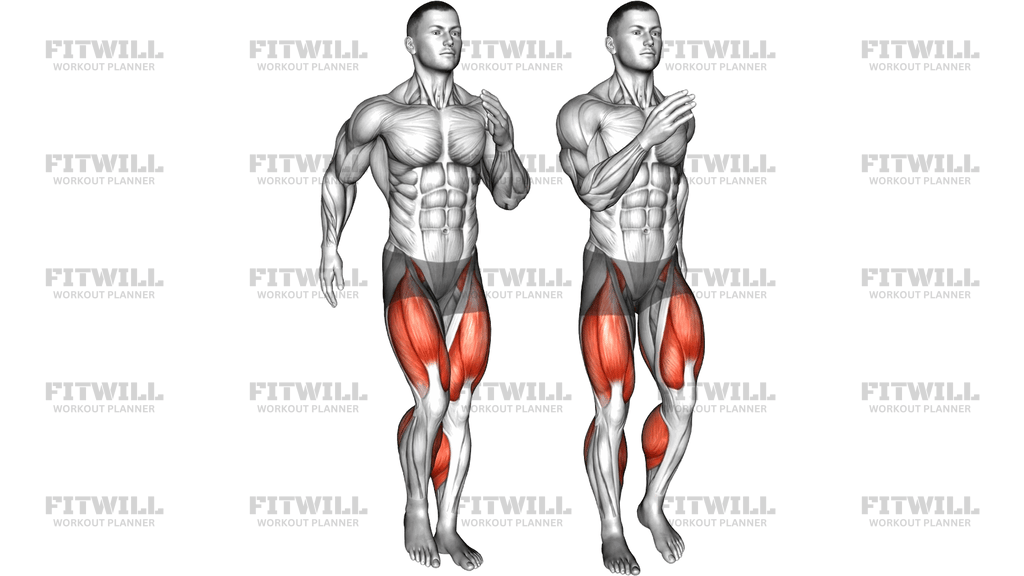
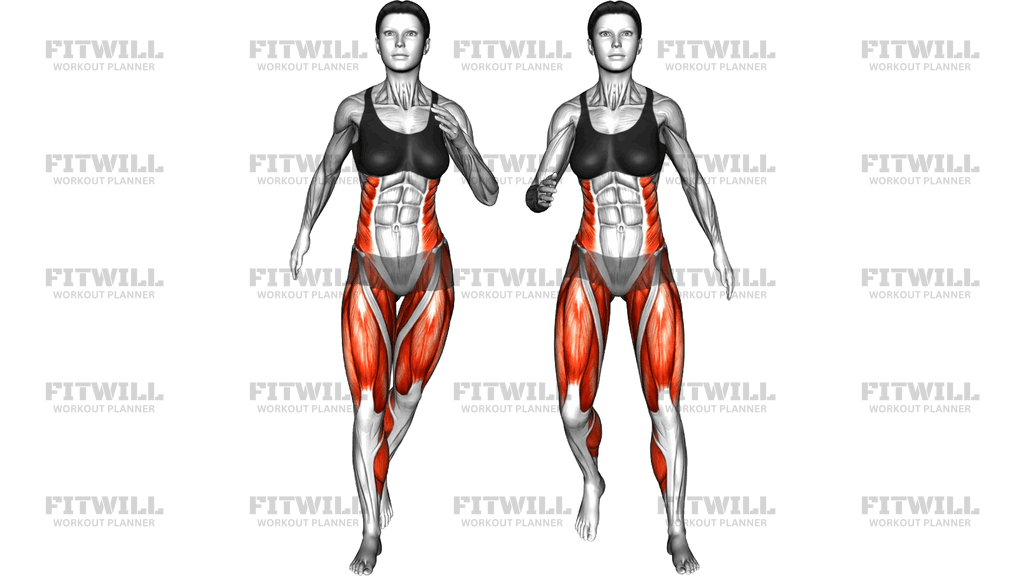
This movement works the glutes and quads of the standing leg, which absorb and control your weight every time you shift to one side. The tapping leg trains the hip flexors and hamstrings as it reaches back and returns, while the calves and ankle stabilizers work constantly to keep you centered over your foot. Because you are always balanced on one leg for a brief moment, your deep core and obliques also engage to keep your torso upright and square to the front.
The Alternating Back Toe Tap Walk is especially good for beginners building single leg confidence, for older adults who want a safe balance drill with a low fall risk, and for athletes using it as a warm up before squats, lunges, or running. It is also a nice low impact option for active recovery days, since it raises the heart rate slightly without any jumping or heavy loading.
Setup matters more than it appears to. Stand tall with your feet hip width apart, your weight spread evenly, and your gaze forward rather than down at your feet. Your torso should stay upright with a light brace through the midsection, because leaning back or twisting as the leg reaches behind you is the most common way this drill loses its balance benefit. Keep the tap light, a genuine touch of the toe, not a weight bearing step.
To perform it well, shift your weight to your left leg, reach your right foot back and tap the toe down behind you, then bring the right foot back to center and immediately repeat on the left side. The rhythm should feel like a smooth, unhurried walk in reverse. If you travel, move forward slowly with each rep, letting each tap happen just behind your new stance. Your arms can swing naturally with the opposite leg to help coordination.
A few practical points will keep this safe and effective. Choose a smooth, uncluttered floor and give yourself room behind you. Start with a short tap range and a slower tempo, and only lengthen the reach once you can tap without wobbling. If balance is a challenge at first, stand near a wall or sturdy chair and let your fingertips hover there for support rather than gripping it.
[ Workout Log & Planner ]
Put your next workout in Fitwill
Keep your plan and training log ready when you are.


Instructions
- Stand tall with your feet hip width apart, arms relaxed at your sides or slightly bent, and your eyes on a fixed point ahead of you at eye level.
- Brace your core lightly, pull your ribs down over your hips, and shift your full weight onto your left leg so the right foot is free to move.
- Reach your right foot straight back behind you and tap the ball of your right toe lightly on the floor, keeping only a small amount of pressure on that toe.
- Keep your torso upright and your hips square to the front as you reach back; do not arch your lower back or rotate your pelvis open.
- Push your weight back over your left foot and lift the right toe, returning the right foot to the starting position beside the left.
- Immediately repeat the tap with your left foot reaching behind you while you balance over your right leg, and keep alternating side to side.
- Swing your arms naturally in opposition to your legs, right arm forward as the left foot reaches back, to maintain rhythm and coordination.
- Breathe steadily throughout, inhaling through the nose and exhaling through the mouth; do not hold your breath during the tap.
- Continue for your target number of taps or time, moving at a controlled walking pace, then step both feet together and reset your stance before the next set.
- To make it a walk, take a small step forward with each returning foot so you travel slowly across the floor while maintaining the same tap pattern.
Tips & Tricks
- Keep the tap genuinely light. If you find yourself pressing hard into the back toe or resting weight on it, you are turning the drill into a staggered stance hold and losing the balance work on the front leg.
- Watch for pelvic rotation. As the leg reaches back, the hip on that side tends to swing open; imagine both hip bones pointing at the wall in front of you the whole time.
- If your lower back arches when your leg goes behind you, shorten the reach. A small, controlled tap with a tall spine beats a long reach with a swayed back.
- Slow the tempo before you lengthen the tap. Most wobbles come from rushing the transition between legs, not from the reach itself.
- Keep your standing knee soft rather than locked. A slight bend lets the quads and glutes of the standing leg do their job and protects the joint.
- Look forward, not down. Fixing your gaze on a spot at eye level noticeably steadies single leg balance compared to watching your feet.
- Use fingertip contact with a wall or chair for the first few sessions if you are unsteady, but aim to reduce that support as soon as the rhythm feels natural.
- On a slick floor, be deliberate with the toe contact. Tap, feel the floor, then lift; sliding the toe back can cause the foot to shoot out from under you.
- If you want more calf and ankle involvement, add a small heel lift on the standing leg as the opposite toe taps, lowering it slowly each rep.
Frequently Asked Questions
What muscles does the Alternating Back Toe Tap Walk work?
The glutes and quads of the standing leg do most of the stabilizing work, while the calves and ankle stabilizers keep you centered over your foot. The hip flexors and hamstrings of the tapping leg control the reach back and return, and your core stays engaged to hold your torso upright.
Is the Alternating Back Toe Tap Walk good for beginners?
Yes, it is one of the friendliest single leg balance drills to start with because the back toe stays in contact with the floor, which gives you a built in safety point. Beginners can also stand near a wall and use fingertip support until the rhythm feels secure.
How far back should I reach my foot during the tap?
Reach only as far as you can while keeping your torso upright and your hips square to the front. A tap roughly one to two foot lengths behind your stance is plenty; if your back arches or your pelvis rotates, shorten the distance.
Should my back toe hold any of my body weight?
No, keep it a light touch. The moment you load the back toe, the standing leg stops doing the balance work and the drill becomes a staggered stance position instead of a toe tap.
Can I do the Alternating Back Toe Tap Walk as a warm up?
It works very well as a warm up before lunges, squats, or running because it wakes up single leg balance, ankle stability, and glute activation without fatiguing you. Two to three minutes of easy paced tapping is usually enough.
What is the most common mistake with this movement?
Twisting the hips open and leaning the torso back as the leg reaches behind. Both errors cheat the standing leg balance and reduce the core demand, so cue yourself to keep your hip bones facing forward and your ribs stacked over your pelvis.
How can I make the Alternating Back Toe Tap Walk harder?
Slow the tempo, pause for one or two seconds with the toe hovering just above the floor instead of touching down, or perform the tap with your eyes on a distant fixed point rather than nearby objects. Adding a small heel lift on the standing leg also increases calf and ankle demand.
What can I substitute if I cannot balance well enough for this drill?
Try a supported version with your fingertips resting lightly on a wall or the back of a sturdy chair, or start with standing alternating knee lifts, which keep the foot moving forward instead of behind you. Both build the same single leg control with less demand.
Is the Alternating Back Toe Tap Walk safe for older adults?
It is generally a low impact, joint friendly balance exercise, and the light toe contact lowers fall risk compared to fully airborne single leg drills. Still, begin near a support surface, use a non slip floor, and progress the reach and speed gradually.
How many reps should I do?
A practical starting point is 10 to 20 taps per leg, or 30 to 60 seconds of continuous alternating taps for two to three rounds. Focus on smooth, controlled rhythm rather than speed or total volume.