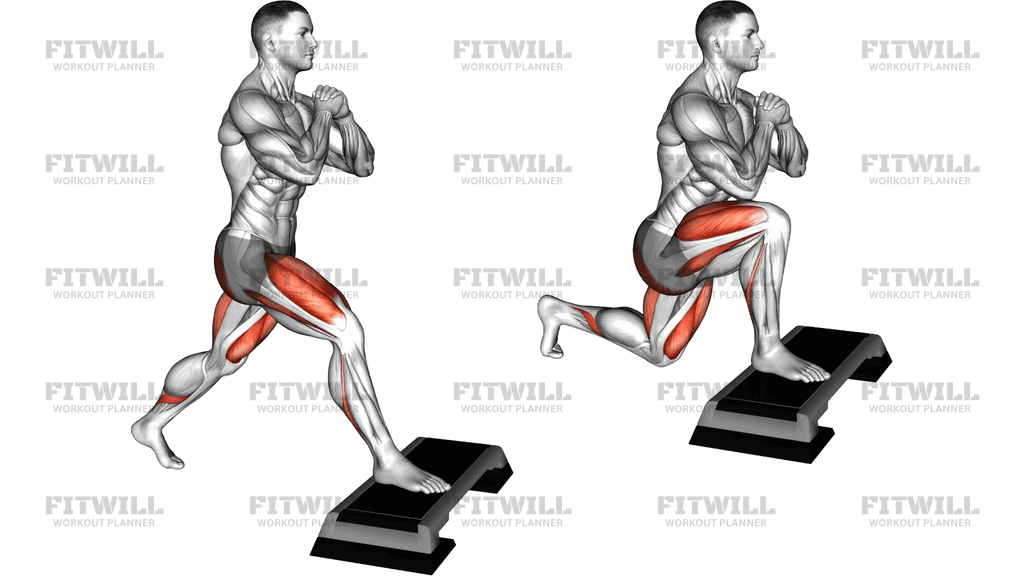
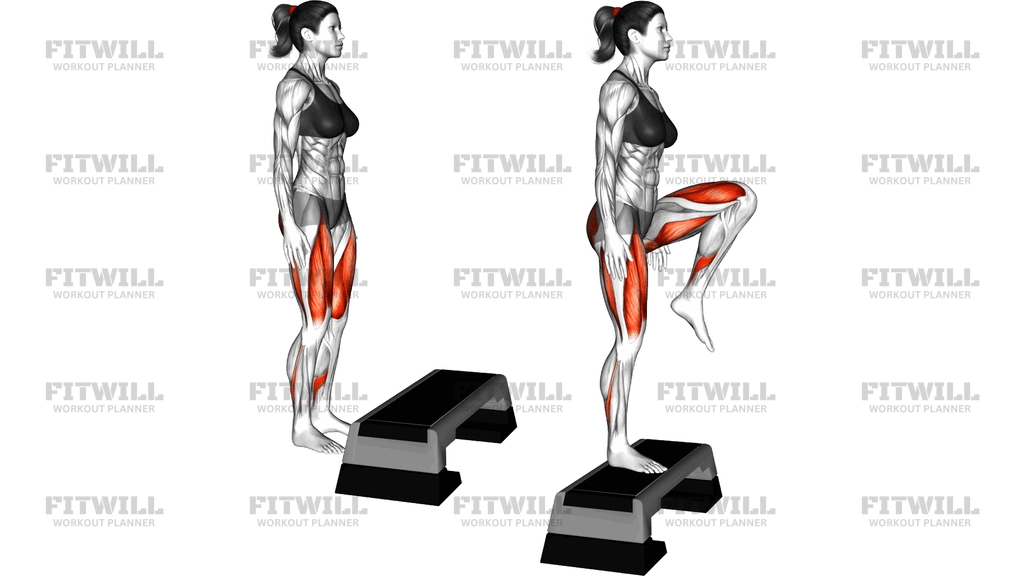
Side Step Up Down Punch Twist
Side Step Up Down Punch Twist is a compound body weight movement that combines a lateral step-up onto a step platform with a rotating punch driven from the torso. Instead of stepping up facing forward, you approach the platform from the side, step up with the near leg, and as you rise, one arm extends out to the side while your ribcage rotates through the punch. You then lower back down with control and repeat on the opposite side or alternate legs, depending on the pattern you choose.
This exercise earns its place in a workout because it does several jobs at once. The step-up portion loads the glutes, quads, and calves through a full hip extension, while the single-leg stance challenges balance and the hip stabilizers on the working leg. The punch and twist layer in rotational work for the obliques and deep core, and the shoulders and arms stay active through the guard and punching position. Because the whole body is moving in rhythm, your heart rate climbs quickly, making it a useful conditioning drill as well as a strength and coordination exercise.
Setup matters more than it might seem. The platform should be low enough that you can place your whole foot on it without pushing off the trailing toes, and there should be clear space on both sides so you can step down without guessing where the floor is. Starting with your fists held at chest height in a guard position keeps your elbows tucked and your torso tall, which makes the twist come from your ribs and hips rather than from swinging your arms loosely.
To get the most from it, think of the punch and the step-up happening together: as the working leg drives you tall on the platform, the fist rotates and extends out to the side at roughly shoulder height, and your torso turns into it. Then reverse the order on the way down—retract the fist to guard first, then step down softly, foot by foot. This exercise suits general fitness routines, warm-ups for boxing or kickboxing sessions, and circuit training where you want leg strength, core rotation, and cardio in a single low-impact station. Keep the pace honest and the landing quiet; if you are slamming down or wobbling on top of the step, reduce the height or slow the tempo before adding reps.
[ Workout Log & Planner ]
Put your next workout in Fitwill
Keep your plan and training log ready when you are.


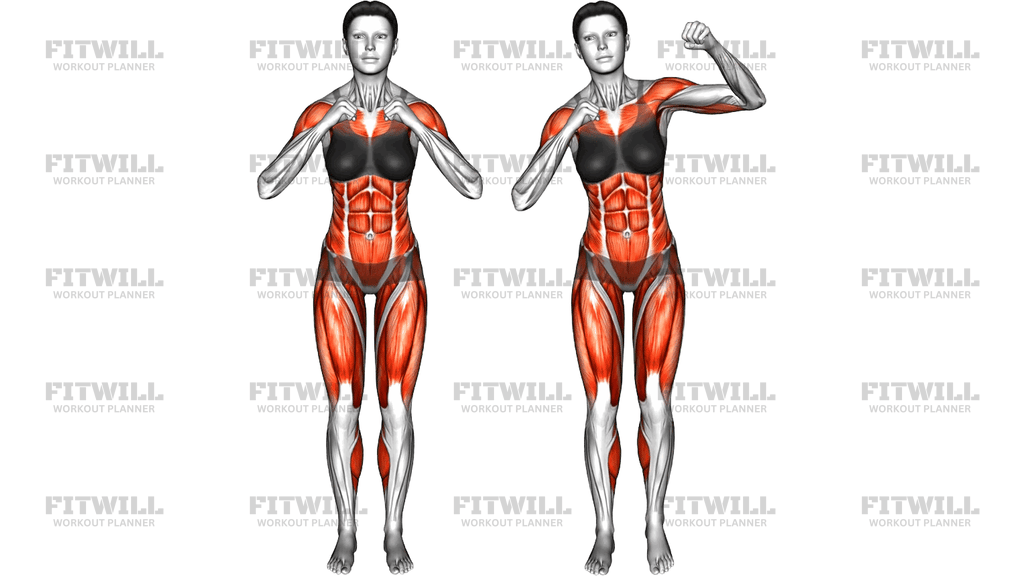
Instructions
- Place a low step platform beside you so the near edge runs parallel to your body, and stand tall with your feet about hip-width apart.
- Raise both fists to chest height in a guard position, elbows close to your ribs, and look straight ahead.
- Brace your core lightly and keep your chest lifted and shoulders relaxed away from your ears.
- Step sideways with the leg closest to the platform, placing your whole foot flat on top of the step.
- Drive through that foot to stand fully upright on the platform, extending your hip without locking the knee.
- As you rise, extend one fist out to the side at shoulder height and rotate your torso into the punch so your ribs turn with the arm.
- Retract the fist back to guard first, keeping the rotation controlled rather than letting the arm snap back.
- Step down with the trailing leg, then bring the working leg down to return to the floor, landing softly with bent knees.
- Exhale as you step up and punch, inhale as you lower back down.
- Reset your stance and repeat on the other side, or complete all reps on one leg before switching.
Tips & Tricks
- Put your whole foot on the platform, not just the ball of the foot, or the drive comes from the calf and the knee drifts inward.
- If you wobble at the top, pause for a beat with both feet planted on the step before punching—balance first, rotation second.
- Keep the punching fist at shoulder height; punches that fly higher pull your shoulder up toward your ear and strain the neck.
- Let the twist come from your ribcage and hips, not from whipping the arm across your body—the arm follows the torso.
- Do not let the knee of the working leg cave inward as you push up; think of pressing the knee slightly out over the little toe.
- Land quietly on the way down; a heavy thud means you are dropping instead of lowering under control.
- Start with a lower step than you would use for a forward step-up, since the sideways approach and twist demand more stability.
- Keep the non-punching fist glued to guard; a dropped hand twists your posture and shortens the rotation on the punching side.
Frequently Asked Questions
What muscles does Side Step Up Down Punch Twist work?
The step-up primarily targets the glutes and quads of the working leg, with the calves assisting on the drive. The punch twist brings in the obliques and deep core, while the shoulders and arms work through the guard and punching action.
Can beginners do Side Step Up Down Punch Twist?
Yes, as long as the step is low enough to place the whole foot on comfortably. Beginners can also drop the punch at first and simply practice stepping up and down sideways before adding the rotation.
How high should the step platform be for Side Step Up Down Punch Twist?
Choose a height that lets your entire foot rest flat on top without you rising onto the toes of the trailing leg. For most people that means a lower setting than they would use for a forward step-up, since the lateral approach is less stable.
Should I alternate legs on every rep of Side Step Up Down Punch Twist?
Either works. Alternating each rep keeps the movement rhythmic and cardio-focused, while completing all reps on one leg before switching gives you more of a strength and balance challenge per side.
Why do I lose my balance when I punch on Side Step Up Down Punch Twist?
The twist shifts your center of mass sideways over a single-leg stance, which is genuinely demanding. Slow the tempo, shorten the punch slightly, or hold the top position with both feet planted for a second before extending the arm.
Can I do Side Step Up Down Punch Twist without a step platform?
You can substitute a sturdy low bench, a stable stair, or any secure raised surface of similar height. Avoid anything that rocks or slides, because the lateral step puts sideways force on the surface.
Is Side Step Up Down Punch Twist a cardio or strength exercise?
It sits between the two. Continuous, moderately paced reps raise your heart rate like a cardio drill, while the single-leg step-up provides meaningful strength work for the legs and hips.
How do I avoid twisting my knee on Side Step Up Down Punch Twist?
Keep the knee of the working leg tracking over your toes as you step up and down, and make sure your whole foot is planted before you rotate. If the knee feels strained, reduce the step height and pause the twist until the pattern feels steady.