Hanging Knee Raise
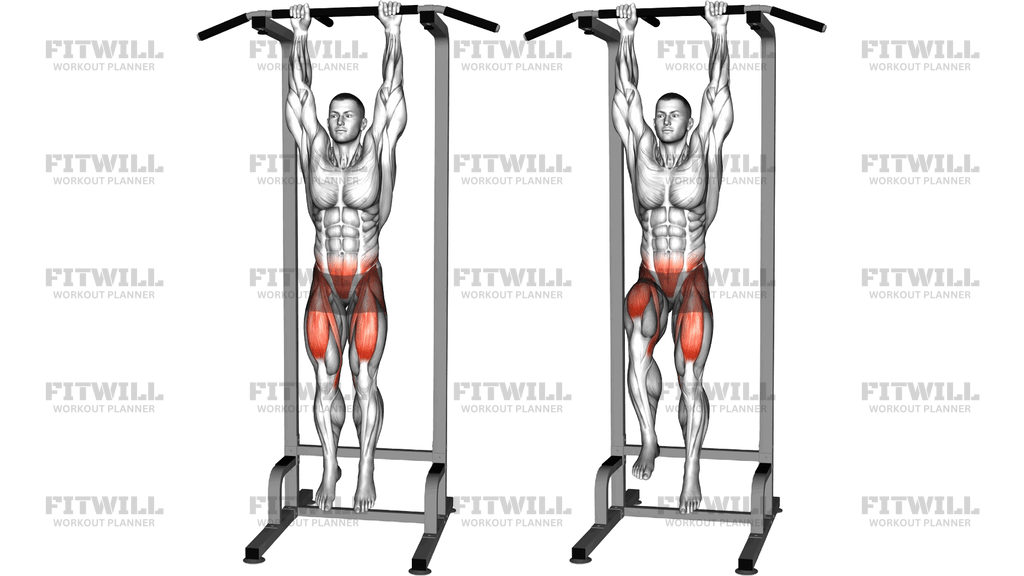
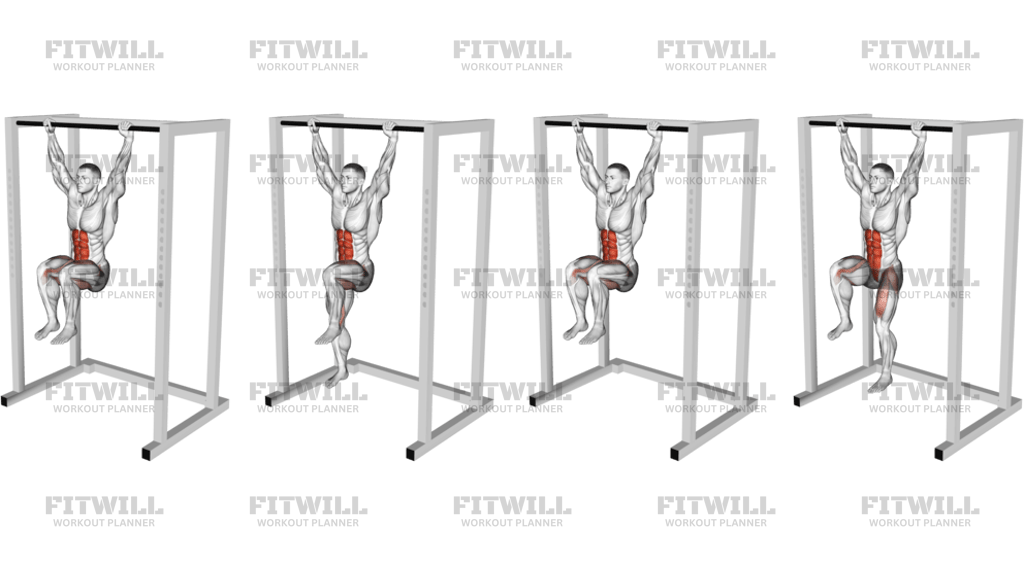
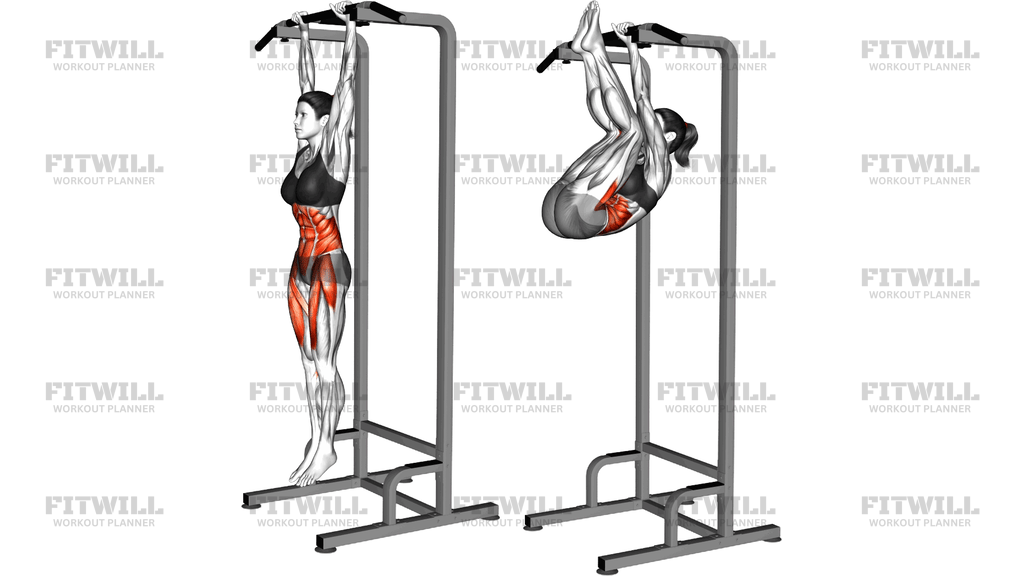
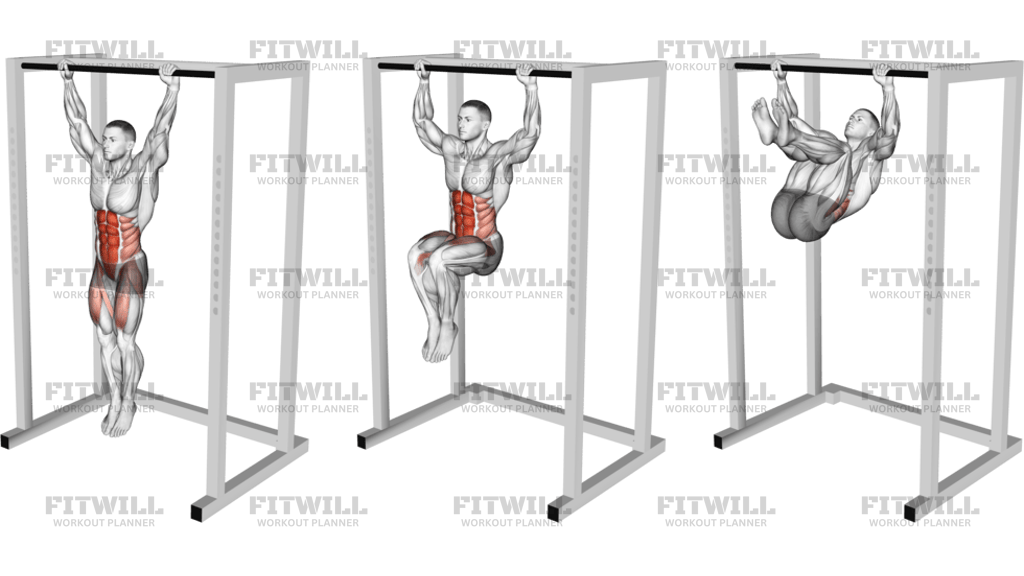
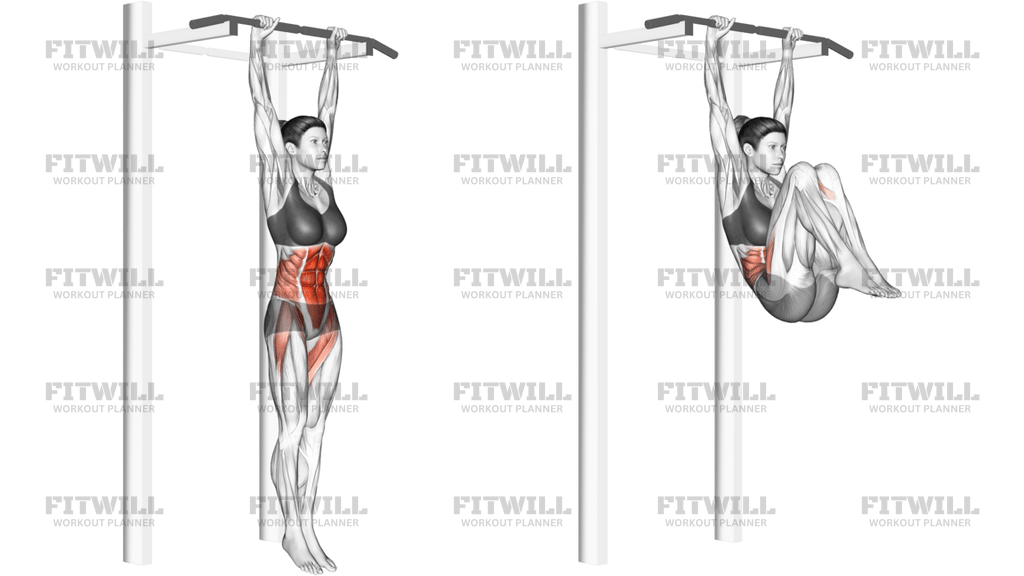
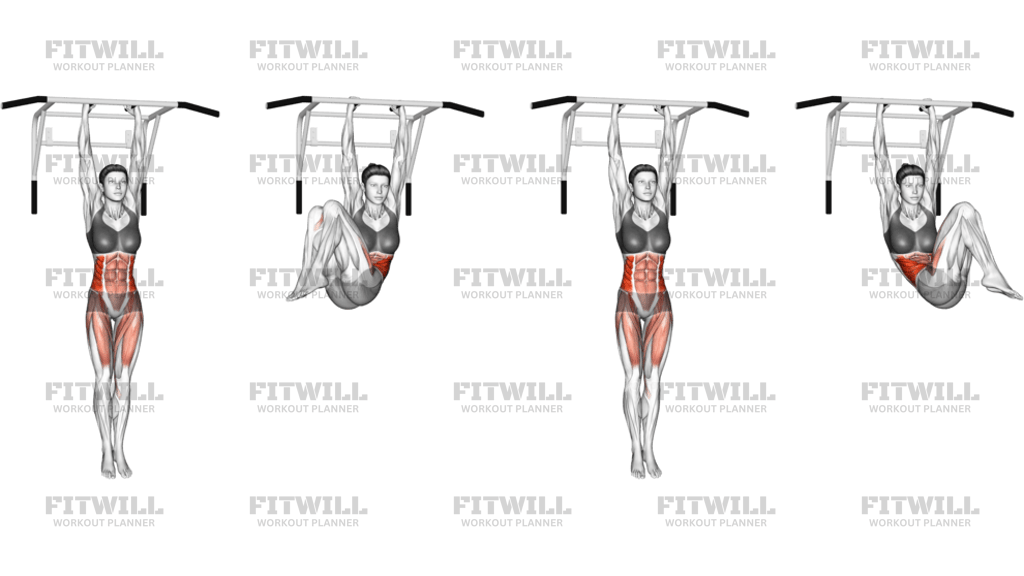
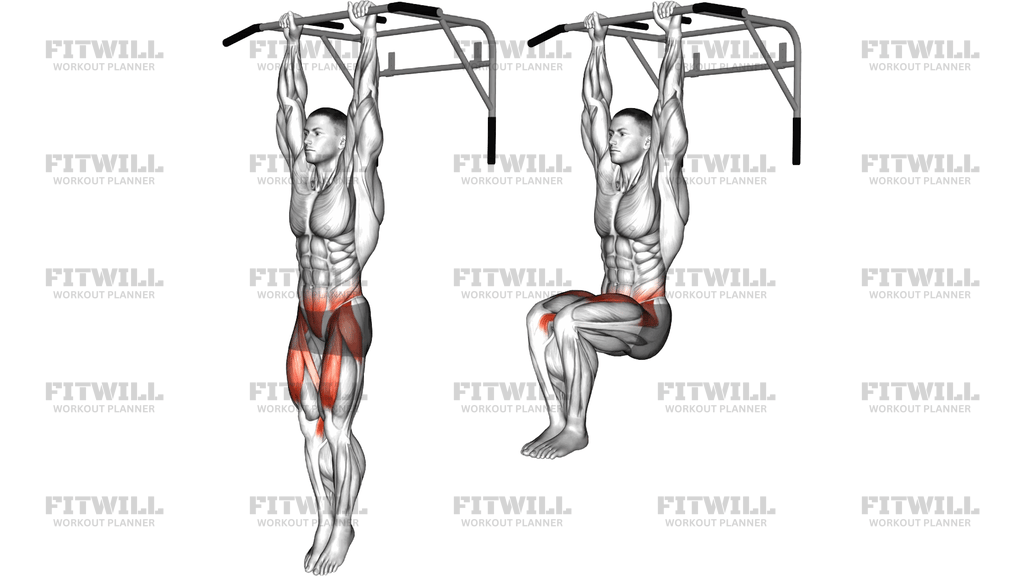
The Hanging Knee Raise is a bodyweight core exercise performed from a dead hang on a pull-up bar. You lift your knees up toward your chest, then lower them back down under control, keeping your torso as quiet as possible throughout. Because your whole body is suspended, every rep also challenges your grip, shoulders, and the stabilizers that keep you from swinging.
This movement earns its place in most training programs because it trains the lower portion of the rectus abdominis in a way that floor work cannot. On the ground, crunches and leg raises stop when your back meets the floor; hanging, your abs have to control your legs through a longer range and actively pull your pelvis into a posterior tilt at the top. The hip flexors work hard as well, which is exactly why distinguishing between hip-flexor dominance and true abdominal control is one of the main coaching points here.
The Hanging Knee Raise suits a wide range of lifters. Beginners use it as the entry point to all hanging core work, since bent knees shorten the lever and make the rep more manageable than a straight-leg raise. More advanced trainees use it for higher-rep conditioning between heavy pulling sessions, or as a precursor to toes-to-bar and hanging leg raises. It is a staple in calisthenics routines, CrossFit-style conditioning, and general gym programs aimed at building a resilient midsection.
Setup matters more than people expect. Grab the bar slightly wider than shoulder width with an overhand grip, hang with arms fully extended, and take a moment to stop any swing before the first rep. If the bar is too low and your feet touch the ground, bend your ankles back or find a higher bar — starting each rep from a stable, quiet dead hang is what makes the abdominal work real rather than momentum-driven.
To execute well, think of the rep as a pelvic curl, not just a knee lift. Brace your midsection, then draw your knees up past hip height while your tailbone curls slightly forward and up. Pausing briefly at the top, lowering slowly, and resisting the urge to swing on the way down will do more for your core than churning out fast, sloppy reps. Keep your shoulders active — pulled slightly down toward the bar rather than shrugged up to your ears — to protect the shoulder girdle during the hang.
A few practical points: use chalk or a secure grip if your hands sweat, because grip failure mid-set is the most common way this exercise goes wrong. If you cannot yet control the hang, cap your sets before your grip gives out, or use a captained's chair or dip station with back support as a stepping stone. Expect your forearms and upper back to fatigue alongside your abs — that is normal, and it is part of what makes hanging core work so transferable to pull-ups and other bar work.
[ Workout Log & Planner ]
Put your next workout in Fitwill
Keep your plan and training log ready when you are.


Instructions
- Stand under a sturdy pull-up bar and reach up to grip it with an overhand grip, hands slightly wider than shoulder width.
- Hang with your arms fully extended and feet clear of the floor, letting your body settle until all swinging stops.
- Pull your shoulders slightly down away from your ears so your upper back stays engaged rather than hanging loosely on the joint.
- Brace your abdominal wall and squeeze your glutes lightly to set a stable pelvis before starting the rep.
- Exhale as you draw your knees up and in toward your chest, curling your tailbone slightly forward so your lower abs do the lifting, not just your hip flexors.
- Continue until your knees reach at least hip height — ideally close to your waist or chest — and pause for a beat at the top.
- Lower your knees back down slowly and with control, inhaling as you descend, until your legs are fully extended beneath you.
- Stop the momentum completely before starting the next rep; do not swing forward to kick-start the next knee raise.
- Reset your grip and brace, then repeat for the desired number of repetitions, stepping down off the bar rather than dropping when you finish.
Tips & Tricks
- If your torso rocks backward as the knees come up, your hip flexors are taking over and you are using momentum — slow the tempo down and reduce the range until you can lift without swinging.
- Think about tucking your pelvis under at the top of each rep. Simply folding at the hips trains the hip flexors heavily but only scratches the surface of the lower abs.
- Chalk your hands or use a bar with a textured coating. A slipping grip forces you to cut sets short well before your abs are fatigued, and letting go mid-rep is a real fall risk.
- Do not let your shoulders creep up toward your ears during the hang. Keep light tension through the lats and upper back to protect the shoulder girdle over long sets.
- If your feet touch the floor at the bottom of the hang, the reps become inconsistent. Find a higher bar or keep your ankles flexed back so each rep starts from a true dead hang.
- Fight the urge to drop your legs fast on the way down. A two- to three-second lower builds more abdominal control than the lift itself and keeps you from turning the set into a swing contest.
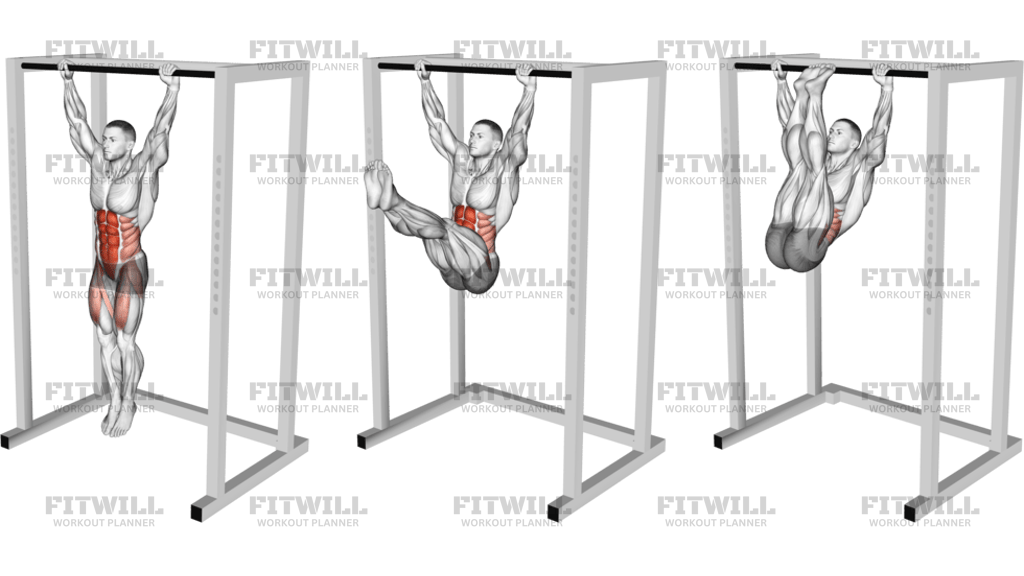
- Bend your knees less — not more — if you want to progress. Bringing the knees higher and tighter to the chest increases the pelvic curl demand; extending toward straight legs is the next progression.
- Start each rep from stillness, not from a forward swing. The swing-kick habit makes the first half of every rep free and hides weak lower-ab strength.
- If hanging is limiting you early in your training, use a captained's chair or a dip station with back padding to learn the knee-tuck pattern before moving to the bar.
Frequently Asked Questions
What muscles does the Hanging Knee Raise work?
The primary movers are the lower abs, specifically the rectus abdominis, with strong assistance from the hip flexors like the iliopsoas and rectus femoris. Your grip, forearms, and upper back also work continuously to hold the dead hang.
Is the Hanging Knee Raise good for beginners?
Yes — it is usually the best starting point for hanging core work because bent knees shorten the lever compared to straight-leg raises. Beginners should focus on slow, swing-free reps and may need to build hanging tolerance before the abs are the limiting factor.
Why do my hip flexors feel the Hanging Knee Raise more than my abs?
This usually means you are folding at the hips without curling the pelvis. Concentrate on tucking your tailbone up as your knees rise past hip height, and lift slightly slower so the abdominals, not momentum, drive the top of the movement.
How high should I raise my knees?
Aim for at least hip height, but higher is better as long as you can keep your torso from swinging. Bringing the knees toward the chest with a slight pelvic curl at the top gives the lower abs the fullest range.
How do I stop swinging during the Hanging Knee Raise?
Start every rep from a completely still dead hang, lower your legs slowly, and pause briefly between reps to kill momentum. If swinging persists, reduce your range of motion and tempo until the movement is under control.
What can I use instead of a pull-up bar?
A captained's chair or a dip station with back and arm support works the same knee-tuck pattern with less grip and stability demand. Once that feels easy, transition to the bar to gain the hanging benefits.
My grip gives out before my abs do — what should I change?
Use chalk, lift straps, or a bar with better texture, and keep sets shorter than your grip limit. You can also build hanging time separately with dead hangs, then return to knee raises once your hold strength improves.
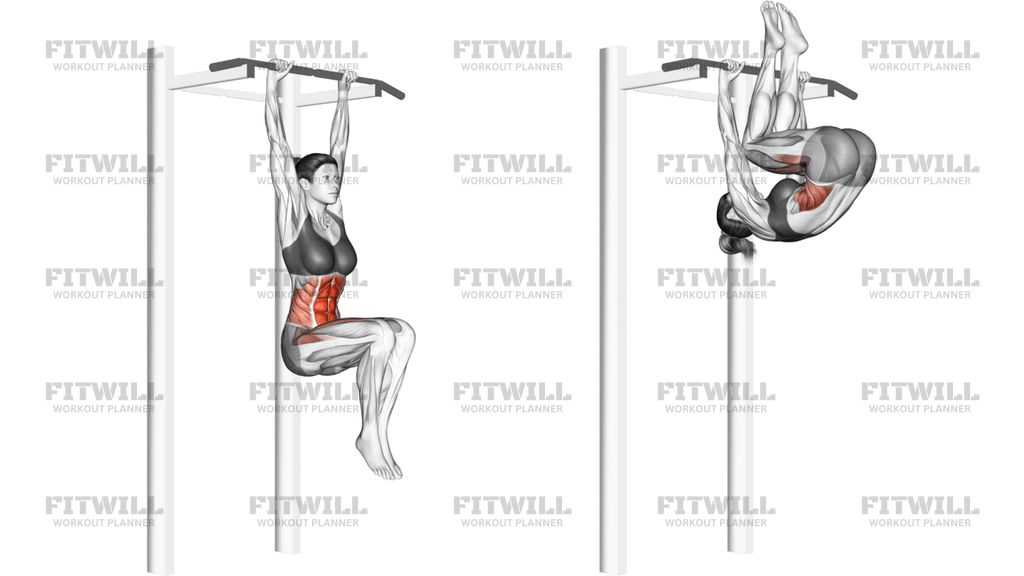
How does the Hanging Knee Raise differ from the Hanging Leg Raise?
The knee raise bends the legs, which shortens the lever and makes the exercise easier, while the leg raise keeps the legs straight and demands far more abdominal strength and control. Master the knee raise first and progress toward the leg raise over time.
Are Hanging Knee Raises safe for the lower back?
When performed with controlled tempo and a deliberate pelvic tilt, the movement is generally well tolerated. Avoid letting your legs drop rapidly or arching your lower back hard at the bottom of the hang, and skip the exercise if hanging provokes shoulder or back discomfort.
How many reps and sets should I do?
Three to four sets of 8 to 15 controlled reps works well for most lifters. Prioritize swing-free execution over rep count — a set of 8 strict reps beats 20 with momentum.