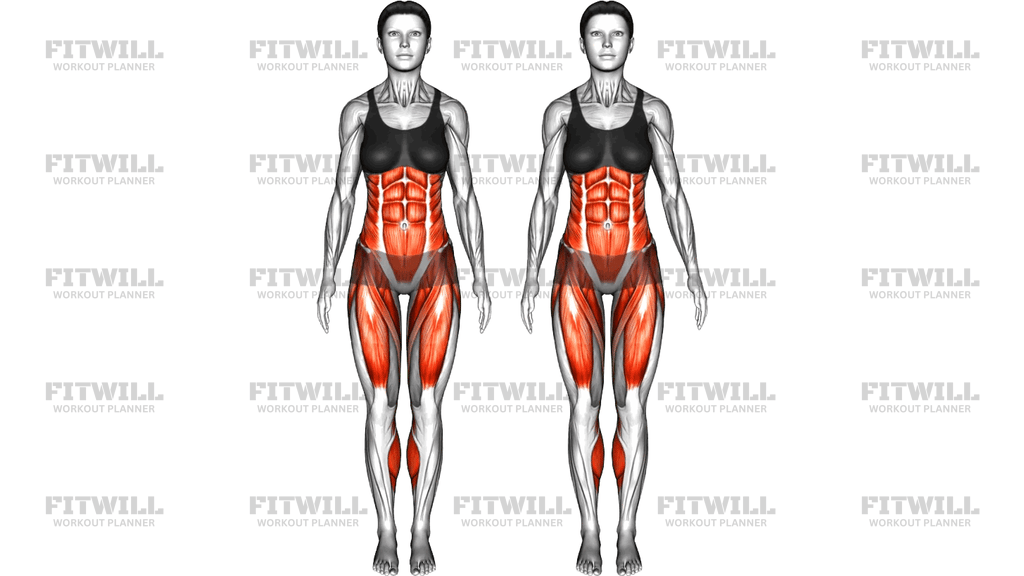
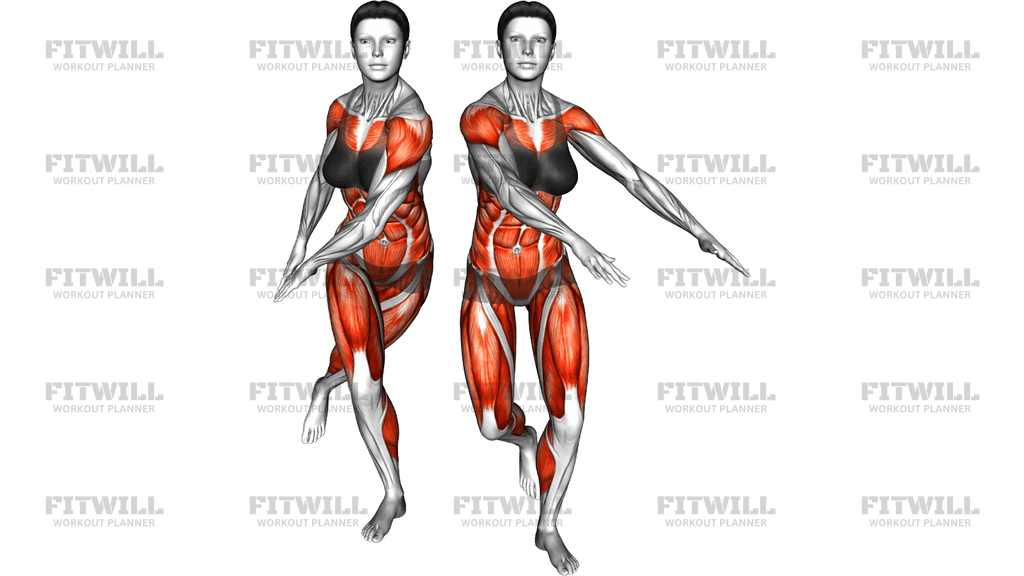
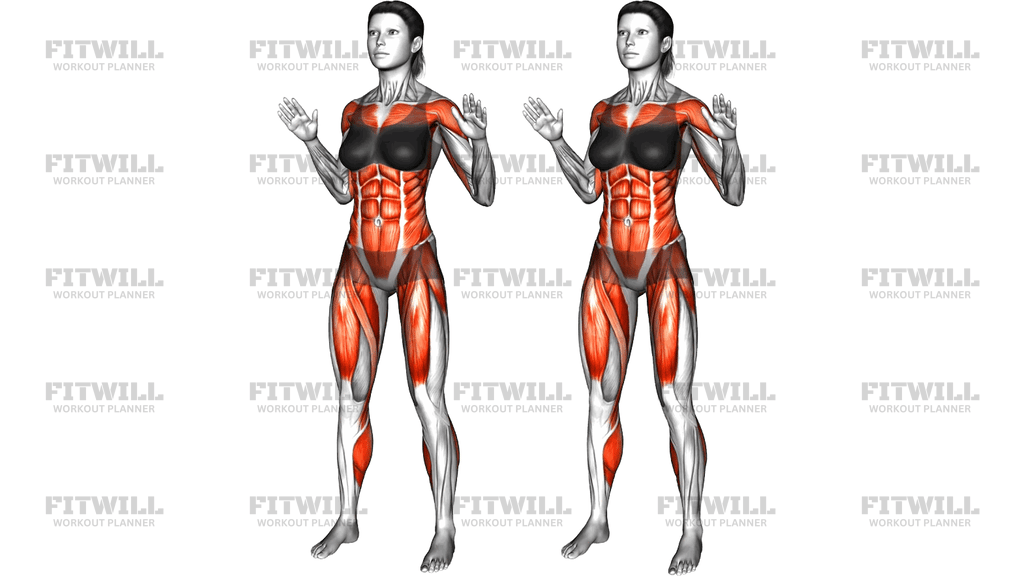
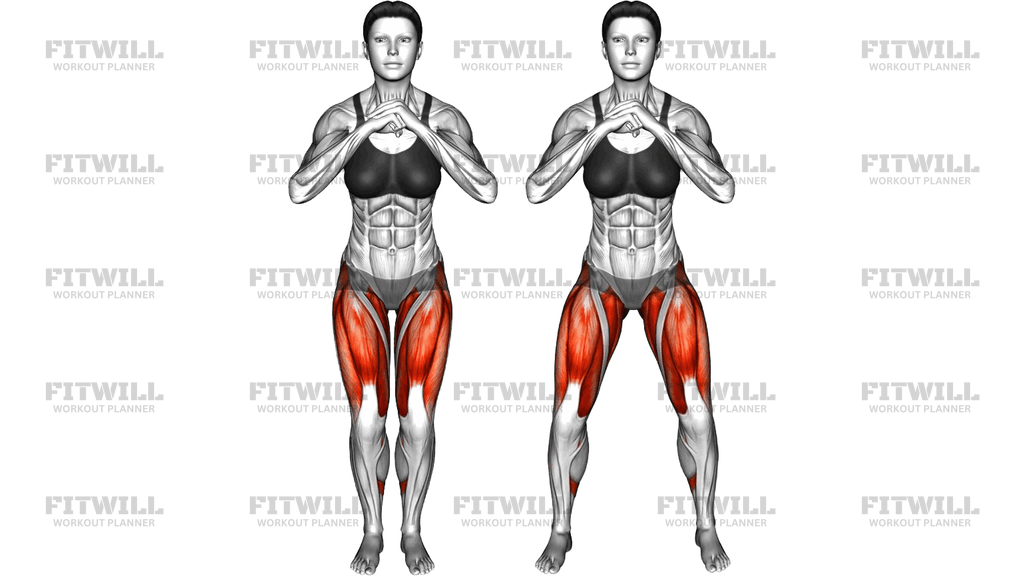
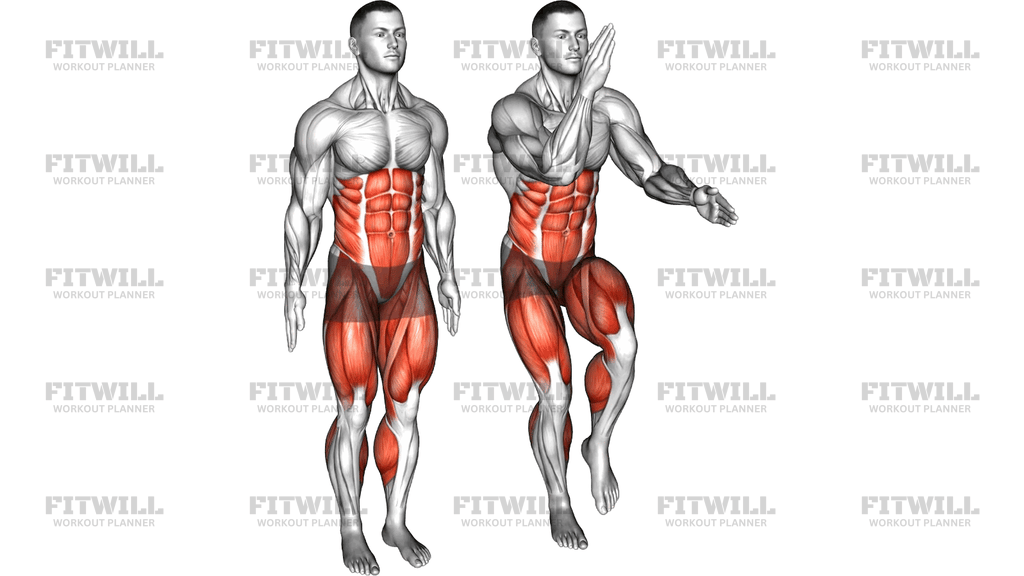
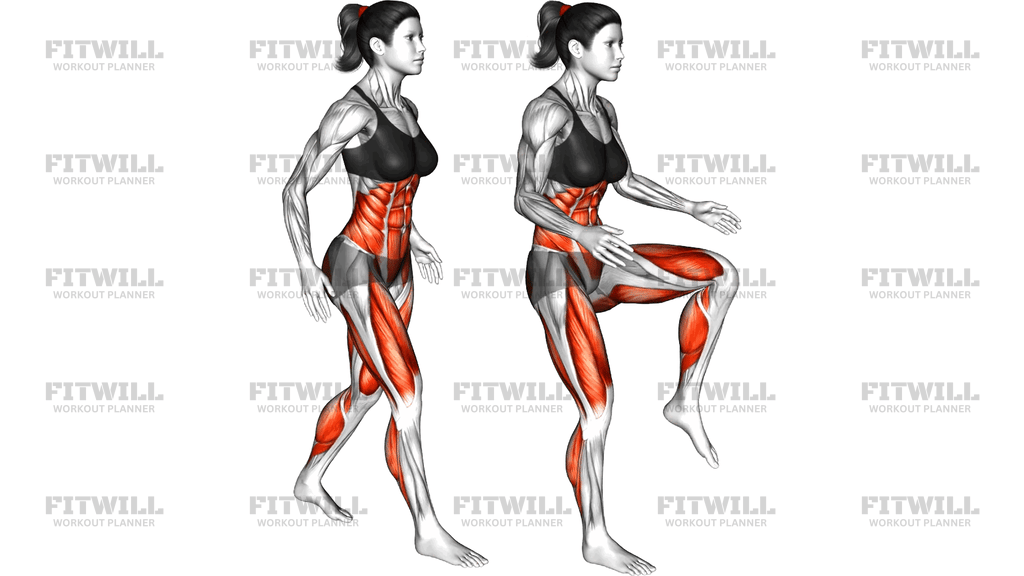
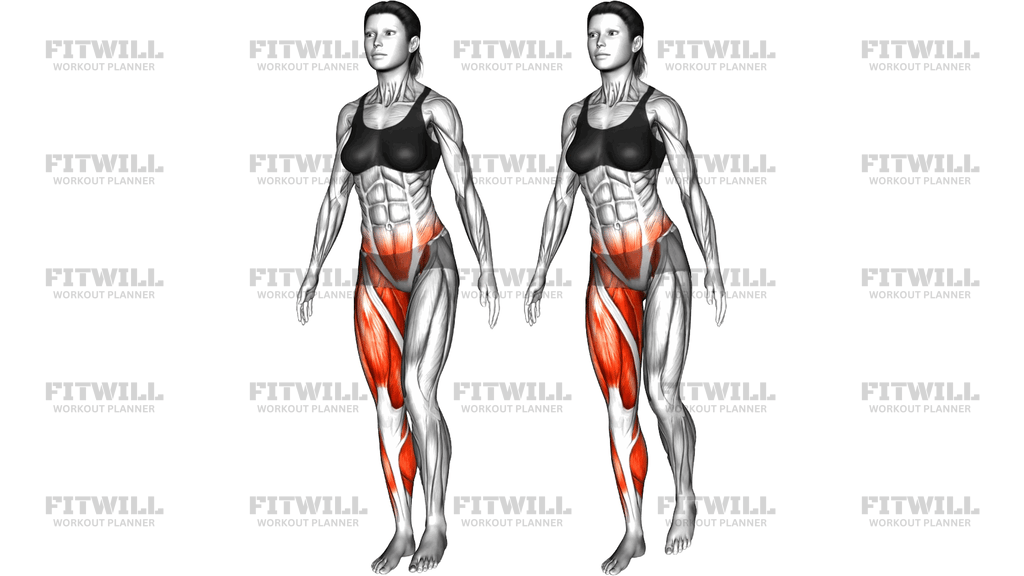
Marching On Spot Arms Swing
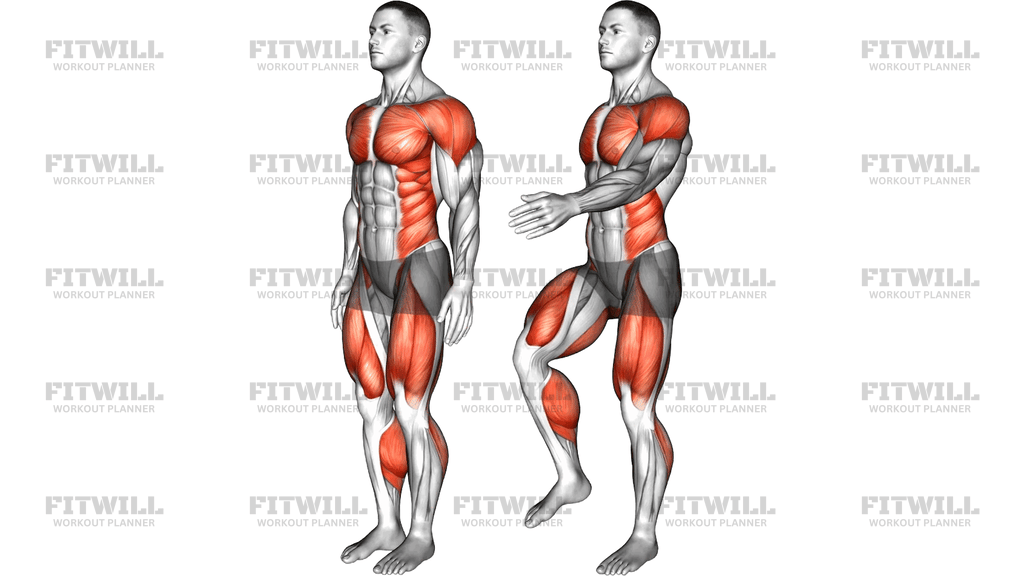
Marching On Spot Arms Swing is a low-impact, bodyweight cardio drill where you lift your knees in an alternating marching rhythm while driving your arms in a natural opposite-arm swing. It looks simple, but the coordinated arm and leg pattern is what makes it valuable: the swinging arms raise your heart rate, challenge your coordination, and turn a basic knee lift into a full-body warm-up or conditioning move.
This exercise suits a wide range of people. Beginners use it to build an aerobic base without joint stress, older adults use it for balance and coordination, and trained lifters use it as a dynamic warm-up before leg days or as active recovery between sets. Because it needs no equipment and no floor space beyond a single standing spot, it also works well as a quick movement break during long periods of sitting.
The main work comes from the quads and hip flexors, which lift each knee toward hip height, while the calves and glutes stabilize every step. Holding an upright torso keeps the core engaged, and the deliberate arm swing brings the shoulders and upper back into play. The goal is rhythm and posture, not speed or height.
Setup matters more than it might seem. Stand tall with your feet about hip-width apart, soften your knees, and brace your stomach lightly so your torso does not collapse as the legs move. Keep your elbows bent around 90 degrees and let the arms swing from the shoulders, with the opposite arm driving forward as each knee rises. This cross-body pattern mirrors natural walking and running mechanics, which is exactly why it transfers well to those activities.
To execute it well, lift one knee to roughly hip height, then switch legs at a steady, even tempo. Land softly on the ball of each foot rather than slapping down with a flat foot. Your head stays level, your chest stays open, and your breathing stays controlled enough that you could speak a sentence if needed. If you find yourself leaning back, holding your breath, or letting the arms go limp at your sides, slow the tempo down and rebuild the rhythm.
A practical safety note: because you are stepping repeatedly in place, wear supportive shoes or march on a forgiving surface if your knees or ankles are sensitive. Start with 30 to 60 seconds and gradually extend the duration as your conditioning improves, keeping the knee lift at a height that feels comfortable rather than forcing the knee to the hip.
Fitwill
Log Workouts, Track Progress & Build Strength.
Achieve more with Fitwill: explore over 9600 exercises with images and videos, access built-in and custom workouts, perfect for both gym and home sessions, and see real results.
Start your journey. Download today!




Instructions
- Stand upright with your feet hip-width apart, arms relaxed at your sides, and your gaze on a fixed point at eye level.
- Bend your elbows to about 90 degrees and bring your hands up so they hang loosely in front of your torso.
- Draw your belly button in slightly and keep your chest lifted to set a tall, stable posture before moving.
- Shift your weight onto one leg and lift the opposite knee up toward hip height, keeping your torso vertical.
- As the knee rises, drive the opposite arm forward in a controlled swing while the other arm travels back.
- Lower the foot to the floor with a soft landing on the ball of the foot and immediately lift the other knee.
- Continue alternating knees and arms at a steady, even rhythm, like marching in place with purpose.
- Exhale naturally on a steady cycle as you march; avoid holding your breath as the tempo increases.
- Keep the elbows bent and the shoulders relaxed, letting the arms swing from the shoulder joint rather than the elbows.
- To finish, gradually slow the marching tempo over a few steps, let the arms settle, and stand still to reset your breathing.
Tips & Tricks
- A common mistake is leaning the torso backward to help lift the knee; brace the core lightly and imagine a string pulling the crown of your head upward instead.
- If your arms hang dead at your sides, exaggerate the elbow bend to 90 degrees for the first few sessions until the swing feels automatic.
- Slapping the feet down flat usually means the tempo is too fast; slow down and focus on landing on the ball of each foot first.
- Keep the knee lift at or just below hip height; forcing the knee higher often causes the lower back to arch and the posture to break down.
- Stay on one spot. If you drift forward, pick a fixed visual target in front of you to anchor your position.
- Let the hands stay loose rather than clenched; tight fists create shoulder and neck tension over longer sets.
- For a harder cardio stimulus, speed up the tempo or raise the arm swing so the hands reach chest height, rather than adding bounce.
- If your calves tire quickly, shorten the set and make sure your heel touches or nearly touches down between lifts to reduce constant calf tension.
Frequently Asked Questions
What muscles does Marching On Spot Arms Swing work?
The quads and hip flexors do most of the work lifting each knee, while the calves and glutes stabilize each step. The arm swing adds the shoulders and upper back, and the core stays active to keep the torso upright.
Is Marching On Spot Arms Swing good for beginners?
Yes, it is one of the most beginner-friendly cardio drills because it is low impact, needs no equipment, and can be scaled simply by changing tempo, duration, or knee height.
Why should the arms swing opposite to the knees?
The opposite-arm pattern mirrors natural walking and running mechanics and helps train coordination between the upper and lower body. It also raises the heart rate more than marching with still arms.
How high should I lift my knees during Marching On Spot Arms Swing?
Aim for roughly hip height, but choose the highest lift you can maintain without leaning back or arching your lower back. Comfortable and consistent beats forced and sloppy.
How long should I march on the spot?
Start with 30 to 60 seconds per set and build toward 2 to 5 minutes of continuous marching as your conditioning improves. You can also use shorter bursts as a warm-up before strength training.
Can I do this exercise without shoes?
You can, but repeated stepping in place is easier on the feet and calves with supportive footwear or on a cushioned surface. If going barefoot, start with shorter sets and land softly.
What is the most common mistake in this movement?
Leaning the torso backward as the knees rise, which shifts work away from the hips and strains the lower back. Keep the core braced and the chest tall so the knee does the lifting.
What can I use instead of Marching On Spot Arms Swing?
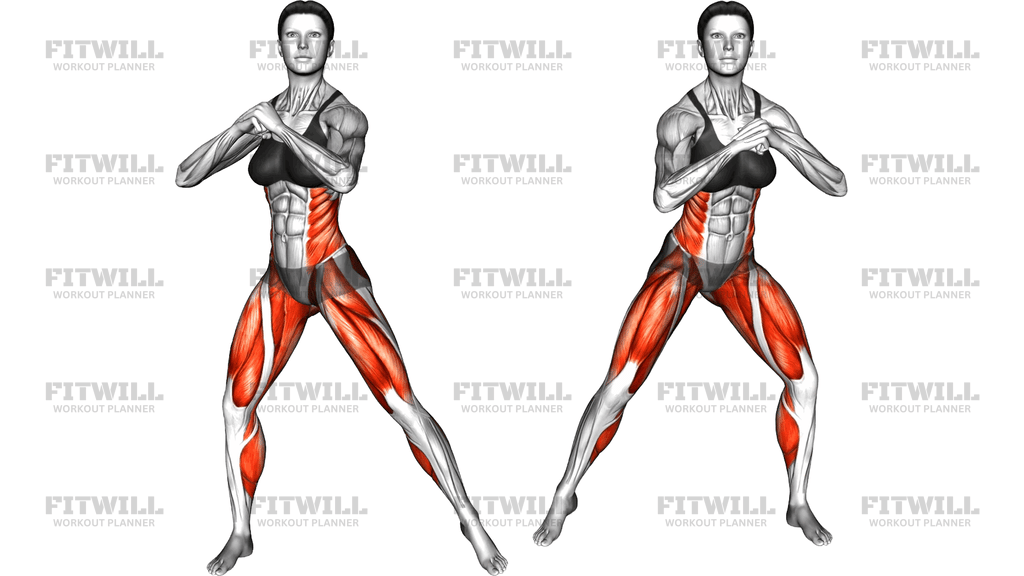
High knees, walking in place with exaggerated steps, or stepping side to side are all close substitutes. High knees are more intense, while slow marching with a lower knee lift is an easier regression.
Is marching on the spot safe for people with knee problems?
It is generally gentle because there is no jumping, but reduce the knee height and tempo if you feel any discomfort. Stop and consult a professional if pain persists.