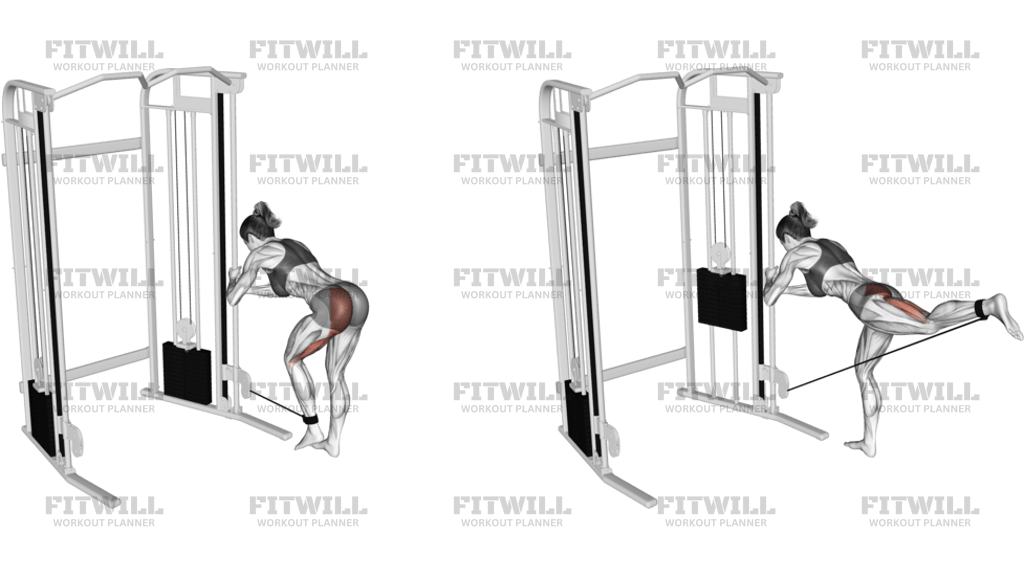
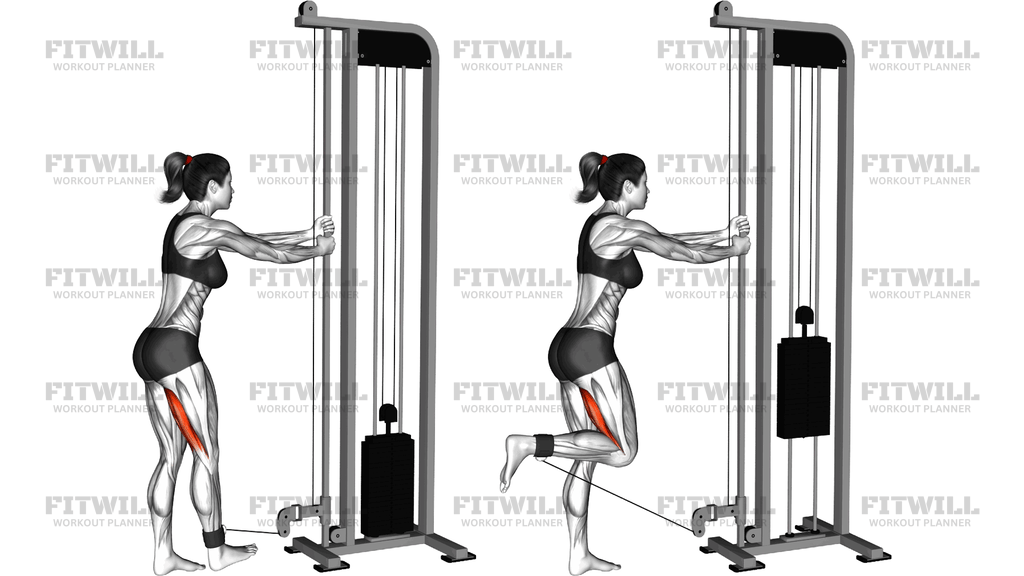
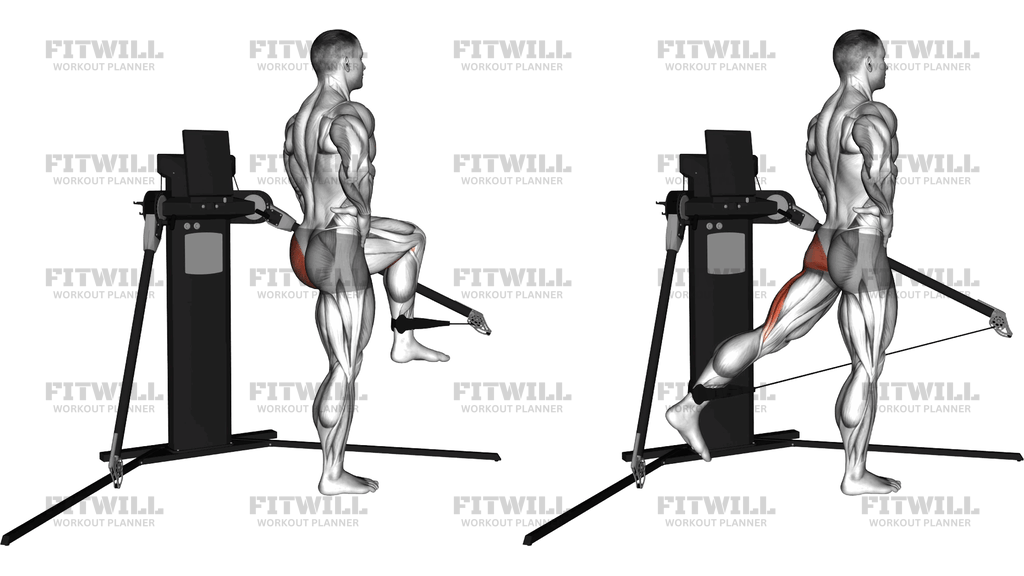
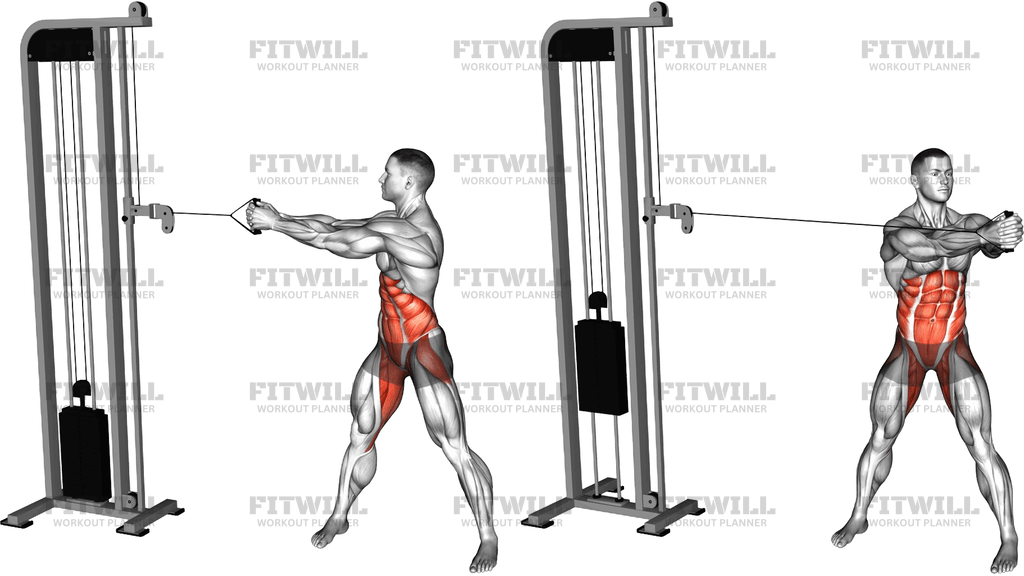
Cable Side Lying Floor Single Leg Kickback
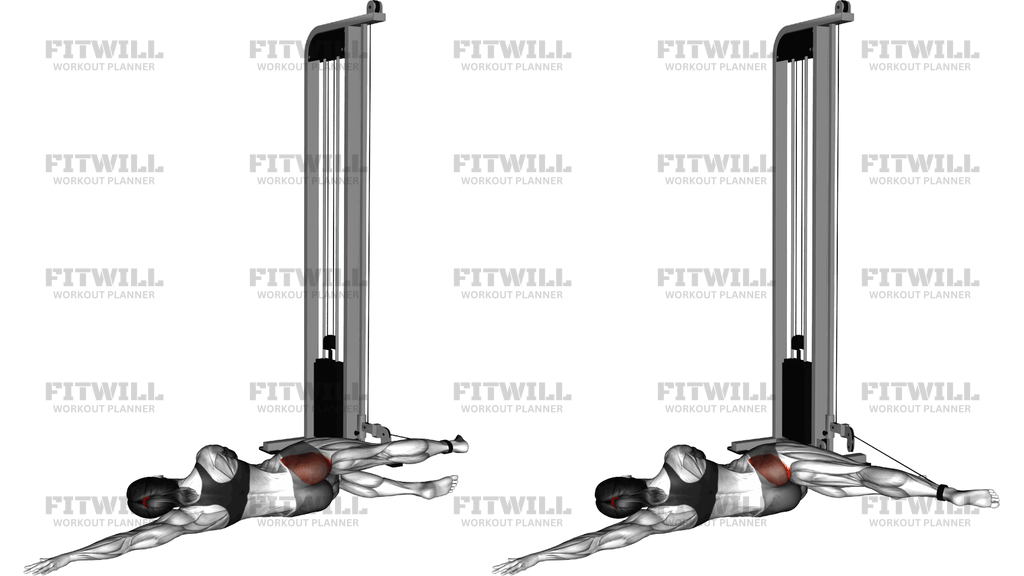
The Cable Side Lying Floor Single Leg Kickback is a glute isolation exercise performed lying on your side on the floor with an ankle strap attached to your top leg and connected to the low pulley of a cable machine. From this position, you extend your top leg backward against the cable's resistance, squeezing the glute of the working leg before lowering it back under control. Because the cable pulls from behind your feet, your glute has to work through the entire range of the kick, not just at the hardest point the way it often does with bodyweight versions.
This movement is especially useful for people who struggle to feel their glutes working during standing hip extension exercises. Lying on the floor removes the balance and lower back demands that come with standing kickbacks, so you can focus purely on driving the leg back with the hip. The floor also limits how far you can swing the leg, which naturally discourages the excessive arching and rotation that common mistakes in standing versions.
The primary muscle worked is the gluteus maximus of the top leg, which extends the hip as you kick back. The hamstrings assist as secondary movers, while the gluteus medius and other hip stabilizers work isometrically to keep the leg in line with your body rather than letting it drift upward. Your core and obliques on the underside also stay engaged to keep your trunk from rolling forward or back as the cable pulls.
Setup matters more here than in most glute exercises because your distance from the pulley determines the resistance curve. If you lie too close, the cable goes slack at the start and you lose tension; if you lie too far, the strap drags your leg toward the machine before you even begin the kick. Position yourself so the strap just barely goes taut with your legs stacked and your hips neutral, then keep your pelvis still throughout the set.
To execute it well, keep both hips stacked vertically and your top arm braced on the floor in front of you. Kick the top leg back by squeezing the glute, keeping the knee nearly straight or only slightly bent, and stop when your leg reaches a comfortable line behind your body without your lower back arching or your torso twisting. Pause briefly at the back, then return slowly until the leg is back in line with your torso while maintaining cable tension.
This exercise fits well as an accessory movement after heavier hip hinges or squats, as a warm-up activation drill before lower body training, or in home and rehab-friendly routines where floor-based glute work is preferred. Because each side is trained separately, it also makes it easy to spot and address side-to-side differences in hip strength.
[ Workout Log & Planner ]
Put your next workout in Fitwill
Keep your plan and training log ready when you are.


Instructions
- Set the pulley of the cable machine to its lowest position and attach an ankle strap to your top leg, just above the ankle bone.
- Lie on your side on an exercise mat with your head near the cable machine's base and your feet pointing toward the pulley, far enough away that the cable is almost taut with your legs stacked.
- Extend your bottom arm along the floor for support and place your top hand or forearm on the floor in front of your chest to stabilize your torso.
- Stack your hips directly on top of each other and brace your core so your ribcage and pelvis stay neutral before the set begins.
- Exhale and kick your top leg straight back behind you by squeezing the glute, keeping the knee soft and the toes facing forward rather than rolling the hip open.
- Stop at the end of the kick when the leg is in line with or slightly behind your torso, and hold the contraction for a beat without arching your lower back.
- Inhale and return the leg slowly to the starting position, stopping while the cable still has light tension rather than letting the weight stack rest.
- Complete all reps on one side, then roll over, switch the ankle strap to the other leg, and match the repetitions on the second side.
- Between sets, unclip or fully relax the strap before sitting up so the cable does not snap your leg back toward the machine.
Tips & Tricks
- If the cable goes slack at the start of each rep, scoot your body a few inches farther from the pulley so tension exists before the glute ever engages.
- The most common fault is rotating the torso backward as the leg kicks; press your top forearm into the floor and think about keeping both shoulders facing the ceiling.
- Avoid lifting the working leg upward at the same time you kick back, which turns this into a side leg raise and shifts work to the outer hip; the leg should travel purely backward.
- Keep the kick short and controlled rather than chasing a big range; if your lower back arches or your pelvis tilts at the end point, you have gone too far.
- A slight knee bend is fine, but bending and straightening the knee during the rep brings the hamstrings in and steals work from the glute.
- Use lighter weight than feels necessary for the first set; the floor position gives you excellent leverage, and too much load usually shows up as trunk rotation.
- Point the toes of the working leg forward instead of letting the foot turn out, which keeps the hip in a position where the glute does most of the extending.
- If the strap digs into your ankle, reposition it higher on the calf-adjacent part of the ankle or place it over a thin sock rather than tightening it to the point of discomfort.
- Move deliberately on the return, roughly twice as slow as the kick, since letting the cable yank the leg forward is where most of the control is lost.
Frequently Asked Questions
Which muscles does the Cable Side Lying Floor Single Leg Kickback work?
The gluteus maximus of the top leg is the primary mover during the backward kick. The hamstrings assist, and the hip stabilizers plus your obliques work to keep your trunk from rotating as the cable pulls.
How far should I stand from the cable machine for this exercise?
You don't stand at all; you lie on the floor with your feet toward the low pulley. Choose a distance where the strap is just barely taut with your legs stacked, so the glute is loaded from the very first inch of the kick.
Is the Cable Side Lying Floor Single Leg Kickback good for beginners?
Yes, it is one of the more beginner-friendly cable glute exercises because the floor supports your entire body and there is no balance requirement. Start with light weight and focus on feeling the glute squeeze rather than moving a big load.
Why do I feel this exercise in my lower back instead of my glutes?
That usually means you are arching your spine to finish the kick or your hips have rotated toward the ceiling. Reduce the range slightly, re-brace your core, and make sure both hips stay stacked while the leg moves on its own.
Can I do this kickback with the cable set at a high pulley instead?
A high pulley changes the resistance direction and pulls your leg up rather than back, which no longer matches the hip extension this exercise is designed for. Keep the pulley at its lowest setting so the cable runs flat along the floor toward your ankle.
How is this different from a standing cable kickback?
The side-lying floor position removes balance demands and caps the range of motion, which makes it easier to keep the pelvis neutral and isolate the glute. The standing version allows a larger kick but is more likely to involve lower back arching and torso swing.
Should my knee be straight or bent during the kick?
Keep the knee nearly straight with only a slight bend, and hold that bend constant through every rep. Actively bending and straightening the knee turns the movement into a hamstring-dominant curl instead of a glute kickback.
How many reps and sets should I do?
Two to three sets of 10 to 15 reps per side works well as an accessory or activation exercise. Because the range is short and the floor supports you, higher reps with strict form generally beat heavy weight here.
What can I use if my gym has no cable machine available?
Ankle-strap resistance bands anchored low behind you replicate the same backward resistance while lying on your side. A bodyweight side-lying glute kickback on a mat is a simpler substitute, though the tension will not be constant through the range.
Is it safe to do this exercise every day?
It is a low-load, low-skill movement, so frequent practice is generally fine, but your glutes still need recovery like any other muscle. Two to four sessions per week with at least one rest day between harder sessions is a sensible rhythm.