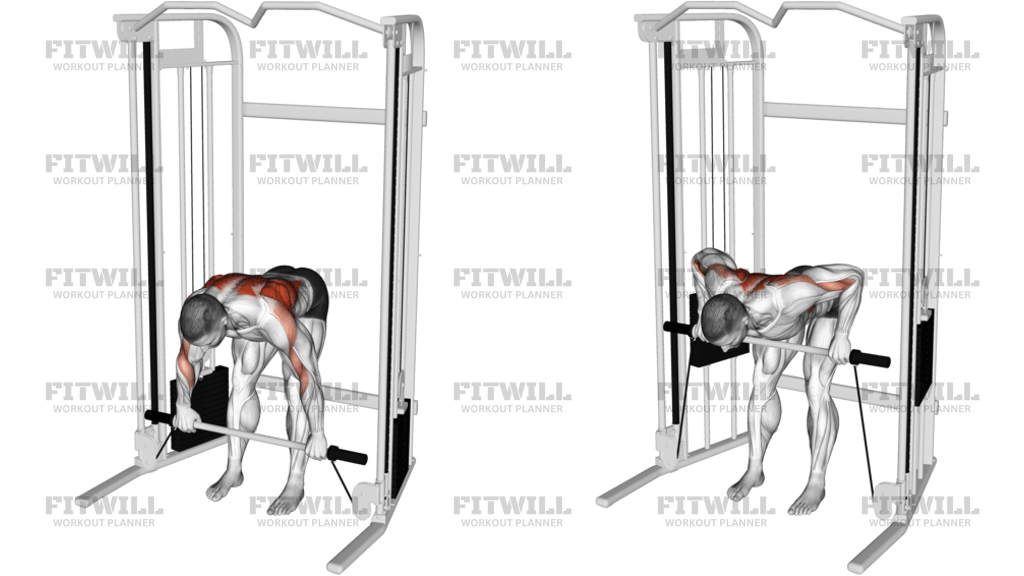
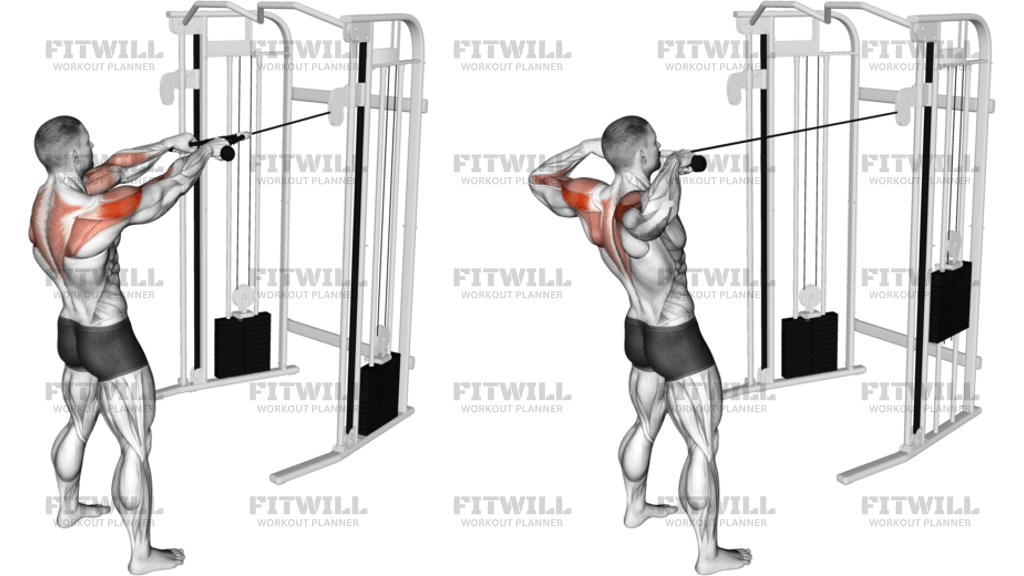
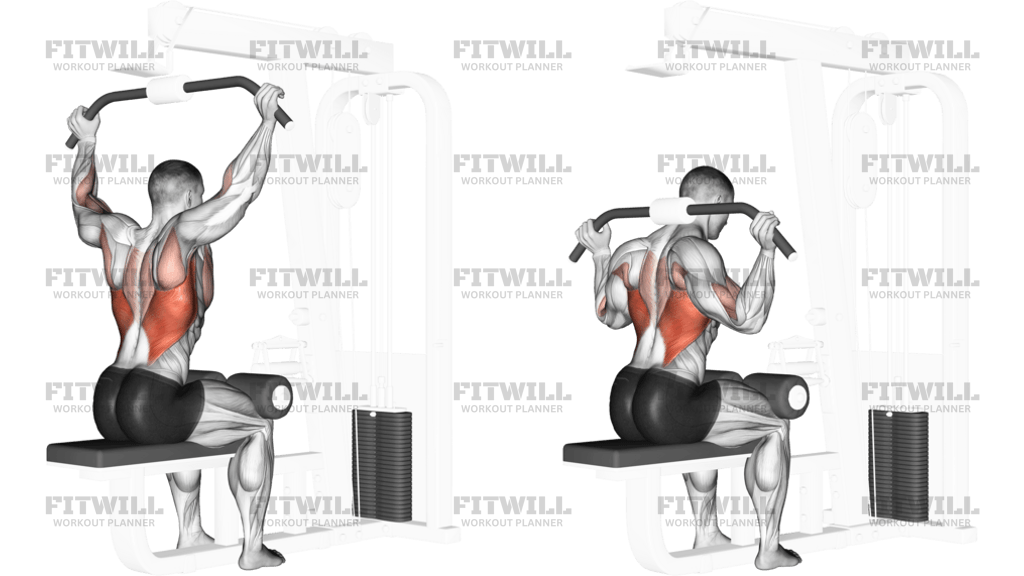
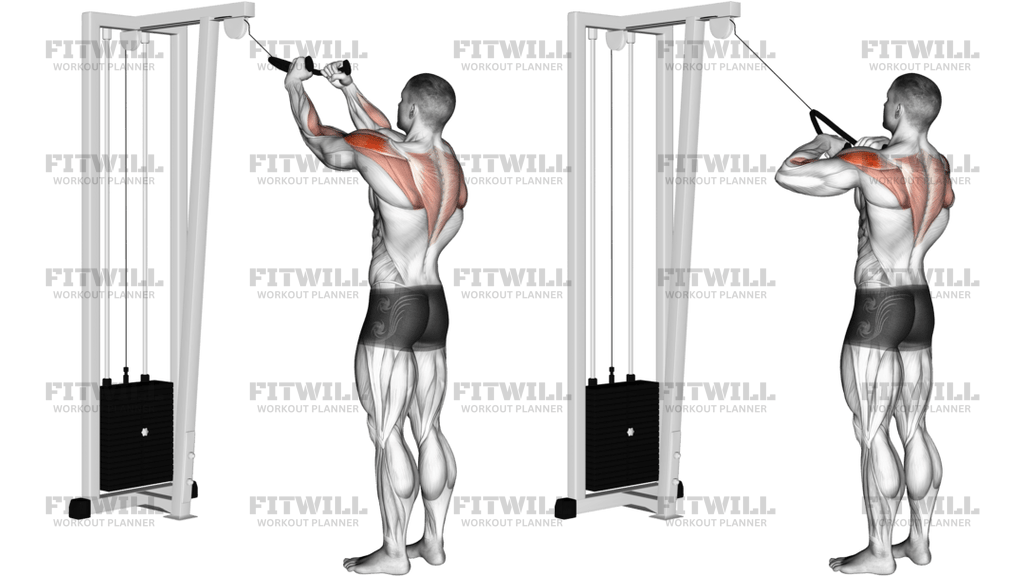
Cable 45 Degrees Single Arm Reverse Grip Reverse
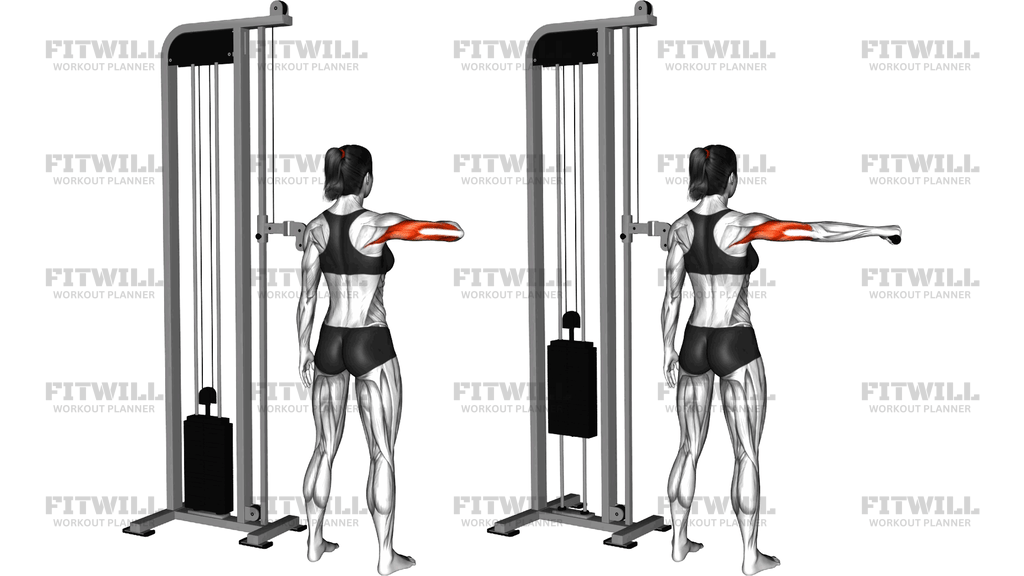
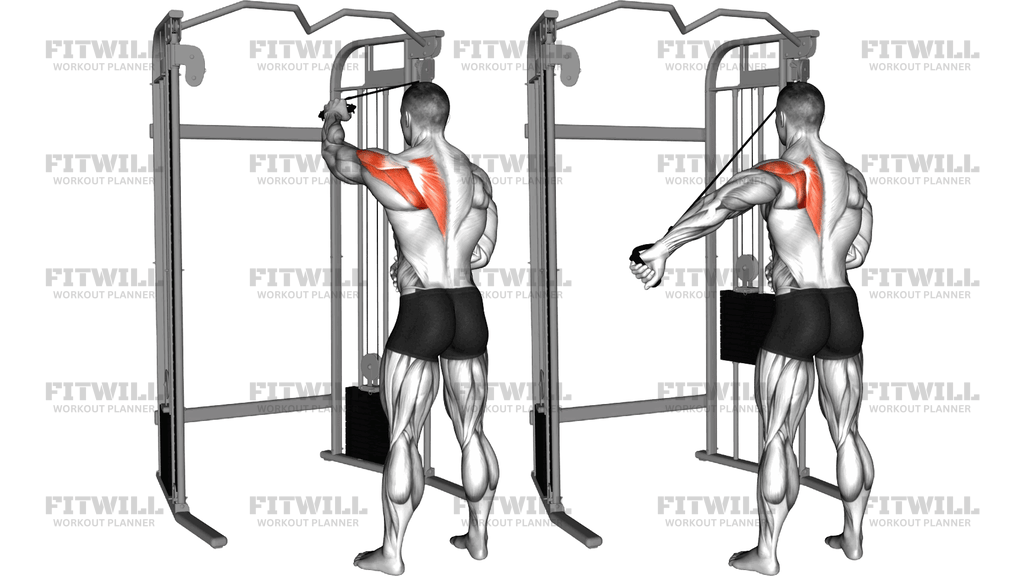
The Cable 45 Degrees Single Arm Reverse Grip Reverse Fly is a unilateral rear-delt isolation movement performed standing at a high cable pulley. You set the pulley at or near the top of the machine, take a single handle with a reversed (palm turned up) grip, and sweep the arm out and down in a wide arc at roughly a 45-degree angle until it finishes out to your side just below shoulder height. Because the cable pulls diagonally from above, the resistance stays on the rear deltoid through the entire range, which is hard to achieve with dumbbells.
This exercise is especially useful for lifters whose rear shoulders lag behind their front and side delts. Pushing movements, desk work, and typical gym routines all favor the front of the shoulder, and that imbalance often shows up as rounded posture or cranky shoulders during pressing. Training one side at a time also exposes and corrects left-to-right differences, since your stronger arm can't silently take over the way it can during barbell or two-dumbbell work.
The reversed grip is the detail that separates this from a standard cable reverse fly. Turning the palm up as you pull slightly externally rotates the upper arm, which changes the line of pull on the rear delt and brings more involvement from the rotator cuff and the muscles between the shoulder blades. It is a subtle adjustment, but lifters who feel standard rear-delt flyes more in the biceps or traps often find the rear delt finally wakes up with this version.
Setup matters more than weight here. Stand far enough from the machine that the cable does not go slack at the finish, keep your torso square to the stack, and resist the urge to rotate your trunk as the arm sweeps back. The moment your chest opens toward the working side, you are stealing work from the rear delt and handing it to the lats and torso muscles. A lighter load moved with a strict arc builds this area far better than a heavy load yanked with body English.
You will see this movement in shoulder-focused sessions, upper-body pull days, and rehabilitation-informed programs that emphasize scapular control. It pairs naturally with face pulls and rows, filling in the horizontal-abduction work that rows alone don't fully cover. Because it is done one arm at a time, keep rest periods short and alternate sides to keep the session efficient.
[ Workout Log & Planner ]
Put your next workout in Fitwill
Keep your plan and training log ready when you are.


Instructions
- Set the pulley of a cable machine to the highest position and attach a single handle.
- Stand facing the machine with your feet about hip-width apart and stagger your stance slightly so the cable passes outside your body rather than across it.
- Grip the handle with one hand using a reverse grip, palm facing up toward the ceiling, and step back until the cable is taut with your arm raised up and across toward the pulley at roughly a 45-degree angle.
- Place your free hand on your hip or against the machine frame, brace your core, and pull your shoulder blade back so your torso stays square to the stack.
- Exhale and sweep your arm out and down in a wide arc, leading with the elbow and keeping a soft bend in the elbow the whole way.
- Finish with your arm out to your side at or slightly below shoulder height, palm now turned toward the floor, and squeeze the back of your shoulder for a beat.
- Inhale and slowly let the arm travel back up along the same arc until it reaches the raised starting position, keeping tension in the cable rather than letting it slack.
- Complete all repetitions on one side, then reset your stance, switch grips, and work the other arm.
- Between sets, rest the handle on the stack and shake out your shoulder before the next set to keep the grip fresh.
Tips & Tricks
- The most common mistake is turning this into a row: if your elbow bends deeply and your shoulder blade pulls toward your spine, the weight is too heavy or you are leading with the biceps. Keep the elbow nearly fixed and let the shoulder joint do the moving.
- Watch for trunk rotation at the finish. If your chest swings open toward the working arm, drop the load one plate and hold your torso square to the machine for the whole set.
- The reverse grip works best when the palm rotation comes from the shoulder, not the wrist. Forcefully twisting at the wrist puts strain on the joint without adding rear-delt work.
- Keep the arc at about 45 degrees from your midline. Sweeping the arm straight out to the side shifts work toward the side delt, while pulling too close to the body lets the lats dominate.
- A slight forward lean of 10 to 15 degrees from the hips can improve the line of pull on the rear delt, but hinge from the hips rather than slouching through the upper back.
- Pause for a full second at the end position. The rear delt responds well to that held contraction, and the pause also prevents momentum from carrying the rep.
- If the cable scrapes across your body at the start, widen your stance or step further from the machine so the cable track clears your torso.
- Do not chase range at the top. Raising the arm above shoulder height at the start can pinch the shoulder; stop the stretch where you feel tension but no joint compression.
Frequently Asked Questions
Which muscles does the Cable 45 Degrees Single Arm Reverse Grip Reverse Fly target?
The rear deltoid is the prime mover, with strong support from the rhomboids and middle traps as the shoulder blade stabilizes. The reversed grip also adds meaningful rotator cuff involvement through the external rotation component.
Why use a reverse grip instead of a neutral grip on this exercise?
Turning the palm up externally rotates the upper arm as you pull, which shifts the line of pull onto the rear delt and rotator cuff. Lifters who feel standard versions in their biceps or traps often get better rear-delt feedback with this grip.
Is the Cable 45 Degrees Single Arm Reverse Grip Reverse Fly suitable for beginners?
Yes, provided you start light. The single-arm cable setup actually helps beginners because the machine guides the resistance path, and the light loads needed make it easy to learn the correct arc before adding weight.
How high should I set the pulley?
Set it at or near the top of the machine so the cable pulls diagonally down toward you. This matches the 45-degree sweep of the exercise and keeps tension on the rear delt through the full range.
My traps take over during this movement. How do I fix that?
Shrug-free execution is the key: consciously pull your shoulder blade down before each rep and keep the working arm's arc wide. If shrugging persists, reduce the weight, since heavy loads almost always recruit the upper traps first in this position.
Can I substitute dumbbell rear delt flyes for this exercise?
Dumbbell flyes are a reasonable substitute, but they lose tension at the top of the range where the cable version is strongest. Bent-over cable crossovers or a dual-pulley reverse fly come closer to matching the resistance profile.
How many sets and reps should I use?
Two to four sets of 12 to 20 reps per arm works well, since the rear delt handles lighter loads and benefits from controlled volume. Rest about 45 to 60 seconds between sides.
Is it safe for my shoulder to pull the arm down from overhead?
For most lifters yes, as long as you stay within a pain-free range and avoid forcing the arm above shoulder height at the start. If you have a current shoulder injury or a history of impingement, check with a qualified professional before adding this movement.
Should my elbow stay bent or straight during the reverse fly?
Keep a soft, fixed bend of about 10 to 20 degrees. Locking the elbow fully is harsh on the joint, while bending it more turns the exercise into a row and shifts work away from the rear delt.
Why train one arm at a time instead of both together?
The unilateral setup prevents your stronger side from compensating, doubles the time under tension for each shoulder, and makes it easy to spot and fix side-to-side strength differences.