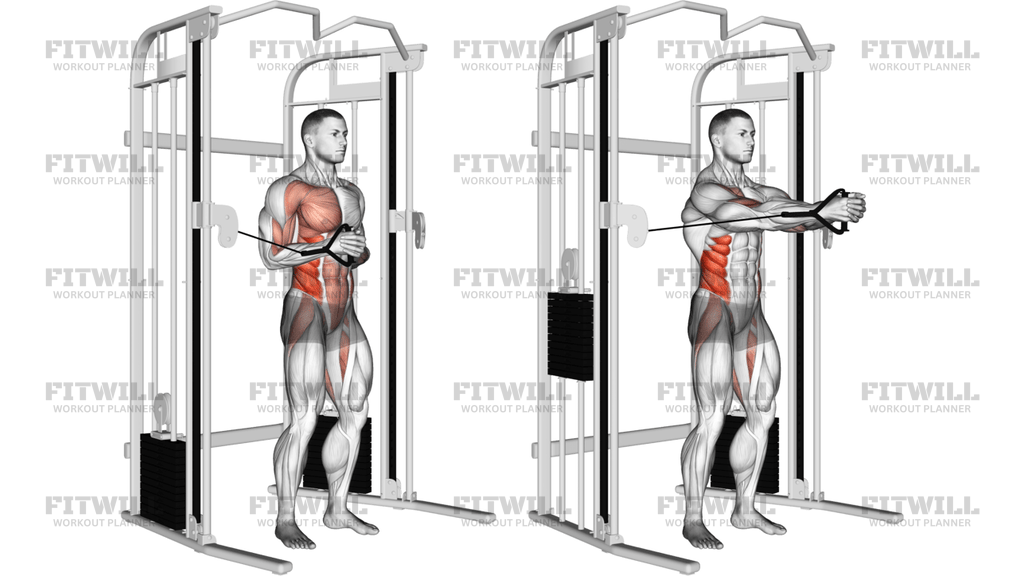
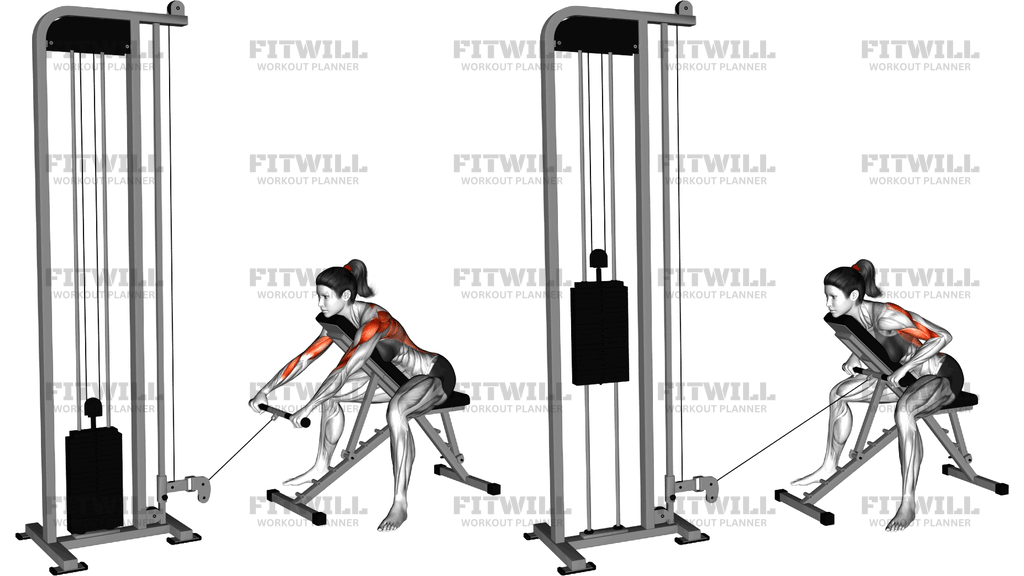
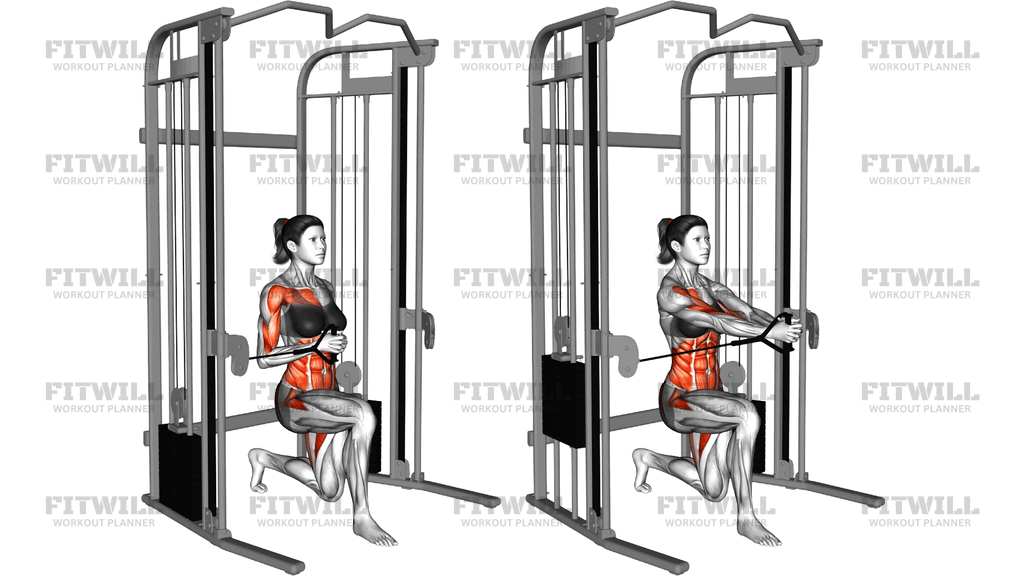
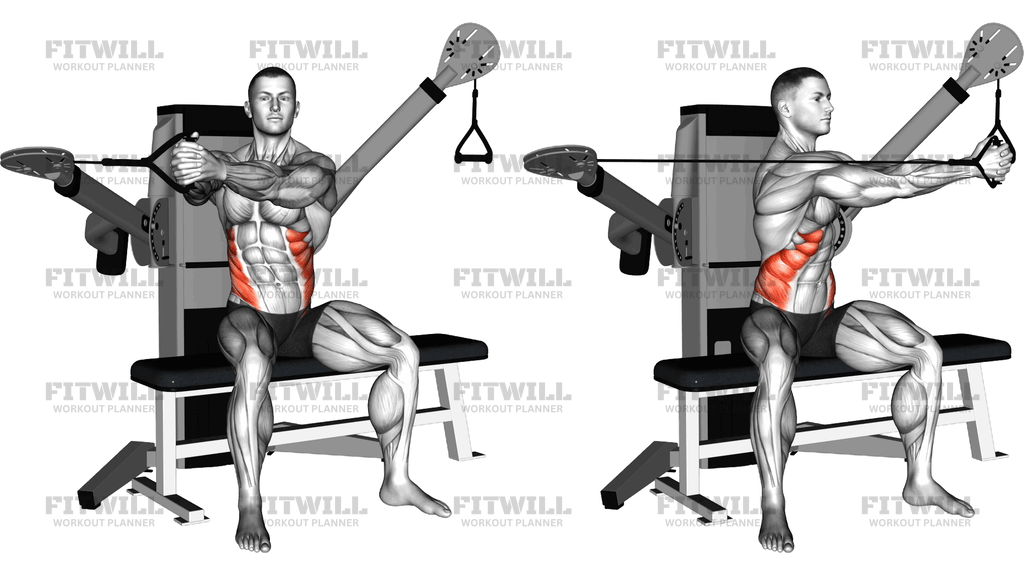
Cable Lying Single Arm Cross Lateral Raise
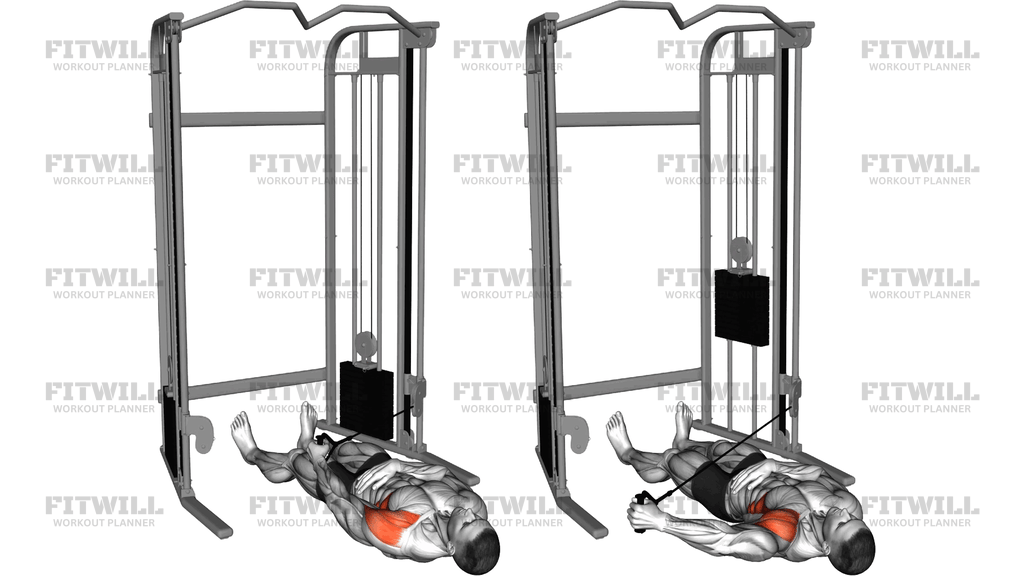
The Cable Lying Single Arm Cross Lateral Raise is a chest isolation movement performed on a cable machine with a low pulley. You lie flat on your back on the floor with the pulley set at its lowest position, then draw the handle up and across your body in a wide arc until your arm points toward the ceiling over your upper chest. Because the cable pulls from behind and to the side of you at floor level, the tension on the pec runs through the entire arc instead of dropping off the way it does with a dumbbell fly.
This exercise suits lifters who want focused, single-side chest work without loading the shoulder joint heavily. It is a good fit after heavier pressing movements, for correcting a side-to-side strength difference, or for anyone who struggles to feel the chest working during standing fly variations. The floor gives your torso a stable base, so you can concentrate purely on moving the arm at the shoulder rather than stabilizing your whole body on a bench.
The primary muscle worked is the chest, especially the sternal head of the pectoralis major, which handles the horizontal adduction as the arm sweeps up and inward. The front delt assists, while the biceps and forearm muscles work isometrically to hold the handle. Since only one arm works at a time, your trunk also engages mildly to keep you from rotating as the cable pulls sideways.
Setup details matter more here than in most chest exercises. Your head should sit close to the machine with the low pulley just behind and to the working side, so the cable clears your body without dragging across your torso or face. Lying with your body squared to the machine rather than angled changes the pull line noticeably, so take a moment to position yourself before you start. Keep the non-working hand resting on your stomach as a simple reference point for torso position.
Execution is deliberately slow. Start with the handle resting near your hip or thigh on the working side, then sweep the straight-ish arm up and across in a smooth quarter-circle until it finishes above your chest, angled slightly toward the middle of your body. Pause briefly at the top, then lower back along the same path under control, letting the arm return to your side without letting the stack slam down.
Keep the weight conservative. Because the cable pulls at an awkward angle near the floor, the hardest position for the shoulder is the start of the rep, and ego weights there tend to pull your torso into a twist. If you feel the movement in your shoulder joint rather than across the chest, shorten the arc slightly or reduce the load before changing anything else.
[ Workout Log & Planner ]
Put your next workout in Fitwill
Keep your plan and training log ready when you are.


Instructions
- Set the pulley of a cable machine to its lowest position and clip a single handle to it.
- Lie flat on your back on the floor with your head nearest the machine, positioned so the cable runs just behind and to the outside of your working arm without touching your body.
- Grip the handle with one hand using a neutral palm-up orientation, and let the arm rest by your side with a soft bend in the elbow; place your free hand on your stomach.
- Brace your core lightly and press your upper back, hips, and legs into the floor so your torso stays squared to the machine.
- Exhale as you sweep the handle up and across your body in a wide arc, keeping the elbow angle fixed, until your arm points toward the ceiling and finishes angled slightly over the center of your upper chest.
- Squeeze the chest for a beat at the top of the arc.
- Inhale as you lower the handle back down along the same arc until your arm returns to your side and the cable stays taut.
- Complete all reps on one arm, then reposition your body on the other side of the machine and work the opposite arm.
- Between sets, let the handle rest on the floor beside you rather than releasing it under tension so the stack settles quietly.
Tips & Tricks
- If the cable drags across your hip or ribs during the rep, slide your body a few inches away from the machine; the pull line should stay clear of your torso the whole way.
- A common mistake is straightening or bending the elbow as the arm rises, which turns the exercise into a partial press. Lock in a slight bend before the first rep and hold that same angle throughout.
- Do not let your shoulder roll off the floor as you reach the top. If the front of your shoulder pinches, reduce the arc so the handle finishes over your chest rather than past your head.
- Because you are lying down, you cannot see the stack—use the sound of the plates as feedback. If they clank between reps, you are resting too long at the bottom and losing chest tension.
- Start lighter than you think you need. The stretched position near the floor is the weakest point of the lift for the shoulder, and the resistance feels heaviest exactly there.
- Keep your free hand on your stomach and check it between reps; if you are pressing it down or twisting toward it, the pulling side is cheating with trunk rotation.
- Match reps arm for arm, starting with your weaker side, so the stronger arm does not set an uneven standard.
- A slow two-second lowering phase does more for chest development here than extra weight, since the pec works hardest eccentrically in the bottom third of the arc.
Frequently Asked Questions
Which muscles does the Cable Lying Single Arm Cross Lateral Raise target?
The chest is the primary mover, particularly the sternal head of the pectoralis major, as the arm sweeps up and across the body. The front delt assists, and the biceps work statically to hold the handle.
Why lie on the floor instead of using a bench for this movement?
The floor gives you a fixed, stable base and lets the low pulley pull from directly beside you, which a bench setup would obstruct. It also removes any balance demand, so all your attention stays on the chest contraction.
Is the Cable Lying Single Arm Cross Lateral Raise suitable for beginners?
Yes, provided the weight is kept light. The movement pattern is simple, but beginners should practice a few reps with minimal load to learn the arc before adding resistance.
How close should my head be to the cable machine?
Lie close enough that the cable runs just behind your working shoulder without brushing your body or face. Too far away and the angle becomes awkward; too close and the hardware sits over your head.
Should my arm stay straight during the exercise?
Keep a small, constant bend in the elbow rather than a locked-out arm. Straightening it as you lift shifts effort toward the elbow and shoulder, while the chest works best when the arm angle never changes.
What is the most common mistake with this exercise?
Twisting the torso to help the handle up. Because the cable pulls sideways from floor level, it is tempting to rotate the trunk; keep both shoulder blades and hips flat on the floor to isolate the chest.
What can I substitute if my gym has no low pulley free?
A one-arm cable crossover from a low pulley while standing, or a single-arm dumbbell fly on a flat bench, covers similar ground. The floor version is unique mainly in its stable base and fixed pull line.
How many sets and reps work best for the Cable Lying Single Arm Cross Lateral Raise?
Two to three sets of 10 to 15 reps per arm fits its role as an isolation finisher. Because each side works alone, rest briefly between arms rather than treating the pair as one endless set.
Is it safe for the shoulder joint?
When done with a moderate weight and a controlled arc, the movement is shoulder-friendly. Stop short of any pinching sensation at the front of the shoulder, and do not let the handle yank your arm toward the floor at the start of each rep.