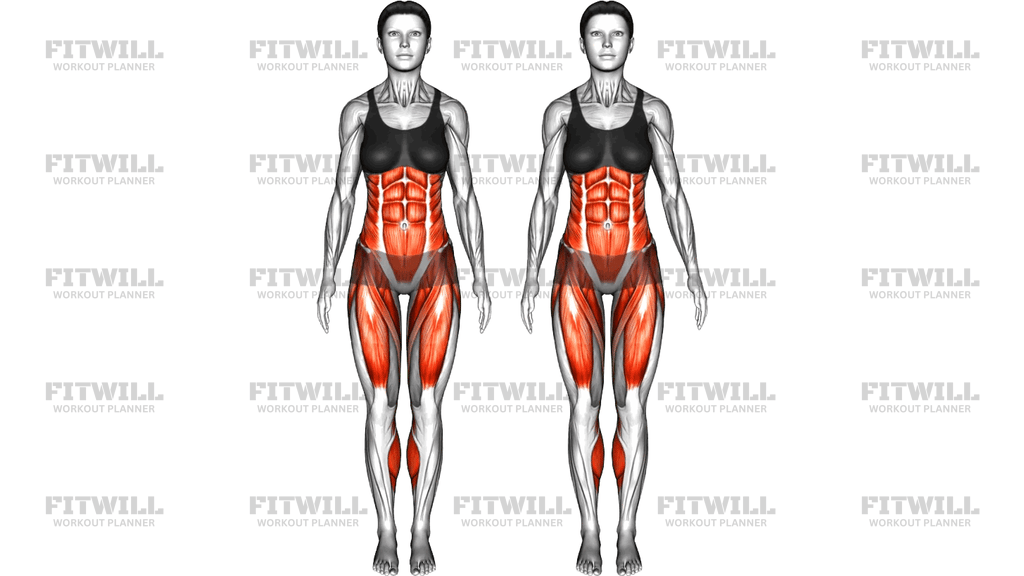
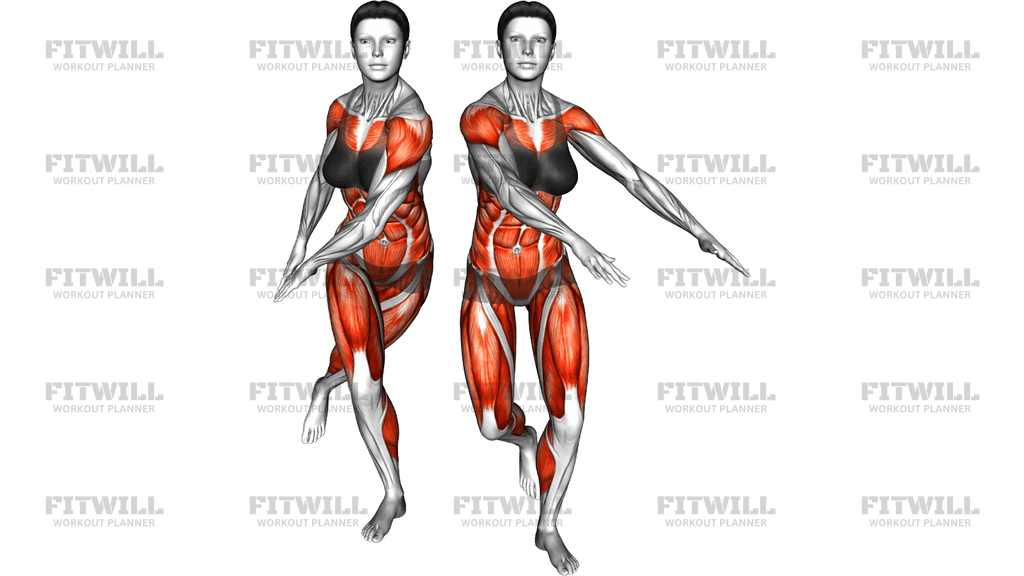
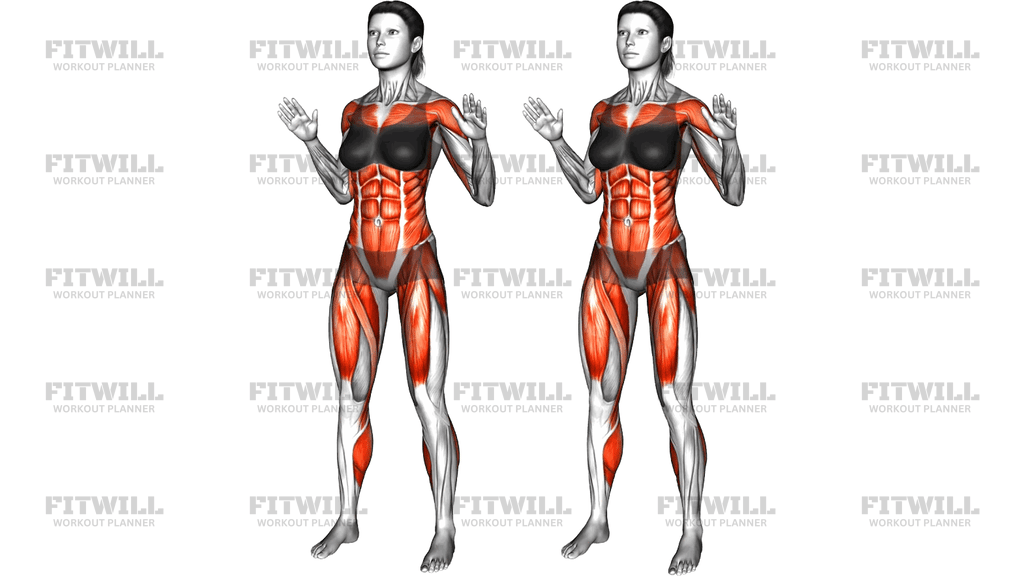
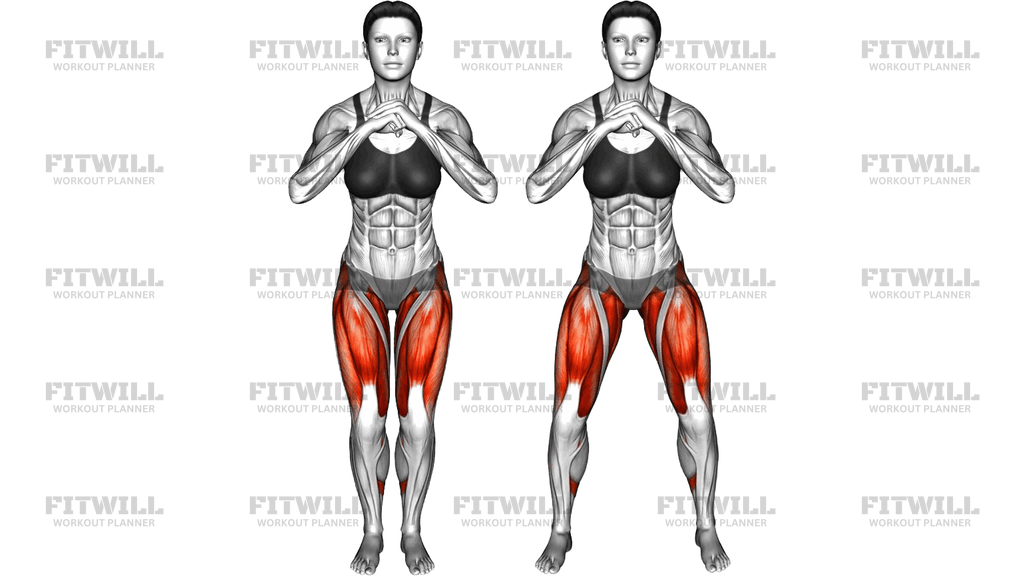
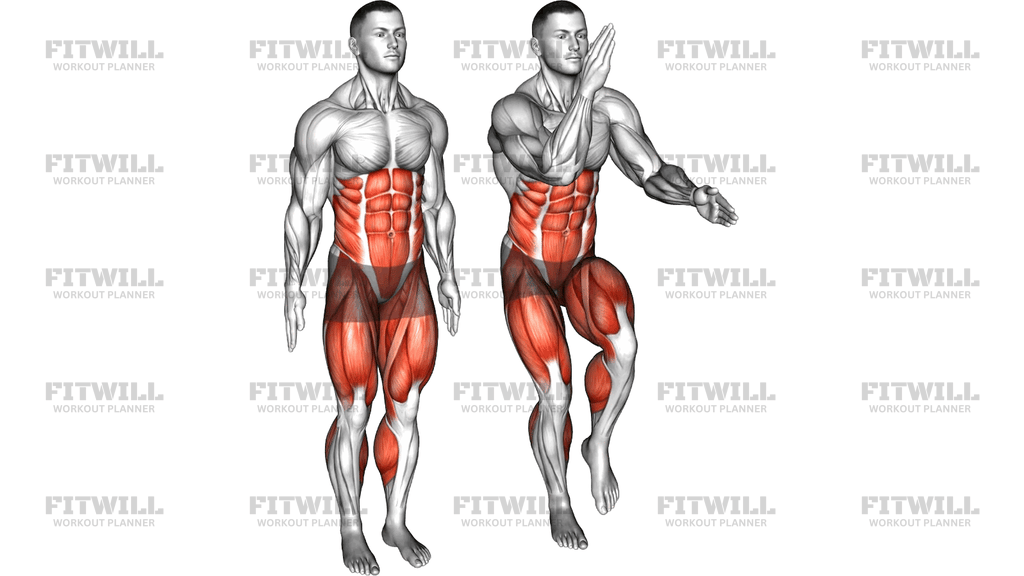
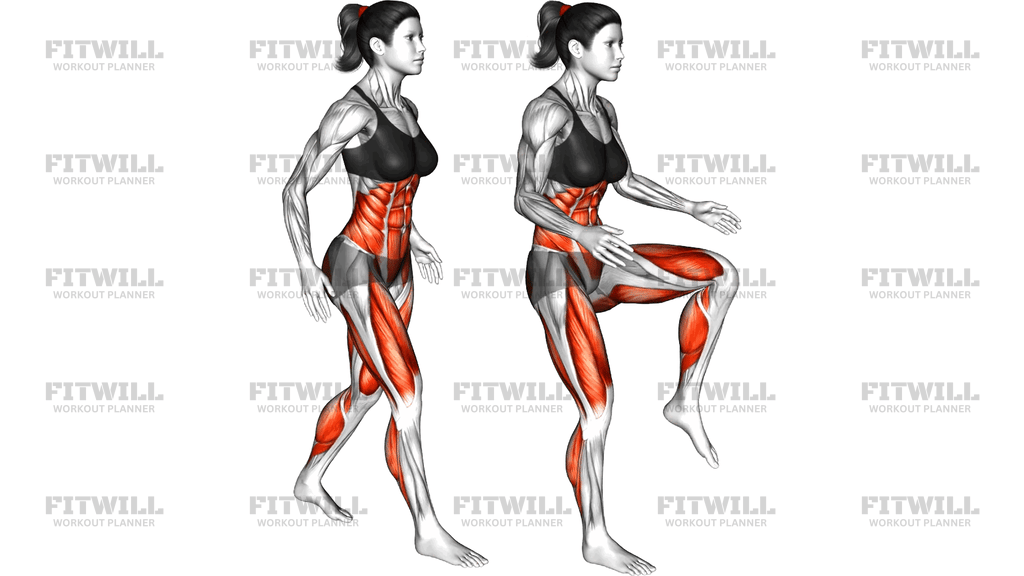
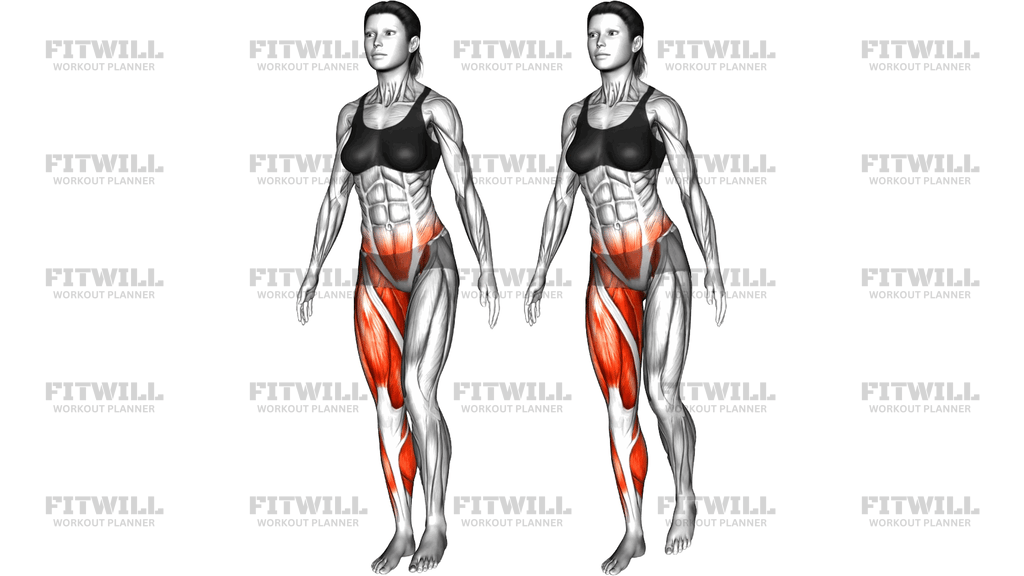
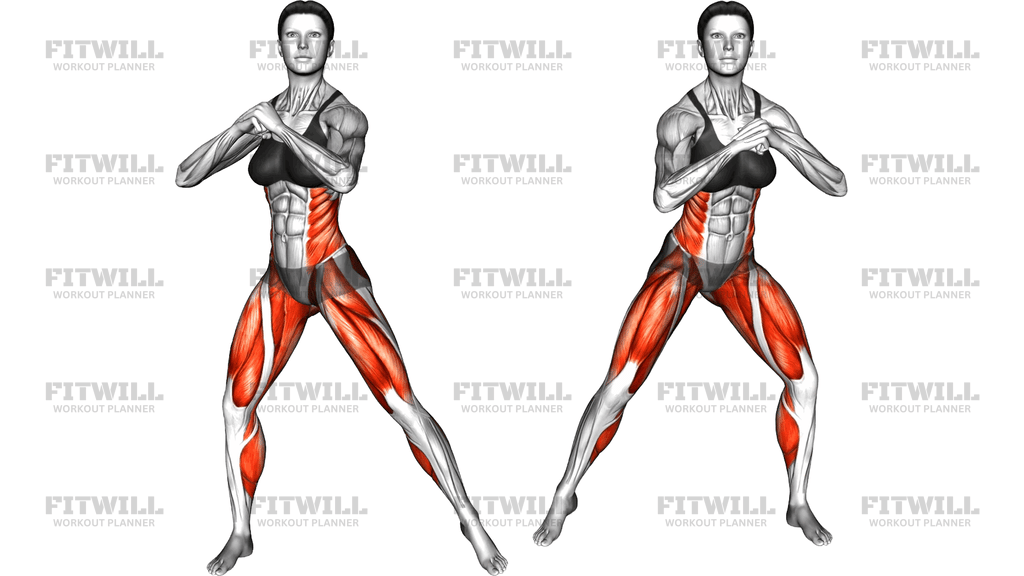
High Low Lunge Split Squat
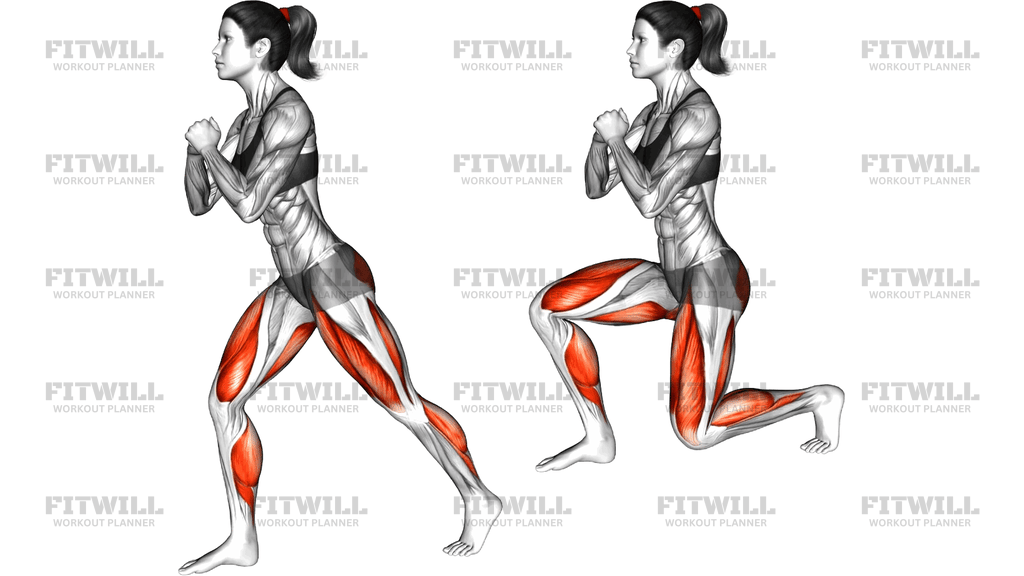
The High Low Lunge Split Squat is a flowing bodyweight lunge variation that moves you between two distinct split-stance positions: a tall high lunge with the back leg long and heel lifted, and a deep low lunge where the back knee lowers toward or touches the floor. Instead of staying locked in one depth, you travel between the two, which challenges the front leg through a longer range and adds a dynamic hip-flexor stretch on the back leg each time you drop low.
This movement is especially useful for people who sit a lot, since the low-lunge position opens the front of the back hip while the front leg works. Runners, cyclists, and lifters who feel tight through the hip flexors often use it as both a strength drill and a mobility-focused lunge. It also suits beginners who find traditional lunges awkward, because the back knee touching down gives a clear bottom position and reduces the balance demand compared with a full floating lunge.
The main work comes from the front leg. The quads control the descent and drive you back up, the glutes extend the hip at the top, and the hamstrings and calves of the front leg stabilize the knee and ankle. The back leg contributes through the hip flexors and quads as you lift the knee back to the high position, and your core stays engaged the entire time to keep your torso upright and your hips square.
Setup matters more than speed here. A stance that is too narrow will make you feel wobbly and pitch forward, while a stance that is too wide reduces how deep the front knee can travel. Aim for roughly hip-width feet in the side-to-side direction, with a long front-to-back split. Keep the torso tall with hands clasped at the chest, which acts as a counterbalance and helps you feel any leaning or twisting.
To execute well, sink straight down from the high lunge until the back knee lightly touches the floor, keeping the front shin close to vertical and the front heel planted. Press through the front foot to rise back to the tall high lunge without shortening the stance. Complete all repetitions on one side before switching, or alternate legs if you prefer a continuous flow.
Common use cases include warm-ups before lower-body training, home workouts with no equipment, and single-leg strength work for people rebuilding confidence after time away from lunging. Move at a pace you can control, and treat the knee touch as a soft contact rather than a drop. If balance is limiting you, hold a wall or the back of a chair with one hand until your stability improves.
[ Workout Log & Planner ]
Put your next workout in Fitwill
Keep your plan and training log ready when you are.


Instructions
- Start in a high lunge: step one foot forward into a long split stance with both feet facing forward and hips squared, back heel lifted and back leg nearly straight.
- Clasp your hands together at chest height and stand tall, stacking your shoulders over your hips and drawing your belly button in slightly to brace your core.
- Shift your weight over the front foot and check that your feet are about hip-width apart side to side for balance.
- Inhale, then bend both knees to lower your hips straight down until your back knee lightly touches or hovers just above the floor.
- Keep your front shin close to vertical and your front heel flat; stop lowering if the front knee starts collapsing inward or traveling far past the toes.
- Pause briefly in the low lunge and feel the stretch across the front of the back hip without arching your lower back.
- Exhale and press through the whole front foot, driving the floor away to rise back up to the tall high lunge without letting the stance narrow.
- Keep the movement smooth and controlled from top to bottom, letting the quads of the front leg lower you rather than dropping quickly.
- Finish all reps on one leg, then step the feet together, shake out the legs, and switch sides.
- Reset your brace and stance each time you switch legs so the new front knee tracks over the middle of its foot.
Tips & Tricks
- The most common mistake is a stance that is too short, which forces the front knee far past the toes and turns the move into a balance test. Step the back foot farther away until you can lower vertically.
- If your hips twist as you drop into the low lunge, imagine both hip bones pointing straight ahead and squeeze the glute of the back leg to square them.
- Let the back knee make soft contact with the floor. Slaming it down defeats the control work of the front leg and can bruise the knee on hard surfaces.
- Hands clasped at the chest do more than look tidy; if you feel yourself leaning forward, press your palms together harder and lift through the crown of your head.
- Keep weight distributed across the whole front foot, not dumped onto the toes. If the front heel lifts as you sink, widen your split slightly.
- Because the back heel stays lifted the entire time, your back calf works isometrically. If it cramps, shorten your sets and stretch the calf between rounds.
- Do not rush the transition between high and low positions. The rising portion is where the front glute does most of its work, so drive up deliberately.
- Place a folded mat or towel under the back knee if you train on wood or tile floors so you can focus on depth instead of protecting the joint.
- If your front knee tracks inward at the bottom, think about spreading the floor with your front foot and keeping the knee lined up over your second and third toes.
Frequently Asked Questions
What muscles does the High Low Lunge Split Squat work?
The front leg's quads and glutes do most of the work as you lower and drive back up. The hip flexors of the back leg get lengthened in the low position and contribute as you rise, with the calves and core stabilizing throughout.
How is the High Low Lunge Split Squat different from a regular lunge?
A regular lunge stays at one depth, while this variation travels between a tall high lunge and a deep low lunge where the back knee touches down. That gives the front leg a longer range and adds a hip-flexor stretch on the back leg each rep.
Is the High Low Lunge Split Squat good for beginners?
Yes. The back knee touching the floor provides a clear bottom position and lowers the balance demand compared with a floating lunge. Beginners can also hold a wall lightly with one hand until stability improves.
Should my back knee actually touch the floor?
A light touch or a hover just above the floor both work. The key is controlling the descent so the contact is soft; if you cannot lower without dropping, reduce the depth and build up gradually.
Why does my front knee travel past my toes?
This usually means your stance is too short or you are leaning your torso forward. Step the back foot farther back and keep your chest tall with hands clasped at your chest to shift the load back toward the front heel and midfoot.
How many reps should I do per side?
Start with 8 to 10 controlled reps per leg for 2 to 3 sets. Because the movement is slower than a standard lunge, quality matters more than volume, especially while you learn the transition.
Can I use the High Low Lunge Split Squat as a warm-up?
Absolutely. Performed without added load and at a moderate tempo, it raises the temperature of the legs while mobilizing the hip flexors, which makes it a useful primer before squats, lunges, or running.
My back calf cramps when the heel stays lifted. What should I do?
That is common because the back calf holds a constant contraction. Shorten your sets, stretch the calf between rounds, and slightly reduce how high the heel is lifted without letting the whole foot flatten.
What can I use instead if lunges bother my knees?
Try reducing the depth so the back knee only hovers, shorten the range of the front knee bend, or substitute a glute bridge or step-up pattern. Stop and reassess your stance and tracking before pushing through knee discomfort.
Should I alternate legs each rep or finish one side first?
Either works. Finishing all reps on one leg lets you focus on the front knee tracking and hip position, while alternating keeps the flow continuous and is convenient in circuit-style workouts.