Lying Alternating Crunch And Twist
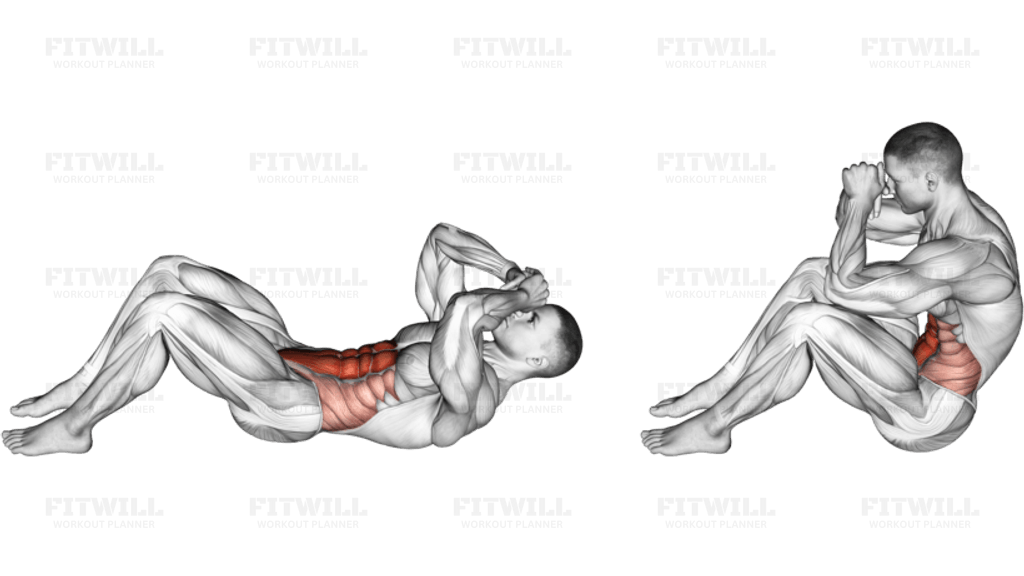
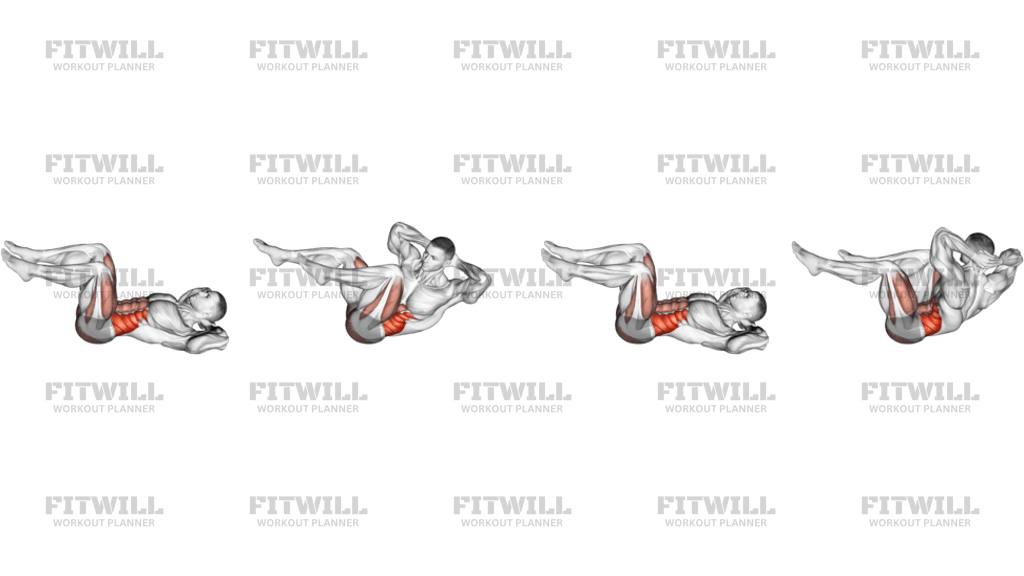
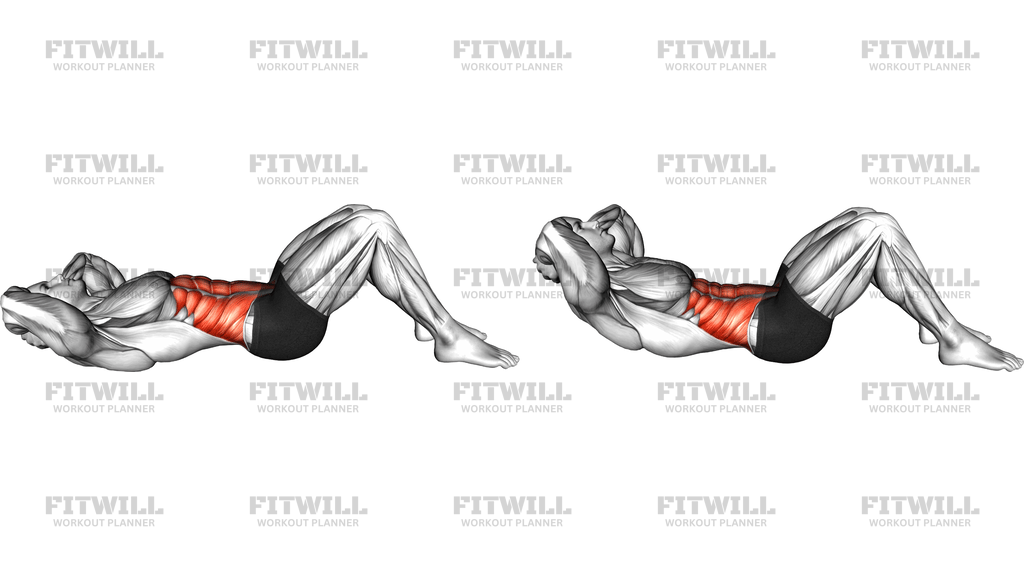
The Lying Alternating Crunch And Twist is a bodyweight core exercise performed on your back with the knees bent and feet flat on the floor, hands lightly placed behind the head. From that position you crunch the upper back and shoulders off the floor while rotating the torso, bringing one elbow toward the opposite knee, then repeat on the other side, alternating rep by rep. The combination of spinal flexion and rotation makes it one of the more complete abdominal floor movements because it challenges the rectus abdominis and the obliques at the same time.
This movement is useful for anyone who wants to train the waist without equipment. It fits well into home workouts, warm-up circuits, and finishers at the end of a lifting session. Because you alternate sides, each repetition also trains the trunk to resist and control rotation on the non-working side, which has practical carryover to throwing, swinging, and changing direction.
The primary muscles worked are the abs, especially the rectus abdominis, which drives the crunch portion. The internal and external obliques handle the twisting component, while the deep core stabilizes the pelvis and lower back against the floor. The hip flexors assist as the torso rises, so keeping the crunch short and deliberate keeps the emphasis where you want it.
Setup matters more than most people think. Lying flat on a mat with the low back gently pressed toward the floor, knees bent to roughly 90 degrees, and feet flat gives the spine a neutral base. The hands should support the head rather than pull it, because yanking the neck forward is the most common fault in this exercise. Feet stay planted throughout, and the hips should not rock side to side as you twist.
To execute well, exhale as you curl up and rotate, aiming the elbow toward the opposite knee rather than trying to touch it. Lift until the shoulder blade leaves the floor, pause briefly, then lower with control before switching sides. The tempo should stay smooth from rep to rep; if you find yourself bouncing off the floor or swinging the elbows, slow down and reduce the range.
As with any repeated flexion and rotation drill, quality of movement comes first. Stop short of fatigue where form breaks down, keep the neck relaxed, and progress by adding reps or a brief pause at the top rather than by rushing the tempo. Anyone with current back or neck discomfort should get clearance from a qualified professional before adding high volumes of this exercise.
[ Workout Log & Planner ]
Put your next workout in Fitwill
Keep your plan and training log ready when you are.


Instructions
- Lie on your back on an exercise mat with knees bent to about 90 degrees and feet flat on the floor, hip-width apart.
- Place your fingertips lightly behind your ears or temples with elbows flared out, and gently draw the low back toward the floor.
- Brace the abdominal muscles as if preparing for a light poke, and keep the feet planted for the entire set.
- Exhale as you curl the upper back off the floor and rotate the torso, driving one elbow toward the opposite knee.
- Lift only until the shoulder blade on the working side clears the mat; the elbow does not need to touch the knee.
- Pause for a beat at the top, feeling the contraction through the abs and the oblique on the twisting side.
- Inhale as you lower slowly back to the starting position, keeping the head and shoulders from slamming down.
- Repeat the crunch and twist to the other side, completing one repetition per side.
- Keep the hips level and avoid letting them rock or lift as you alternate directions.
- Finish the set by lowering fully, releasing the hands from the head, and letting the back settle before standing up.
Tips & Tricks
- Do not interlace the fingers behind the head; cupping the ears lightly stops you from cranking the neck forward as fatigue sets in.
- Think about rotating from the ribs, not swinging the elbow. If the elbow travels while the shoulders stay square, the obliques are not doing the work.
- If the low back arches off the mat at the top, you are crunching too high; shorten the range and keep the tailbone heavy on the floor.
- A common mistake is bouncing off the mat between reps to reset momentum. Let the shoulders lightly touch down and restart each rep from tension.
- Keep the chin about a fist's distance from the chest. Tucking it to the chest or letting the head drop back both strain the neck.
- If the hip flexors dominate and you feel it in the front of the hips, focus on peeling the shoulder blades up first rather than pulling the torso with the legs.
- Slower reps with a one-second pause at the top build more control than fast reps, especially when you are learning the alternating pattern.
- Keep the knees pointing straight up and the feet from sliding outward; wobbling legs steal tension from the core.
- Breathe out on the twist and in on the way down. Holding the breath makes the movement harder to control on the alternating side.
Frequently Asked Questions
Which muscles does the Lying Alternating Crunch And Twist work?
The rectus abdominis drives the crunch, while the internal and external obliques produce the twist. The deep core and hip flexors assist with stability and lifting the torso.
Is the Lying Alternating Crunch And Twist suitable for beginners?
Yes, it is bodyweight and easy to scale. Beginners can reduce the range by lifting only partway or perform the crunch and twist to one side at a time until the alternating rhythm feels natural.
Should my elbow touch the opposite knee during the Lying Alternating Crunch And Twist?
No, the elbow-to-knee contact is not required. Chasing it usually causes shoulder hunching and neck pulling; aim the elbow toward the knee and stop when the twist stops coming from the ribs.
Why does my neck hurt when I do the Lying Alternating Crunch And Twist?
This usually means the hands are pulling the head forward. Rest the fingertips behind the temples, keep the chin neutral, and let the abs, not the arms, lift the torso.
How is the Lying Alternating Crunch And Twist different from a regular crunch?
A regular crunch trains pure spinal flexion, while this version adds rotation each rep, placing more demand on the obliques along the sides of the waist.
Can I make the Lying Alternating Crunch And Twist harder without adding weight?
Add a two-second pause at the top of each twist, slow the lowering phase to three seconds, or increase reps. You can also hold a light medicine ball at the chest once the bodyweight version feels easy.
Should my feet stay on the floor during the Lying Alternating Crunch And Twist?
Yes, keep both feet flat and planted throughout. Lifting or sliding the feet lets the hips rock and reduces the rotational control the exercise is meant to train.
How many reps of the Lying Alternating Crunch And Twist should I do?
Start with 10 to 16 total alternating reps for two or three sets, stopping when your form or tempo slips. Add reps gradually as control improves.
What can I substitute if lying crunches bother my back?
A standing or kneeling cable woodchop trains similar rotation with less spinal flexion, and a dead bug or plank variation builds core stability without repeated rounding of the spine. Stop any variation that causes discomfort and consult a professional if pain persists.