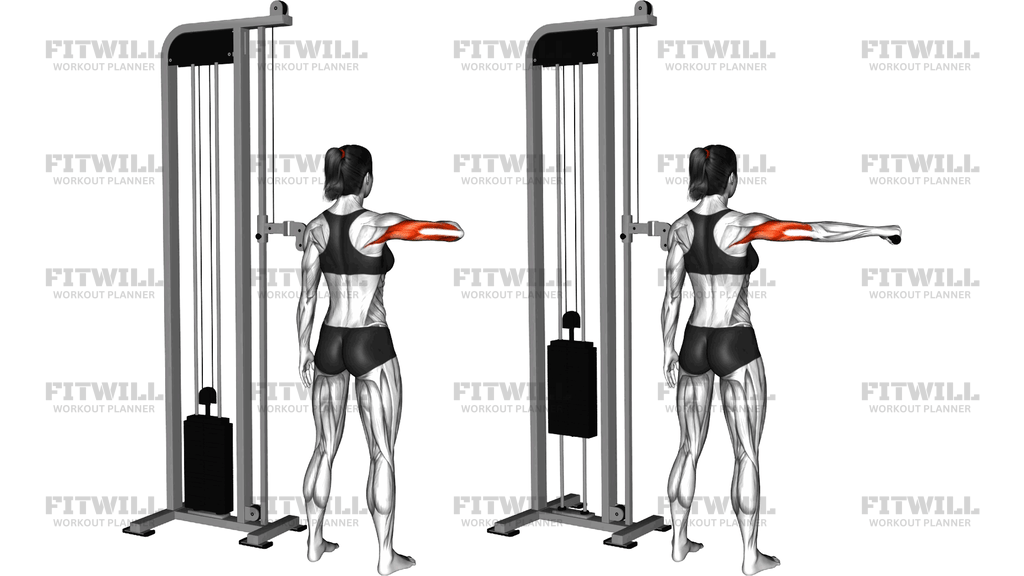
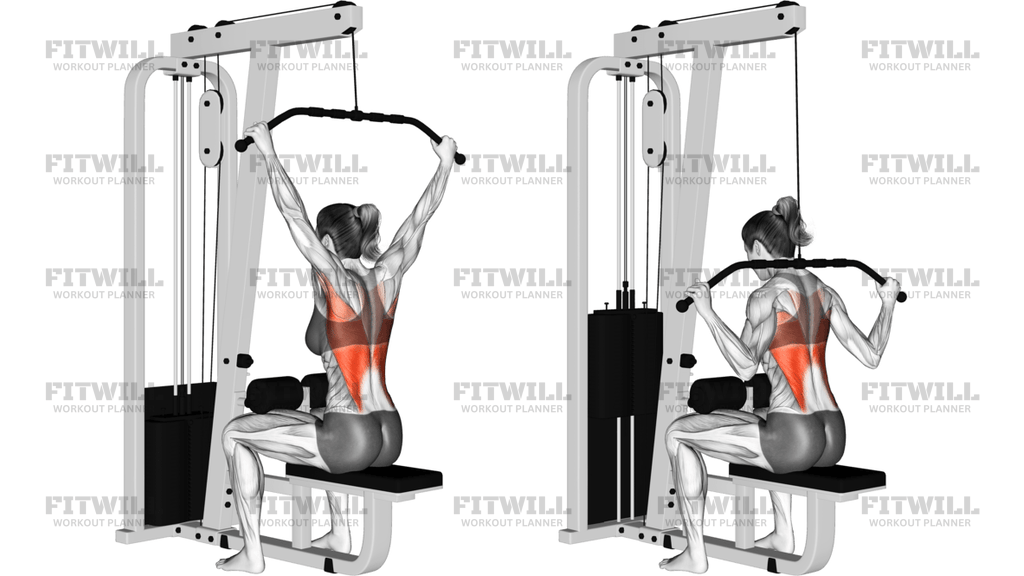
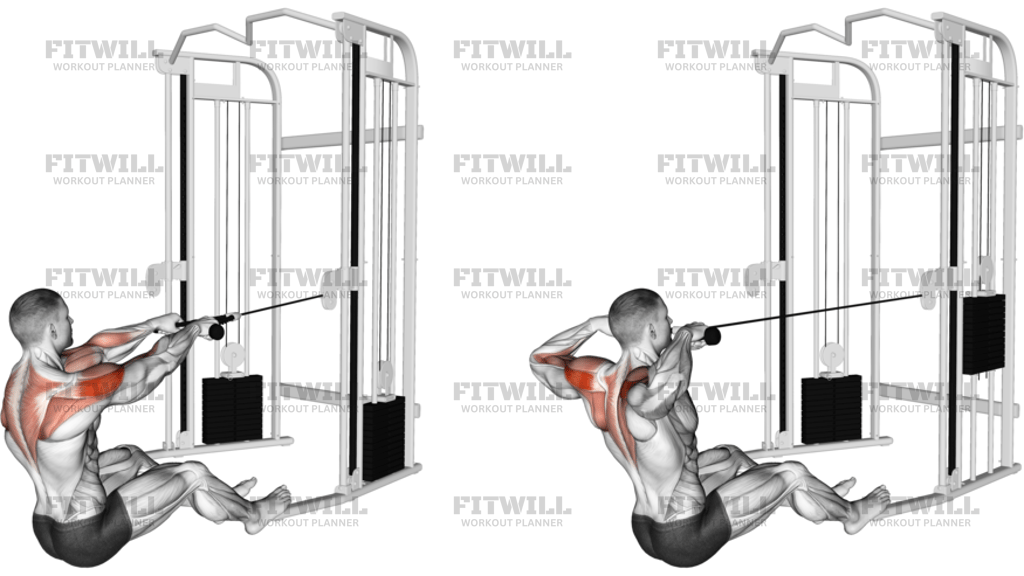
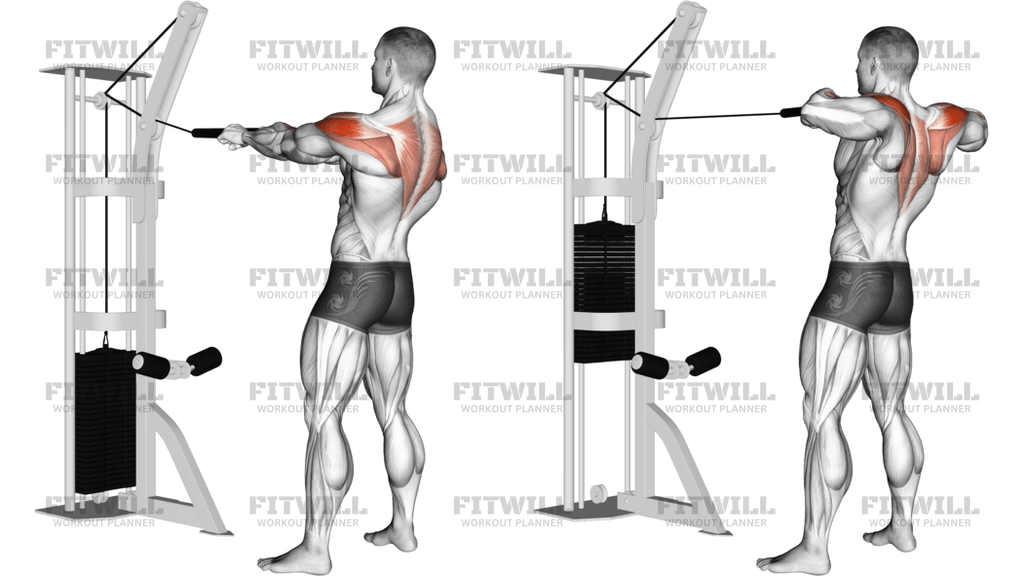
Cable Seated Reverse Fly
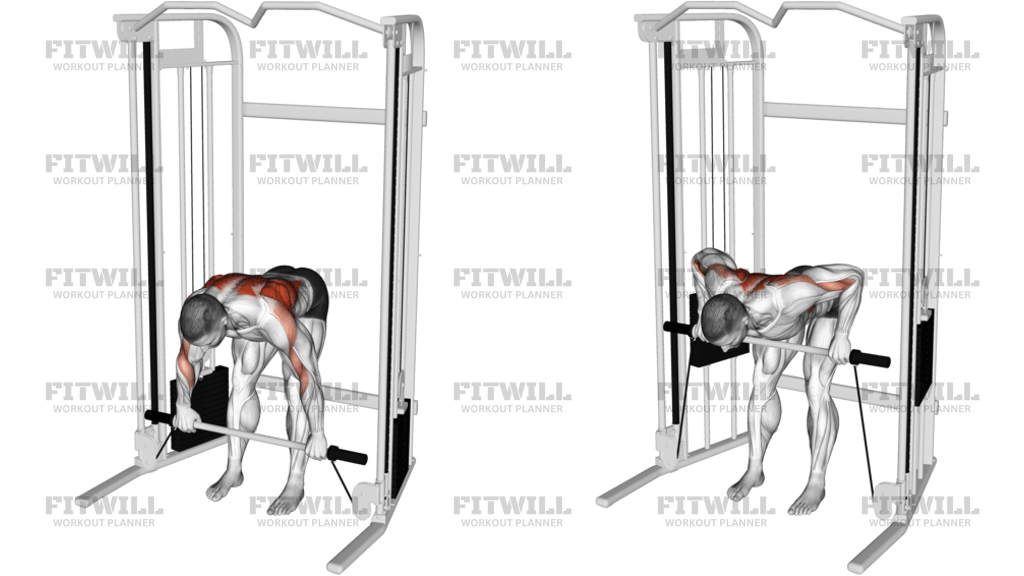
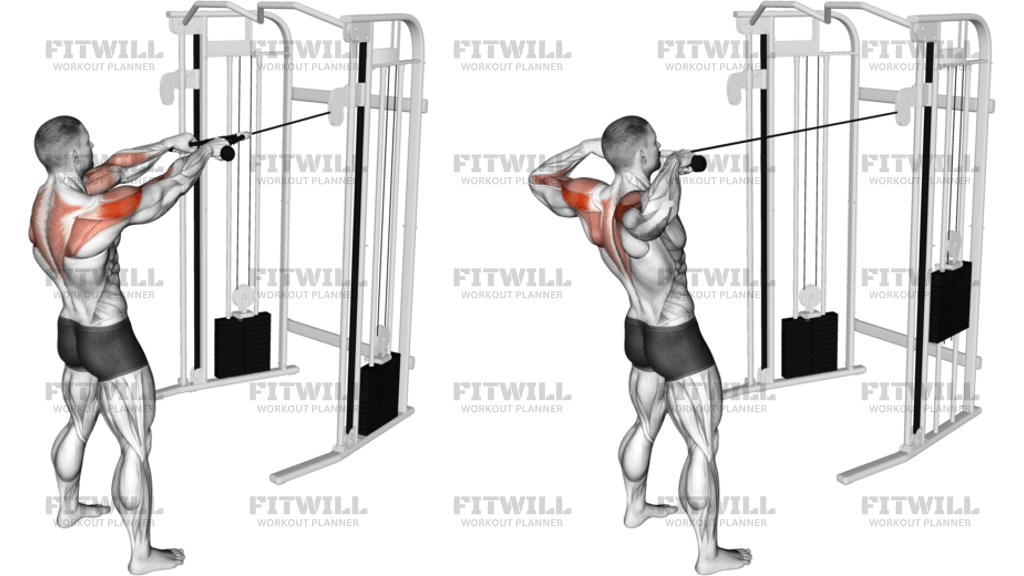
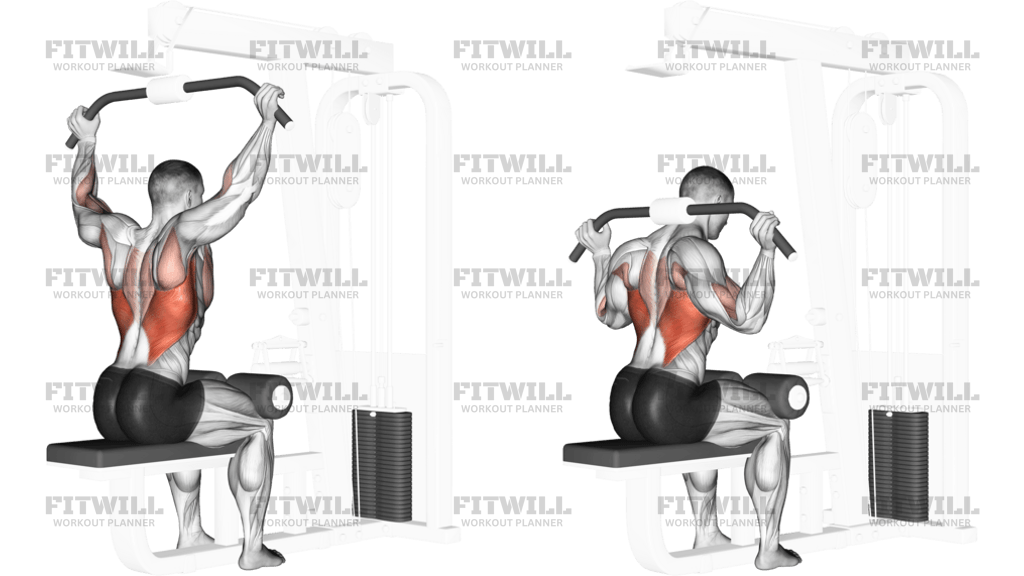
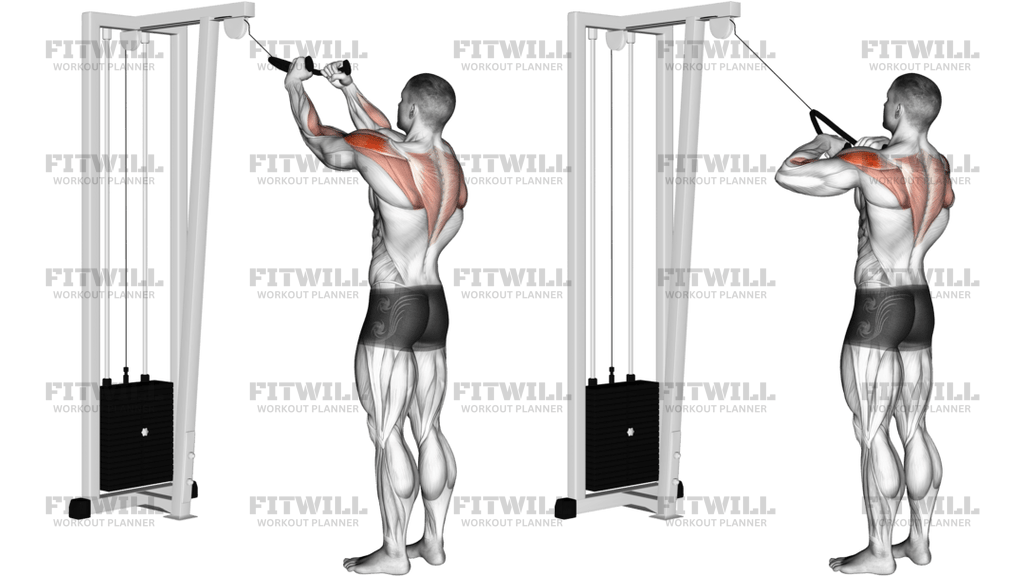
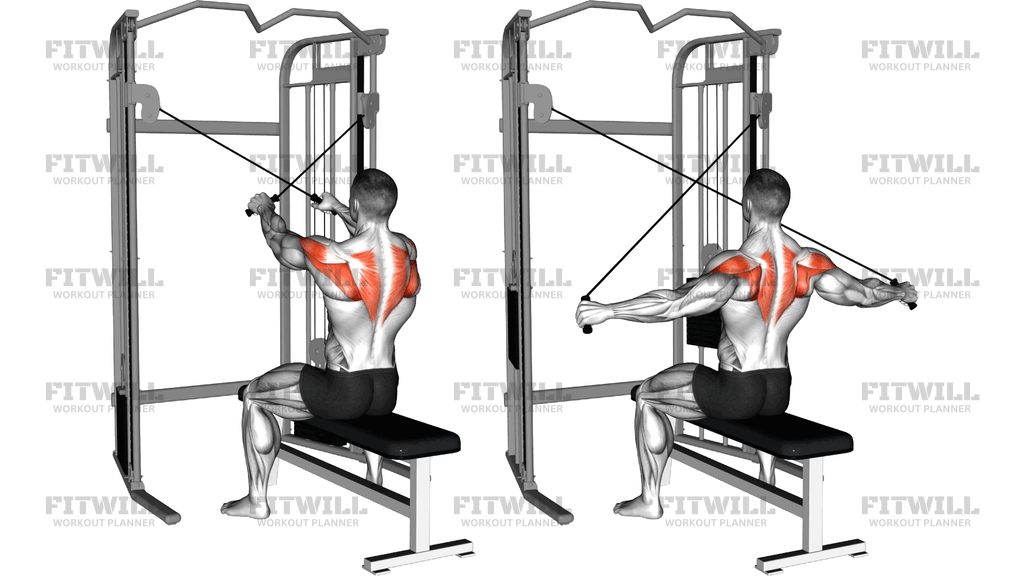
The Cable Seated Reverse Fly is a rear-delt isolation exercise performed on a dual-pulley cable machine. You sit on a flat bench facing the pulleys, reach up to grab the opposing handles so the cables cross in front of you, and sweep your arms out and back until they line up with your shoulders. The constant cable tension from start to finish is what separates this version from the dumbbell reverse fly, where resistance fades at the top of the movement.
This lift primarily targets the posterior deltoids, with the rhomboids and mid-traps working to pull the shoulder blades together at the end of each rep. Because you are seated with your torso upright and unsupported by momentum, the rear delts have to do the work on their own. That makes it a clean, focused option for a muscle that most pressing-heavy programs neglect.
Lifters who bench, press, or do a lot of push-up volume benefit the most from this movement. Balancing all that horizontal pressing with direct rear-delt work supports better shoulder positioning and posture, and it rounds out the three-dimensional look of the shoulders from behind. Powerlifters and desk workers alike tend to find it valuable for exactly the same reason.
Setup matters here because the cable height and your seating distance determine the resistance curve. The pulleys should be at or slightly above shoulder height, and you should be far enough from the machine that the cables already have light tension when your arms are extended forward. Sit too close and the cables slacken; sit too far and the start position pulls you forward out of posture.
Execution is about a wide, controlled arc rather than a pull. Lead with the elbows slightly bent, sweep the hands out to the sides, and finish by squeezing the shoulder blades together without shrugging. The weight should stay modest enough that you can pause briefly at the widest point of each rep. If your torso starts rocking backward or your arms drift upward past shoulder height, the load is too heavy for the rear delts to handle honestly.
Expect to use far less weight here than on rows or presses. Rear-delt isolation responds well to moderate loads, higher reps, and strict form, so treat this as a precision exercise placed at the end of a shoulder or upper-back session rather than a strength main lift.
[ Workout Log & Planner ]
Put your next workout in Fitwill
Keep your plan and training log ready when you are.


Instructions
- Set both pulleys of the cable machine to the top or upper-side position and attach a single handle to each.
- Place a flat bench facing the machine, roughly two to three feet away, so the cables already carry slight tension when your arms reach forward.
- Sit down with feet flat on the floor, then reach up and grab the handle on the opposite side with each hand so the cables cross in front of your chest.
- Sit tall with a neutral spine, brace your core lightly, and extend your arms forward at shoulder height with a small bend in the elbows.
- Exhale and sweep both arms out to the sides in a wide arc, leading with the elbows and keeping them locked at that slight bend.
- Continue until your arms are in line with your shoulders or slightly behind, then squeeze your shoulder blades together for a brief pause.
- Inhale and slowly let your arms travel back along the same path until your hands meet in front of you with the cables still under tension.
- Keep your torso still throughout; do not lean backward or shrug your shoulders toward your ears as you pull.
- Complete all reps on one set, then carefully release one handle at a time, letting the cable return under control rather than letting it snap back.
Tips & Tricks
- Grabbing the opposite-side handles creates the crossed-cable setup that keeps tension pulling forward and slightly down, which matches the rear delts' line of pull better than same-side handles.
- If your upper traps take over, lower the weight and think about pulling your elbows apart instead of pulling your hands back.
- Set the bench distance before you pick up the handles. If your shoulders get yanked forward when you grab the cables, you are sitting too close to the machine.
- Keep the arc at shoulder height. Letting the hands drift up toward head level turns the movement into a different pattern and stresses the upper traps.
- A one-second pause at the widest point does more for rear-delt development than adding another plate; the muscle works hardest right at that end range.
- Do not straighten your elbows to make the rep longer. The slight fixed bend protects the elbow joint and keeps tension on the rear delts.
- If your torso rocks backward on each rep, drop the weight by a noticeable amount. Momentum from the trunk steals almost all the work from the target muscle.
- Use a lighter starting weight than feels reasonable. Rear delts are small, and this crossed-cable position gives you no mechanical advantage to cheat with.
- On your last set, release one handle fully before the other so the returning cable does not drag your arm sideways unexpectedly.
Frequently Asked Questions
Which muscles does the Cable Seated Reverse Fly work?
The posterior deltoids are the primary movers, with the rhomboids and mid-trapezius assisting as the shoulder blades pull together. Grip and supporting shoulder stabilizers work lightly to hold the handles.
Why grab the opposite handles instead of same-side handles in the Cable Seated Reverse Fly?
The crossed grip makes each cable pull across your body from the far pulley, which keeps steady tension on the rear delts through the whole arc. Same-side handles pull from behind your shoulders and slacken the resistance at the start.
Is the Cable Seated Reverse Fly good for beginners?
Yes, as long as the weight is kept light. The seated position and fixed cable path make it easier to learn the rear-delt fly pattern than a free-weight version, where balance and momentum can mask form errors.
How high should the pulleys be set?
Set them at or slightly above shoulder height when you are seated. This keeps the resistance pulling forward along a line that matches a rear-delt fly rather than a high pull.
Why is my weight so low compared to my cable rows?
This is a single-joint isolation move for a small muscle, and the crossed cables offer no leverage advantage. Heavy rows and strict rear-delt flies use completely different loads, so judge progress against your own previous sessions.
How far should I sit from the cable machine?
Sit far enough back that the cables already have light tension with your arms extended in front of you. If the cables go slack at the start of the rep, move the bench back; if they yank you forward, move closer.
Can I do the Cable Seated Reverse Fly if I don't have a dual-pulley machine?
You can substitute a single-cable version with a rope or handle by sitting side-on and sweeping across your body, or use a bent-over dumbbell reverse fly. The cable version is preferable when available because the tension stays constant.
Should my elbows be bent or straight?
Keep a small, fixed bend of roughly 10 to 20 degrees. Fully straight arms strain the elbow joint and let the cables pull on the joint rather than the shoulder, while more bend shortens the lever and makes the rep easier to cheat.
How many reps should I do?
Sets of 10 to 15 controlled reps work well for most lifters, with a brief pause at the widest point. Because the rear delts respond to time under tension, strict moderate loads beat heavy, rushed reps.
Is it safe if my shoulders click or feel pinched during the movement?
Mild, pain-free clicking is common and usually harmless, but sharp pain or pinching is a signal to stop. Reduce the range so your arms stop in line with your shoulders, lower the weight, and consult a qualified professional if the discomfort persists.