Dumbbell Alternating Rear Lateral Raise (Support H)
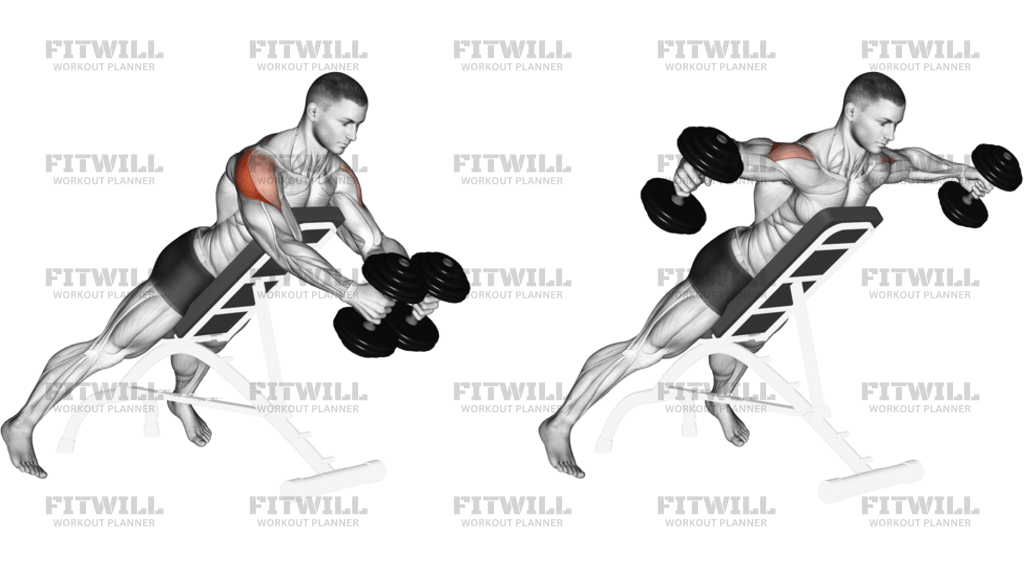
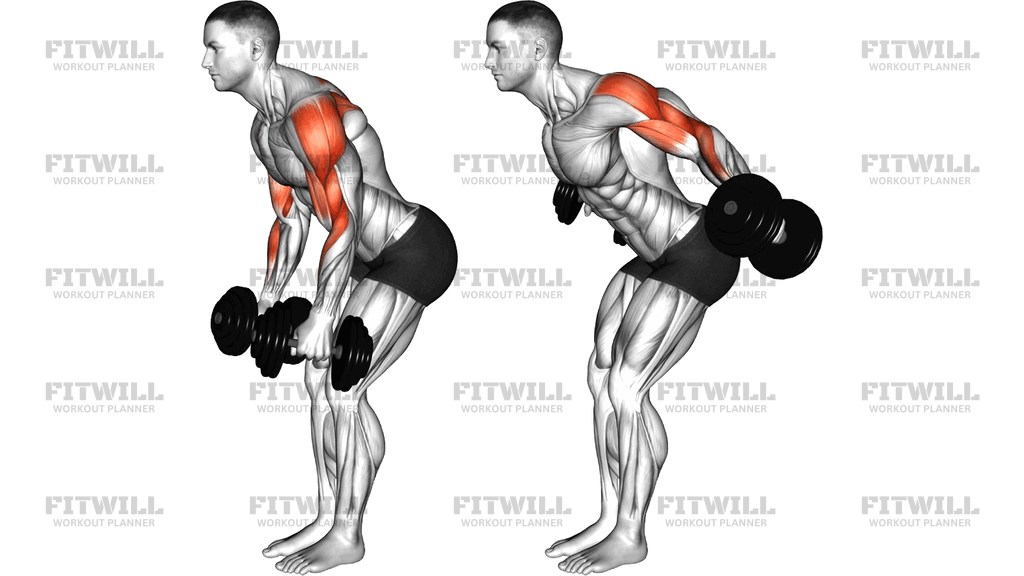
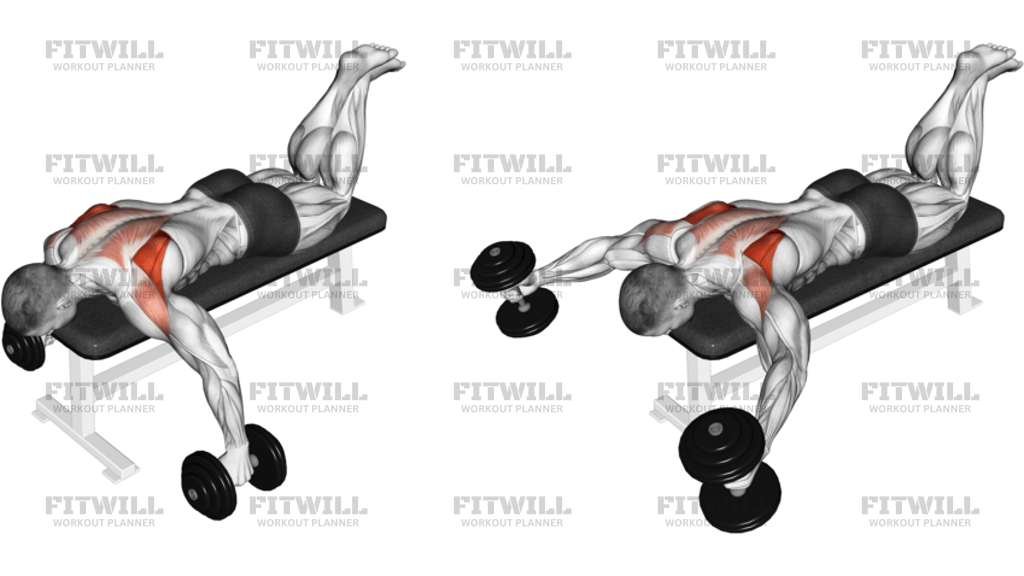
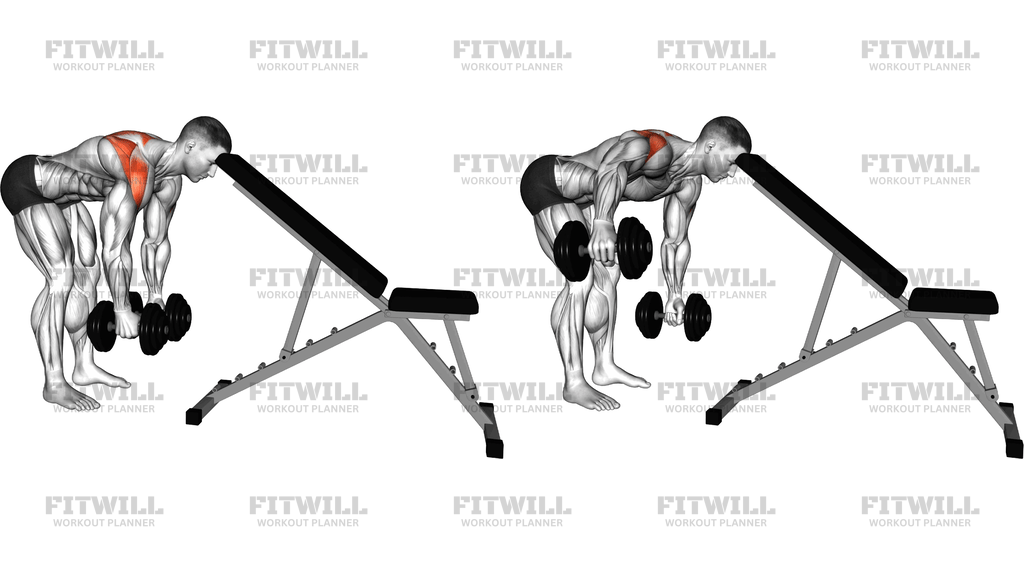
The Dumbbell Alternating Rear Lateral Raise (Support H) is a bent-over rear delt isolation movement performed with your head braced against the top pad of an incline bench. You stand hinged forward with a dumbbell in each hand, let your arms hang straight down, and raise one arm out to the side at a time while the other stays down. The head support is the defining feature: it locks your neck and torso in place so you cannot bounce, swing, or hide behind body English when the set gets hard.
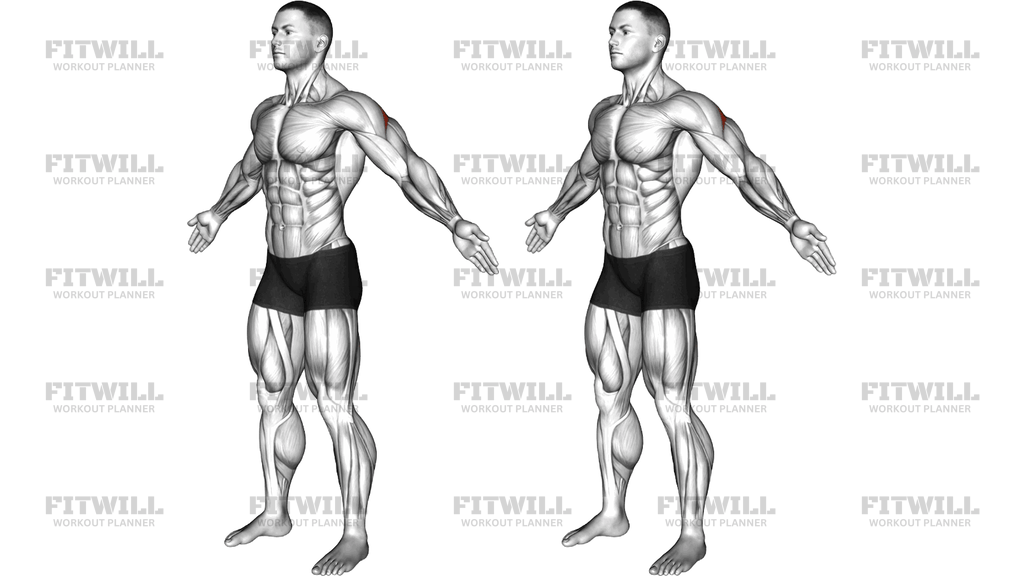
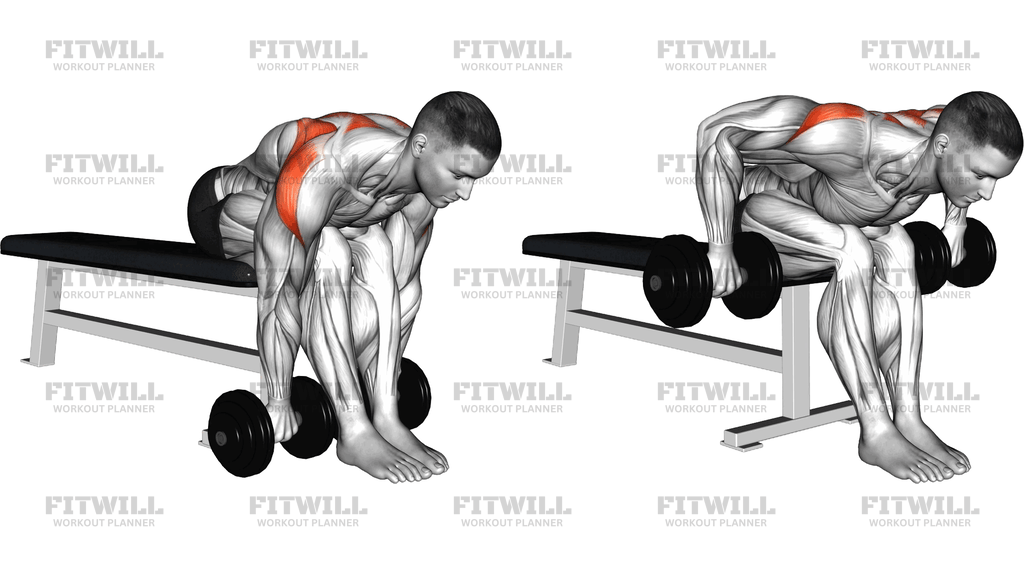
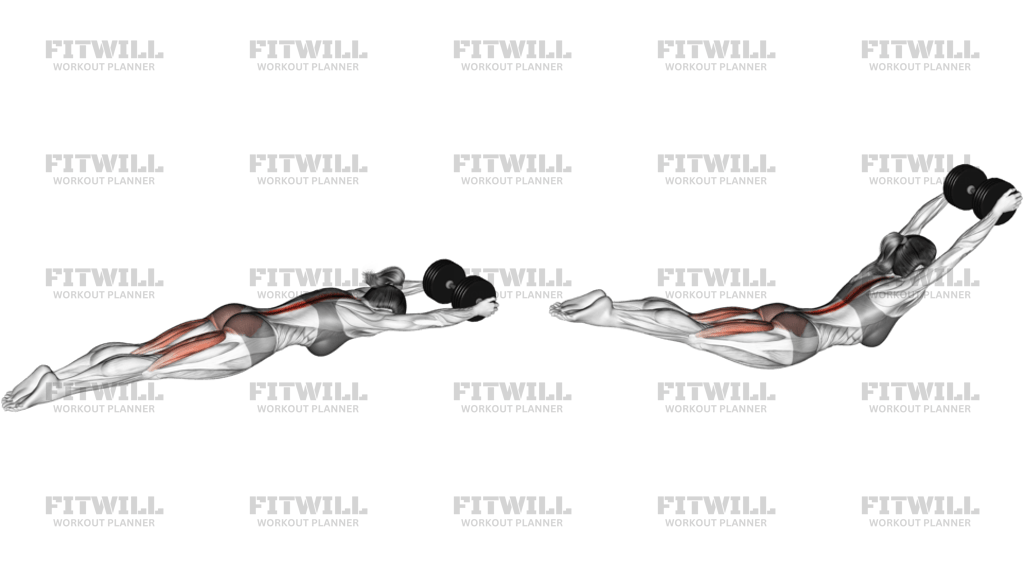
This exercise targets the posterior deltoid, the rear portion of the shoulder that sits on the back of the joint. The middle trapezius, rhomboids, and small rotator cuff muscles assist as the shoulder blade stabilizes and retracts slightly at the top of each rep. Because you work one side at a time, you also get a built-in feedback loop — if one rear delt is noticeably weaker or smaller than the other, alternating reps give it the same workload without the stronger side taking over.
The setup matters more here than in a standard bent-over raise. Resting your head against the incline bench removes momentum from the equation and takes strain off the lower back, since the bench gives your upper body a fixed reference point. Set the bench to a fairly steep angle, around 45 degrees or a bit higher, and stand close enough that your forehead or the top of your head can rest on the pad while your hips hinge back and your torso angles down toward the floor.
To perform it well, keep the raise an arm movement, not a torso movement. Lead with the elbow, lift the dumbbell out to the side until your upper arm is roughly parallel to the floor or just shy of it, and pause briefly before lowering under control. The dumbbell should travel in a wide arc away from your body, not up along your side like a row. Grip the handle loosely; squeezing the dumbbell hard tends to recruit the forearms and biceps and steals tension from the rear delt.
This movement fits well as an accessory lift after presses or rows, typically for 2-4 sets of 10-15 reps per side with a light to moderate weight. It is especially useful for lifters whose rear delts lag behind their front and side delts, people who spend long hours sitting with rounded shoulders, and anyone who finds free-standing bent-over raises turns into a lower-back endurance test. Start lighter than you think you need — rear delts respond to strict tempo, not heavy loads.
[ Workout Log & Planner ]
Put your next workout in Fitwill
Keep your plan and training log ready when you are.


Instructions
- Set an adjustable bench to a steep incline, roughly 45 to 60 degrees, so the top of the pad sits at about head height when you are standing and hinged forward.
- Stand facing the top of the bench with your feet about hip-width apart, and hold a dumbbell in each hand with a neutral, palms-facing-in grip.
- Hinge forward at the hips until your torso angles down toward the floor, then rest your forehead or the top of your head firmly against the upper pad so your neck and torso are fixed.
- Let both arms hang straight down toward the floor with a soft bend in the elbows, shoulders pulled back and down away from your ears.
- Brace your core and keep your weight spread evenly through your feet before starting the first rep.
- Raise the left dumbbell out to the side in a wide arc, leading with the elbow, until your upper arm is about parallel to the floor.
- Pause for a beat at the top with the rear shoulder fully contracted, then lower the dumbbell slowly back to the hanging start.
- Complete the rep on the right arm the same way, keeping the resting arm still and tension-free rather than swinging it.
- Exhale as you raise the dumbbell, inhale as you lower it, and keep the breathing rhythm steady throughout the set.
- Finish all reps on the set, then stand up carefully by driving through the hips, keeping your back flat as you rise.
Tips & Tricks
- Choose a weight you can lift for at least 10 strict reps — rear delts are small, and anything heavy enough to make you thrust your hips will turn this into a row.
- If your head keeps sliding off the pad, you are standing too far away; step closer to the bench so the contact point stays solid through every rep.
- Watch for the elbow drifting behind the torso — the raise should happen in the shoulder joint out to the side, not as a pull backward.
- Keep a small bend in the elbow and hold it constant; straightening the arm at the bottom and bending it at the top turns the raise into a partial biceps movement.
- Do not let the shoulder blade shrug up as the arm lifts; think of pressing the shoulder down before you start each rep to keep the work on the delt.
- If your lower back fatigues before your shoulders, hinge slightly deeper and shift your hips further back so more load sits in the posterior chain and less hangs on the spine.
- Slowing the lowering phase to two or three seconds usually fixes the most common problem on this lift: bouncing the dumbbell off the stretch at the bottom.
- Alternate left-right-left rather than doing all reps on one side first if balance between sides is your goal, and match your weaker side's rep count.
Frequently Asked Questions
What muscles does the Dumbbell Alternating Rear Lateral Raise (Support H) work?
The primary muscle is the posterior deltoid at the back of the shoulder. The middle traps, rhomboids, and rotator cuff muscles assist as the arm raises and the shoulder blade holds its position.
Why does the head rest against the bench during this exercise?
The head support pins your neck and torso so you cannot use body English or momentum to swing the dumbbell up. It also gives your upper body a stable reference point, which reduces strain on the lower back compared to a free-standing bent-over raise.
What bench angle should I use for the Dumbbell Alternating Rear Lateral Raise (Support H)?
Set the bench to roughly 45 to 60 degrees so the top pad meets your head comfortably while you are standing and hinged forward. If the angle feels too shallow and forces your neck to crank up, steepen it slightly.
Is this exercise suitable for beginners?
Yes, provided you start with very light dumbbells and focus on the arc of the raise rather than the weight. Beginners often benefit from doing it first in a shoulder session while they are fresh and can feel the rear delt working.
How heavy should the dumbbells be?
Light enough that you can raise each arm in a smooth, wide arc without your torso twisting or your hips pushing forward. Most lifters use far less weight here than on rows or presses — often the same pair they would use for strict side laterals.
What is the most common mistake with this lift?
Turning the raise into a row by pulling the dumbbell up along the body and behind the torso instead of lifting it out to the side. Leading with the elbow and imagining the arm sweeping in a wide arc fixes this.
Can I do both arms at the same time instead of alternating?
You can, but alternating reps let you focus fully on each side and prevent the stronger arm from setting the pace. If you switch to simultaneous raises, expect the set to feel harder and reduce the weight slightly.
What can I use if I don't have an adjustable bench?
A standard Dumbbell Rear Lateral Raise bent over without head support works the same muscles. You can also sit backward-straddled on a flat bench and fold your chest onto the pad, or perform cable rear delt raises to keep tension on the delts.
How many sets and reps should I do?
Two to four sets of 10-15 reps per arm is a practical range, taken to within a couple reps of failure. Because the rear delt recovers quickly, strict tempo and a short pause at the top matter more than adding load.
My neck feels tense during the set — what should I change?
Check that your head is resting on the pad rather than pressing into it, and make sure you are not shrugging the working shoulder toward your ear. Soften the contact with the bench and consciously keep the shoulder down before each rep.