Cable Lying Incline Single Leg Kickback
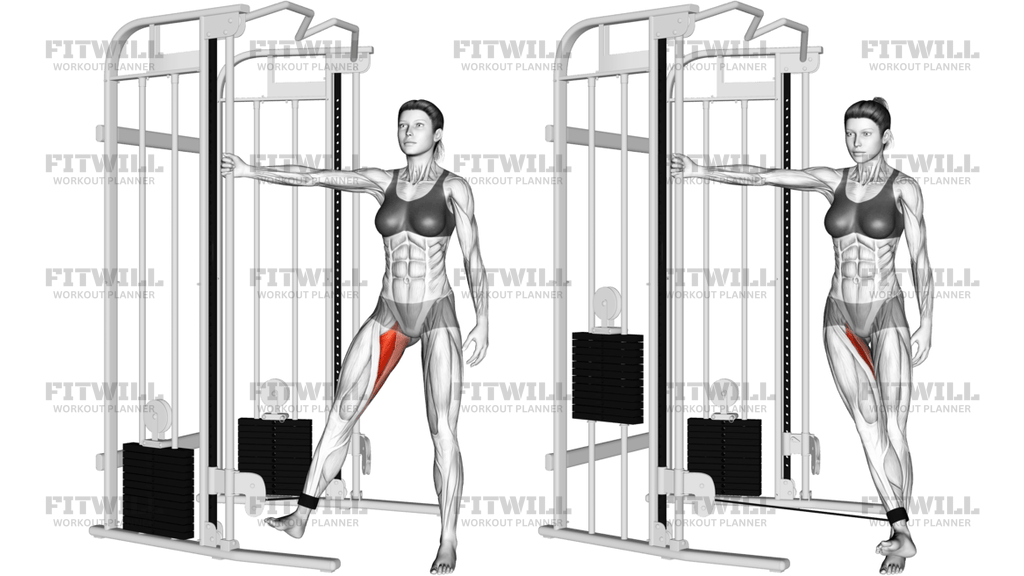
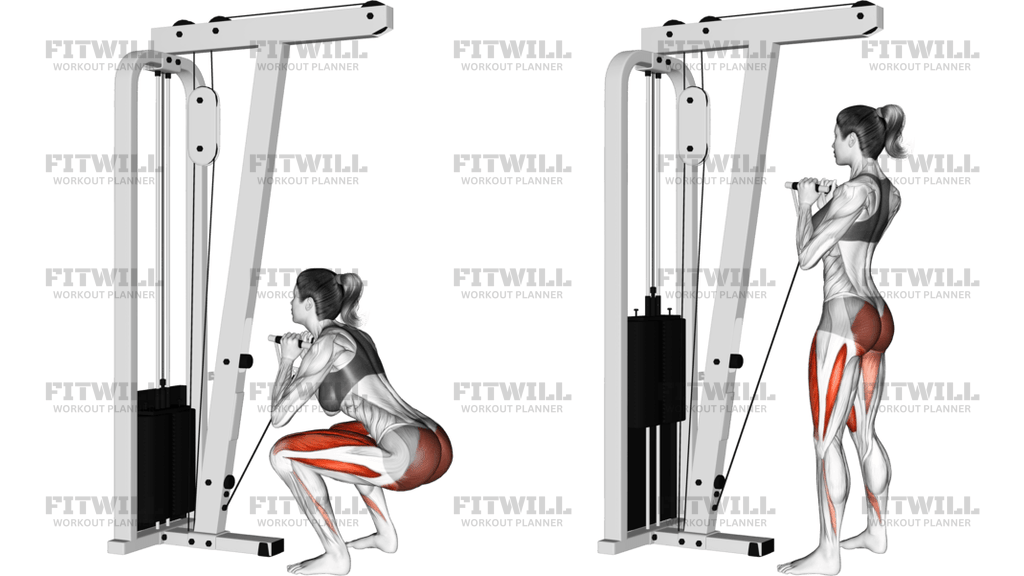
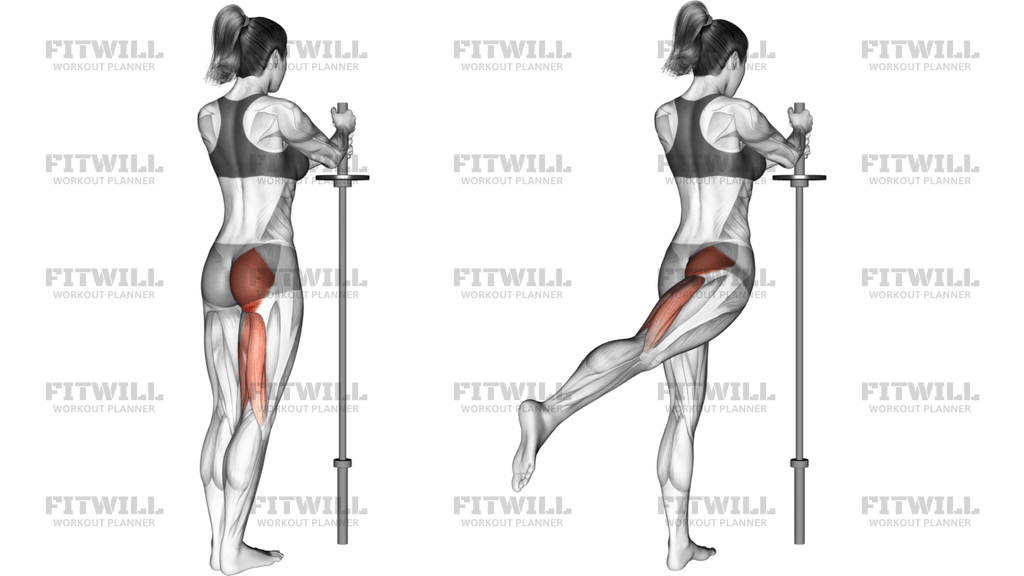
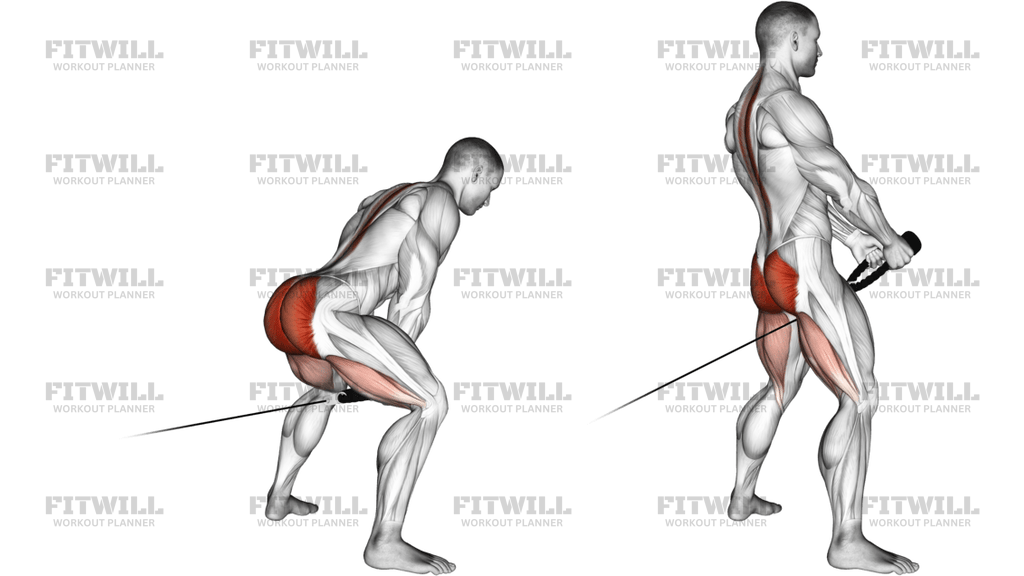
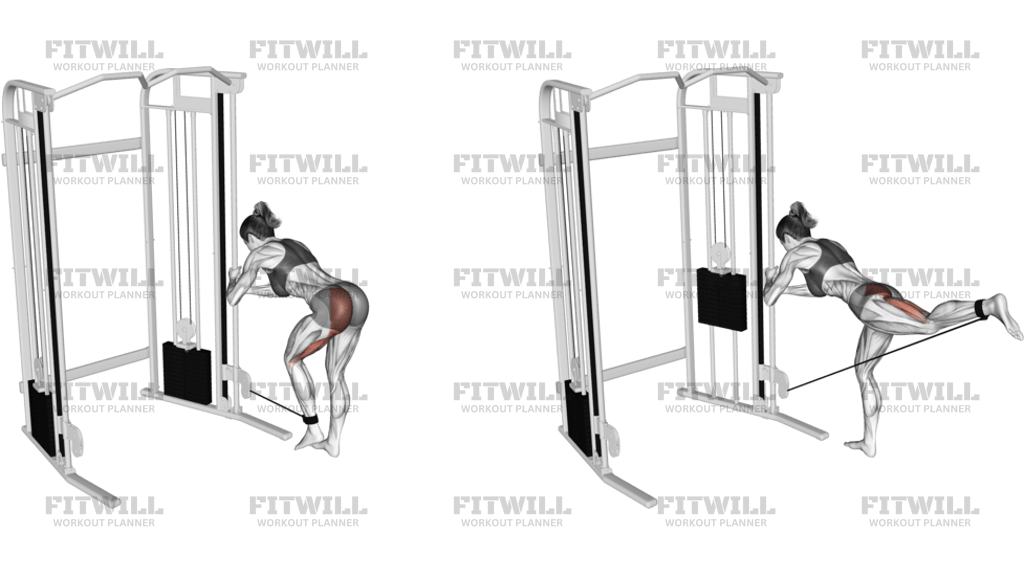
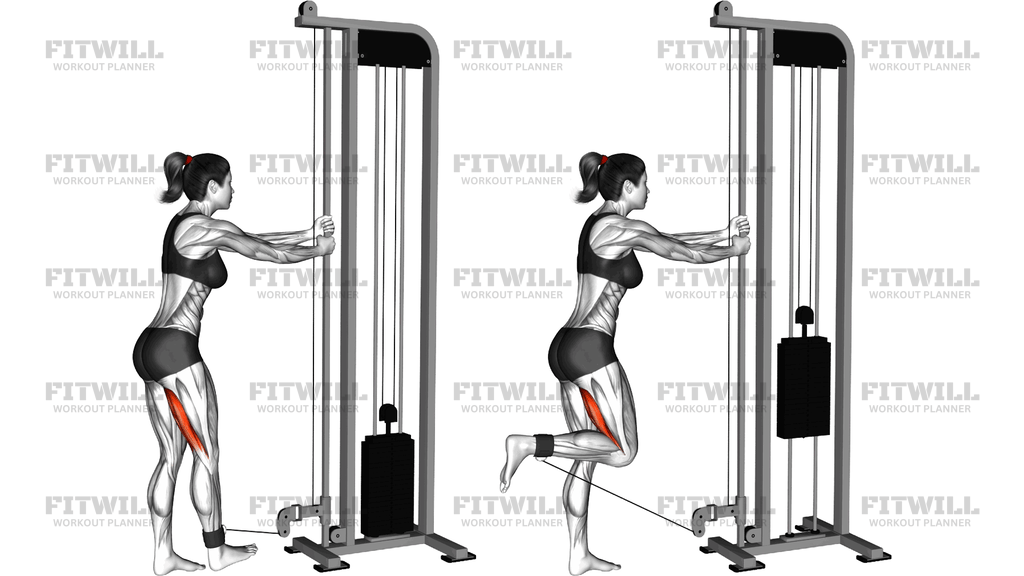
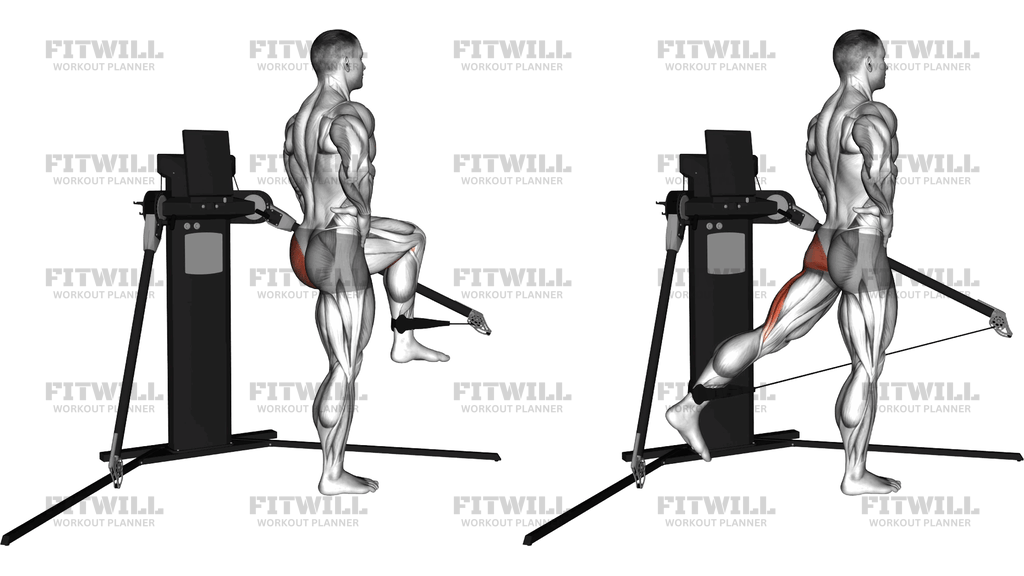
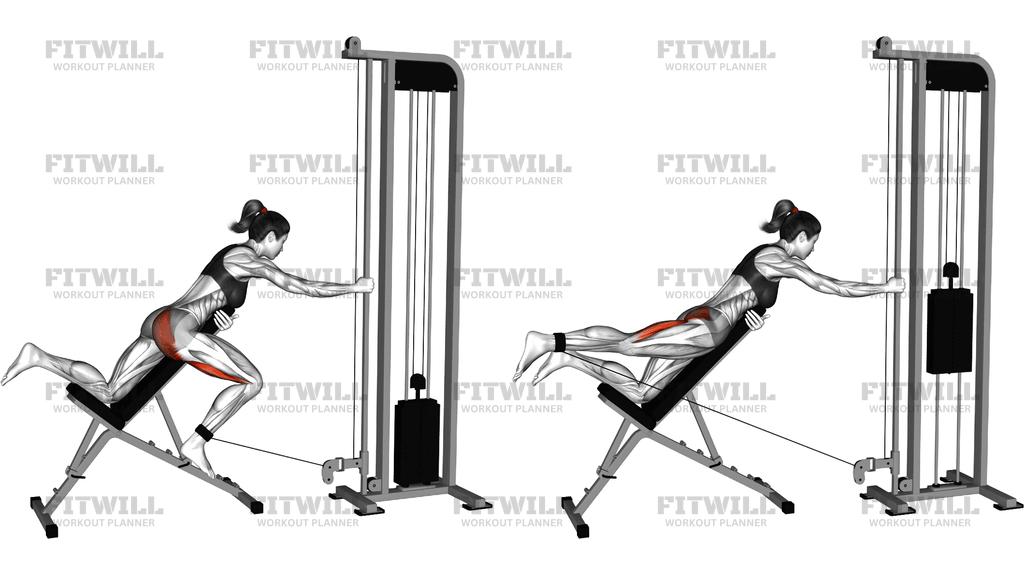
The Cable Lying Incline Single Leg Kickback is a unilateral hip extension exercise performed face down on an incline bench positioned in front of a low cable pulley. An ankle strap is fastened to the working leg and connected to the low attachment, so the cable pulls the leg backward toward the machine. From there, you drive the leg back and up against that resistance, extending through the hip before lowering it back under control. The red-highlighted areas in the movement are the glutes and hamstrings, which do nearly all of the work.
This setup is especially useful when you want to isolate one side at a time. Because you are lying supported on the bench, there is no balance or trunk-stabilization demand the way there is in a standing cable kickback, so the working hip gets a cleaner stimulus. The incline angle also places the hip in a slightly lengthened position at the start, which many people find gives a stronger glute contraction at the top of each rep than floor-based variations.
The primary muscles are the gluteus maximus of the working leg, with the hamstrings assisting strongly as the hip extends. The other leg anchors you on the bench, and your arms and upper back work isometrically to hold your position against the steady pull of the cable. Because the resistance comes from a cable stack, the tension stays constant throughout the range rather than dropping off the way it can with bands or bodyweight kickbacks.
Setup matters more than it might seem. The bench needs to be close enough to the pulley that the cable runs roughly in line with your leg, and the strap should sit snugly around the ankle, not the calf. If the anchor point or bench distance is off, the resistance vector changes and you end up fighting the cable instead of training the hip. Take a minute to dial this in before your first working set.
To execute the movement well, grip the top of the bench or the machine frame, keep your chest supported, and brace your trunk so your lower back does not arch to fake extra range. The kick itself comes from the hip: sweep the leg back and up until the hip is fully extended, squeeze the glute briefly, then lower the leg slowly so the weight stack does not slam down. Range on top is modest for most people; chasing height by arching the spine is the most common error.
This exercise fits well as an accessory movement on lower-body days, particularly for people addressing side-to-side glute imbalances, lifters who feel squats and hinges mostly in their quads and lower back, or anyone rehabbing back into hip extension work after time away. Because the load is easy to adjust in small increments and the position is supported, it is also a reasonable single-leg glute option for relative beginners who find standing kickbacks unstable.
[ Workout Log & Planner ]
Put your next workout in Fitwill
Keep your plan and training log ready when you are.


Instructions
- Position an incline bench a short distance in front of a cable machine and set the pulley to the lowest position.
- Attach an ankle strap around one ankle and clip it to the low pulley carabiner.
- Lie face down on the bench with your hips and torso supported, and grip the top of the bench or the machine frame with both hands for stability.
- Let the strapped leg hang with a soft bend in the knee so the cable pulls it back toward the machine; this is your starting position.
- Brace your core and press your hips lightly into the bench so your lower back stays neutral before each rep.
- Extend the strapped leg back and up by driving the hip into extension, keeping the knee bend roughly constant.
- Pause for a moment at the top with the glute fully contracted, without lifting your chest or arching your lower back for extra height.
- Lower the leg slowly back toward the pulley, resisting the cable the whole way down instead of letting the stack drop.
- Exhale as you kick back, inhale as you return the leg under control.
- Complete all reps on one leg, then switch the strap to the other ankle and match the reps on the second side.
Tips & Tricks
- If the cable scrapes your leg or the bench on the way back, move the bench slightly farther from the pulley or adjust its angle until the cable tracks straight off the ankle.
- The most frequent mistake is turning this into a lower-back exercise by arching the spine to gain height. Lock your ribcage down and accept a shorter, cleaner range.
- Keep the knee bend the same on every rep; flicking the lower leg at the top shifts work toward the hamstrings and away from the glutes.
- Do not swing the leg. If the weight stack moves with momentum on the return, the set is too heavy — drop one plate and rebuild the tempo.
- Squeeze the glute deliberately at the top for a full second. The top of the rep is where this exercise earns its keep.
- Keep the opposite leg firmly planted on the bench. If your body slides toward the pulley each rep, reset your grip before continuing rather than fighting the drift.
- Place the strap around the ankle joint itself, not mid-calf; a high strap lengthens the lever awkwardly and changes the pull on the hip.
- Start lighter than you think you need. Because you are supported and isolated, it is easy to overload before the hip is ready to control the load.
- If your lower back feels pinched at the top, reduce the range slightly and focus on squeezing the glute rather than extending the spine.
Frequently Asked Questions
What muscles does the Cable Lying Incline Single Leg Kickback work?
The gluteus maximus of the working leg is the primary mover, with the hamstrings assisting as the hip extends. Your arms and upper back work statically to hold you steady against the cable's pull.
Is the Cable Lying Incline Single Leg Kickback suitable for beginners?
Yes. The bench supports your torso, so there is no balance requirement like in standing kickbacks, and the cable stack lets you start with very light resistance. Focus on feeling the glute rather than the lower back before adding weight.
Why use an incline bench instead of doing this kickback on the floor?
The incline puts the hip in a slightly lengthened position at the start, which allows a fuller hip extension and a stronger glute contraction at the top. It also keeps your torso supported so nothing else has to work to hold you up.
How do I know if the bench is set up at the right distance from the cable machine?
The cable should run straight from the low pulley to your ankle strap without rubbing the bench or dragging across your leg. If the pull angle feels sideways or the cable catches anything, reposition the bench before your next set.
My lower back arches when I kick back — how do I fix it?
Brace your core and press your hips into the bench before each rep, and shorten the range so the leg stops where your glute maxes out. Extra height usually comes from the spine, not the hip, and it is not buying you anything.
Should my knee stay bent or straight during the Cable Lying Incline Single Leg Kickback?
Keep a soft, consistent bend in the knee throughout. Straightening the leg changes the hamstring contribution and can strain behind the knee, while flicking the lower leg steals work from the glutes.
What can I substitute if my gym has no low pulley available?
A resistance band anchored low and looped around the ankle, performed in the same prone incline position, is the closest substitute. Standing cable or band kickbacks also train the same hip extension pattern, just with more balance demand.
How heavy should I go on this exercise?
Choose a load you can lower slowly without the weight stack slamming down between reps. Since this is an isolation movement with a small range, moderate weight with a one-second squeeze at the top beats heavy reps driven by momentum.
Is it safe for my knees and lower back?
The knee only bends and holds a fixed angle, so joint stress there is low, and keeping your spine neutral protects your lower back. Stop and reduce the range or load if you feel pinching in the back or discomfort behind the knee.
How do I train both sides evenly with the Cable Lying Incline Single Leg Kickback?
Always start with your weaker leg, note the reps and weight, and match them exactly on the stronger side. Never add extra reps to the strong side just because it can handle more.