Cable Bent Over Contralateral Rear Delt Row
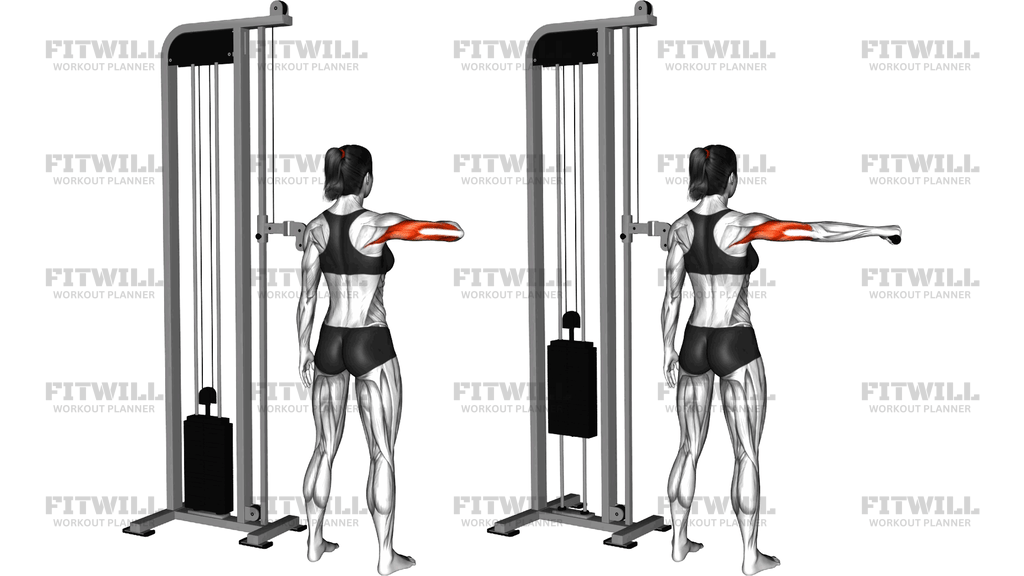
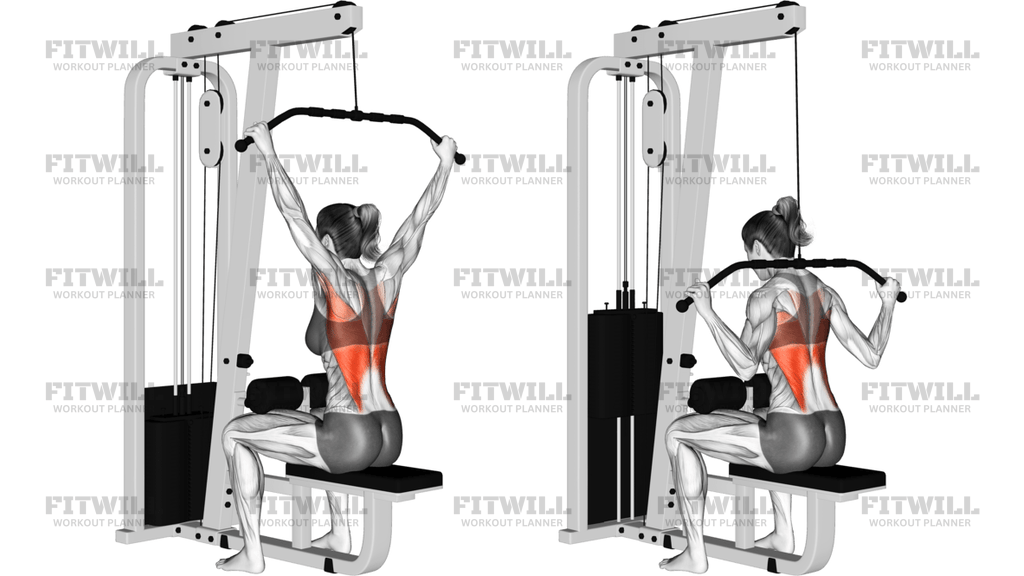
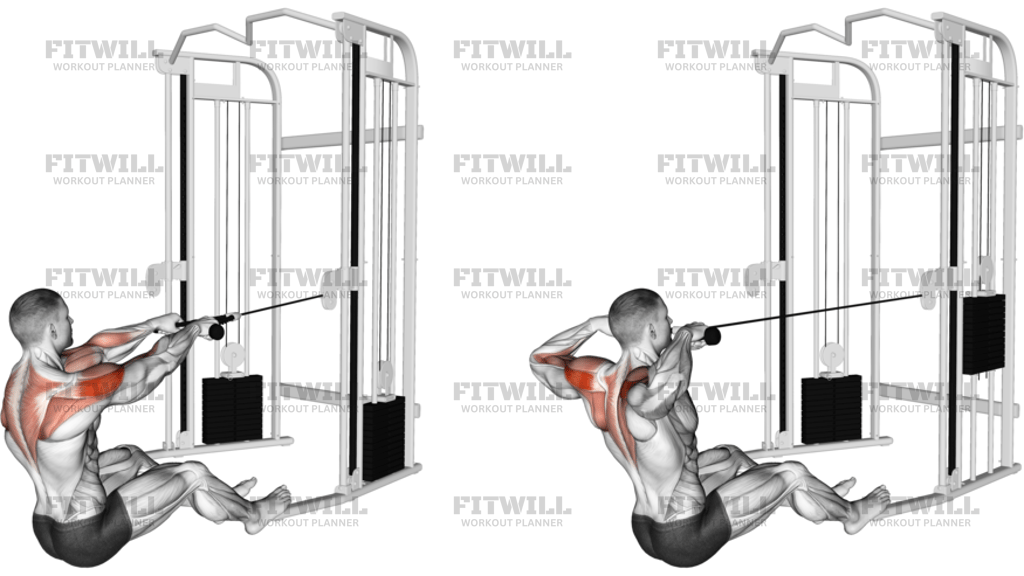
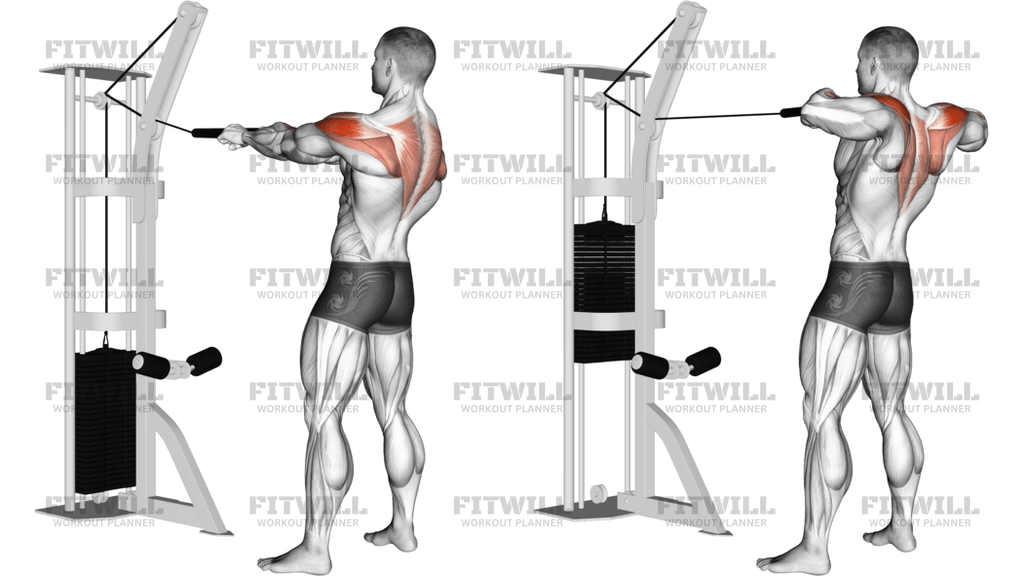
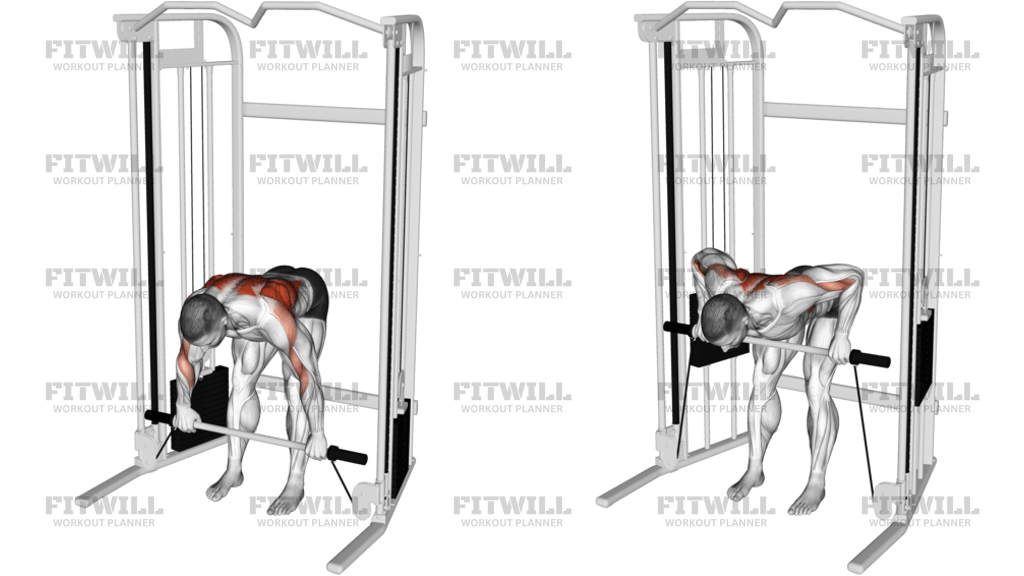
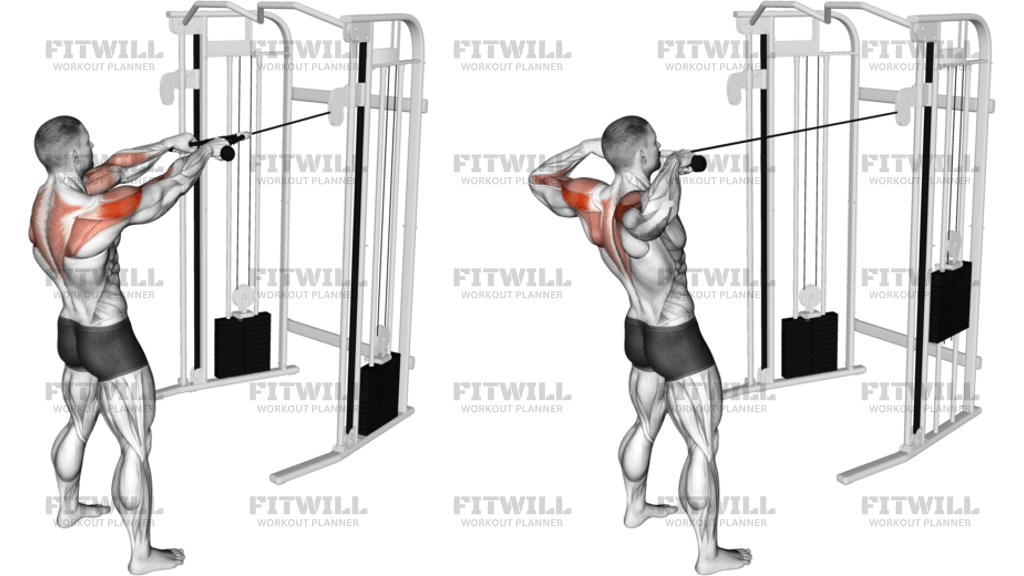
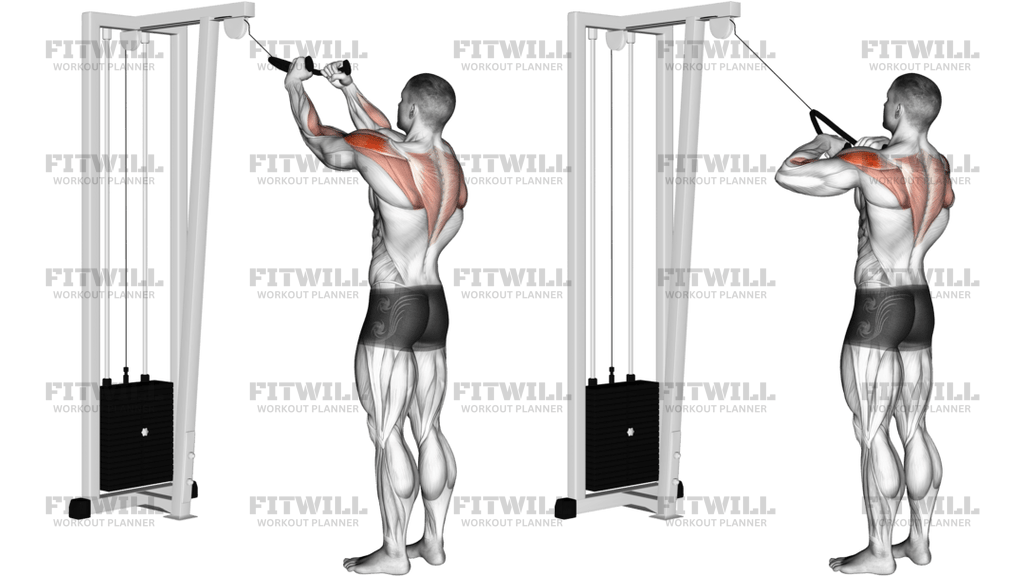
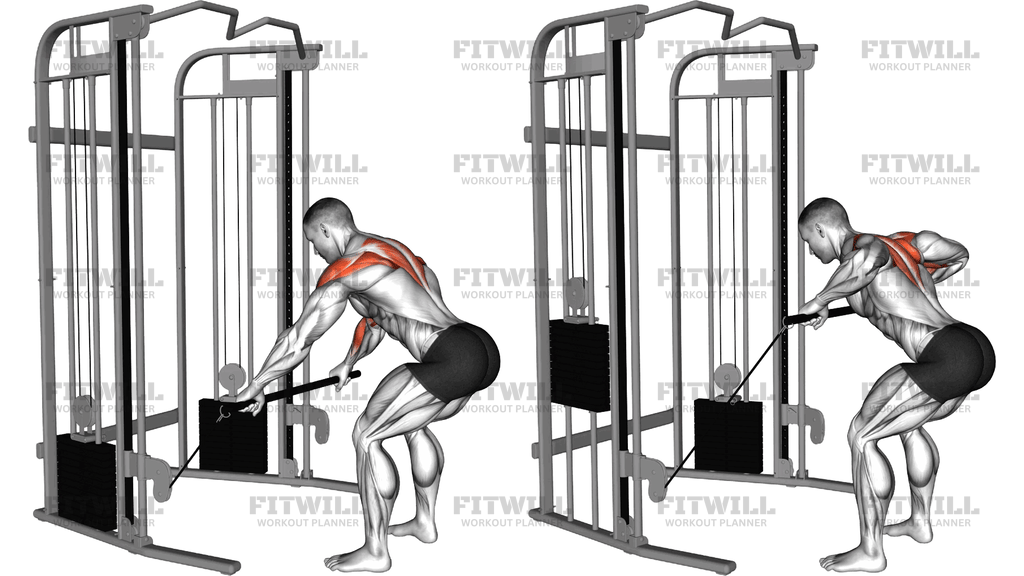
The Cable Bent Over Contralateral Rear Delt Row is a single-arm cable row performed from a hip-hinged position, with one hand pulling the cable from the opposite side of the body. You stand facing a cable machine set at the low pulley, hinge forward at the hips with soft knees, grab a straight bar or handle with one hand, and drive the elbow up and back so the resistance travels diagonally across your body toward your rear shoulder. That diagonal, crossing path is what separates it from a standard bent-over row and puts the emphasis squarely on the posterior deltoid rather than the lats.
The main target is the rear deltoid, with strong support from the middle and lower traps, the rhomboids, and the lat on the working side. Because you are bent over and stabilizing on one leg stance width, your erector spinae, glutes, and core work isometrically to hold your torso angle. The biceps and forearm muscles assist on the pull, but the goal is to let the shoulder blade and rear delt do the work, not turn it into an arm exercise.
This movement is especially useful for lifters whose rear delts lag behind their front and side delts. Pressing and front-rowing variations dominate most programs, and the rear shoulder often ends up undertrained. The contralateral cable setup also creates a unique line of pull: because the cable crosses the body from the low pulley on the opposite side, the rear delt gets loaded through horizontal abduction and extension at the same time, which is hard to replicate with dumbbells.
Setup matters more here than in most rowing variations. The height of the low pulley, the width of your stance, and your hinge angle all determine whether the cable tracks toward your rear delt or drifts into a generic lat row. Set the pulley at the bottom, take a staggered or hip-width stance, and hinge until your torso is roughly 30 to 45 degrees above horizontal. Keep a flat back and let the working arm hang across your midline toward the cable before each rep.
To execute it well, initiate the pull with the shoulder blade moving back and down, then drive the elbow up and toward the ceiling behind you, keeping the elbow wider than a strict lat row would use. Pause briefly at the top when your upper arm is roughly parallel to the floor or slightly above, then lower the handle under control so the shoulder blade protracts fully at the bottom. Resist the urge to twist the torso toward the cable; the rotation should come from the shoulder, not the spine.
You will see this exercise in shoulder-focused blocks, corrective programs for rounded posture, and as a finisher after pressing work. Because each side works independently, it also exposes and helps correct left-to-right imbalances in the upper back. Keep the load moderate, the reps controlled, and treat it as a precision movement rather than a max-effort pull.
[ Workout Log & Planner ]
Put your next workout in Fitwill
Keep your plan and training log ready when you are.


Instructions
- Set a single handle or short straight bar on the low pulley of a cable machine and select a light-to-moderate weight before your first set.
- Stand facing the machine with the cable coming from the pulley on the opposite side of your working hand, feet about hip-width apart or in a slight stagger for balance.
- Hinge forward at the hips with a flat back until your torso sits roughly 30 to 45 degrees above horizontal, knees softly bent, and let the working arm hang across your body toward the cable.
- Grip the bar with one hand, palm facing in or slightly back, and take up the slack in the cable so there is no jerk when you start the rep.
- Brace your core and squeeze your glutes to lock your torso angle in place before initiating the pull.
- Pull by drawing the shoulder blade back first, then drive the elbow up and back toward the ceiling, letting the cable travel diagonally across your midline toward your rear shoulder.
- Finish with the elbow above torso height and roughly parallel to the floor, forearm relaxed, and pause for a beat to feel the rear delt contract.
- Lower the handle slowly along the same diagonal path until the arm is fully extended across the body and the shoulder blade protracts forward.
- Exhale as you pull the handle up and back, inhale as you lower it with control.
- Complete all reps on one side, re-grip and reset your hinge position, then switch hands and match the reps on the other side.
Tips & Tricks
- If your torso rotates toward the cable on every rep, the weight is too heavy; reduce the load until your chest stays square to the floor.
- Keep the elbow flared out rather than pinned to your ribs. A tight-elbow path turns this into a lat row and removes most of the rear delt tension.
- Let the shoulder blade protract fully at the bottom of each rep instead of keeping constant tension with a half-retracted shoulder. The extra range is where much of the benefit lives.
- Because the cable crosses your body, your working leg on the same side as the pull can tip you off balance. Widen your stance or drop to a slight stagger to stabilize.
- Use a false grip with the thumb over the bar if your biceps take over; the goal is to pull with the elbow, not curl the handle.
- Set the pulley all the way at the bottom. Starting from a mid-pulley changes the diagonal and shifts work toward the middle delts and traps.
- A brief one-second pause at the top does more for rear delt development here than adding another plate, since the muscle responds to the squeeze, not momentum.
- If your lower back fatigues before your shoulder, rest your free hand on your thigh or a bench to reduce the stabilizing demand on the hinge.
- Avoid shrugging the working shoulder toward your ear at the top; think of driving the elbow back and slightly up while the shoulder stays away from the ear.
Frequently Asked Questions
What does 'contralateral' mean in the Cable Bent Over Contralateral Rear Delt Row?
It means your working hand grabs the cable from the opposite side of the machine, so the resistance crosses your body diagonally. That crossing path is what biases the rear deltoid instead of the lats.
Which muscles does the Cable Bent Over Contralateral Rear Delt Row work the most?
The rear deltoid is the primary mover, with the middle and lower traps and rhomboids assisting as the shoulder blade retracts. The lats, biceps, and forearm muscles contribute, and the lower back and core hold the bent-over position.
Why pull from the low pulley instead of a mid or high setting?
The low pulley creates the upward diagonal path that combines shoulder extension with horizontal abduction, which loads the rear delt through a longer range. Higher pulley angles shift the emphasis toward the middle delts and different trap fibers.
Is this exercise suitable for beginners?
Yes, provided the weight stays light while you learn the hinge and the diagonal pull path. Beginners often benefit from practicing the bent-over position with their free hand braced on a bench or thigh first.
How is this different from a regular bent-over cable row?
A regular row pulls the handle straight back toward your torso with both hands or an inline path, loading the lats heavily. Here the cable crosses the midline from the opposite side and the elbow stays flared, so the rear delt and upper back do most of the work.
How many reps and sets should I use?
Rear delts respond well to moderate loads and higher reps, so 3 to 4 sets of 10 to 15 reps per side works well. Keep the last few reps challenging without letting your torso twist to finish them.
Why do I feel it in my lower back during this row?
The hip hinge position makes your erectors work to hold your torso angle, so some spinal-erector effort is normal. If it burns out early or your back rounds, shorten the hinge to a higher torso angle or brace your free hand on a bench.
Can I use a rope or single handle instead of a straight bar?
Yes, a single handle or rope attachment works well and can feel more shoulder-friendly, since the wrist can rotate naturally through the pull. The bar gives a stable fixed path, while the rope allows a slight neutral-grip adjustment.
What is a good substitute if my gym has no cable machine?
A bent-over dumbbell rear delt row or a bent-over single-arm dumbbell row with a flared elbow covers similar ground, though you lose the diagonal cable resistance. A resistance band anchored low on the opposite side can recreate the contralateral angle almost exactly.
Should I pull both sides in the same set or alternate?
Finish all reps on one side before switching so you can focus on the working shoulder blade and match volume exactly. Alternating mid-set tends to break your hinge position and rhythm.