Dumbbell Rear Lunge
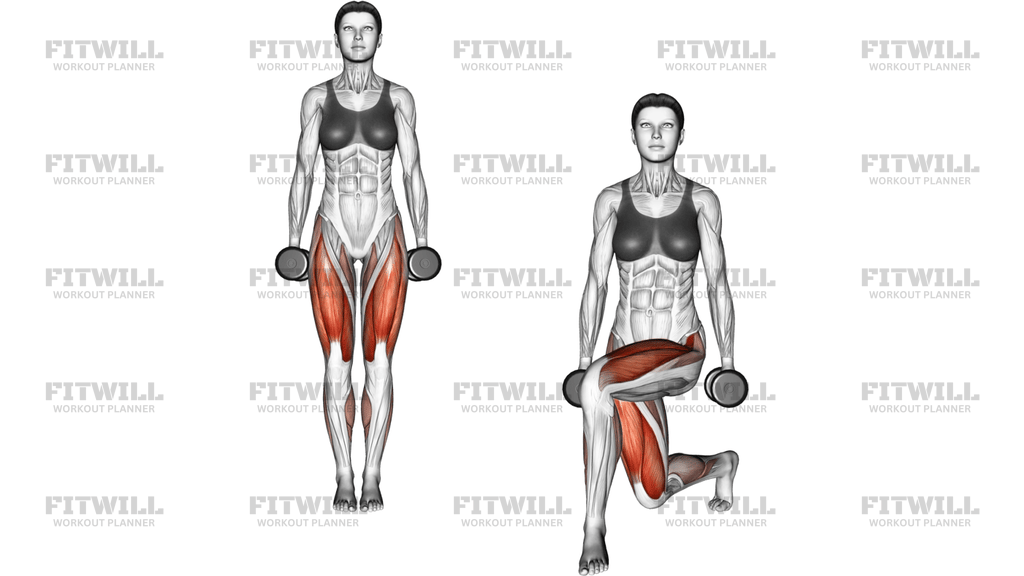
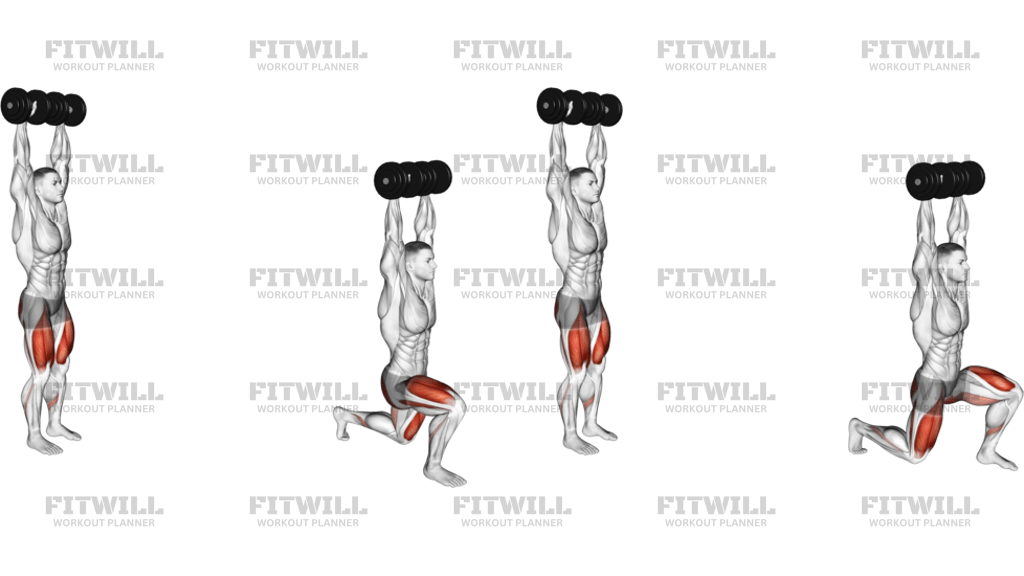
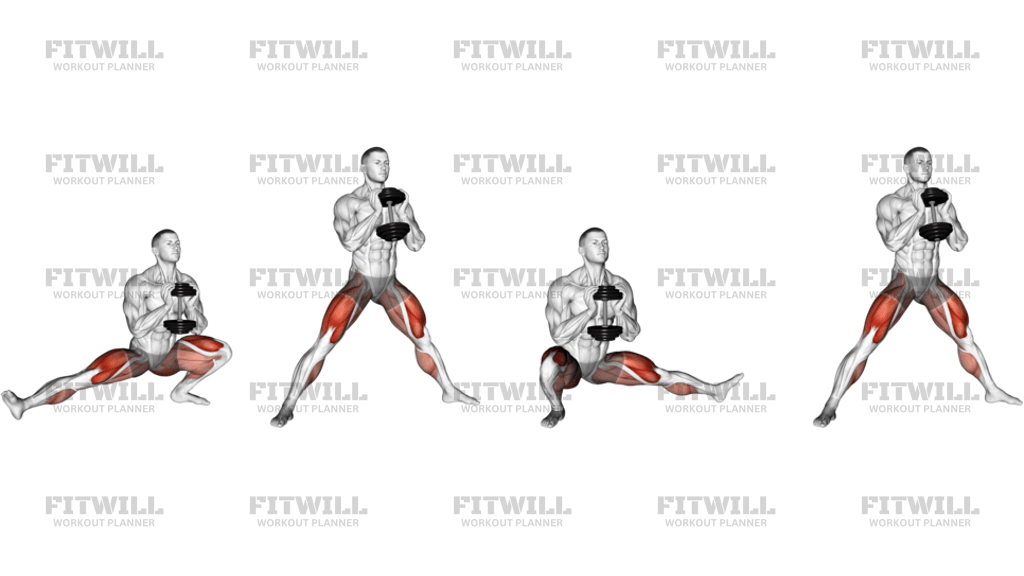
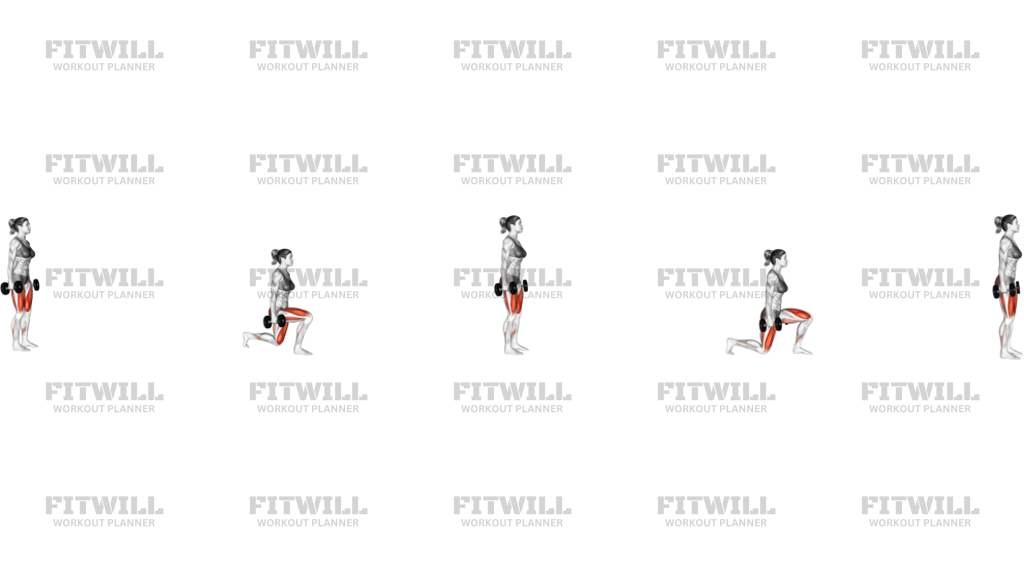
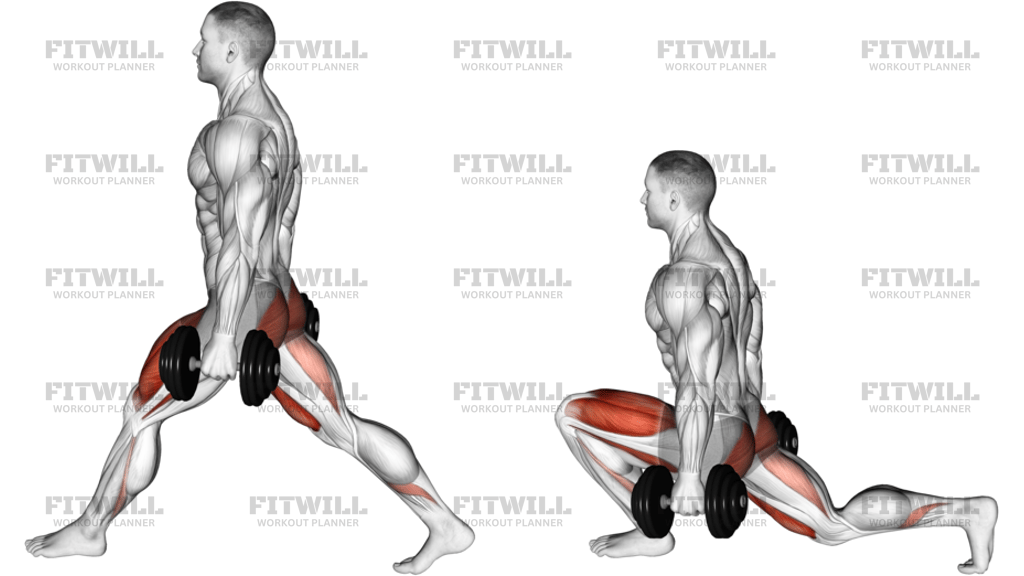
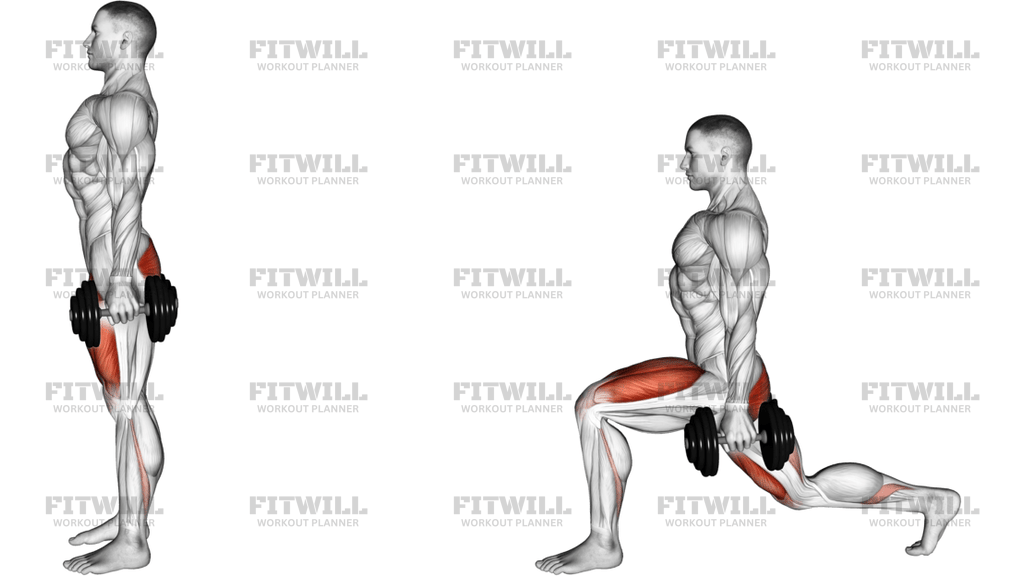
Dumbbell Rear Lunge is a single-leg lower-body exercise performed with a dumbbell in each hand, or one dumbbell held at the sides, to build glutes, quads, hamstrings, adductors, calves, and trunk stability. One leg steps back into a split stance while the front leg accepts most of the load, making this a useful pattern for unilateral strength, balance, and left-right comparison.
The rear lunge shifts emphasis onto the front hip and knee while still asking the back leg to help control the descent and keep the pelvis organized. That combination makes it a strong accessory lift after bilateral squats, a practical option for athletes who need deceleration strength, and a good choice for lifters who want leg work without the same spinal loading as a heavy barbell squat.
Setup matters because small stance errors change the entire rep. Start tall with the dumbbells hanging straight under the shoulders, feet about hip-width apart, ribs stacked over the pelvis, and eyes forward. Step one leg back far enough that the front heel stays planted and the front knee can track over the middle toes without collapsing inward. A step that is too short turns the movement into a cramped knee bend; a step that is too long can dump the load into the hips and balance.
During the descent, lower under control by bending both knees and letting the back knee travel toward the floor while the front shin tilts only as much as your ankle mobility allows. Keep the torso mostly upright with a small forward lean from the hips if needed for balance. At the bottom, the front thigh should approach parallel or go as low as your control and joint comfort allow without bouncing.
Drive back up through the front heel and midfoot, then bring the rear leg forward to reset for the next rep or stay in place if you are alternating legs. The dumbbells should stay quiet at your sides the whole time, with no swinging or twisting. If your knee caves, your heel lifts, or the dumbbells drift, shorten the stance, reduce depth, or lower the load before continuing.
Fitwill
Log Workouts, Track Progress & Build Strength.
Achieve more with Fitwill: explore over 9600 exercises with images and videos, access built-in and custom workouts, perfect for both gym and home sessions, and see real results.
Start your journey. Download today!




Instructions
- Stand tall with a dumbbell in each hand at your sides and your feet about hip-width apart.
- Brace your midsection, keep your chest tall, and look forward before you move.
- Take one controlled step straight back so you land in a staggered split stance with the rear heel lifted.
- Plant the front foot flat and let the front knee track over the second and third toes.
- Lower by bending both knees and dropping the rear knee toward the floor without bouncing.
- Keep most of your weight on the front leg while the rear leg acts as a balance support.
- Descend until the front thigh is near parallel or until your comfortable depth is reached with control.
- Drive through the front heel and midfoot to stand back up, then bring the rear foot forward to reset for the next rep.
- Finish all reps on one side before switching, unless your programming calls for alternating sides.
Tips & Tricks
- Choose a step-back distance that lets the front heel stay down; if the heel lifts, the stance is too short.
- Let the dumbbells hang straight beside the thighs instead of letting them swing in front of the body.
- Keep the front knee moving in line with the toes so the knee does not collapse inward as you rise.
- A slight forward torso lean from the hips is fine, but do not fold at the waist or round the lower back.
- Use a slower lowering phase than you think you need; that makes the rear knee path easier to control.
- If the back knee taps the floor hard, shorten the range and stop just above contact.
- Exhale as you drive up so the trunk stays stacked and the torso does not twist under the load.
- Start lighter than your squat loading, because the balance demand usually limits the set before leg strength does.
- If balance is the weak point, perform the movement beside a rack or wall for light fingertip support.
Frequently Asked Questions
What muscles does Dumbbell Rear Lunge work?
It primarily trains the glutes and quads on the front leg, with help from the hamstrings, adductors, calves, and core to stabilize the split stance.
Is Dumbbell Rear Lunge the same as a split squat?
They are closely related, but a rear lunge starts from standing and steps back each rep, while a split squat keeps the feet planted in the staggered stance.
How far back should I step?
Step back far enough that the front heel stays planted and the front knee can bend freely without the stance feeling cramped.
Where should the dumbbells sit during the rep?
Hold them at your sides with a neutral grip so they hang quietly below the shoulders instead of drifting in front of the body.
How deep should I go?
Lower until the front thigh is near parallel or to the deepest position you can control without bouncing, losing heel contact, or twisting the torso.
Why does my front knee feel stressed?
That usually means the step is too short, the load is too heavy, or the knee is collapsing inward instead of tracking with the toes.
Can beginners do Dumbbell Rear Lunge?
Yes. Start with bodyweight or very light dumbbells and use a support point nearby until the balance and descent pattern feel consistent.
How can I make the exercise more glute-focused?
Use a slightly longer step-back, keep the front foot flat, and drive up through the heel and midfoot instead of pushing off the rear leg.
What should I do if the rear knee taps hard?
Shorten the range so the knee stops just above the floor, then rebuild depth gradually as control improves.