Handstand Push-Up
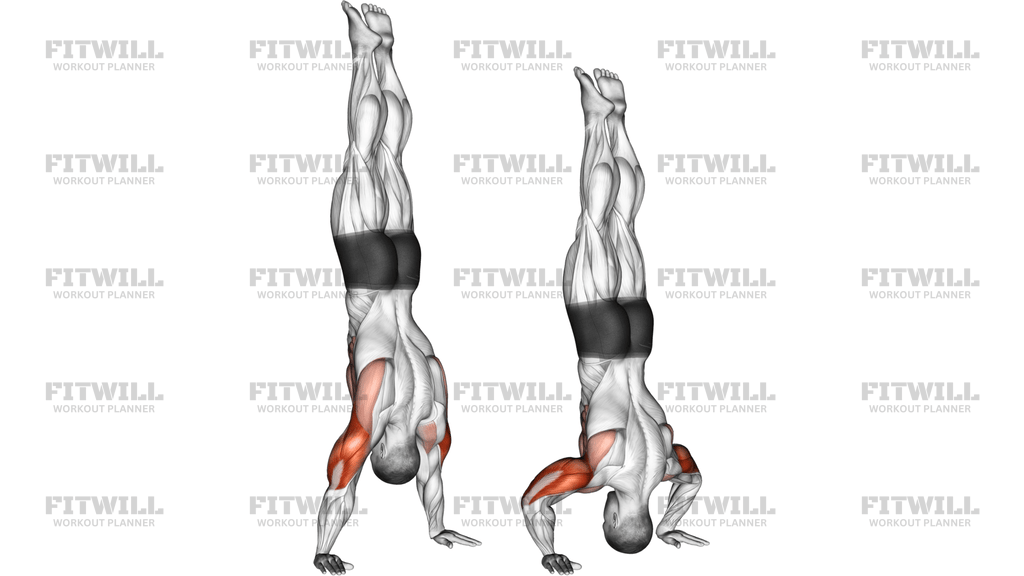
Handstand Push-Up is a strict inverted pressing exercise that asks the shoulders to drive the body against gravity while the triceps and upper chest finish the press. It also demands a strong midline, because any loss of tension changes the line of the rep and makes the movement less efficient. When it is done well, the exercise builds overhead strength and body control at the same time.
The setup matters more here than on most push variations. Place the hands flat on the floor slightly wider than shoulder width, spread the fingers, and stack the wrists, elbows, shoulders, hips, and feet into one line before the first descent. The goal is a stable handstand position with the ribs pulled down and the glutes squeezed so the lower back does not overextend.
From there, lower under control by bending the elbows and bringing the head straight down between the hands. Keep the forearms as vertical as possible, let the head touch a pad or the floor lightly if that is your chosen range, and avoid dumping weight into one arm. Press back up by driving the palms into the floor, keeping the torso tight, and finishing with the elbows locked out over the shoulders.
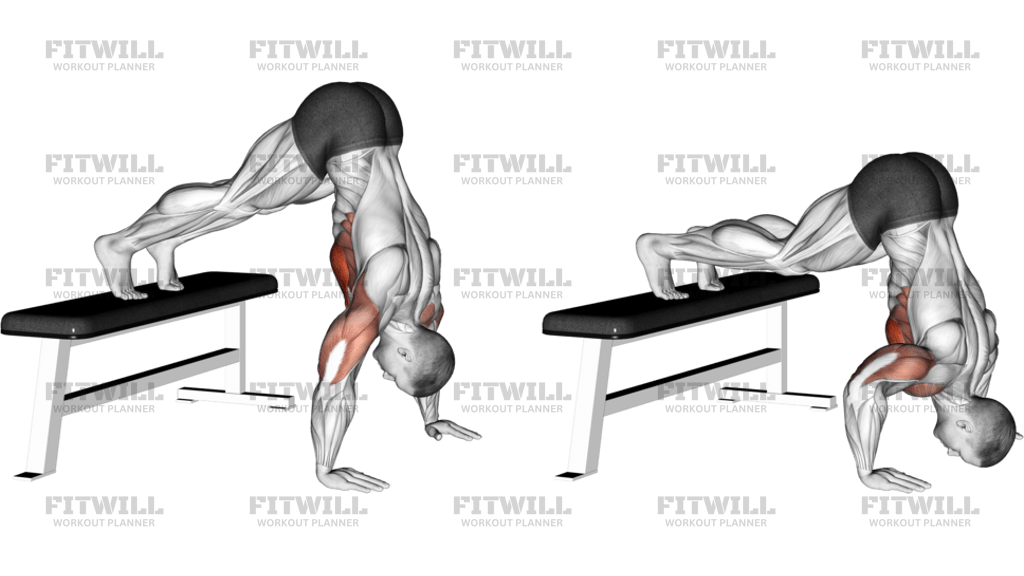
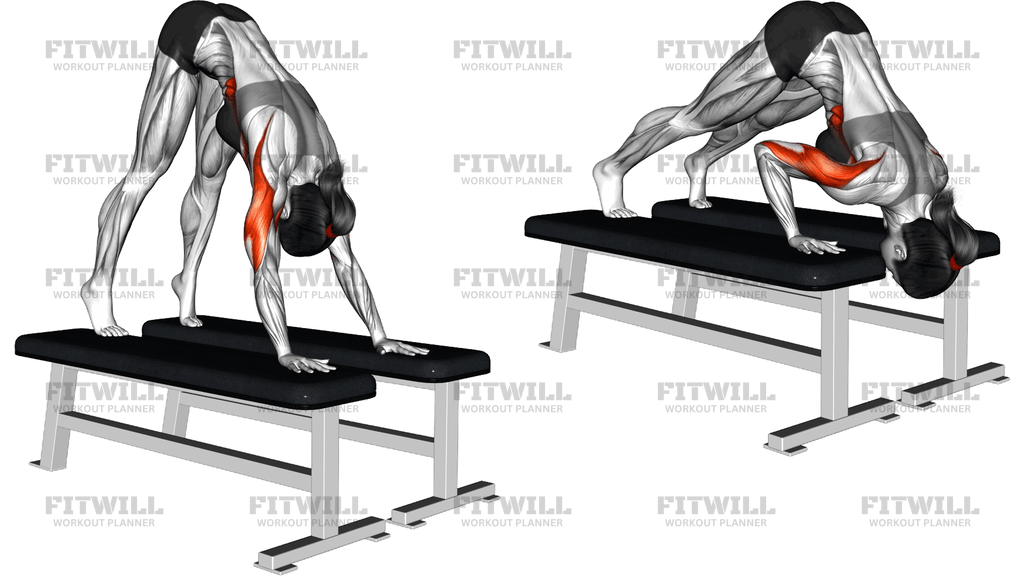
Handstand Push-Up is useful for athletes and lifters who need overhead pressing strength without a barbell, and it is also a useful benchmark for gymnastics-style control. Because the position is inverted, the wrists, neck, and shoulders all need to tolerate the setup before load or volume increases. If balance or depth is inconsistent, a wall-supported handstand push-up, a pike push-up, or a partial range version is usually a smarter place to build from.
The best reps look quiet and deliberate: no collapsing through the shoulders, no loose kick-up, and no rib flare at the bottom. Keep breathing organized, use a repeatable head target, and stop the set when the line of the body or the position of the hands starts to drift. That keeps the exercise focused on shoulder strength instead of turning it into a fight to stay upside down.
Fitwill
Log Workouts, Track Progress & Build Strength.
Achieve more with Fitwill: explore over 9600 exercises with images and videos, access built-in and custom workouts, perfect for both gym and home sessions, and see real results.
Start your journey. Download today!




Instructions
- Place your hands flat on the floor slightly wider than shoulder width, spread your fingers, and kick into a balanced handstand with your weight stacked over your palms.
- Lock your elbows, squeeze your glutes, and pull your ribs down so your body forms one straight line from wrists to feet.
- Keep your gaze between your hands and actively push tall through the shoulders before each repetition.
- Inhale and bend your elbows to lower yourself straight down, keeping the forearms close to vertical as your head travels between your hands.
- Touch the top of your head lightly to a pad or the floor if you are using full range, then pause long enough to stay balanced.
- Exhale and drive the palms into the floor to press back up along the same path until your elbows are fully straight.
- Finish each rep with the shoulders stacked over the hands and the core still tight instead of arching to chase extra height.
- Lower your feet or step out of the handstand with control when the set is done.
Tips & Tricks
- Set your head target before the set starts so every rep touches the same spot on the floor or pad.
- If your lower back arches, squeeze the glutes harder and pull the front ribs down before descending.
- Keep the hands planted instead of letting the fingers lift, or you will lose balance as soon as the elbows bend.
- Let the elbows travel slightly forward and out, but do not flare them so wide that the shoulders lose control.
- Use an ab mat or folded towel if the bottom position is too deep for your current shoulder mobility.
- A slow negative exposes shoulder control better than chasing fast reps from a sloppy kick-up.
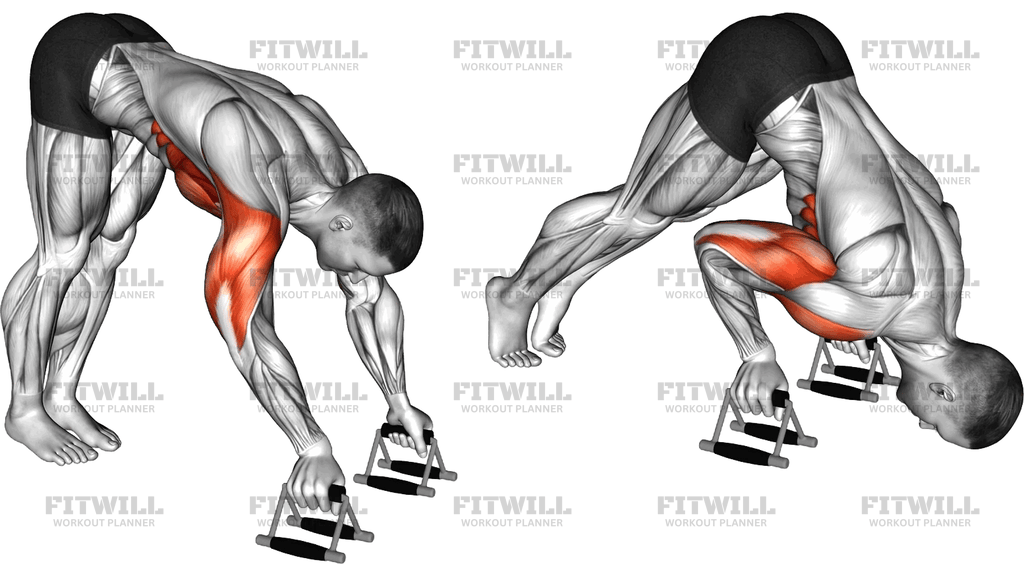
- If the wrists feel overloaded, practice the same movement on parallettes or push-up handles to reduce wrist extension.
- Stop the set when the handstand line breaks; extra reps with bent hips or soft elbows are just practice for bad positions.
Frequently Asked Questions
What muscles does Handstand Push-Up work?
Handstand Push-Up mainly trains the delts and triceps, with help from the upper chest, traps, and core. The inverted position also challenges the wrists and upper back to keep the line steady.
Is Handstand Push-Up good for beginners?
Usually not as a first shoulder exercise. Most beginners should build with pike push-ups or a wall-supported handstand push-up before trying a free-standing version like this.
How deep should I go in a Handstand Push-Up?
Lower until the top of the head lightly touches a pad or the floor, as long as you can keep the torso stacked and the elbows controlled. If depth forces an arch or a shoulder shrug, shorten the range.
Where should my hands be for Handstand Push-Up?
Start with the hands slightly wider than shoulder width and spread the fingers for balance. If the hands are too close together, the base is narrow; if they are too wide, the bottom position gets unstable.
Why do I arch my lower back during Handstand Push-Up?
That usually means the ribs are flaring and the glutes are not staying tight. Pull the ribs down, squeeze the glutes, and reduce the descent depth until the stack stays clean.
Can I use a wall or a pad with Handstand Push-Up?
Yes. A wall or a pad can make the movement more practical by improving balance or reducing the depth at the bottom, which is often the hardest part of the rep.
What should I do if my wrists hurt in Handstand Push-Up?
Reduce the wrist angle by using parallettes or push-up handles, and make sure the fingers stay active on the floor. Persistent wrist pain is a sign to regress the variation instead of forcing full reps.
What is the biggest mistake in Handstand Push-Up?
The most common mistake is losing the body line and turning the press into a half-cartwheel with bent hips or a loose core. Keep the handstand stacked before the first rep and stop as soon as balance or shoulder position slips.