Elbow Out Rotator Stretch
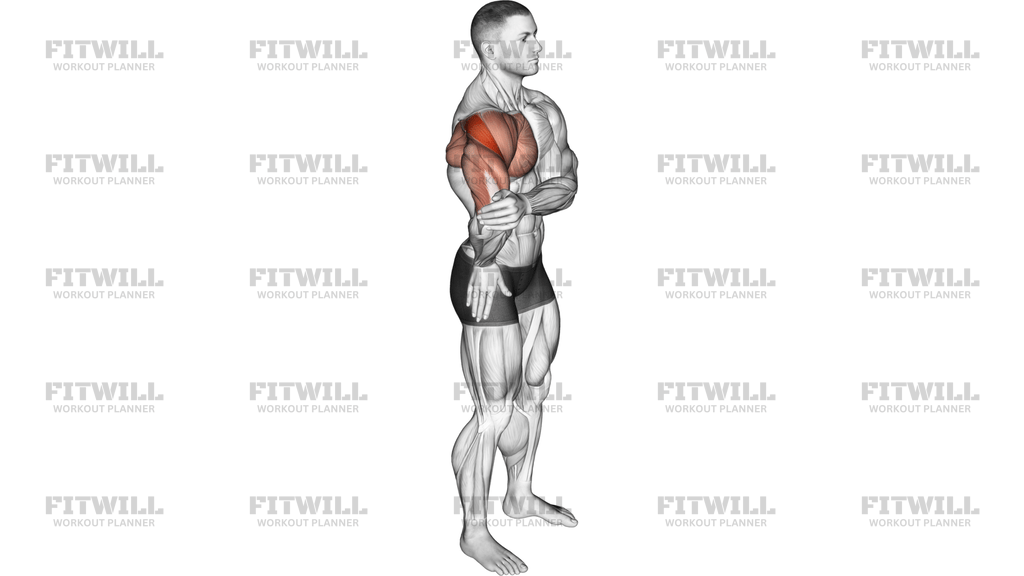
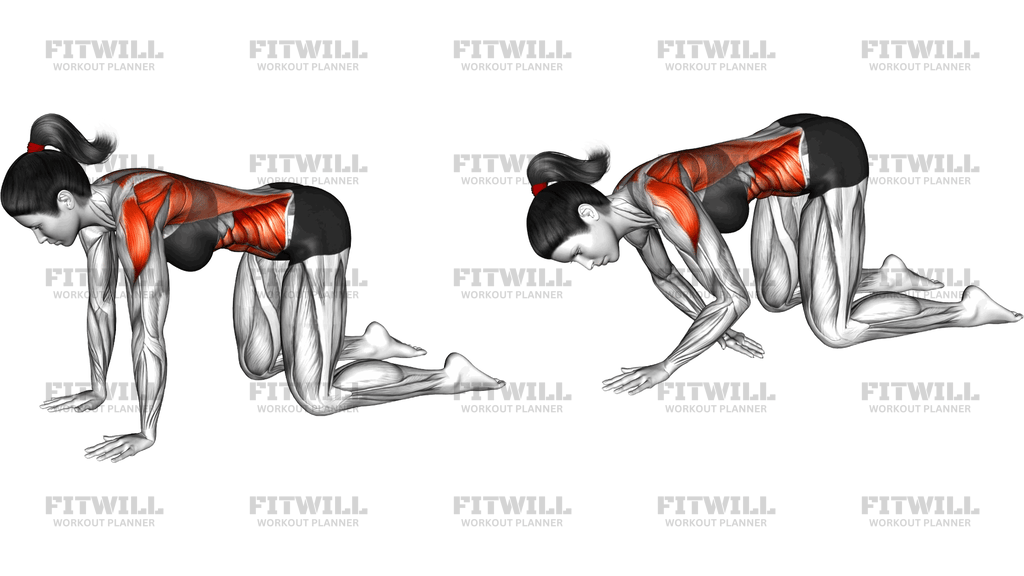
Elbow Out Rotator Stretch is a standing shoulder mobility drill that pulls one arm across the front of the body while the opposite hand controls the stretch. In the image, the working elbow stays turned outward so the back of the shoulder gets the emphasis instead of the front of the joint. That makes this a useful way to open up the rear deltoid, posterior shoulder capsule, and nearby upper-back tissues when they feel tight from pressing, throwing, swimming, or desk work.
The setup matters because a small change in elbow height or torso rotation changes where the stretch lands. Stand tall, keep the ribs stacked over the pelvis, and let the shoulder stay down instead of shrugging toward the ear. If you twist through the trunk or yank the arm too hard, the stretch shifts away from the target area and the neck or upper traps start to take over.
To perform it well, bring one arm across your chest and secure it with the opposite hand just above the wrist or on the forearm. Draw the arm inward until you feel a firm but tolerable stretch through the back of the shoulder. Hold that position with calm breathing, then ease off only enough to keep the tension controlled. The goal is a smooth, repeatable stretch, not a wrenching pull or a larger range earned by compensation.
This stretch fits well before upper-body training to restore shoulder position, between pressing sets when the shoulders start to feel crowded, or after a workout to reduce stiffness around the rear delts and upper back. It can also be done seated if balance is a concern. Stop short of sharp pain, numbness, or pinching in the front of the shoulder, and keep the same control on both sides so the stretch stays even.
Because this is a mobility drill, progress comes from cleaner alignment, calmer breathing, and a more precise end position rather than force. The best version of the exercise is the one where the elbow stays out, the shoulder stays down, and the stretch is felt exactly where you intended.
Fitwill
Log Workouts, Track Progress & Build Strength.
Achieve more with Fitwill: explore over 9600 exercises with images and videos, access built-in and custom workouts, perfect for both gym and home sessions, and see real results.
Start your journey. Download today!




Instructions
- Stand tall on both feet, then bring one arm across your chest at about shoulder height.
- Turn the working elbow outward and keep it slightly lifted instead of letting it drop across your ribs.
- Reach the opposite hand to the forearm or just above the wrist and set a controlled grip.
- Keep your chest facing forward and your ribs stacked over your pelvis before you add any pull.
- Draw the arm across your body until you feel a firm stretch in the back of the shoulder.
- Let the shoulder stay down away from the ear and keep the neck relaxed.
- Breathe out slowly and hold the end position without bouncing or twisting harder.
- Release the arm with control, reset your posture, and repeat on the other side.
Tips & Tricks
- Keep the pull on the forearm or wrist area light enough that the elbow can stay open instead of collapsing inward.
- If the front of the shoulder pinches, reduce the pull and keep the elbow a little higher and farther out.
- A square chest usually gives a cleaner rear-shoulder stretch than rotating the torso to fake more range.
- Exhale as you settle into the end position; that usually helps the upper traps stop guarding the movement.
- If your neck tightens first, lower the shoulder and shorten the hold rather than forcing the arm farther across.
- The stretch should feel strongest in the rear delt or upper back, not in the elbow joint or wrist.
- Use a seated version if standing balance makes you lean or if you cannot keep the torso still.
- Hold only as long as you can keep the shoulder position clean; a sloppy longer hold is less useful than a precise shorter one.
Frequently Asked Questions
What does Elbow Out Rotator Stretch target most?
It mainly targets the rear shoulder and posterior deltoid, with some stretch through the upper back.
Why does the elbow stay out instead of dropping across the body?
Keeping the elbow out shifts the stretch toward the back of the shoulder instead of dumping the force into the front of the joint.
Should I feel this in my neck or upper traps?
No. The stretch should stay centered in the rear shoulder and upper back; if the neck takes over, relax the pull and reset the shoulder.
Can I do this seated instead of standing?
Yes. A seated version works well if you need more balance or want to keep the torso from swaying.
Where should my hand grip be?
Most people get the best control by holding the forearm or just above the wrist, not by yanking on the hand.
How long should I hold each side?
Long enough to feel the shoulder release without losing position, usually a short, calm hold rather than an aggressive stretch.
When is this stretch most useful?
It fits well before upper-body training, between pressing sets, or after workouts when the shoulders feel tight.
What should I do if I feel pinching in the front of the shoulder?
Reduce the pull, keep the elbow a little higher, and stop if the pinch does not go away.