Push-Up On Stability Ball
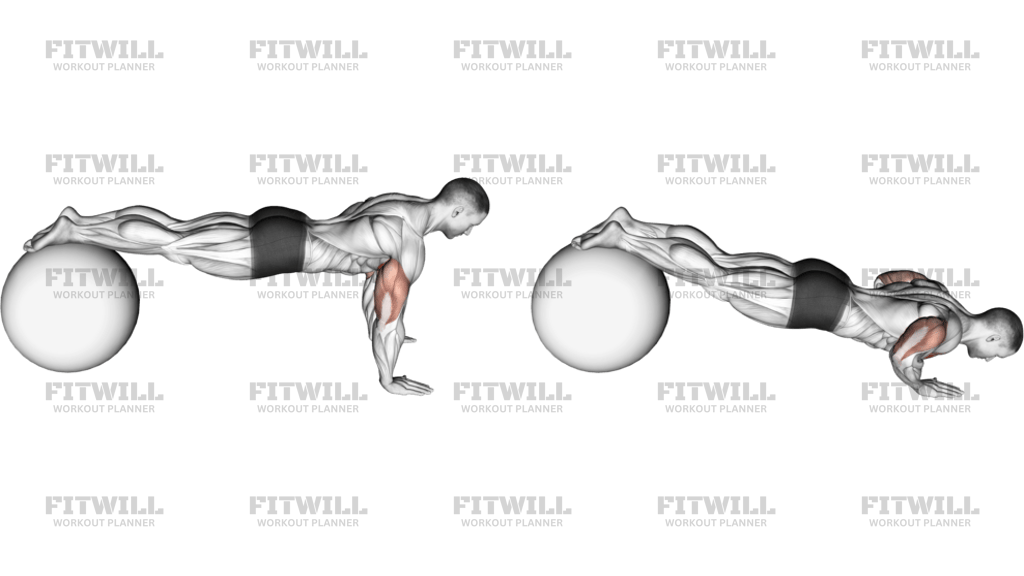
Push-Up On Stability Ball is a feet-elevated push-up that loads the chest, front shoulders, triceps, and trunk while forcing the body to stay rigid against an unstable support. The ball changes the leverage of the push-up and makes every rep more dependent on shoulder position, bracing, and clean tempo than a standard floor push-up. It is useful when you want a harder pressing variation without needing external weights, and it works especially well as a bodyweight strength exercise, a core-demanding accessory movement, or a progression toward more advanced pressing work.
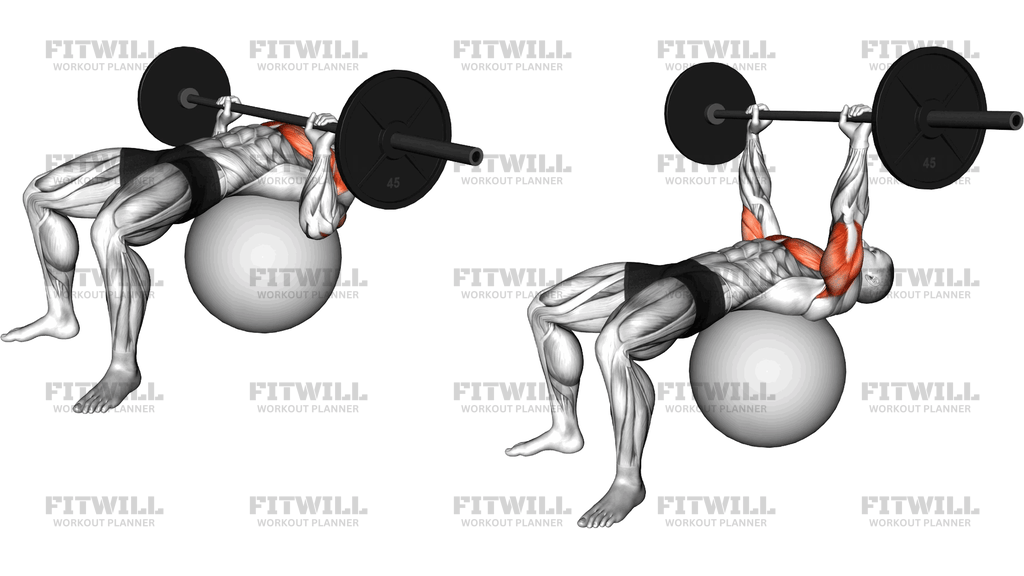
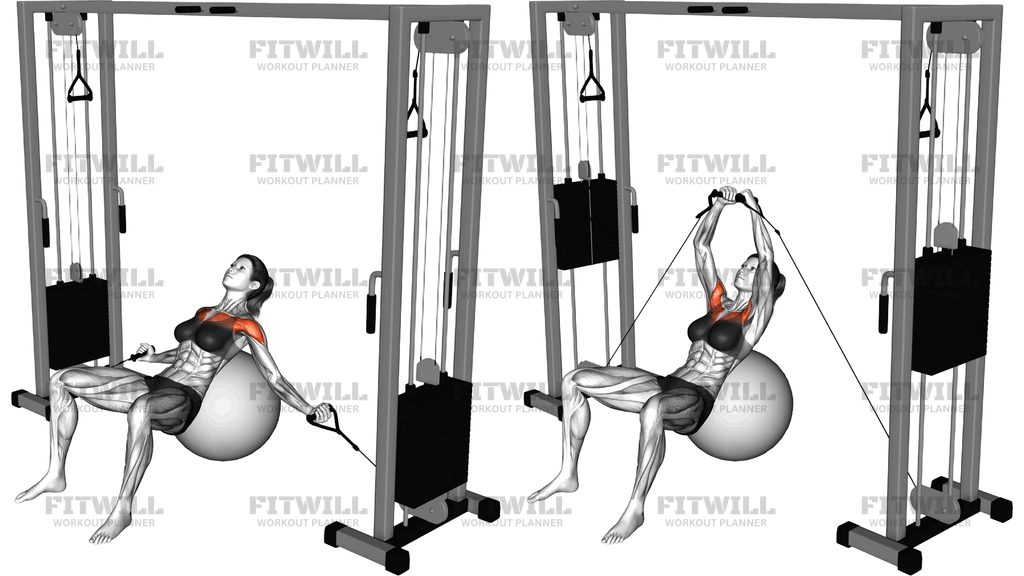
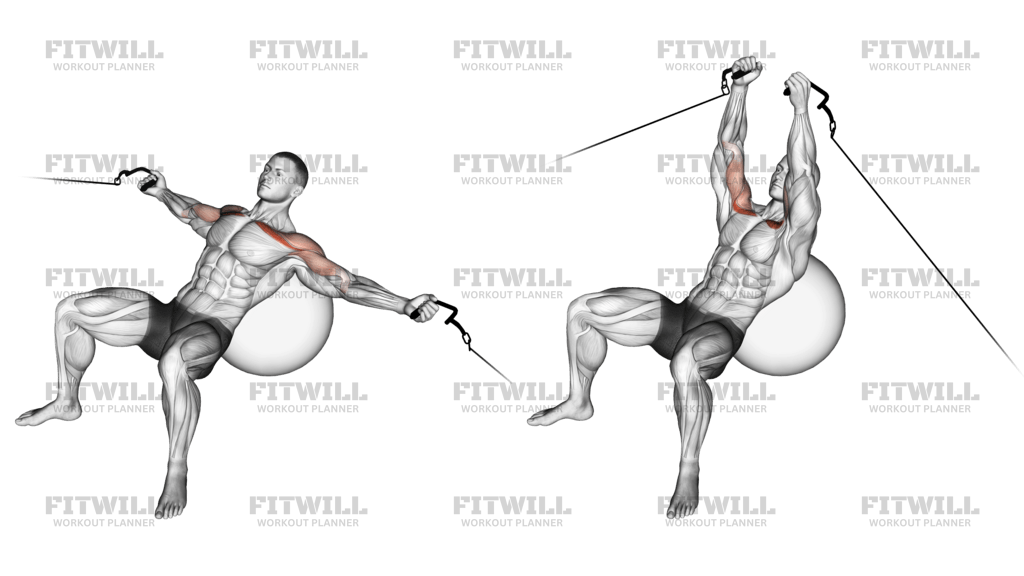
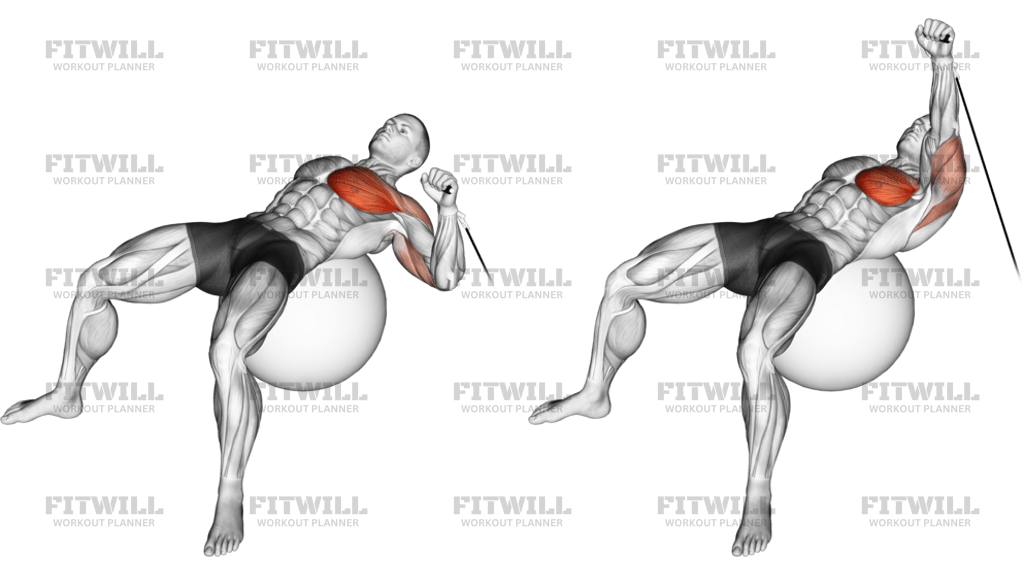
The image shows the feet supported on the ball and the hands on the floor, so the first job is to make the line from head to heels solid before you start the descent. Set the hands under or slightly wider than the shoulders, place the feet on top of the ball with the ankles relaxed enough to keep contact, and squeeze the glutes so the pelvis does not sag. A stable plank matters here because if the midsection collapses, the ball shifts and the shoulders take over the rep.
Each repetition should look like a controlled arc: lower the chest toward the floor, keep the elbows at a moderate angle instead of flaring them straight out, and stop when the upper arms are just below parallel or as low as your shoulder position stays organized. Press the floor away until the elbows lock out without letting the lower back arch. Breathe in on the descent and exhale as you push up, keeping the neck long and the head in line with the spine.
This variation fits well in upper-body strength sessions, push-day accessories, athletic conditioning, or core-focused circuits, but it is not the best choice when fatigue makes the ball wobble from rep to rep. If the setup feels too unstable, shorten the range, widen the base of support by working one foot at a time only if prescribed, or regress to a standard push-up with the feet on the floor. Use the exercise only when you can keep the ball still, the trunk braced, and the pressing path smooth from the first rep to the last.
[ Workout Log & Planner ]
Put your next workout in Fitwill
Keep your plan and training log ready when you are.


Instructions
- Place a stability ball behind you, put the hands on the floor under or slightly wider than the shoulders, and rest the tops of the feet or ankles on the ball.
- Walk the hands out until the body is straight from head to heels, then squeeze the glutes and set the ribs down so the lower back does not sag.
- Brace the abdomen before the first rep and keep the ball centered under the feet rather than letting it drift to one side.
- Lower the chest toward the floor with the elbows angled about 30 to 45 degrees from the torso.
- Stop when the chest is close to the floor and the shoulders stay packed rather than rolling forward.
- Press the floor away until the arms are straight and the body returns to a firm plank.
- Keep the head neutral and breathe in on the way down and out on the way up.
- Reset the feet on the ball if the balance shifts, then continue for the planned reps.
Tips & Tricks
- Keep the hands planted directly under the shoulders so the ball challenge stays in the lower body and trunk instead of turning into a shoulder dump.
- Press the toes or shoelaces into the ball gently before each rep; that tension helps keep the roller from sliding backward.
- If the ball drifts toward the chest during the set, shorten the set and reset instead of trying to save the rep with a back arch.
- Think about lowering the sternum between the hands, not simply dipping the chin toward the floor.
- Keep the elbows from flaring straight out; a moderate tuck usually protects the shoulders better in this variation.
- Do not let the hips rise first on the way up, because that turns the movement into a pike and reduces chest loading.
- Use a slower lowering phase if the ball is unstable; the extra control makes the balance demand more useful.
- Stop one or two reps before the ball starts wobbling enough to break the plank.
Frequently Asked Questions
What muscle does Push-Up (on stability ball) target most?
The chest is the main mover, with the front shoulders, triceps, and core helping keep the body rigid on the ball.
Can beginners perform this exercise?
Beginners usually do better with a standard floor push-up first, then this variation once they can keep the plank and the ball stable.
Where should my feet go on the stability ball?
Place the tops of the feet or ankles on the upper surface of the ball and keep enough contact that the ball does not roll away as you lower.
How do I keep the ball from moving?
Tighten the glutes, keep the ribs down, and press lightly through the feet so the ball stays centered while the hands stay fixed on the floor.
How low should I go on each rep?
Lower until the chest is close to the floor and the shoulders still feel organized; do not force extra depth if the lower back starts to arch.
What is the biggest form mistake?
Letting the hips sag or chase the rep with momentum is the main issue, because it shifts stress away from the chest and onto the lower back.
What can I use instead if this is too hard?
Use a standard push-up on the floor, an incline push-up with the hands on a bench, or a partial-range version before returning to the ball.
Why does my core feel so involved?
The ball makes the body less stable, so the abs and glutes have to keep the torso from twisting, sagging, or shifting during the press.