Sitting Neck Rotation Stretch
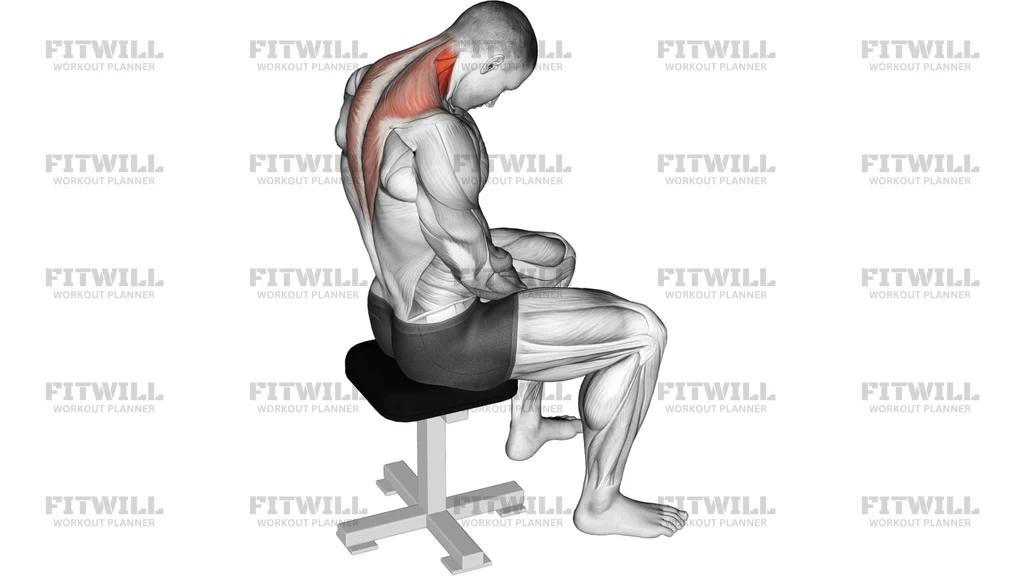
The Sitting Neck Rotation Stretch is a seated stretch that targets the side and back of the neck, with the greatest emphasis on the upper trapezius and levator scapulae on one side at a time. You sit upright on a sturdy chair, anchor one arm down by gripping the edge of the seat behind your hip, and use your free hand to gently guide your head into a rotated and tilted position. The anchoring arm is what makes this version effective: by pinning the shoulder down, the muscles between the neck and shoulder get lengthened instead of being allowed to shrug out of the stretch.
This is one of the most practical stretches for anyone who carries tension where the neck meets the shoulders. It suits office workers who spend long hours at a desk, drivers, people who hold a phone between ear and shoulder, and lifters whose upper traps fatigue during pulls, carries, or overhead work. Because it is performed sitting on an ordinary chair, it fits easily into a workday break, a warm-up, or a wind-down routine at home.
The stretch trains mobility of the cervical spine, particularly rotation combined with lateral flexion, while lengthening the upper trapezius and levator scapulae. The levator scapulae attaches from the top of the shoulder blade to the upper neck vertebrae and is responsible for turning and tilting the head, which is exactly the position this stretch recreates. Keeping the arm anchored also encourages the shoulder blade to stay depressed, so the stretch lands in the intended tissue rather than being absorbed by shoulder movement.
Setup matters here more than force. Sit tall on the chair with your ribs stacked over your pelvis and both sit bones planted, and hold the seat edge firmly enough that your shoulder cannot creep upward. Place your free hand over the top of your head, not on the jaw or the neck itself, and let the hand steer rather than shove. The movement should come from the gentle weight of your arm, guided breathing, and a slow rotation of the chin toward the armpit on the pulling side, with a slight tilt of the ear toward the same shoulder.
A common mistake is pulling the head straight sideways like a classic side-bend stretch while the chin stays square. The rotation component is what distinguishes this stretch and lets you shift the sensation between the side of the neck and the deep angle near the shoulder blade. Small adjustments of the chin angle change where you feel it, so explore a few degrees at a time rather than pulling harder.
Move into the stretch slowly, hold for twenty to thirty seconds while breathing steadily, and release just as slowly. Never bounce, never force the head past the point of a mild to moderate pull, and stop if you feel tingling, dizziness, or sharp pain. Because the neck is mobile and sensitive, the guiding principle for this stretch is patience with light pressure rather than intensity.
[ Workout Log & Planner ]
Put your next workout in Fitwill
Keep your plan and training log ready when you are.


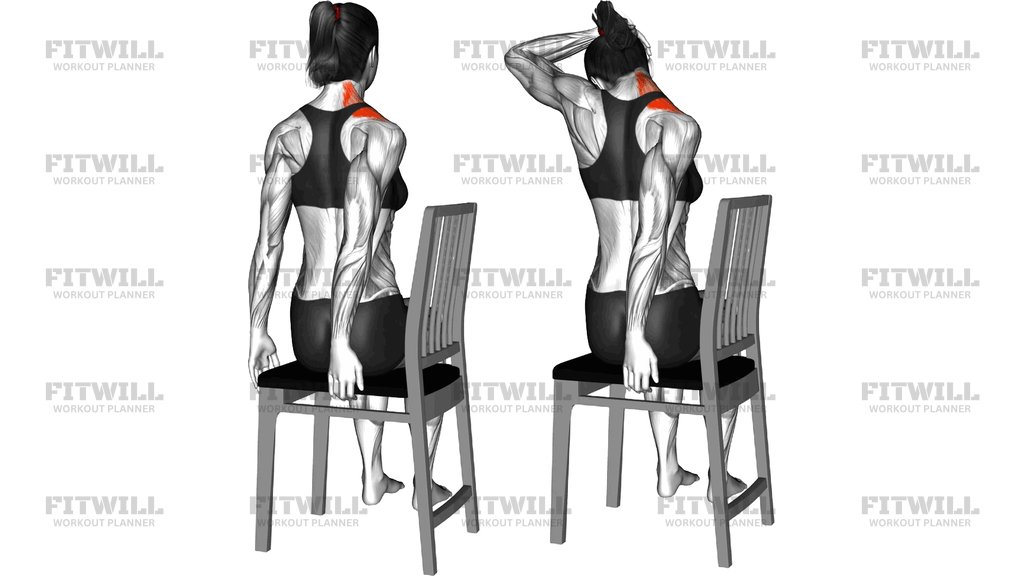
Instructions
- Sit on a sturdy chair with both sit bones planted, feet flat on the floor, and your torso upright with ribs stacked over your hips.
- Grip the edge of the seat behind the hip on the side you want to stretch, and pull your shoulder blade down so that shoulder stays anchored and cannot shrug.
- Place your free hand over the top of your head so the palm covers the upper portion of the skull, never the jaw or the back of the neck.
- Take a breath in, lengthen the back of your neck as you exhale, and keep your shoulders relaxed and level before moving.
- Gently guide your head so the chin rotates toward the armpit on the side of your pulling arm, around a quarter turn or slightly less.
- From that rotated position, let your hand tilt your ear a few degrees toward the same shoulder until you feel a clear pull on the opposite side of the neck, near the top of the shoulder blade.
- Hold the end position for twenty to thirty seconds, breathing slowly and letting the pull ease slightly with each exhale instead of forcing deeper.
- Ease out of the stretch by lifting the head back to neutral with your own neck muscles first, then remove your hand before releasing the grip on the seat.
- Repeat on the other side, anchoring the opposite arm on the seat edge, and complete one to three rounds per side.
Tips & Tricks
- The anchor arm is the half of the stretch people forget. If that shoulder lifts even an inch as you pull, the upper trapezius is shortening instead of lengthening, so re-grip the seat and press the shoulder down before adding any head pressure.
- Keep the pulling hand on the top and slightly back of the head. Contact on the jaw or temple twists the neck unevenly and can irritate the joints of the cervical spine.
- Adjust the chin angle, not the force. Rotating the chin a few degrees more toward the armpit moves the pull deeper toward the levator scapulae; a more neutral chin shifts it to the upper trap.
- If you feel the stretch only behind the ear and not near the shoulder blade, add a small downward gaze, as if looking at your front pocket. That gentle nod deepens the pull at the top of the neck.
- Aim for a mild to moderate pull, around a three or four out of ten. The neck responds poorly to aggressive stretching, and pushing hard often causes the very muscles you are targeting to guard and tighten.
- Avoid letting your torso lean toward the pulling arm. If your ribcage tips sideways, the stretch gains range from your spine instead of your neck, so brace lightly through the core and stay stacked.
- Breathe out slowly as the head moves into position. Holding your breath raises tension through the neck and shoulders and works against the release you are chasing.
- If one side is noticeably tighter, do an extra round on that side, but finish with both sides so you do not create a new imbalance.
- Skip this stretch and consult a professional if rotating your head produces dizziness, tingling into the arm, or pain rather than stretch.
Frequently Asked Questions
Which muscles does the Sitting Neck Rotation Stretch target?
It primarily lengthens the upper trapezius and levator scapulae on the side opposite your pulling hand, with some stretch into the deeper lateral neck muscles. The rotation plus side-tilt position is what reaches the levator scapulae near the top of the shoulder blade.
Why do I need to grip the edge of the chair during the Sitting Neck Rotation Stretch?
Gripping the seat pins the shoulder down so it cannot shrug toward your ear while you tilt the head. Without that anchor, the shoulder blade rides up and the neck muscles never actually lengthen.
How is the Sitting Neck Rotation Stretch different from a regular side neck stretch?
In a plain side stretch the chin stays square and you only tilt the ear toward the shoulder. Adding the rotation, turning the chin toward the armpit on the pulling side, changes the angle and reaches the levator scapulae and upper trap fibers that a straight side-bend misses.
Is the Sitting Neck Rotation Stretch safe for beginners?
Yes, as long as the pressure stays light and the hand rests on the top of the head rather than the jaw. Beginners should aim for a gentle pull and shorter holds of fifteen to twenty seconds before extending the duration.
How long should I hold the Sitting Neck Rotation Stretch?
Twenty to thirty seconds per side works well for most people, repeated one to three times. If the muscle feels very guarded, start with shorter holds and let the release build gradually instead of pulling harder.
Where should my pulling hand be placed?
The palm goes over the top of your head, covering the upper skull slightly behind the ears. Placing the hand on the jaw or temple can strain the neck joints and encourages twisting instead of a clean rotation and tilt.
What is the most common mistake in this stretch?
Letting the anchored shoulder shrug up as the head tilts, which cancels out the stretch. The second most common is pulling too hard; the neck needs light, sustained pressure rather than force.
Can I do the Sitting Neck Rotation Stretch if I feel a pulling sensation into my arm?
Tingling or electric sensations into the arm are a signal to stop immediately and reduce or avoid the stretch. A dull stretch feeling in the neck and shoulder area is expected; nerve-type symptoms are not.
When is the best time to use the Sitting Neck Rotation Stretch?
It works well as a break during long desk sessions, after upper-body pulling workouts, or in the evening to unwind built-up neck tension. It can also be used in a warm-up, but keep the holds brief and the pressure lighter before training.
Can I perform this stretch without a chair?
Yes, you can sit on a bench, stability ball, or the floor, as long as you have something solid at hip height to grip for the shoulder anchor. The seated position and the anchor are the two essential elements, not the chair itself.