Stick Step Up Knee Raise On Stepbox
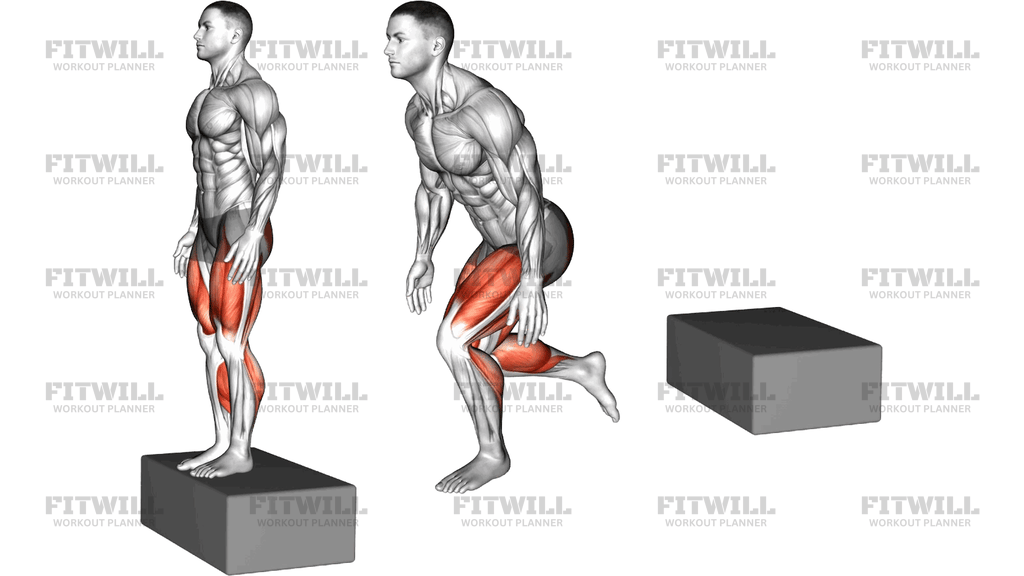
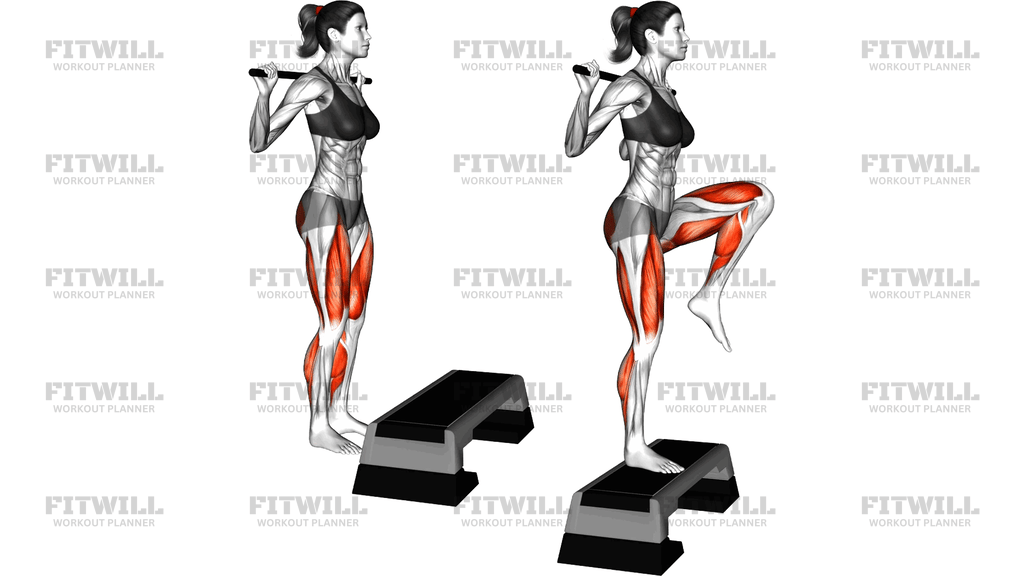
Stick Step Up Knee Raise On Stepbox is a two-part lower body drill that combines a step up with a high knee drive at the top. You hold a light stick across your upper back and shoulders, step one foot onto a step platform, drive through that leg to stand tall on the box, then lift your opposite knee up toward hip height before lowering it back down with control. The stick rests across the shoulders the same way a barbell would in a back squat position, but because it weighs almost nothing, its job is posture and balance rather than load.
This movement is especially useful for people who want the leg strength benefits of step ups along with the hip flexor and core demand of a knee raise, without adding external weight. The knee drive at the top forces you to own the standing position on one leg, which challenges the gluteus medius and the small stabilizers around the hip and ankle far more than a standard step up. Because the working leg stays loaded through the whole rep, the quadriceps and glutes of the stepping leg do most of the pushing.
The setup matters more than it might seem. The stick across your shoulders gives you a physical reference for a tall, level spine: if your torso tips forward or twists as you step up or raise the knee, you will feel it immediately through the stick. The height of the stepbox should put your front knee at roughly a 90 degree angle when your foot is flat on the platform, so the push comes from the whole leg rather than a short, cramped extension.
To execute it well, place your entire foot on the platform, not just the toes, and keep your weight stacked over the midfoot as you stand up. Avoid pushing off the floor with the trailing leg; the bottom leg is only along for the ride until it becomes the knee that drives up. Once you are tall on the box, pause briefly, raise the opposite knee until the thigh is parallel to the floor or slightly higher, then lower it slowly before stepping the same foot back down to the floor.
Common use cases include warm-up circuits, home workouts with minimal equipment, conditioning intervals, and rehabilitation or return-to-training programs where loaded step ups are too aggressive but single leg control is the goal. It also fits well into fat loss circuits because it raises the heart rate while training coordination.
From a safety standpoint, choose a stable, non-slip stepbox and make sure it cannot slide. If you wobble badly at the top or have to hop to complete the knee raise, lower the platform height or slow the tempo until your single leg balance improves. Keep the working knee tracking over the toes and never let it collapse inward as you push up.
[ Workout Log & Planner ]
Put your next workout in Fitwill
Keep your plan and training log ready when you are.


Instructions
- Place a step platform in front of you and hold a stick across the back of your shoulders with both hands gripping it slightly wider than shoulder width, elbows pointing down.
- Stand tall facing the platform, feet hip width apart, and step one foot fully onto the center of the box so your entire foot is in contact with the surface.
- Brace your abdominals, keep your chest up, and press the stick gently into your shoulders so it stays level and does not tip to one side.
- Drive through the heel and midfoot of the top leg to stand up onto the box, fully extending the hip and knee of the working leg.
- At the top, balance briefly on the working leg, then raise your opposite knee up toward hip height, keeping your torso upright.
- Pause for a beat at the top of the knee raise without letting your standing knee lock or drift inward.
- Lower the raised knee back down under control, then step the same foot that stepped up back off the box to return to the floor.
- Exhale as you stand up and drive the knee, inhale as you lower the knee and step back down.
- Complete all repetitions on one leg, then switch sides so the other leg steps up first.
- Reset your stance and grip on the stick between sets, and check that the platform has not shifted position.
Tips & Tricks
- Put your whole foot on the platform, not just the ball of the foot; toe-only contact makes the knee shoot forward and steals work from the glutes.
- The most common mistake is pushing off the floor with the bottom leg. The top leg should do the lifting, so keep the trailing heel down until you are already rising.
- If the stick tips forward as you raise the knee, your torso is leaning instead of staying tall. Squeeze the abdominals and think about growing taller through the crown of the head.
- Do not let the knee of the standing leg cave inward when you drive up; push the knee out slightly over the little toe to keep the hip doing its stabilizing job.
- Pause for one full second at the top before the knee raise. Rushing through the standing position turns the exercise into a hopping motion and removes the balance benefit.
- Lower the raised foot slowly instead of dropping it; the eccentric lowering trains hip flexor control and keeps the rep smooth.
- If hip height on the knee raise is too hard, raise the knee to whatever height lets you stay upright, and increase the height over time.
- Keep the stick light in your hands. Gripping it hard and pulling down on it turns the shoulders and arms into crutches and defeats the balance purpose.
- Use a step height where your front thigh is about parallel to the floor at the start. Too high a box turns the movement into a strain on the hip flexor of the trailing leg.
Frequently Asked Questions
What muscles does the Stick Step Up Knee Raise On Stepbox work?
The quadriceps and glutes of the stepping leg do the main pushing work, while the hip flexors lift the knee at the top. The calves, deep core, and hip stabilizers on the standing leg work throughout to keep you balanced on the box.
Why use a stick across the shoulders instead of holding dumbbells?
The stick gives you a feedback tool for posture and balance without adding meaningful load. If your torso leans or twists during the step up or knee raise, the stick tilts and you feel it right away, which helps you self-correct.
How high should the stepbox be for this exercise?
Choose a height where your front knee sits at roughly a 90 degree angle with your whole foot flat on the platform. If you cannot stand up without pushing off the floor or leaning heavily forward, the box is too high.
Is the Stick Step Up Knee Raise On Stepbox suitable for beginners?
Yes, it is a beginner-friendly option because the stick provides no external load and the platform height can be adjusted. Beginners should start with a low step and focus on a controlled knee raise before adding speed or repetitions.
Should the same leg step up and raise the knee, or opposite sides?
One leg steps up onto the box and the opposite knee drives upward at the top, matching the natural crossed pattern of walking and running. Complete all reps on that side before switching so both legs get equal work.
What is the most common mistake in this movement?
Pushing off the trailing foot from the floor to get up onto the box. This takes tension away from the working leg, so keep the bottom heel planted and let the top leg do the lifting.
Can I do this exercise without a stick?
You can, but you lose the balance and posture feedback that makes this version distinct. If no stick is available, holding a broomstick or light PVC pipe across the shoulders works just as well.
How does this differ from a regular step up?
The knee raise at the top adds a single leg balance challenge and trains the hip flexors, which a standard step up does not. You also spend more time standing on one leg, which strengthens the hip stabilizers on the working side.
Is this exercise safe for people with knee discomfort?
It can be a gentler option than weighted step ups because there is no external load, but stop if you feel sharp pain and choose a lower platform height. Keep the knee tracking over the toes and avoid locking it out at the top.
How many repetitions should I do?
For strength and balance, 8 to 12 controlled reps per leg works well, finishing each side before switching. In conditioning circuits, use a set time such as 30 seconds per side with a slower, steady tempo.