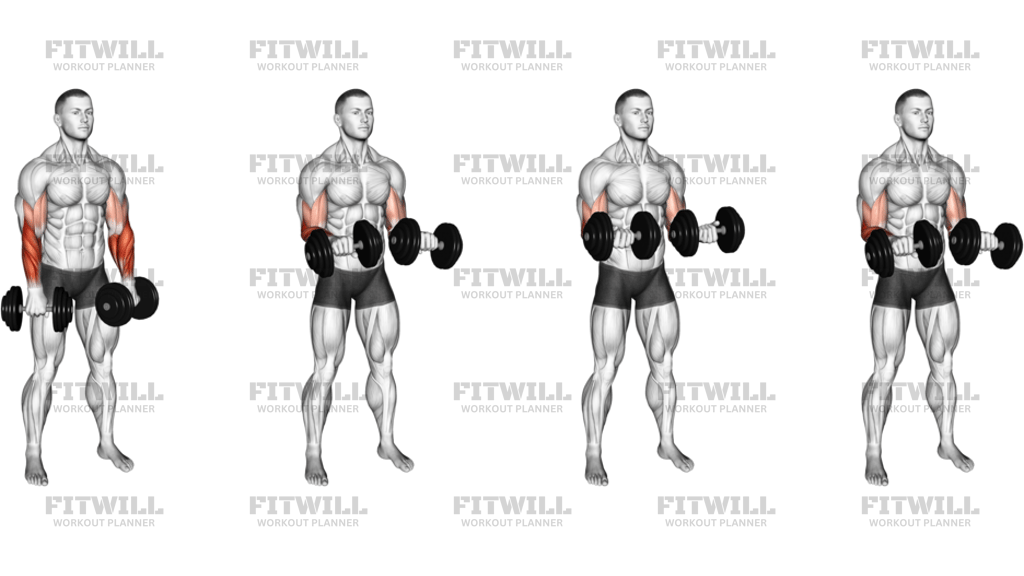
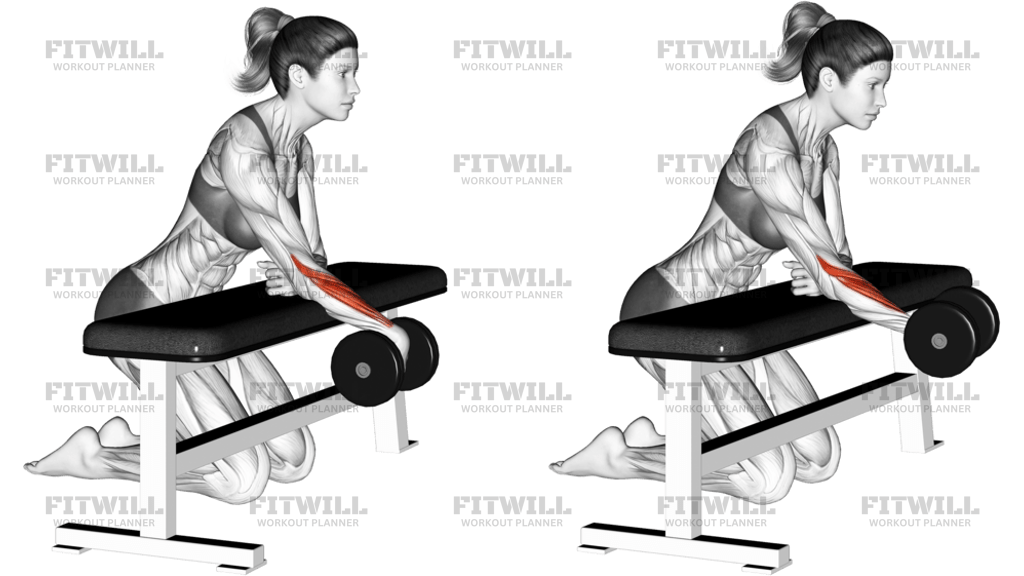
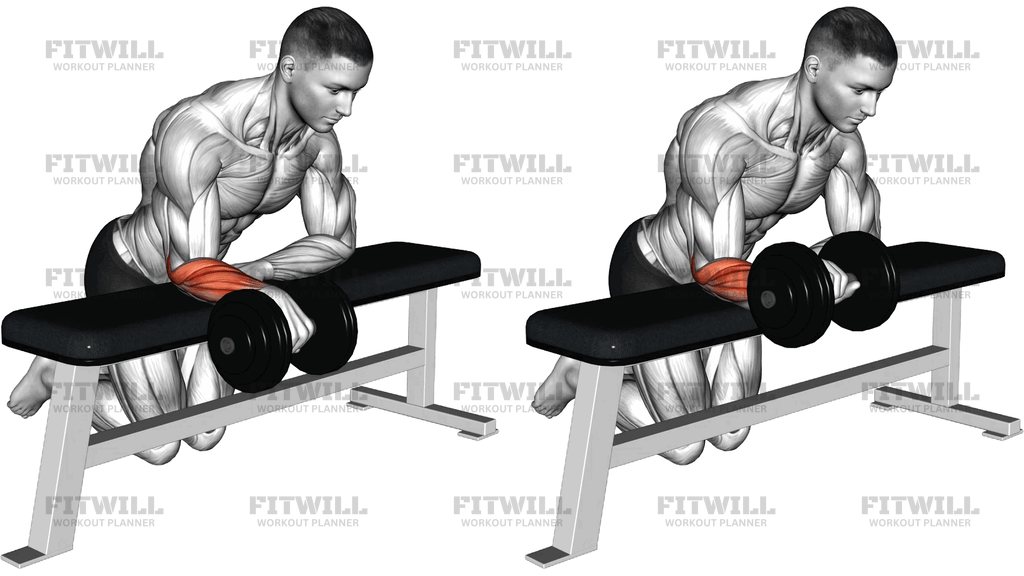
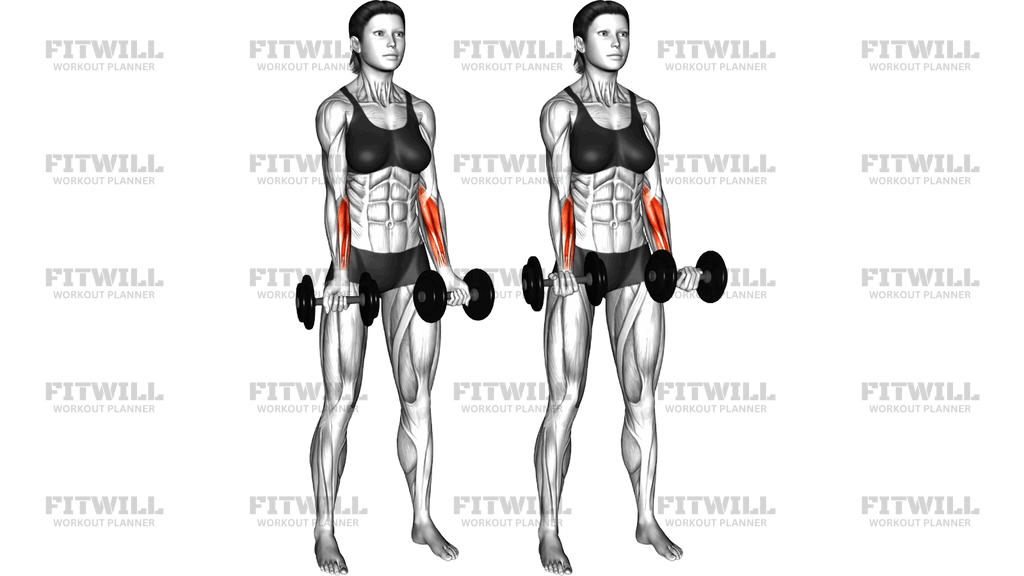
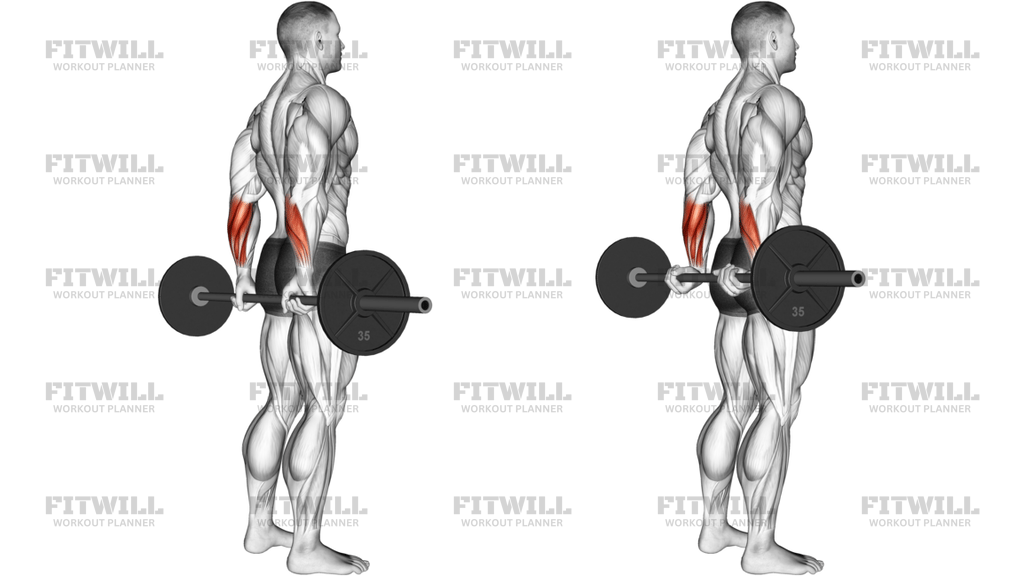
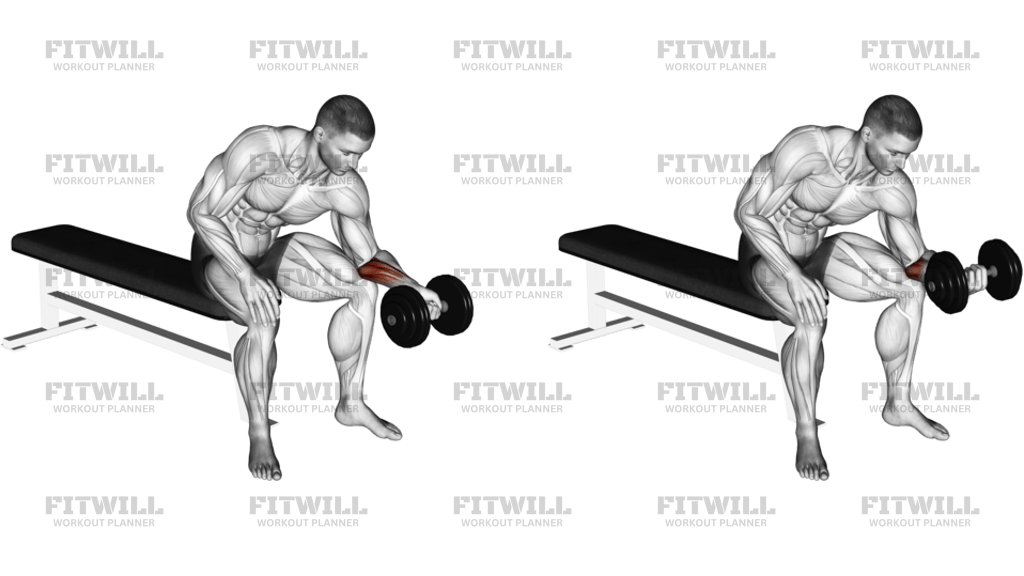
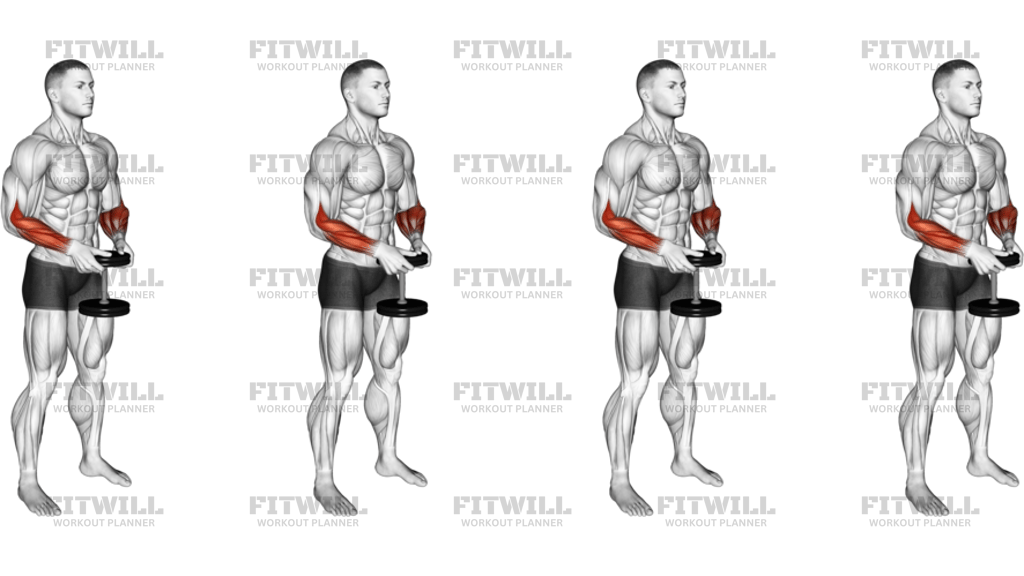
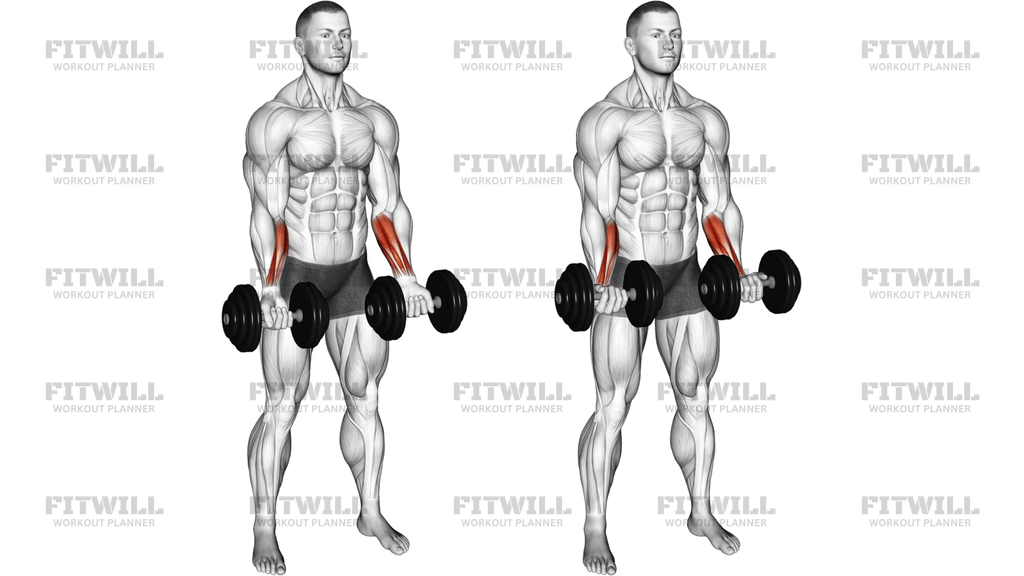
Dumbbell Standing Wrist Radial Flexion
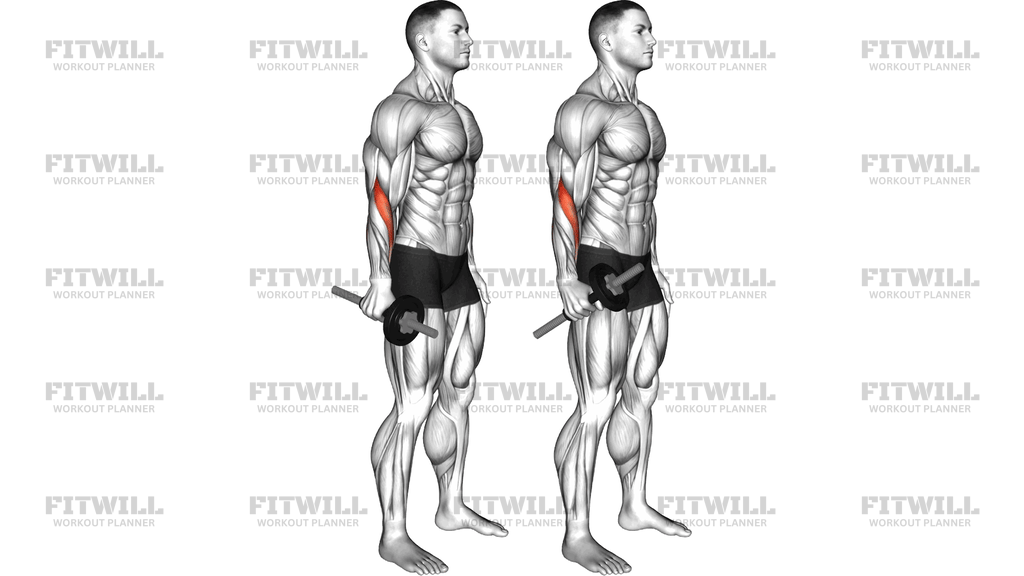
The Dumbbell Standing Wrist Radial Flexion is a forearm isolation exercise that trains the wrist's ability to bend sideways toward the thumb side of the hand, a movement known as radial deviation. You stand tall with a dumbbell held in one hand at your side and simply tilt your wrist upward along the thumb edge, keeping the rest of your arm quiet. The highlight in the muscle diagram falls on the front of the forearm, which is exactly where the flexor carpi radialis does most of its work during this motion.
This is a niche but valuable movement. Most wrist training focuses on curling the palm up or down, yet side-to-side wrist strength is what keeps the hand stable during heavy carries, racquet sports, golf, baseball, martial arts, and everyday tasks like turning a wrench or carrying a suitcase. If you play a sport that loads the thumb side of the wrist, this exercise directly strengthens that exact range.
The setup matters because the arm must stay still for the wrist to do the work. Standing with the dumbbell at your side gives you a natural plumb line: the weight pulls straight down, and the only way to lift it is to hinge at the wrist itself. If your elbow drifts, your shoulder swings, or your torso leans, the forearm loses tension and the movement becomes a sloppy arm swing.
Execution is deliberately small. The dumbbell travels only a few inches, moving away from your thigh as you tilt your knuckles and thumb up and out to the side. The weight should feel like it pivots in your hand rather than being gripped violently. Pause briefly at the top, then lower it back until the wrist returns to neutral, letting the bar of the dumbbell hang in line with your body again.
Use light dumbbells for this exercise, especially at first. The wrist joint operates through a small lever arm, and a weight that feels trivial for curls can quickly overload the small muscles and connective tissue around the wrist. Start with a few pounds, learn the path, and progress gradually over weeks.
This movement fits well at the end of an upper body or grip-focused session, when the forearms are already warm. It pairs naturally with ulnar deviation (the opposite direction) and regular wrist curls to cover the full range of wrist motion. Two to three sets of twelve to twenty controlled reps per side is a sensible working range.
Fitwill
Log Workouts, Track Progress & Build Strength.
Achieve more with Fitwill: explore over 9600 exercises with images and videos, access built-in and custom workouts, perfect for both gym and home sessions, and see real results.
Start your journey. Download today!




Instructions
- Stand upright with your feet about hip-width apart, holding a light dumbbell in one hand with a neutral grip, palm facing your thigh.
- Let your arm hang straight down at your side, elbow fully extended but not locked, and square your shoulders so the dumbbell sits beside your thigh.
- Relax your fingers slightly so the dumbbell rests in your hand rather than being crushed by your grip, and set your head and chest in a tall posture.
- Keeping your elbow and upper arm completely still, tilt your wrist sideways toward the thumb side so the dumbbell swings up and away from your thigh.
- Lift until your wrist reaches its comfortable end range of radial deviation, feeling the forearm muscles shorten along the front of your forearm.
- Hold the top position for a beat without letting your elbow bend or your shoulder rise.
- Lower the dumbbell slowly back down until your wrist returns to neutral and the weight hangs directly beside your leg again.
- Breathe out as you lift the wrist up, and breathe in as you lower it back down.
- Complete all reps on one side, then switch the dumbbell to the other hand and repeat.
Tips & Tricks
- Choose a very light dumbbell — the wrist's side-to-side range is short, and a weight that is even slightly too heavy will pull your whole arm into the movement.
- The most common fault is bending the elbow to help lift the weight; watch that your upper arm stays glued to your side and the only hinge is the wrist itself.
- Avoid rolling your shoulder forward as you lift; if your torso starts twisting toward the working arm, the dumbbell is too heavy or your range is too large.
- Keep your grip firm enough to be safe but loose enough that the wrist, not the fingers, drives the motion — over-squeezing shifts the work away from the radial wrist muscles.
- Do not force the dumbbell past your natural end range; radial deviation is a small joint angle, and chasing extra inches usually comes from the elbow or shoulder instead.
- Train both directions over time — pairing this with a ulnar deviation variation keeps the wrist balanced around the forearm's midline.
- Warm the wrists up with a few unloaded side-to-side tilts before adding the dumbbell, especially if you type, climb, or lift a lot during the week.
- If the handle of the dumbbell presses uncomfortably into your fingers, adjust where it sits in your palm so it pivots across the middle of the hand rather than digging into one spot.
- Tempo matters more than load here: a one-second lift, a brief hold, and a two-second lower will do more for wrist control than fast, swinging reps.
Frequently Asked Questions
Which muscles does the Dumbbell Standing Wrist Radial Flexion work?
The primary mover is the flexor carpi radialis on the front of the forearm, which bends the wrist toward the thumb side. The radial wrist extensors assist, and the grip muscles work isometrically to hold the dumbbell.
How is radial flexion different from a regular wrist curl?
A wrist curl bends the wrist forward and back, while radial flexion tilts the wrist sideways toward the thumb. This exercise targets a different plane of motion that regular curls miss entirely.
How heavy should the dumbbell be for this exercise?
Start with a very light dumbbell, often just a few pounds, because the wrist's sideways range is short and the muscles are small. If your elbow or shoulder moves during the rep, the weight is too heavy.
Is the Dumbbell Standing Wrist Radial Flexion suitable for beginners?
Yes, it is beginner-friendly as long as the load stays light and the range stays comfortable. Beginners should prioritize slow, controlled reps over any attempt to add weight.
Why do I feel this in my elbow instead of my wrist?
That usually means your elbow is bending to help lift the dumbbell. Keep your arm locked straight at your side and let the wrist be the only joint that moves.
Who benefits most from this movement?
Athletes in racquet sports, golf, baseball, and climbing benefit because those activities load the thumb side of the wrist. It is also useful for anyone who carries heavy objects or wants balanced forearm development.
Can I do this exercise seated instead of standing?
You can, but the standing version shown here lets the dumbbell hang vertically beside your thigh, which gives you a clean reference for the movement path. Seated variations often let the elbow drift more easily.
How many sets and reps should I perform?
Two to three sets of twelve to twenty reps per side works well for a small muscle group like this. Higher reps with light weight build endurance and control better than heavy, low-rep sets.
Is this exercise safe for sore or previously irritated wrists?
Start with no weight and move through the range pain-free before adding a dumbbell, and stop if you feel sharp or pinching sensations. If discomfort persists, have a qualified professional assess the wrist before loading it.
Can I train both wrists on the same side of motion in one set?
Yes, but each hand tilts in its own direction — the right wrist deviates to the right and the left wrist to the left if you train both at once. Doing one side at a time with a single dumbbell makes it easier to keep the elbow still and monitor the path.