Stepback Russian Twist
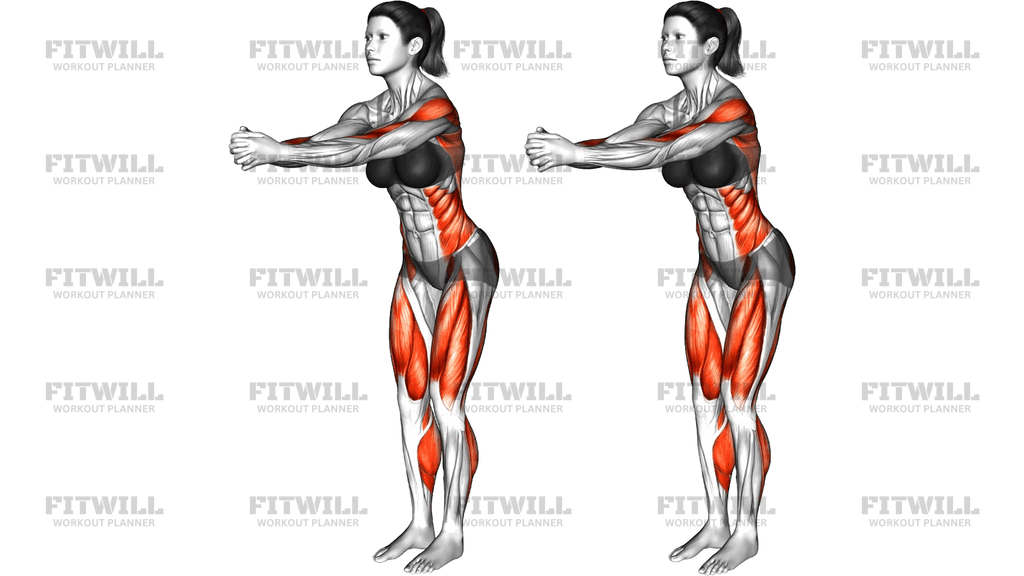
The Stepback Russian Twist is a standing rotational exercise that combines the twisting action of a traditional Russian twist with a controlled reverse step. Instead of sitting on the floor and rotating a weight, you stay upright on your feet, clasp your hands in front of your chest with your arms extended, and rotate your torso from side to side while stepping one foot back with each rep. Because you are on your feet, the movement demands more from your balance and hip stability than the seated version.
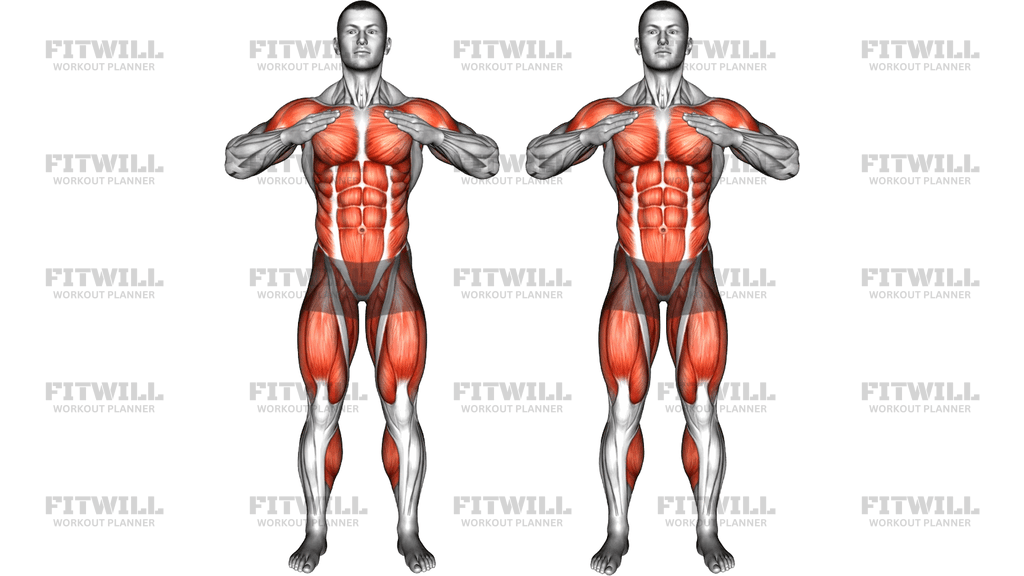
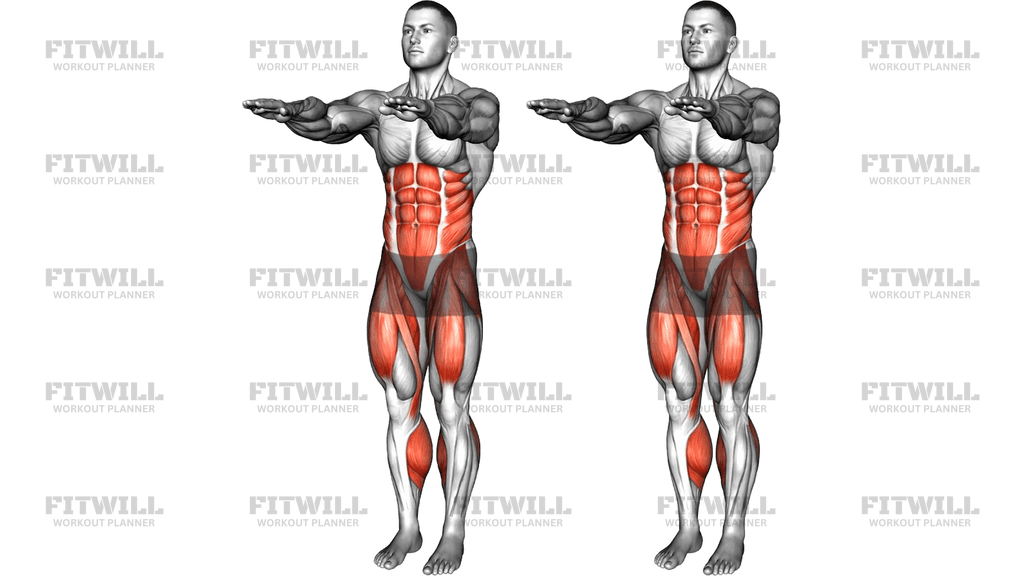
The primary work comes from the obliques, which drive the rotation of the ribcage and pelvis. Your rectus abdominis and deep core bracing muscles hold the trunk rigid between rotations, while the glutes, quads, and calves of the stepping leg absorb the load and control the step back. The shoulders and upper back stay engaged isometrically to keep the extended arms from dropping, so you get a surprising amount of upper-body endurance work without moving any equipment at all.
Setup matters here because the standing position removes the floor support that the seated Russian twist provides. Your torso has to create its own stability, which means your spine angle, foot position, and bracing need attention before the first rep. Stand tall with a soft bend in the knees, weight distributed evenly, and the arms reaching straight forward at chest height. If you lean back or let the arms drift, the rotation loses its connection to the hips and the obliques stop doing the driving.
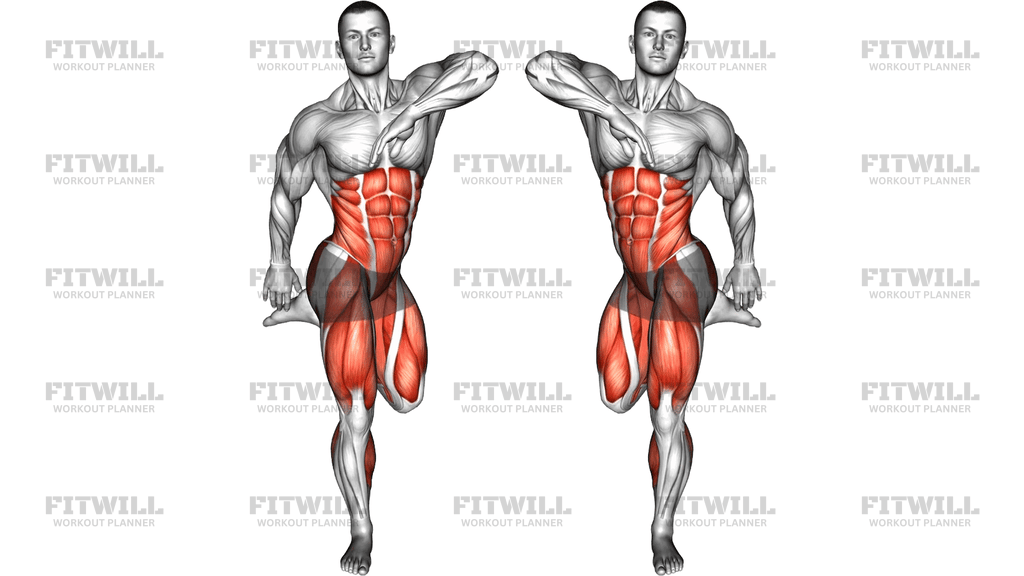
To perform it well, think of rotating from the ribcage rather than swinging the arms. As you twist to one side, step the opposite foot back into a short reverse stance, allowing the hips to turn with you. The back heel lifts naturally, the front knee stays stacked over the ankle, and the arms stay glued to the chest height you set at the start. Return to standing under control, then rotate to the other side with the other leg stepping back.
This exercise suits people who want standing rotational strength without equipment, athletes looking for a warm-up that links the core to the lower body, and anyone who finds floor-based twists uncomfortable on the tailbone or lower back. It fits well as a core finisher, a dynamic warm-up drill, or part of a circuit where you want rotation plus a balance challenge.
Keep the tempo moderate and the rotations crisp but not violent. The most common faults are cranking the rotation from the arms, collapsing the lower back into an arch, and taking too long a step back, which turns the move into a lunge and steals the work from the obliques. Master the range you can control while keeping both hips and shoulders moving together, and progress speed or reps from there.
[ Workout Log & Planner ]
Put your next workout in Fitwill
Keep your plan and training log ready when you are.


Instructions
- Stand upright with your feet hip-width apart, knees soft, and your weight spread evenly across both feet.
- Clasp your hands together and extend both arms straight forward at chest height, keeping a small bend in the elbows.
- Brace your core as if preparing for a light push to the stomach, and pull your ribs down so your lower back is not arched.
- Rotate your torso to the left from the ribcage, keeping the arms locked at chest height and letting the hips turn with the shoulders.
- As you rotate, step your right foot back into a short reverse stance, landing on the ball of that foot with the heel lifted.
- Pause briefly at the end of the rotation with your chest facing left and both legs supporting your weight.
- Push through the front heel to stand back up as you rotate through center toward the right side.
- Step your left foot back as you rotate right, mirroring the same arm height and hip turn.
- Exhale as you rotate into each twist, inhale as you return to center, and keep breathing steadily rather than holding your breath.
- Alternate sides for the desired number of reps, resetting your posture and arm height at center whenever you feel the form drift.
Tips & Tricks
- The arms should travel as one fixed unit with the ribcage. If your hands whip past your chest, the shoulders are doing the twist instead of the obliques — slow down and lead with the ribs.
- Keep the step back short, around the length of one of your own feet. A long reverse step turns this into a lunge and the front knee drifts forward of the ankle.
- Watch for the lower back arching as you rotate. If you feel it in your spine rather than your waist, tighten the brace and rotate slightly less far.
- The back foot should land on the ball of the foot with the heel up, not flat. A flat back foot blocks the hip rotation and strains the ankle.
- Keep both knees slightly bent the whole time. Locking the knees makes the rotation grind through the lumbar spine instead of the hips.
- If you lose balance, widen your base slightly at center between reps rather than leaning your torso to catch yourself.
- Rotate the hips as well as the shoulders. A twist where the pelvis stays frozen forward puts all the stress on the lower back.
- For an extra challenge, hold a medicine ball or light plate at the chest, but only after the bodyweight version is smooth at a steady tempo.
Frequently Asked Questions
What muscles does the Stepback Russian Twist work?
The obliques drive the rotation, supported by the rectus abdominis and deep core for bracing. The glutes, quads, and calves of the stepping leg control the reverse step, and the shoulders work statically to hold the arms extended.
How is the Stepback Russian Twist different from a seated Russian twist?
The standing version replaces the floor support with your own balance, so your hips, glutes, and legs share the work with your core. The stepback also trains the hips to rotate with the torso, which the seated version cannot do.
Is the Stepback Russian Twist suitable for beginners?
Yes, as long as you start with a small rotation range and a short stepback. Beginners can also practice the twist without the step until the arm and hip coordination feels natural.
Should my hips move during the Stepback Russian Twist?
Yes. The pelvis should turn with the ribcage on each rotation, and the back leg's heel lifts to allow that turn. Keeping the hips locked forward shifts stress into the lower back.
Why do my arms keep swinging instead of my torso rotating?
This usually happens when the core is not braced or the tempo is too fast. Clasp the hands firmly, keep the arms locked at chest height, and initiate each rep by turning the ribcage, letting the arms follow.
How far back should I step on each rep?
A short step is enough — roughly the length of your own foot. The step exists to let the hips rotate and add a balance demand, not to load the legs like a lunge.
Can I add weight to the Stepback Russian Twist?
Once the bodyweight version is smooth, hold a light medicine ball or plate at the chest with the arms still extended forward. Increase the weight only if you can keep the hips and shoulders rotating together.
What should I do if the movement bothers my lower back?
Reduce the rotation range, check that your ribs are down and your core is braced, and make sure the hips are turning rather than the twist coming from the lumbar spine. If discomfort persists, switch to a slower tempo or a seated Russian twist and rebuild gradually.
How many reps of the Stepback Russian Twist should I do?
Eight to twelve controlled rotations per side works well as a core set, or ten per side at a lighter pace as a dynamic warm-up. Quality of rotation matters more than total reps.