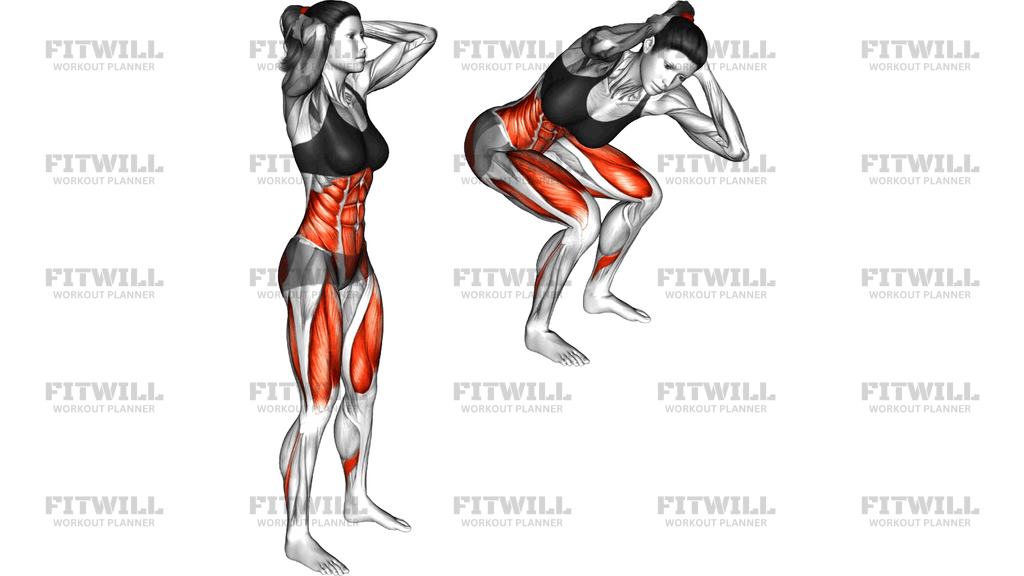
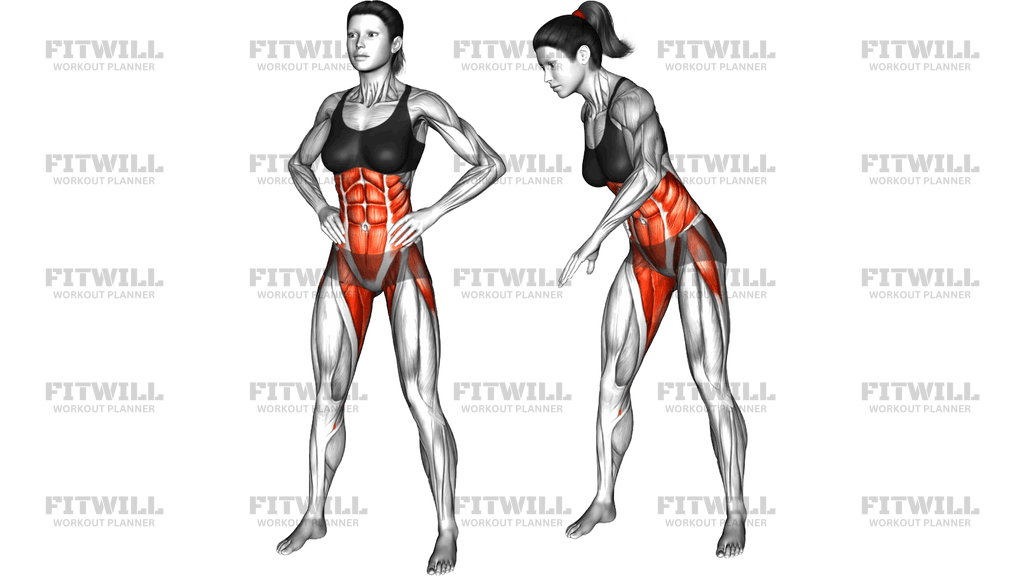
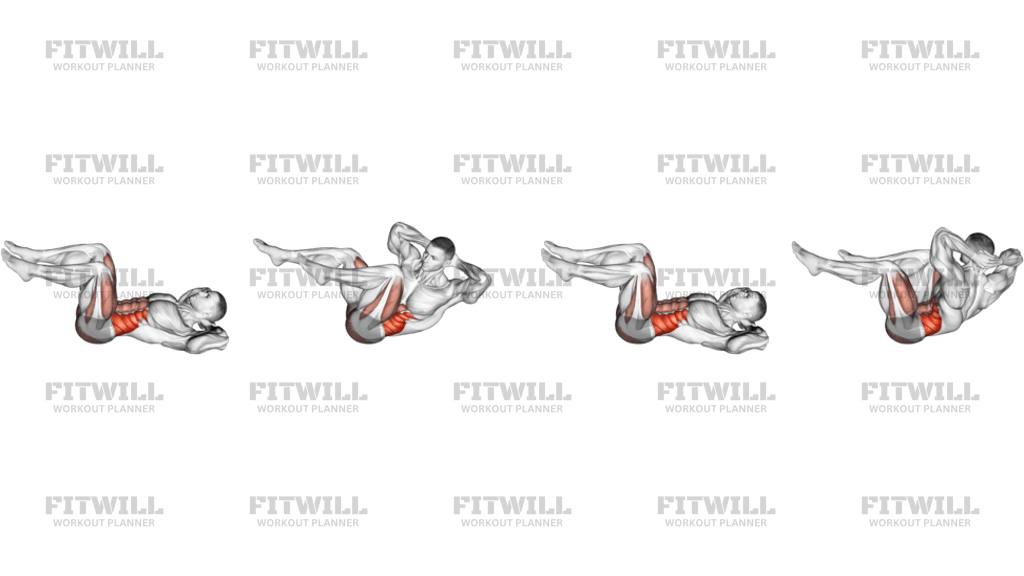
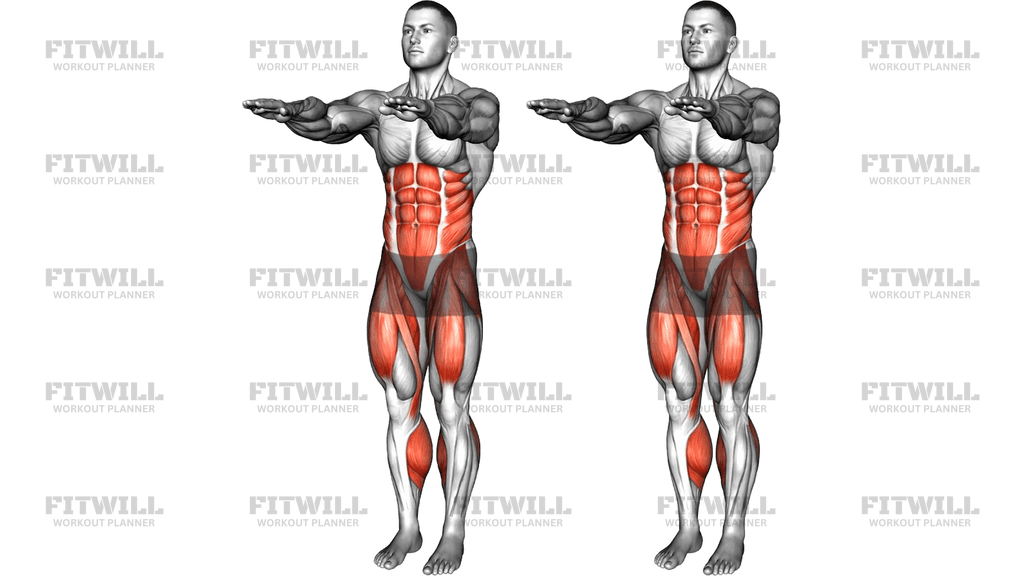
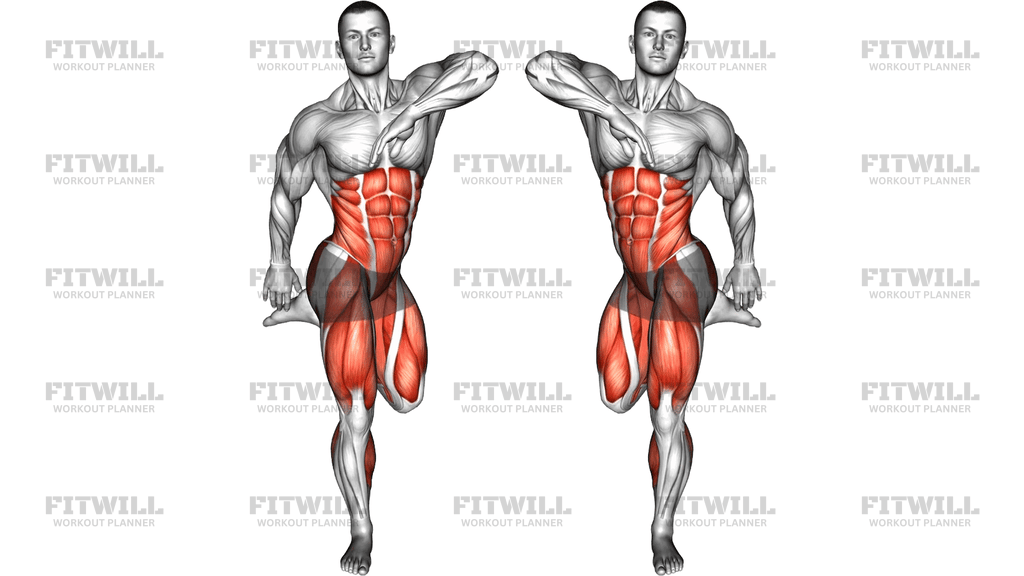
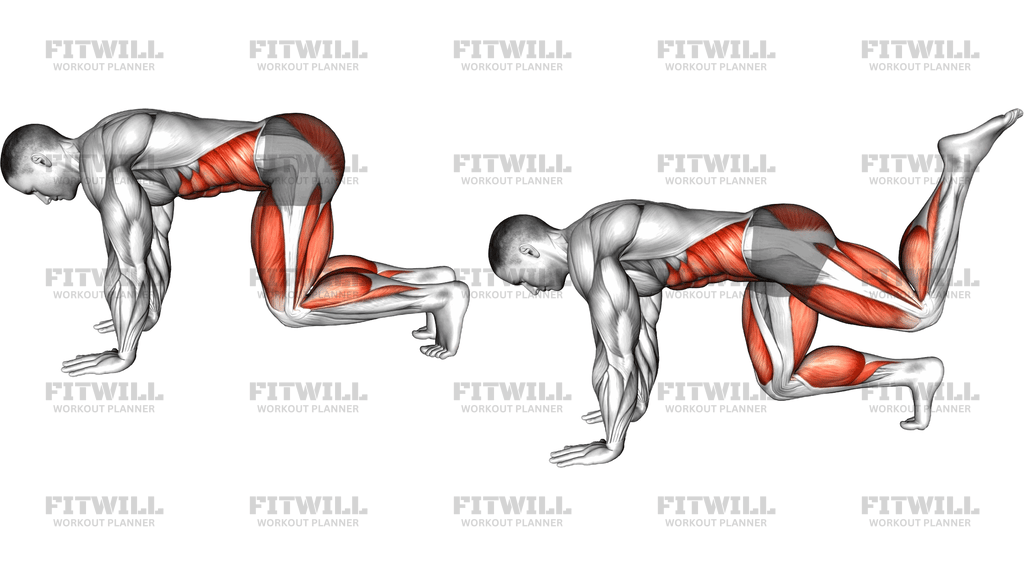
Alternate Knee Raise Side Reach
Alternate Knee Raise Side Reach is a standing body weight core exercise that combines a knee lift with a lateral bend of the torso. You stand tall with your hands placed on your upper chest, then raise one knee up in front of you while drawing the same-side or opposite side of your torso down toward that knee, return to standing, and repeat on the other side. The two halves of the movement — the knee raise and the side reach — turn a simple crunch pattern into a diagonal challenge for the entire midsection.
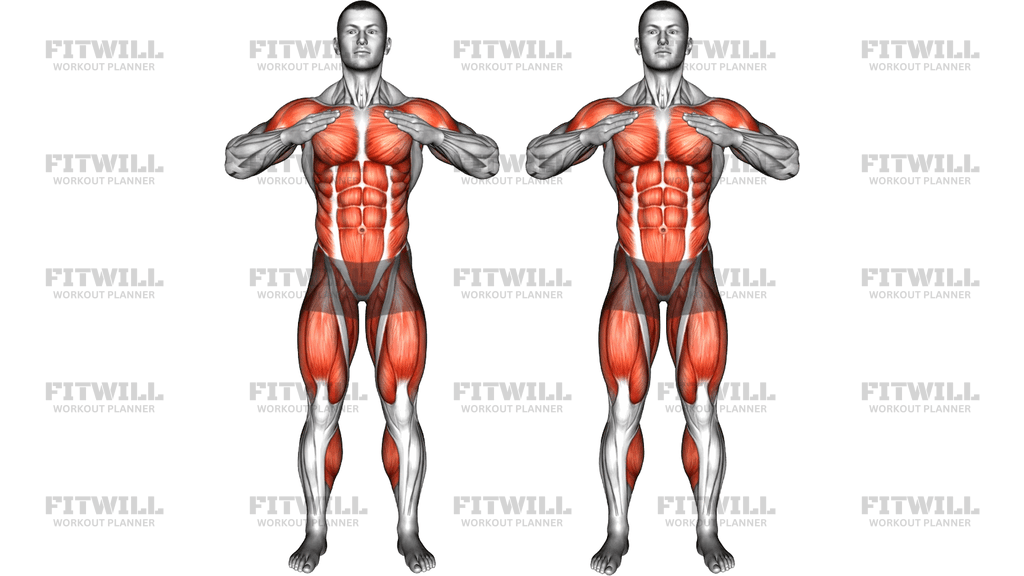
The main muscles working here are the obliques on the side of your waist, which contract to pull your ribcage toward your hip and control your torso as you straighten back up. The rectus abdominis braces and flexes the trunk slightly, the hip flexors drive the knee up, and the glutes and standing leg work hard to keep you balanced and centered. Because you are on one foot for half of every rep, this drill also quietly trains the hip stabilizers that matter for walking, running, and changing direction.
This is a useful exercise for people who want core work without getting on the floor, which makes it a natural fit for warm-ups, home workouts, group training, and desk-break routines. Older adults and beginners often find it more approachable than floor crunches because the standing position keeps the neck and lower back in a comfortable posture. Athletes like it because the knee drive plus lateral flexion mirrors real rotation and side-bending patterns used in racquet sports, throwing, and running.
Setup matters more than it looks. Feet should be about hip-width apart with weight spread evenly across the whole foot, and your hands resting lightly on your upper chest rather than pulling on your neck. Keep the standing knee soft, not locked, so your balance has a shock absorber. A tall spine before each rep gives the obliques a full range to shorten through, whereas a slouched start shortens the movement before it begins.
To execute the movement well, exhale as you lift the knee and let your torso fold sideways so the elbow and knee travel toward each other. Think about crushing a can on the side of your waist rather than just swinging your arm or shoulder across. Move at a steady pace — about two seconds up, a brief pause at the top, two seconds down — so your muscles, not momentum, do the work. Complete all reps on one side or alternate legs rep by rep, both are effective.
The most common fault is leaning the whole body sideways or dropping the chest forward instead of side-bending at the waist, which shifts work away from the obliques. Another is snapping the knee up fast and letting it fall, which turns the drill into a balance exercise only. Keep the range honest: a controlled, moderate side bend with a deliberate knee lift beats a big, floppy reach every time. If balance is a struggle, hold a wall or the back of a sturdy chair with one hand until your stabilizers catch up.
[ Workout Log & Planner ]
Put your next workout in Fitwill
Keep your plan and training log ready when you are.


Instructions
- Stand with your feet hip-width apart, weight spread evenly across both feet, and your spine tall with your shoulders relaxed.
- Place your hands lightly on your upper chest with elbows out to the sides, and soften both knees slightly so they are not locked.
- Brace your midsection as if preparing for a light push, and shift your weight subtly toward one leg without leaning your torso.
- Exhale as you drive one knee up in front of you to about hip height.
- At the same time, side-bend at the waist so the elbow on the reaching side travels down and across toward the raised knee, shortening the side of your waist.
- Pause briefly at the top, feeling the squeeze along the side of your ribcage and hip.
- Inhale as you lower the knee and unfold your torso back to the tall starting position under control.
- Repeat on the other leg, either alternating rep by rep or completing all reps on one side before switching.
- Keep your head neutral and eyes forward throughout so the bend happens at your waist, not your neck.
- Reset your stance and brace between reps if you feel your balance drifting or your lower back starting to arch.
Tips & Tricks
- The reach should come from your waist, not your arm — if your shoulder is doing the traveling, your obliques are being shortchanged.
- If you find yourself wobble-heavy on one side, slow the lowering phase to a three-count; the slow descent doubles as balance training for the standing leg.
- Avoid pulling your head forward with your hands; keep the touch on your upper chest light enough that your fingers could lift off at any moment.
- Do not let the standing knee collapse inward as the opposite knee rises — press the big toe into the floor to keep the hip stacked.
- A common mistake is bending straight forward into a crunch instead of sideways; imagine sliding your ribcage toward your hip bone along a diagonal line.
- Keep the raised foot dorsiflexed (toes pulled up) — it tightens the knee drive and stops the leg from swinging loosely.
- If your lower back tightens up, reduce the knee height and focus purely on the side bend; the range should never come at the cost of arching.
- Holding a light wall touch with one hand is a legitimate regression — progress to hands-free once you can complete ten controlled reps per side.
- Breathe out on the knee raise and reach, in on the return; holding your breath is the fastest way to lose your brace mid-set.
Frequently Asked Questions
What muscles does Alternate Knee Raise Side Reach work?
The obliques on the side of your waist are the primary movers, with support from the rectus abdominis, hip flexors that lift the knee, and the glutes and hip stabilizers of the standing leg.
Is Alternate Knee Raise Side Reach suitable for beginners?
Yes. The standing position is gentler on the neck and lower back than floor crunches, and beginners can hold a wall or chair for balance while learning the knee-and-reach pattern.
Should I reach with the elbow on the same side as the raised knee or the opposite side?
Bringing the same-side elbow toward the raised knee emphasizes a direct side crunch of the obliques, while the opposite-side reach adds a diagonal twist. Either works — just pick one pattern per set so you can judge progress.
Why do I wobble when I lift my knee?
Balancing on one leg challenges the glutes and ankle stabilizers of the supporting leg. Soften the standing knee, press through the whole foot, and slow the movement; balance usually improves within a couple of weeks.
How high should I raise my knee?
About hip height is a good target, but only as high as you can lift without your torso collapsing forward or your lower back arching. Height matters less than a clean side bend and controlled return.
Can I use Alternate Knee Raise Side Reach as a warm-up?
Absolutely. Performed slowly for eight to ten reps per side with no rush, it raises core temperature, wakes up the hip flexors, and rehearses the side-bending pattern before heavier lifting or running.
What is the most common mistake in this exercise?
Leaning the entire torso sideways or hinging forward instead of bending at the waist. Fix it by starting tall, bracing, and consciously squeezing the side of your waist as the elbow travels toward the knee.
What can I substitute if standing balance is too difficult?
Try the same knee-and-reach pattern seated on a sturdy bench, or perform a standing side bend without the knee lift. Both keep the oblique focus while removing the single-leg demand.
How many reps and sets should I do?
For general core strength, two to three sets of ten to fifteen controlled reps per side works well. Stop the set when your form leans toward swinging rather than squeezing.
Is it safe for my lower back?
For most people yes, provided the side bend is moderate and controlled and the knee never exceeds a height that forces your spine to arch. If any movement reproduces pain rather than muscular effort, reduce the range or consult a qualified professional.