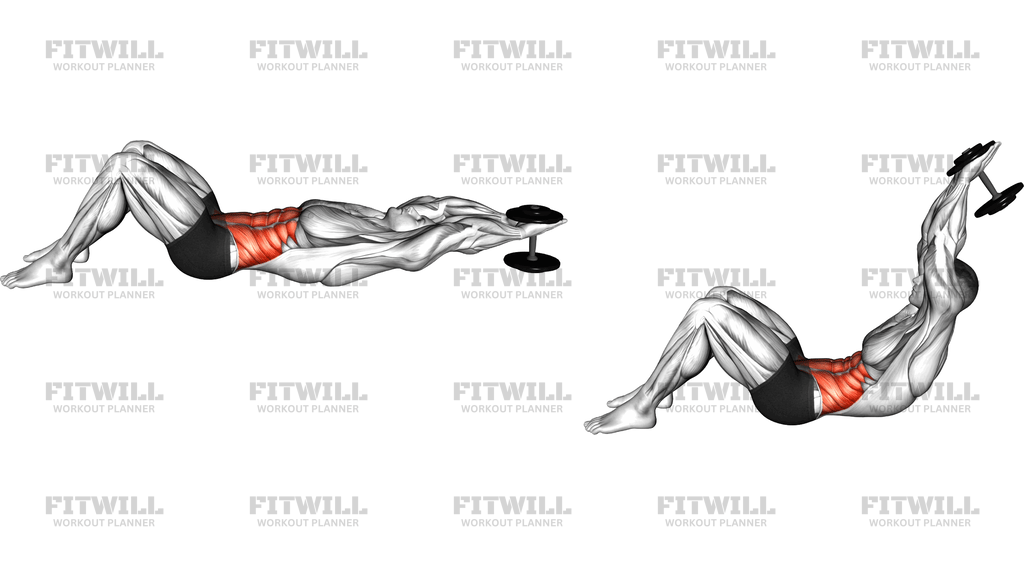
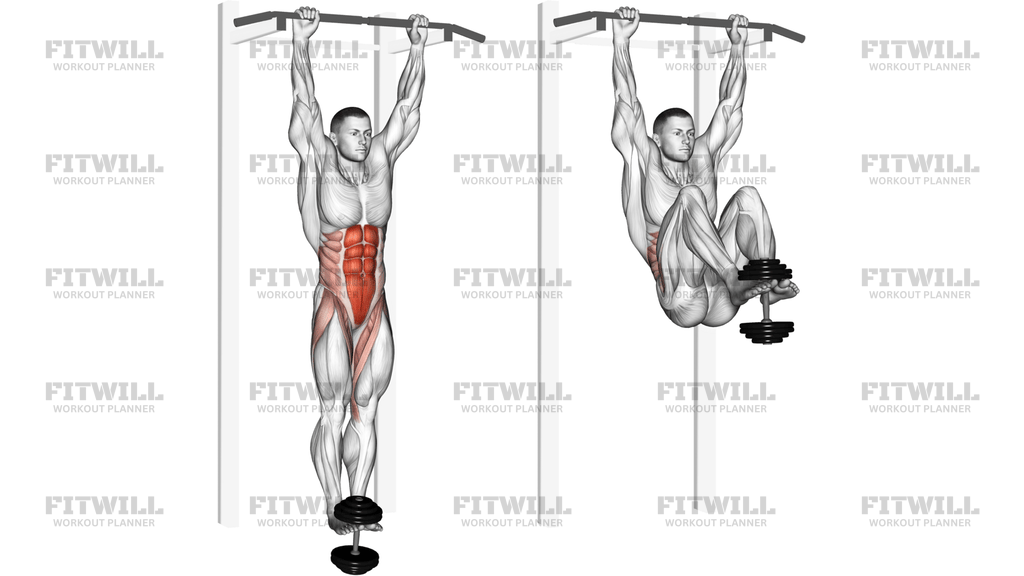
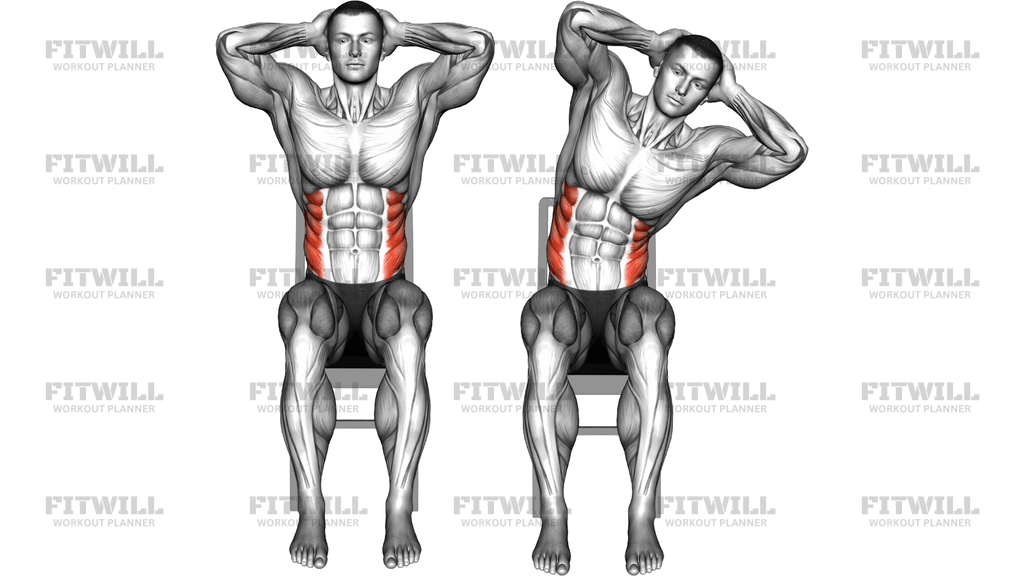
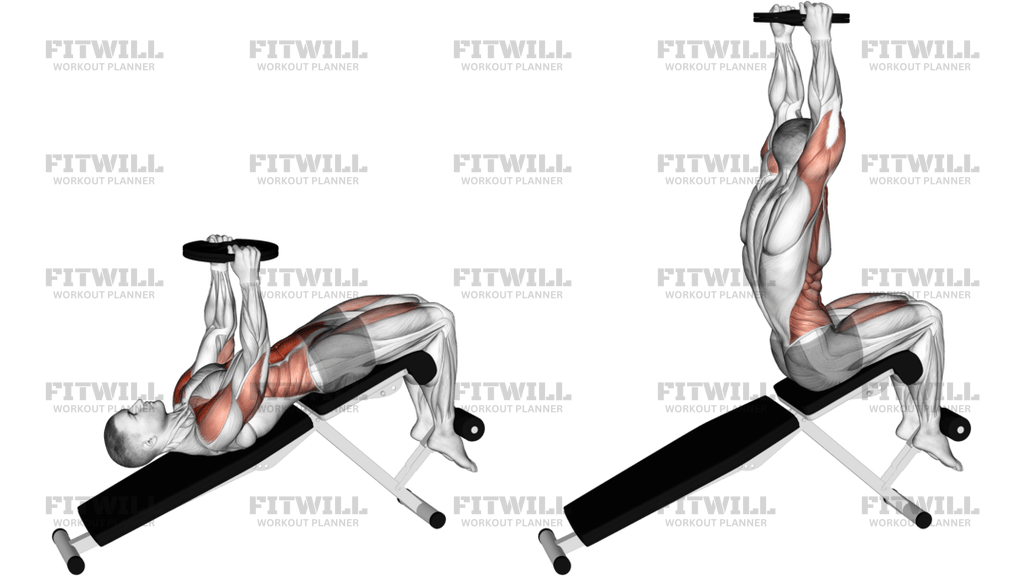
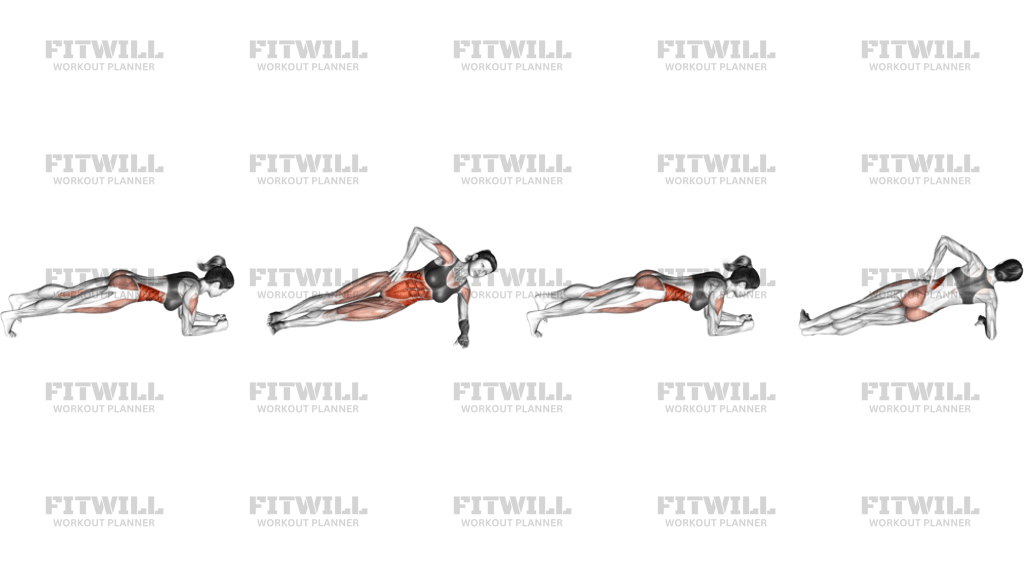
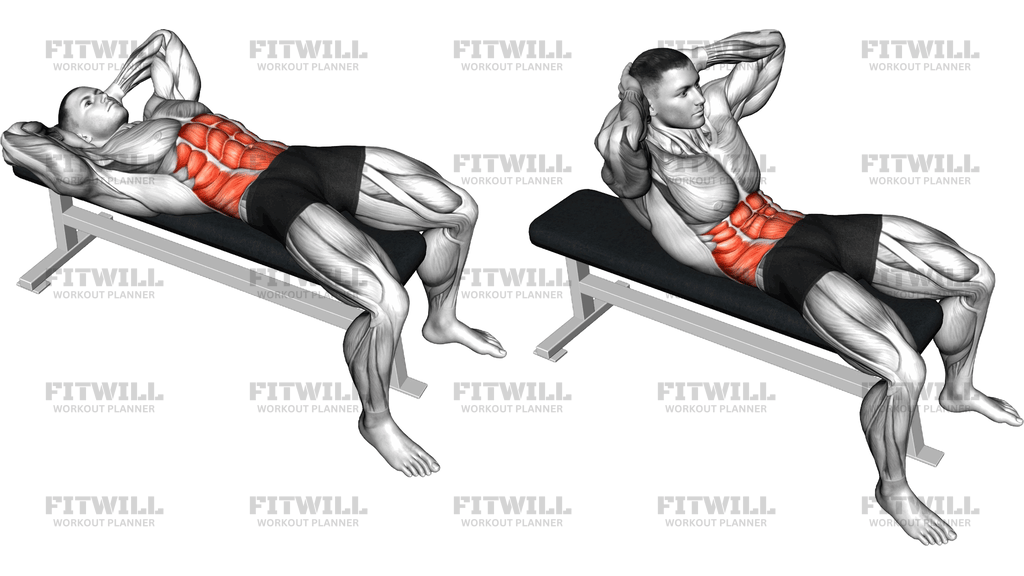
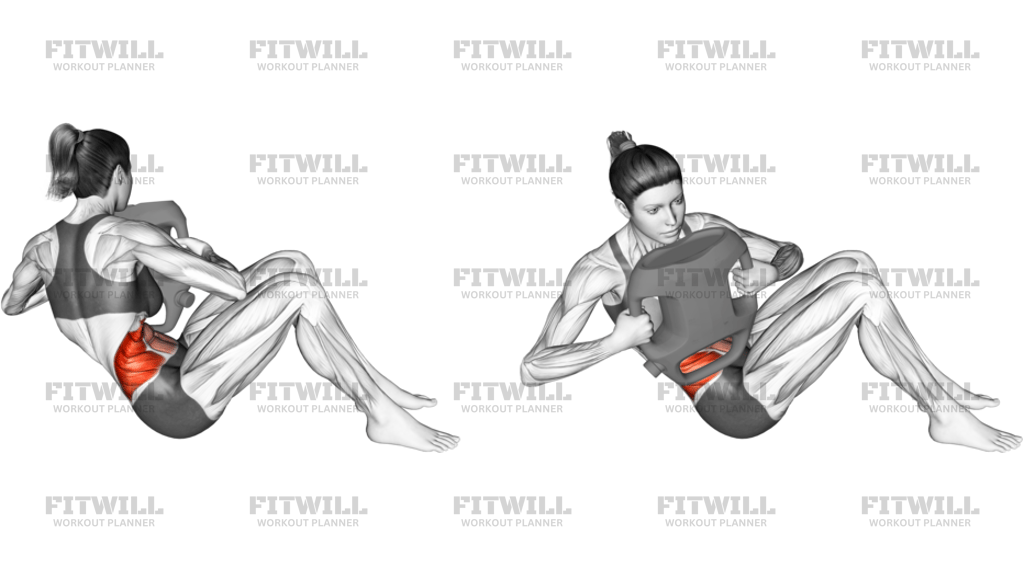
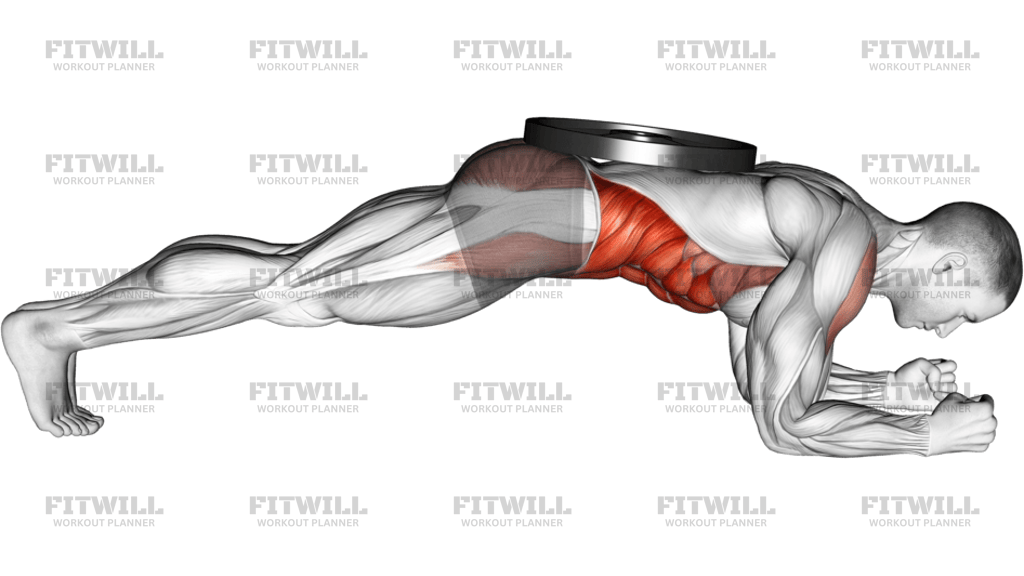
Weighted Plate Lying Side Oblique Crunch
The Weighted Plate Lying Side Oblique Crunch is a lateral flexion exercise performed from a side-lying position on the floor. You lie on your side with your legs extended and stacked, hold a weight plate against your chest with your top hand, and crunch your upper body sideways off the floor by contracting the obliques on the working side. The bottom arm stays along the floor for support, which keeps your torso from twisting and forces the side of your waist to do the work.
This movement targets the obliques directly, along with the deeper lateral core muscles that bend the spine sideways. Because you are lying down, your spine is supported and the range is naturally short, which makes it easier to feel the contraction than in standing side bends where gravity and hip movement can take over. The plate on your chest adds load that body-weight side crunches lack, which is useful once the unweighted version stops giving you a challenge.
It suits lifters who want to build the sides of their waist, people rehabbing or prehabbing lateral core strength under low spinal compression, and anyone whose oblique training relies only on rotation work like woodchops or twists. Side flexion is a distinct function of the obliques, and this is one of the simplest ways to load it.
Setup matters more than it looks. Lie fully on your side rather than angled toward your back, keep your hips stacked and still, and place the plate flat against your upper chest so it moves with your ribcage. If your hips rock or your shoulders rotate, the bottom obliques start assisting and the working side loses tension. A mat under you makes the position comfortable and keeps your bottom shoulder and hip from digging into the floor.
Execution should feel like a short, deliberate side crunch, not a heave. Lift your top shoulder toward your top hip by curling the side of your torso, pause briefly at the top where the obliques are shortest, then lower slowly until your shoulder lightly touches down. Because the plate sits close to your chest, the leverage is modest, so progress by adding small plate increments rather than swinging the weight.
Use it as an accessory after your main lifts, usually 2-3 sets of 10-15 controlled reps per side. Always do both sides, and start with your weaker side so the workload stays even. Keep the movement smooth and avoid pulling on your head or neck at any point.
[ Workout Log & Planner ]
Put your next workout in Fitwill
Keep your plan and training log ready when you are.


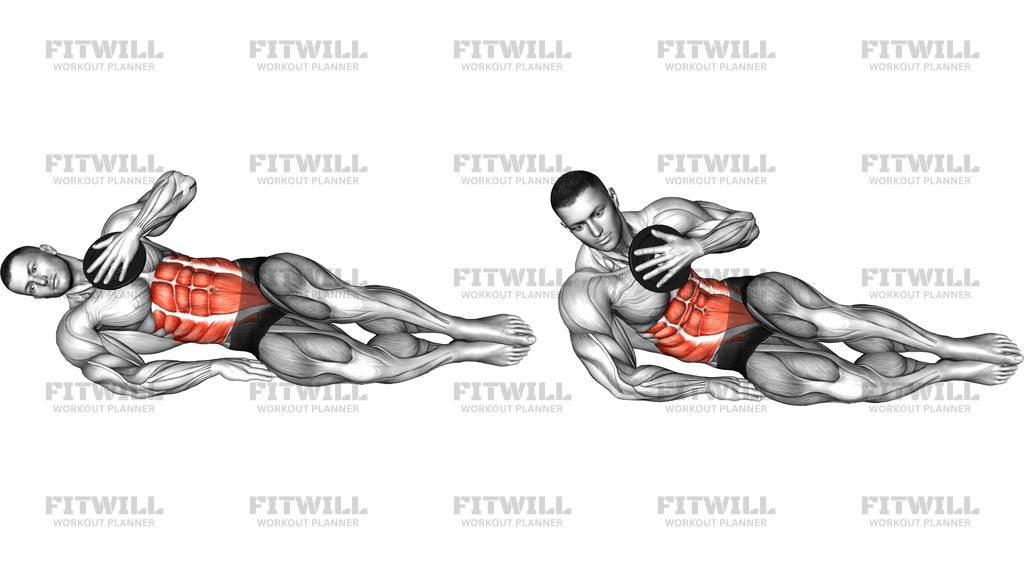
Instructions
- Lie on your side on an exercise mat with your legs fully extended and stacked, one foot on top of the other.
- Hold a weight plate flat against your upper chest with your top hand, fingers spread across the face of the plate, and rest your bottom arm along your body or on the floor for support.
- Align your shoulders and hips in a straight vertical stack so your torso is truly side-on, not rolled toward the ceiling or the floor.
- Brace your core lightly and keep your hips and legs completely still for the entire set.
- Exhale and crunch sideways, lifting your top shoulder off the floor and curling the side of your waist toward your top hip as far as your obliques can shorten without your hips rotating.
- Pause for a beat at the top with the obliques fully contracted, keeping the plate pressed to your chest.
- Inhale and lower yourself in a controlled manner until your top shoulder lightly touches the floor, maintaining tension rather than dropping.
- Complete all reps on one side, then roll over, switch the plate to your other hand, and repeat on the opposite side.
- Between sets, reset your body alignment before starting again so you don't begin each rep already twisted.
Tips & Tricks
- The most common mistake is turning this into a half side plank: if your hips lift or tilt during the crunch, you're using leverage instead of obliques. Pin your bottom hip into the mat and think of only your shoulder girdle moving.
- Keep the plate pressed snugly against your upper chest. Letting it drift forward turns the rep into a chest press motion and offloads the obliques at the top.
- The range is genuinely short in this position. If your shoulder is flying up several inches, your torso has rotated rather than side-flexed; a few inches of clean lateral curl is a full rep.
- Do not interlock fingers behind the plate and squeeze it hard, which tenses your chest and shoulders. A flat palm with light pressure is enough to secure it.
- Start with a lighter plate than feels necessary. The obliques work through a short lever here, and a heavy plate encourages jerking off the floor instead of curling.
- If your bottom shoulder or hip aches on a hard floor, use a thicker mat or a folded towel under your torso rather than shortening the range to avoid the contact point.
- Match reps strictly side to side, and start with your weaker side. Because the plate shifts your center of gravity slightly, letting the stronger side run extra reps builds asymmetry.
- Avoid resting fully relaxed between reps. Letting your torso go completely limp onto the floor each rep makes the first inch of the next crunch a momentum lift instead of a muscle contraction.
Frequently Asked Questions
Which muscles does the Weighted Plate Lying Side Oblique Crunch work?
The external and internal obliques on the working side do the main job of bending your torso sideways. The rectus abdominis and deeper lateral core muscles like the quadratus lumborum assist throughout the lift.
Is the Weighted Plate Lying Side Oblique Crunch good for beginners?
Yes, provided you start with a light plate or no plate at all. The floor supports your spine and the range is short, so it is one of the safer ways to learn lateral core control before adding load.
Why hold the plate on the chest instead of behind the head?
Holding the plate flat against your upper chest keeps the load close to your trunk and moves with your ribcage, which limits strain on your neck and shoulders. Pulling weight behind your head in a side-lying position invites neck pulling and shoulder discomfort.
Should my legs stay flat on the floor during the Weighted Plate Lying Side Oblique Crunch?
Yes, keep your legs extended and stacked with hips planted. Moving your hips or knees turns the exercise into a different, less targeted movement and steals work from the obliques.
My hips rotate during each rep. How do I fix that?
Press your bottom hip firmly into the mat, engage your glutes slightly, and reduce the plate weight. If rotation persists, practice the body-weight version until your side-flexion control improves.
How heavy should the plate be for the Weighted Plate Lying Side Oblique Crunch?
Choose a plate you can lift for 10-15 slow reps per side with a visible pause at the top and zero hip movement. Most people should begin with a 2.5-5 kg plate and progress gradually.
Can I substitute another exercise if I don't have a weight plate?
A dumbbell held flat against the chest, a small kettlebell, or simply the body-weight version all work. A cable side crunch or side plank variations cover similar oblique function if you prefer standing or braced positions.
How many sets and reps should I do per side?
Two to three sets of 10-15 controlled reps per side works well as an accessory after your main training. Prioritize a full contraction and a slow lowering over adding reps quickly.
Is it safe to do the Weighted Plate Lying Side Oblique Crunch every day?
Daily training is unnecessary since the obliques respond to the same recovery pattern as other muscles. Two to four sessions per week with rest days between is a more productive approach.