Barbell Core Squat
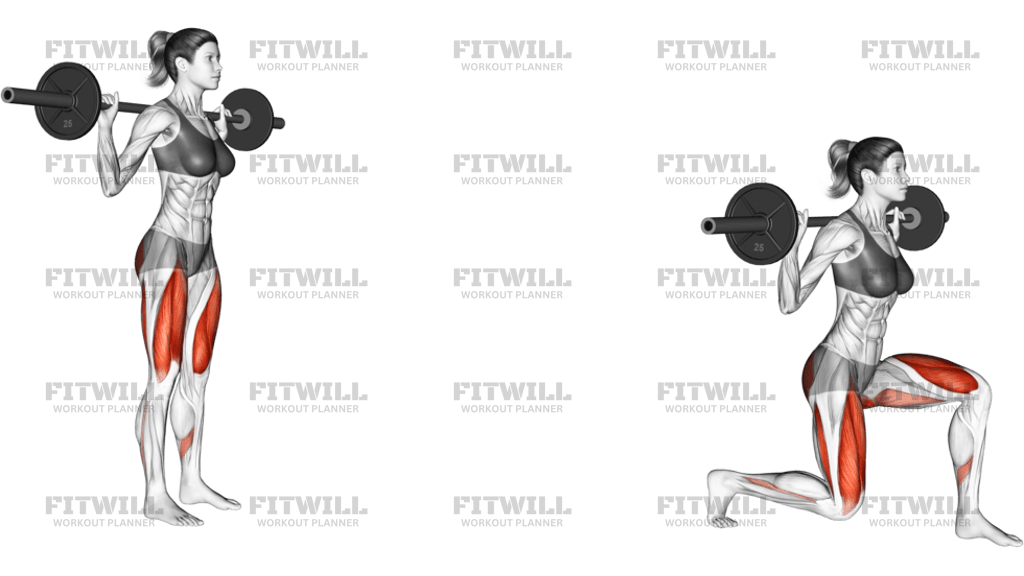
The Barbell Core Squat is a front-loaded squat variation in which the bar rests across the front of your shoulders, held in place with a clean-style grip and elbows driven high. Unlike a back squat, where the bar sits on the upper traps, this position places the load directly in front of your torso, which forces your midsection to stay rigid from the first inch of the descent to the final lockout. The quads do the bulk of the work, with the glutes and hamstrings contributing strongly on the way up, but the defining feature is the constant demand on the core and upper back to keep your chest tall and the bar stable.
This movement suits lifters who want to build serious leg strength while also training their trunk under load. Because the front-rack position rewards an upright torso and punishes rounding or collapsing forward, it doubles as a core exercise in a way that back squats do not. It is a staple for Olympic weightlifters who need a strong squat recovery from a clean, and it works well for general strength trainees who find that back-loaded squats aggravate their lower back or who simply want a quad-biased alternative.
Setup is where most people win or lose this lift. The bar should sit on the front deltoids, not in your hands and not pressing into your throat. Your fingertips stay under the bar just enough to secure it, while your elbows stay lifted so the shoulders create a solid shelf. If your wrists, shoulders, or lats are tight, the rack position may feel awkward at first; mobility work on those areas pays off quickly. Your stance should be about shoulder width with toes turned slightly out, matching the foot position you would use for a regular squat.
Execution comes down to one rule: keep the elbows up and the chest tall. As you descend, sit straight down between your hips rather than pushing them far back, let your knees track over your toes, and aim to reach at least a parallel depth if your mobility allows. Drive up through mid-foot, keeping the bar path over the middle of your feet the entire time. If the bar drifts forward, the first thing that usually happens is the elbows drop and the chest follows, so treat elbow height as your main feedback cue throughout every rep.
[ Workout Log & Planner ]
Put your next workout in Fitwill
Keep your plan and training log ready when you are.


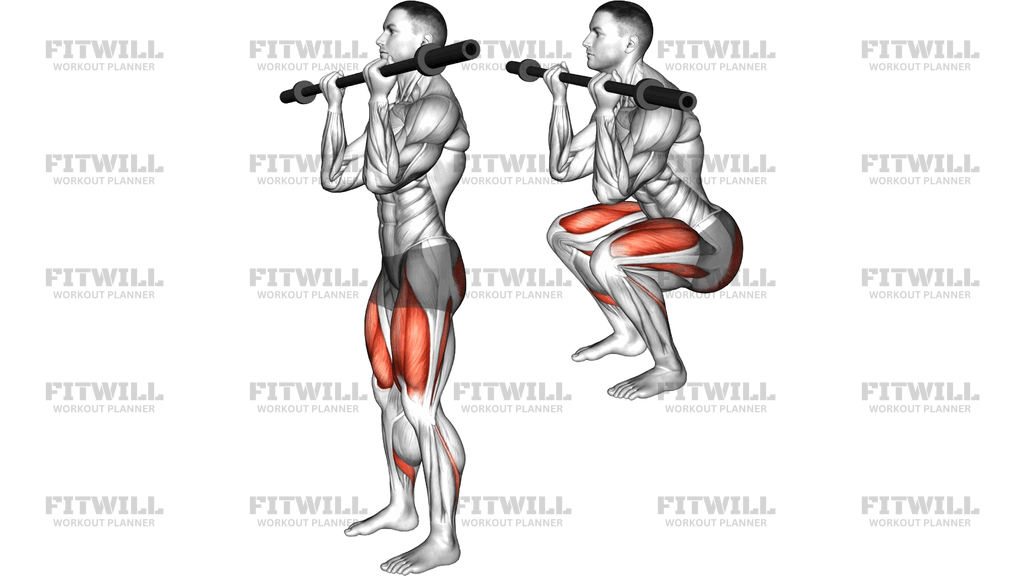
Instructions
- Set a barbell in a squat rack at roughly upper-chest height and step under it so the bar rests across the front of your shoulders, on top of your deltoids just below your collarbone.
- Grip the bar slightly wider than shoulder width, curl your fingertips under the bar to secure it, and raise your elbows high and forward so the shoulders form a shelf for the bar.
- Unrack the bar, take one or two steps back, and set your feet about shoulder width apart with toes turned out 15 to 30 degrees.
- Brace your core by taking a breath into your belly and tightening your midsection as if preparing for a light punch, keeping the ribcage stacked over the pelvis.
- Begin the descent by bending the knees and hips together, sitting straight down between your feet while keeping your elbows pointed at or above the bar.
- Lower until your thighs reach at least parallel with the floor, or as deep as you can go while keeping your heels down and chest upright.
- Drive up through mid-foot, extending the knees and hips together, and keep the elbows high so the bar travels straight up rather than forward.
- Exhale through the sticking point on the way up, then take a fresh breath at the top before the next rep.
- After your final rep, walk the bar back into the rack and let the safety arms or hooks take the load before releasing your grip.
Tips & Tricks
- If the bar chokes your neck, your elbows have dropped. Lift them and the bar will roll back onto the delts where it belongs.
- Do not rely on squeezing the bar with your hands. The fingers only secure the bar; the shoulders, not the grip, carry the weight.
- When you drift onto your toes, pause and reset rather than grinding through it, because a front-loaded squat loses balance forward much faster than a back squat.
- Film a set from the side. If the bar moves ahead of your mid-foot at the bottom, cue yourself to lift the elbows and sit slightly more straight down.
- Treat the top of every rep as a brace checkpoint: stand tall, squeeze the glutes, re-breathe, then descend. Rushing the reset is where rounded chests start.
- If wrist discomfort limits your rack position, try a crossed-arm hold on lighter sets while you work on wrist and lat flexibility.
- Warm up your front rack with a few empty-bar pauses in the bottom position; the upright posture feels much more natural once the position is grooved.
- Keep your squat shoes or heels flat and stable. Soft running shoes compress and push your knees and the bar forward together.
- Set the rack safeties at just below your bottom depth so a failed rep can be set down safely instead of dumped forward.
Frequently Asked Questions
Which muscles does the Barbell Core Squat work the most?
The quadriceps are the primary movers, with strong contributions from the glutes and hamstrings on the way up. Because the bar sits in front of the torso, the abs, obliques, and upper back work hard to keep your chest upright, which is what sets this squat apart from a back squat.
Why is the bar held in front of the shoulders instead of on the back in the Barbell Core Squat?
The front-rack position shifts the load over your mid-foot and demands an upright torso, which increases the quad and core demand while reducing lower back shear. That is why the trunk has to stay rigid the whole time and why the lift doubles as core training.
Is the Barbell Core Squat suitable for beginners?
Yes, but start with an empty bar or light weight to learn the rack position and the straight-down squat path. Many beginners actually find it easier to keep an upright chest with this setup than with a bar on the back.
My wrists hurt in the rack position of the Barbell Core Squat. What should I do?
Most wrist discomfort comes from trying to hold the bar with the hands instead of resting it on the deltoids. Focus on lifting the elbows so the shoulders carry the load, use only the fingertips for security, and work on wrist and lat flexibility. A crossed-arm hold is a reasonable temporary alternative.
How deep should I go in the Barbell Core Squat?
Aim for thighs at least parallel to the floor, or deeper if you can keep your heels down and chest tall. The moment your lower back rounds at the bottom is the moment you have gone deeper than your current mobility allows.
Why do my elbows drop and my chest fall forward at the bottom of the Barbell Core Squat?
Elbow drop is the most common failure point in this lift, usually caused by fatigue in the upper back or simply losing focus on the cue. Deliberately drive the elbows up as you descend, and build tolerance with lighter sets before adding significant load.
What can I use instead of a Barbell Core Squat if I have no barbell?
A double kettlebell or dumbbell front rack squat, or a goblet squat with a single weight held at the chest, trains the same upright posture and quad emphasis. A Smith machine front squat is another option if wrist mobility is the limiting factor.
How is the Barbell Core Squat different from a back squat?
The front load lets you stay much more upright, shifts emphasis toward the quads, and taxes the core and upper back more per pound of weight lifted. Most lifters will handle less load than in a back squat, which also makes it easier on the lower back.
Is the Barbell Core Squat safe for the knees and lower back?
When performed with controlled depth, heels on the floor, and an upright chest, it is a well-tolerated squat variation for most lifters. Set the rack safeties at proper height, progress the load gradually, and stop any set where your chest begins to round or the bar pulls you forward.