Dumbbell Squat Royalty Lunge
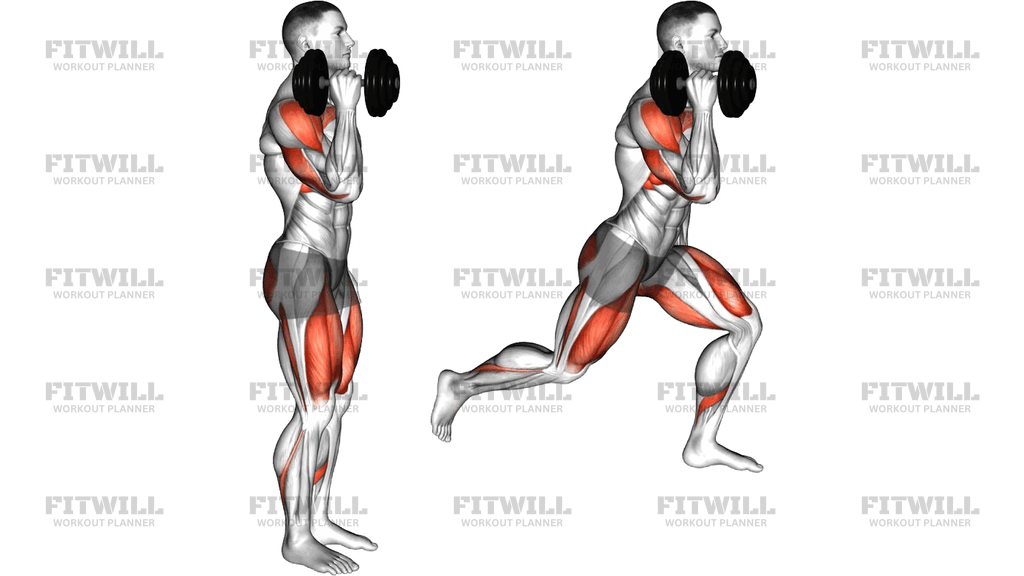
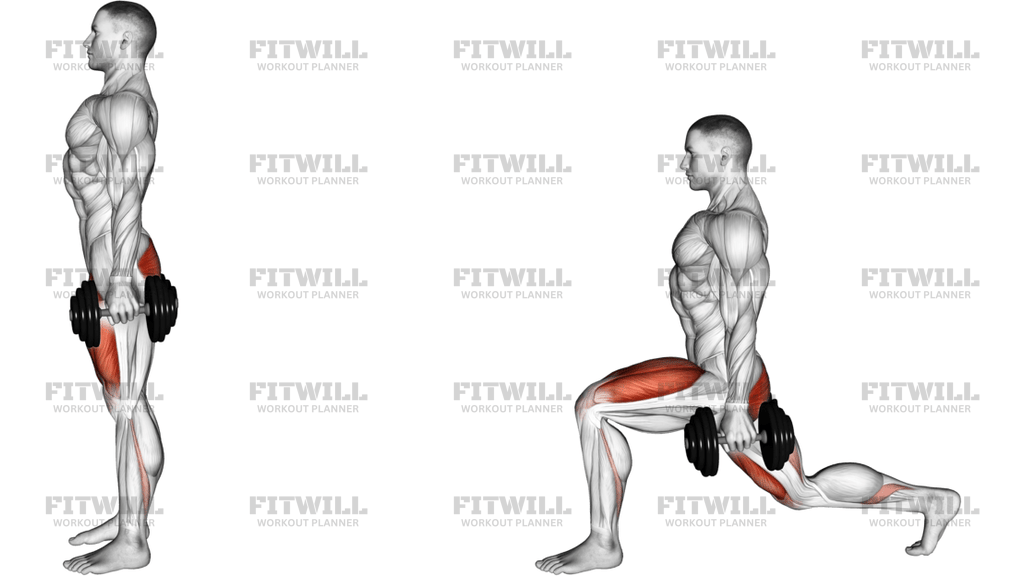
The Dumbbell Squat Royalty Lunge is a single-leg strength exercise performed with a pair of dumbbells held at shoulder height, elbows tucked underneath so the weights rest just in front of your shoulders rather than hanging at your sides. From a tall standing stance, you step one leg back into a deep reverse lunge, lowering until the rear knee brushes close to the floor and the front thigh is roughly parallel to the ground, then drive back up to standing. Holding the dumbbells at shoulder level instead of by your sides raises the center of mass and forces your torso, core, and upper back to work harder to stay upright through every rep.
This movement suits lifters who have already become comfortable with bodyweight lunges and want a stronger loading stimulus without putting a barbell on their spine. Because each rep is a reverse lunge, the stress lands on the front leg's quads and glutes while the trailing hip gets a controlled stretch, and the joint-friendly backward step makes it easier on the knees than forward-stepping lunge variations.
The main muscles working are the quadriceps of the front leg, with strong assistance from the glutes and hamstrings as you stand back out of the hole. The calves of the rear leg stabilize the ankle through the bottom position, and holding the weights racked demands continuous work from the core and upper back to prevent your chest from collapsing forward.
Setup details matter more here than in a side-loaded lunge. Your elbows should point down, forearms roughly vertical, with the dumbbell heads sitting on or just outside your shoulders. If the weights drift forward, your lower back takes over the bracing job and your balance suffers. Keep your feet hip-width apart before stepping back, and let the front shin stay close to vertical as you descend so the knee travels over the mid-foot rather than past the toes.
A common use case is as a secondary leg movement after squats or as a primary single-leg builder when barbell loading is not available. Two to three sets of six to ten reps per leg with a moderate weight covers strength work, while lighter dumbbells for ten to twelve reps per side work well for muscle and conditioning.
For safety, prioritize a controlled descent over depth you cannot manage. If your front heel lifts or your torso pitches forward at the bottom, reduce the range or the load. Step back far enough that the front knee stays stacked over the ankle, and reset your stance fully between reps if balance becomes inconsistent.
[ Workout Log & Planner ]
Put your next workout in Fitwill
Keep your plan and training log ready when you are.


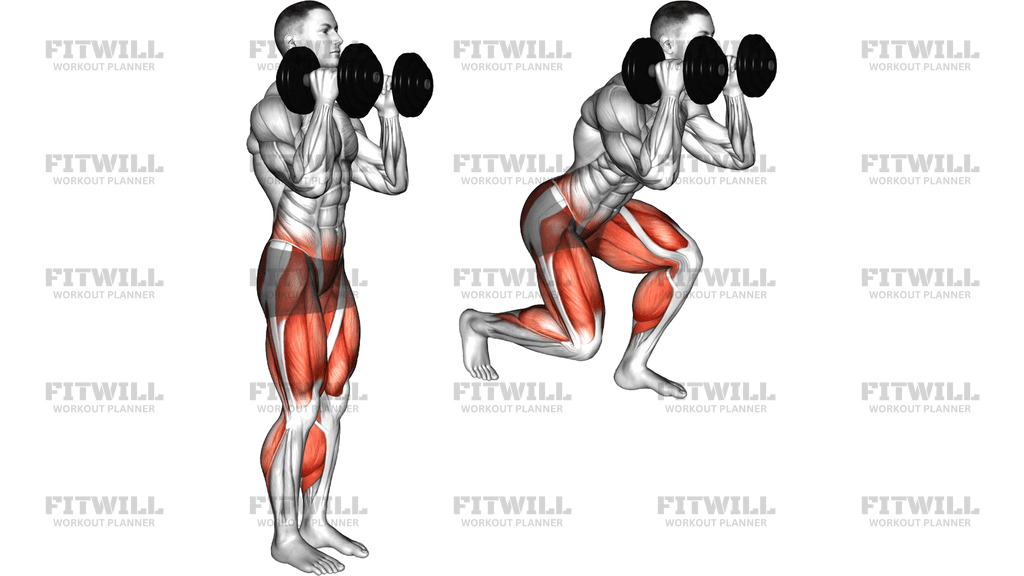
Instructions
- Stand tall with a dumbbell in each hand, weights racked at your shoulders, elbows pointing down and tucked close to your ribs, feet hip-width apart.
- Draw your shoulder blades gently back and down, and look straight ahead so your head stays neutral over your spine.
- Brace your core as if preparing for a light push to the stomach, and take a breath into your belly before you move.
- Step one foot straight back into a long split stance, landing on the ball of that foot with your heel facing the ceiling.
- Bend both knees to lower straight down, letting the rear knee travel toward the floor until it is just above or lightly touching it, while the front thigh reaches parallel or slightly below.
- Keep your torso upright and your front shin near vertical; the front heel must stay flat on the floor throughout the descent.
- Press through the entire front foot, especially the mid-foot and heel, to stand back up and bring the rear leg forward to the starting stance.
- Exhale as you drive up, then inhale and reset your brace before the next rep.
- Complete all reps on one leg or alternate legs as preferred, but fully return to a standing split-free stance between reps so every rep starts balanced.
- Once the set is done, lower the dumbbells to your sides with a bend at the hips and knees rather than rounding over to set them down.
Tips & Tricks
- If the dumbbells keep rolling forward off your shoulders, raise your elbows slightly and press the inner heads of the dumbbells back into your front delts instead of letting your wrists take the full weight.
- A short backward step is the most common fault in this exercise; it drives the front knee past the toes and shifts stress forward. Step back far enough that the front shin stays close to vertical.
- If your rear knee slams into the floor each rep, you are dropping instead of lowering. Pause for a beat at the bottom to build control before progressing the load.
- Watch the front heel: if it lifts off the floor, widen your stance slightly or reduce depth until ankle mobility allows a full-range rep.
- Keep the rear foot's weight on the ball of the foot, not the toes curling under hard; distributing pressure across the forefoot protects the knee of the trailing leg.
- Because the load sits at shoulder height, expect your upper back to fatigue before your legs on heavier sets. If your chest starts to cave, that is a cue to drop weight rather than lean forward.
- Alternating legs every rep is fine for conditioning, but for strength work finish all reps on one side first so you can focus on the working leg's positioning.
- Warm up the pattern with bodyweight reverse lunges before adding the racked dumbbells, since the shoulder-height load changes your balance point more than side-held weights do.
Frequently Asked Questions
Which muscles does the Dumbbell Squat Royalty Lunge work the most?
The quadriceps of the front leg do the bulk of the work, with the glutes and hamstrings driving you back up out of the bottom. The calves stabilize the rear ankle and the core and upper back hold the shoulder-height dumbbells in place.
Why are the dumbbells held at the shoulders instead of at the sides in this exercise?
The racked position raises the center of mass and increases the demand on your core, upper back, and stabilizers, making the same leg loading more challenging overall. It also keeps the weights from pulling you sideways, which helps you stay square to the front.
Is the Dumbbell Squat Royalty Lunge suitable for beginners?
Beginners should first master the bodyweight reverse lunge and be able to hold a dumbbell at each shoulder with elbows down. Once both pieces are comfortable, start with light weights for eight to ten reps per leg.
Should I step backward or forward for the Royalty Lunge?
Step backward, as shown in the movement. A reverse step keeps the front shin more vertical and is generally easier on the knees, while a forward step demands more deceleration from the front leg and is harder to control under load.
How deep should I lower in the Dumbbell Squat Royalty Lunge?
Aim for a depth where the rear knee is just above the floor and the front thigh is at or near parallel, provided your front heel stays flat and your torso stays upright. If either breaks down, shorten the range and rebuild it gradually.
What is the most common mistake with this exercise?
Letting the chest fall forward as the weights fatigue the upper back, usually paired with a front heel lifting off the floor. Fix it by bracing harder, reducing the load, and cueing yourself to keep the elbows stacked under the dumbbells.
Can I alternate legs on every rep?
Yes, alternating works well for conditioning and keeps the set symmetrical. For strength or hypertrophy focus, complete all reps on one leg first so you can concentrate on each side's foot position and depth.
What can I substitute if I do not have dumbbells?
A kettlebell or a single weight held in the front rack position works as a close substitute, or a barbell in the front rack if you have the mobility. The bodyweight version remains a valid option while you refine the split-stance mechanics.
Is it safe for my knees to let the rear knee touch the floor?
Lightly touching the floor with control is fine for most healthy trainees; forcefully slamming it is not. Lower with intent, and if kneeling causes discomfort, stop the rep an inch or two higher.