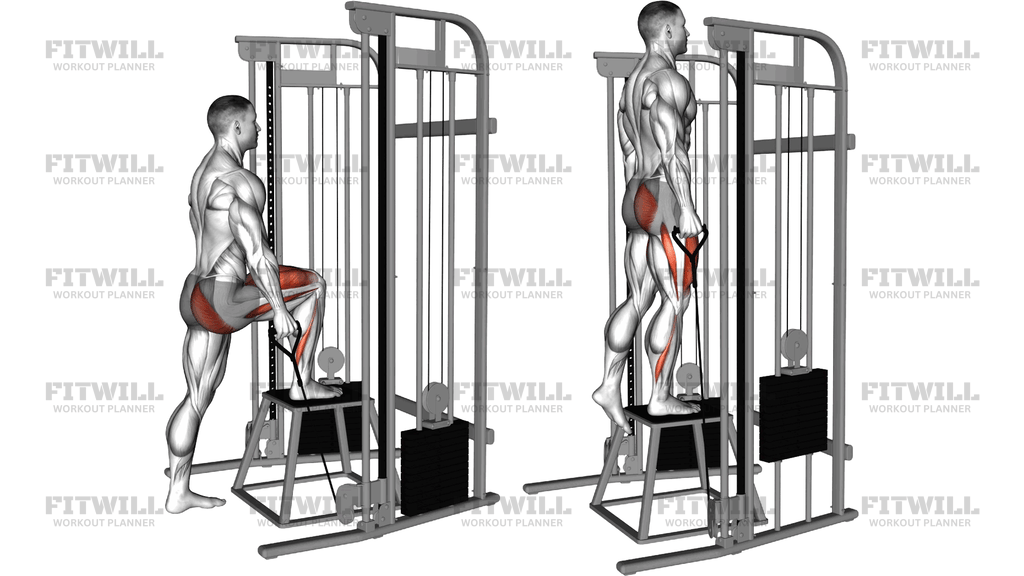
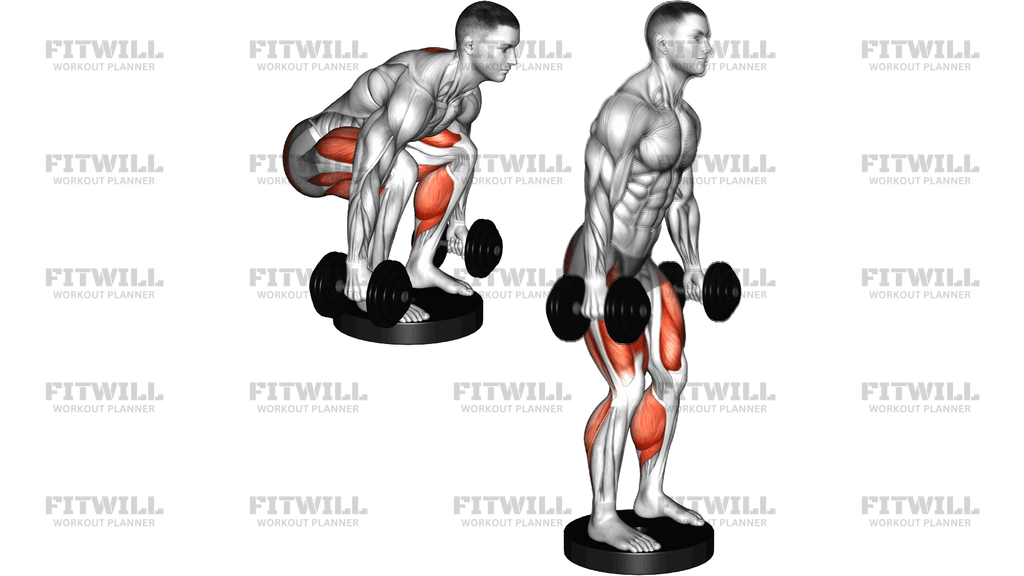
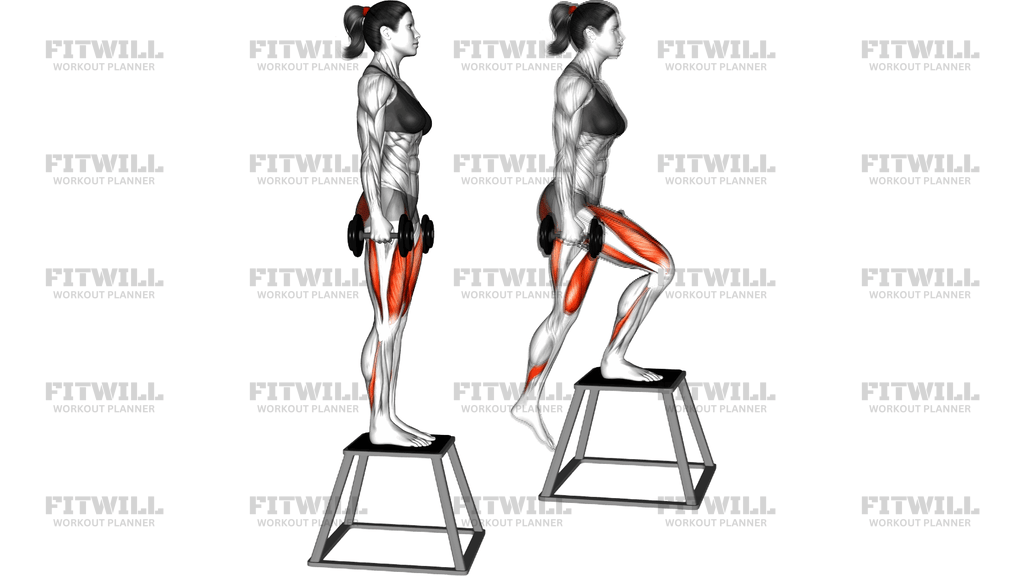
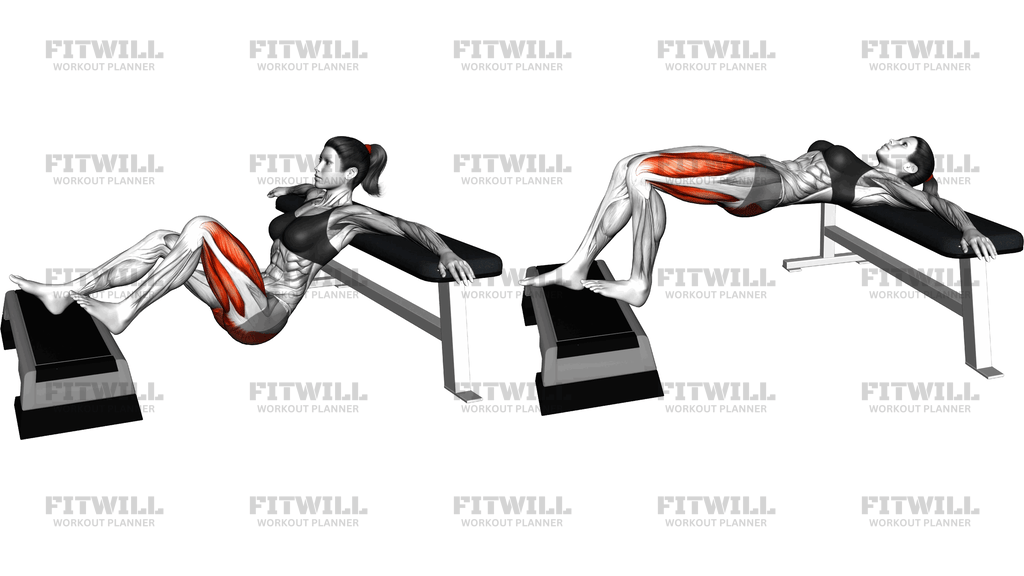
Step Up On Box
Step Up On Box is one of the simplest and most honest lower body exercises you can do: place one foot on a sturdy box or step platform, drive through that front leg, and stand fully upright on top of the box before lowering back down under control. No bars, no machines, no momentum tricks. Because you're working one leg at a time, each side has to earn its own strength, which quickly exposes and corrects the left-to-right imbalances that squats and leg presses can hide.
The main work comes from the quads of the stepping leg as they straighten the knee and lift your entire body weight, with strong support from the glutes driving the hip into extension at the top. The hamstrings and calves assist through the rise, and the calf complex is especially active as you press up onto the ball of the working foot and stabilize on the box. Your core and hip stabilizers stay busy the whole time keeping your pelvis level, which is exactly why this movement carries over so well to walking, hiking uphill, climbing stairs, and getting up from low surfaces.
Box height is the biggest setup decision, and it matters more than most people realize. A lower box around knee height or below keeps the emphasis on the quads and lets you stay upright and controlled, while a higher box places greater demand on the glutes and requires more hip mobility to plant the foot cleanly. Choose a height where you can place your whole foot flat on the surface without pushing off the trailing leg, hopping, or leaning heavily to one side. If you have to fling your body up, the box is too high for right now.
To perform it well, stand facing the box with your weight over the stepping foot from the moment it lands on top. Push the floor away through the whole foot and stand tall until both feet are on the platform and your hips are fully open, without letting the trailing leg contribute more than balance duty. On the way down, resist gravity rather than dropping: lower the trailing foot slowly to the floor, let it touch lightly, and reset your posture before the next rep. Complete all repetitions on one leg before switching, or alternate legs if you prefer, but keep the quality of each step identical.
This exercise earns its place in nearly every program. Beginners use it to build a strength base with almost no learning curve, lifters use it as a single-leg accessory after squats or deadlifts, and anyone returning from time off appreciates that it loads the legs without a barbell on the spine. Because the demand scales so cleanly with box height, step speed, added weight, and reps, you can keep progressing it for a long time with nothing more than a stable platform and consistent effort.
[ Workout Log & Planner ]
Put your next workout in Fitwill
Keep your plan and training log ready when you are.


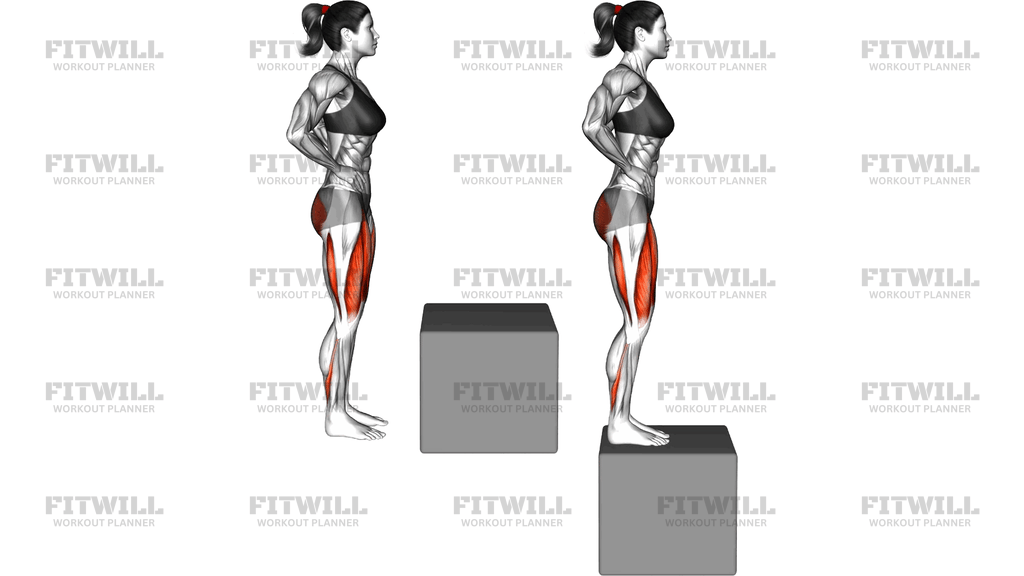
Instructions
- Stand facing a sturdy box or step platform at a height between mid-shin and just below the knee, with your feet hip-width apart and your arms relaxed at your sides or hands on your hips.
- Place your entire right foot flat on top of the box so your shin is close to vertical; if your knee travels far past your toes or your heel hangs off the edge, pick a lower box.
- Shift your weight fully over the stepping leg and brace your stomach lightly, keeping your chest tall and your gaze forward.
- Press down through your whole right foot, especially the heel and midfoot, and straighten the knee and hip to lift your body up.
- Continue rising until you are standing fully upright on top of the box with both feet flat, hips fully open, and shoulders stacked over your hips.
- Avoid pushing off the ball of your trailing left foot; it should only help with balance, not drive the movement.
- Pause briefly at the top, then shift your weight back over the right leg and slowly lower your left foot to the floor under control.
- Exhale as you step up, inhale as you lower back down, and keep the descent smooth rather than letting gravity drop you.
- Let the left foot touch down lightly, reset your posture, and complete all planned repetitions on the right leg before switching sides.
Tips & Tricks
- If you find yourself bouncing or springing off the bottom leg, that leg is doing work it shouldn't. Slow the tempo down and think of the top leg as the only engine of the rep.
- Keep the stepping foot flat and centered on the box. A heel hanging over the edge shifts stress to the calf and makes balance needlessly harder.
- Watch for the knee of the stepping leg caving inward as you rise. Cue yourself to spread the floor with the foot and track the knee over the middle of your toes.
- Don't lean your torso far forward as you step up. A slight forward lean is fine, but excessive hinging turns the rep into a hip-dominant grind and often signals the box is too high.
- Control the lowering phase for at least a two-count. Most of the muscle-building and balance benefit of Step Up On Box comes from that eccentric portion, not the step up itself.
- Pick a box height where you can do all your reps with clean form. If the last few reps involve hopping, shrugging, or pushing off the back foot, drop to a lower platform.
- If your balance wobbles at the top, widen your stance slightly once both feet are on the box and fix your eyes on a point ahead of you rather than looking down at your feet.
- Once bodyweight reps feel easy, hold a dumbbell in each hand at your sides or a single weight at your chest, keeping the same tempo and full-foot contact.
- Use a box with a non-slip top surface and set it on flat ground before starting. A platform that slides or tips under load is the biggest safety risk in this exercise.
Frequently Asked Questions
What muscles does Step Up On Box work?
The quads of the stepping leg do most of the lifting as you straighten the knee, with the glutes driving the hip open at the top. Hamstrings and calves assist during the rise, and your core works to keep the pelvis level throughout.
How high should the box be for Step Up On Box?
Start with a box around knee height or slightly lower, where you can place your whole foot flat without straining. As your strength and hip mobility improve, a higher box shifts more of the load toward the glutes.
Is Step Up On Box good for beginners?
Yes, it's one of the best beginner lower body exercises because the movement pattern is natural, no equipment is held, and the intensity is easily matched to your level by adjusting box height and reps.
Why does my bottom leg feel sore after Step Up On Box?
Soreness in the trailing leg usually means it's pushing off the floor to help the step. Focus on loading the top leg completely before lifting, and touch the bottom foot down lightly rather than driving through it.
Should I alternate legs or complete all reps on one side?
Completing all reps on one leg before switching makes it easier to keep each set honest and match work between sides. Alternating is fine too, just hold yourself to the same depth and tempo on both legs.
Can I add weight to Step Up On Box?
Absolutely. Hold a dumbbell in each hand at your sides or a kettlebell at your chest once your bodyweight form is solid, and only increase the load when you can still control the lowering phase.
How is Step Up On Box different from a lunge?
A step up moves you vertically onto an elevated surface, which limits how far the knee travels forward and trains the pattern used for climbing. A lunge moves you down and back, loading both legs simultaneously with a different balance demand.
Is it safe for my knees to let the knee pass over my toes?
Some forward knee travel on a step up is normal and not inherently harmful. What you want to avoid is a knee collapsing inward or a height so aggressive that your heel lifts and the joint is loaded at an awkward angle.
How many reps and sets should I do of Step Up On Box?
For general strength, 2 to 4 sets of 8 to 12 reps per leg works well; for muscular endurance, go up to 15 to 20 reps per side with a lower box. Rest briefly between legs so form doesn't slip.
What can I use if I don't have a step platform?
Any stable, non-slip surface at the right height works, such as a low bench, sturdy aerobic step, or bottom stair, as long as it can hold your weight and won't slide. Avoid soft or wheeled surfaces that could shift under you.