Russian Twist (Beginner Level)
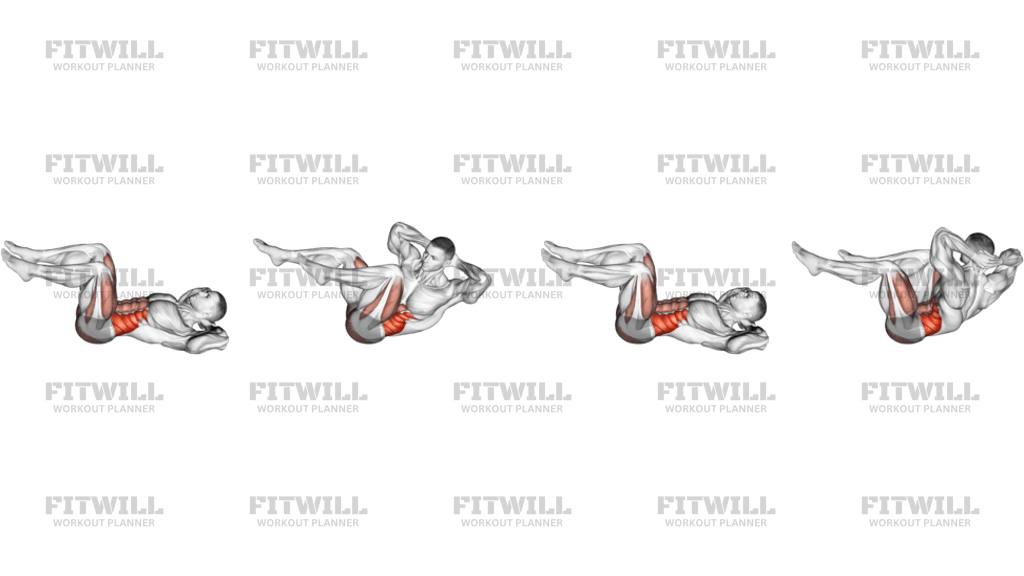
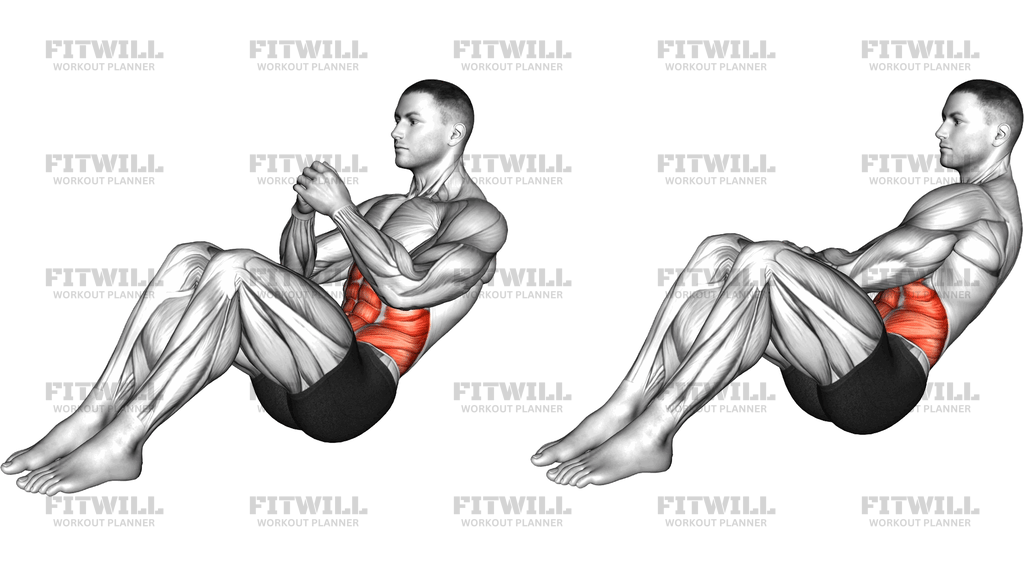
The Russian Twist is a seated rotational core exercise where you lean your torso back, hold your hands together in front of your chest, and rotate your upper body from side to side. At the beginner level, your feet stay flat on the floor and your heels remain planted, which shortens the lever and makes the movement much easier to control than the advanced version with raised feet. The image shows the classic setup: knees bent, torso leaned back at roughly 45 degrees, and hands clasped as the shoulders sweep across the body.
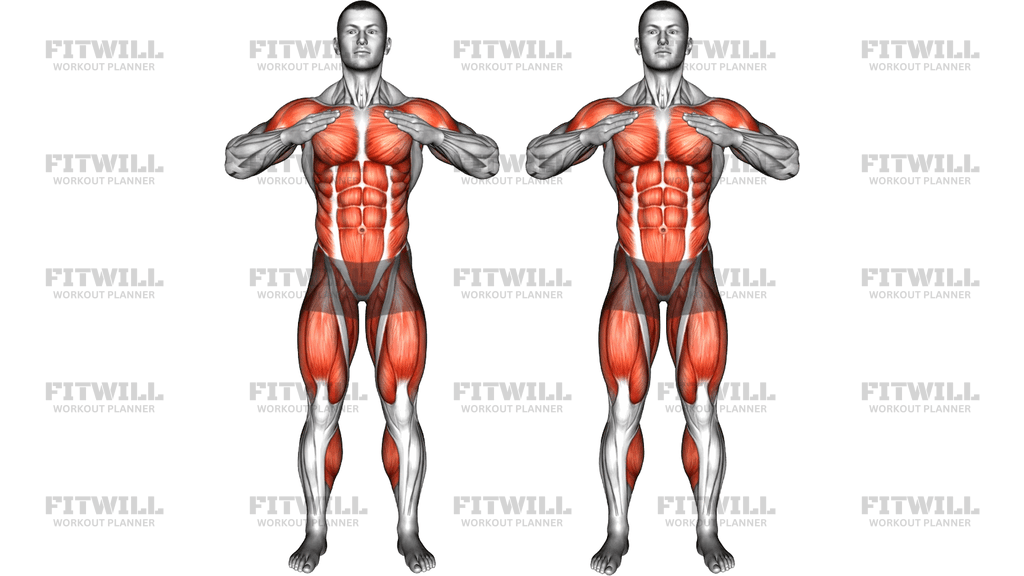
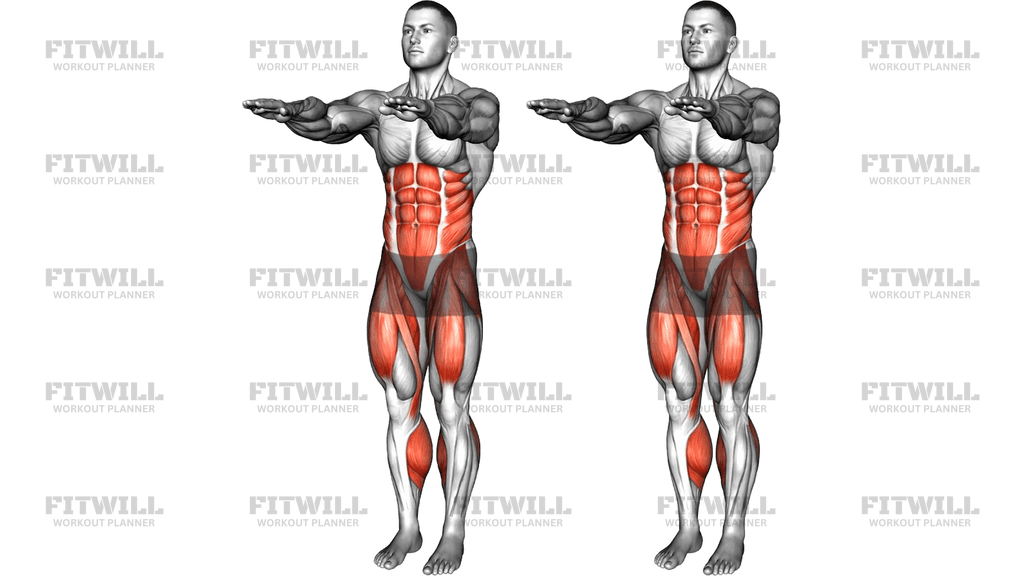
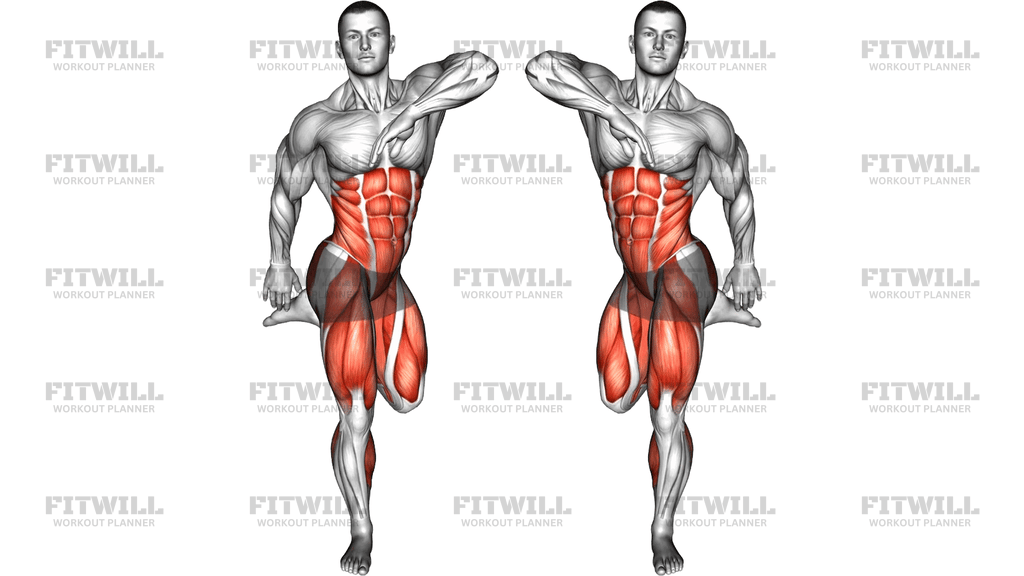
This movement primarily trains the obliques, the muscles running along the sides of your waist that are responsible for trunk rotation. Your rectus abdominis works hard the whole time to hold the leaned-back position, and your deep core muscles stabilize your spine while your hip flexors help keep your torso upright against gravity. Because the rotation happens through the trunk rather than the arms, it teaches you to generate twisting force from the middle of your body, which carries over to swinging, throwing, and changing direction.
The beginner version is a good fit for anyone new to core training, people returning after a layoff, or lifters who want rotational volume without loading the spine with a weight. It also suits home workouts since it needs nothing more than a bit of floor space, and a mat helps if you are training on a hard surface. Because the feet stay down, you can focus purely on the quality of the twist without fighting to balance.
Setup matters more than most people realize. Your torso angle decides the difficulty: the further back you lean, the more your abs must hold you up. Sit far enough forward on your sit bones so you are not resting on your tailbone, and keep your chest tall instead of collapsing toward your knees. Your clasped hands act as the marker for the rotation, so the path they travel should come from your ribcage and shoulders turning, not just your arms swinging.
To execute it well, rotate slowly enough that you feel the side of your waist working on each side, and pause briefly at the end of each turn rather than bouncing. A controlled rhythm with a moderate range beats fast, wide swings every time. If you feel it mostly in your hip flexors or lower back, you are likely leaned back too far or rotating too quickly.
Use the Russian Twist as a finishing movement after your main lifts, or as one station in a core circuit alongside planks and dead bugs. Two to three sets of 10 to 20 rotations per side is a sensible starting range, and you can progress later by lifting your feet, holding a weight, or slowing the tempo.
[ Workout Log & Planner ]
Put your next workout in Fitwill
Keep your plan and training log ready when you are.


Instructions
- Sit on the floor or on an exercise mat with your knees bent to about 90 degrees and your heels resting on the floor in front of you.
- Clasp your hands together in front of your chest with a soft bend in your elbows.
- Lean your torso back to roughly 45 degrees until you feel your abdominal muscles engage, keeping your spine long and your chest open.
- Brace your core as if bracing for a light push to the stomach, and keep your hips and heels planted where they are.
- Rotate your shoulders and ribcage to one side, letting your clasped hands travel with your torso until they are beside your hip.
- Pause for a moment at the end of the turn, feeling the obliques on that side work.
- Rotate smoothly across the center to the opposite side, keeping your hips facing forward rather than swinging with your shoulders.
- Breathe steadily throughout, exhaling as you rotate and inhaling as you come back through the middle.
- Complete your repetitions alternating sides, then sit upright and rest before the next set.
- If your back rounds or your feet start lifting, lean your torso slightly more upright and continue with a smaller range.
Tips & Tricks
- Turn from your ribcage, not your arms. If your hands are whipping side to side while your chest barely moves, the rotation is coming from your shoulders and the obliques are doing very little.
- Sit on your glutes rather than your tailbone. Resting directly on the tailbone makes the lean uncomfortable and encourages a rounded lower back.
- Keep your heels glued to the floor. If they drift or lift as you twist, slow the tempo down before you allow the more advanced floating-feet version.
- Do not chase range at the expense of control. A twist that stops where you can still breathe and stay tall trains the obliques better than a violent swing all the way to the floor.
- Watch for your hips rotating with your shoulders. Hips should stay square and forward; the twist happens above them.
- If your neck strains because you keep looking side to side, pick a fixed spot in front of you and let your chin travel with your chest instead.
- Start with bodyweight only, even if the unweighted version feels easy. Adding a weight too soon is the most common reason people start yanking their lower back around.
- Breathe out on each turn. Holding your breath makes the brace stiffen and the rotation choppy.
- Place a folded mat or towel under your sit bones if the floor is hard, so discomfort in your hips does not cut the set short.
Frequently Asked Questions
Which muscles does the Russian Twist work?
The obliques along the sides of your waist do most of the rotational work, while the rectus abdominis holds your torso in the leaned-back position. Your hip flexors and deep core muscles assist with posture and stability throughout.
What makes this the beginner version of the Russian Twist?
Your heels stay flat on the floor, which removes the balance demand and shortens the lever your core must control. In advanced versions the feet are lifted off the ground, which is considerably harder on both the abs and the hip flexors.
How far should I lean back during the Russian Twist?
Aim for roughly a 45-degree torso angle where your abs are clearly engaged but your lower back stays long and you are not resting on your tailbone. The further back you lean, the harder it gets, so start more upright and lean back gradually as you get stronger.
Why do my hip flexors burn more than my abs during Russian Twists?
That usually means you are leaned back farther than your current strength allows, so the hip flexors take over the job of holding your torso up. Sit a little more upright and keep the sets shorter until the abs can hold the position on their own.
Should my feet move with my shoulders during the twist?
No, in the beginner version your heels stay planted and your hips stay facing forward the entire time. If your hips and knees swing with each turn, the rotation is coming from the wrong place.
How many reps of Russian Twists should a beginner do?
Start with 2 to 3 sets of 10 to 15 controlled rotations per side, resting about 45 to 60 seconds between sets. Each rotation to one side counts as one rep, so a full left-right cycle is two.
Can I do the Russian Twist every day?
The abs recover quickly, so light bodyweight sets several times a week are generally fine. Still, treat it like any resistance exercise and give yourself at least one full rest day between harder core sessions.
What can I use instead of a Russian Twist if twisting bothers my lower back?
A dead bug, plank, or Pallof press-style anti-rotation hold trains the core without repeated spinal rotation. If twisting itself is uncomfortable at any range, stop the movement and reduce the range or lean angle before swapping exercises.
When should I add weight or lift my feet in the Russian Twist?
Once you can complete 20 smooth rotations per side with your heels down, your hips still, and no lower back rounding, you can progress to holding a light weight at your chest or lifting your heels slightly off the floor. Add one progression at a time, not both.
Do I need a mat for the Russian Twist?
Not strictly, but a mat or soft surface makes the seated position much more comfortable on your sit bones and tailbone. Comfort in the setup lets you focus on the rotation instead of the floor digging into you.