Exercise Ball Serratus Anterior Activation
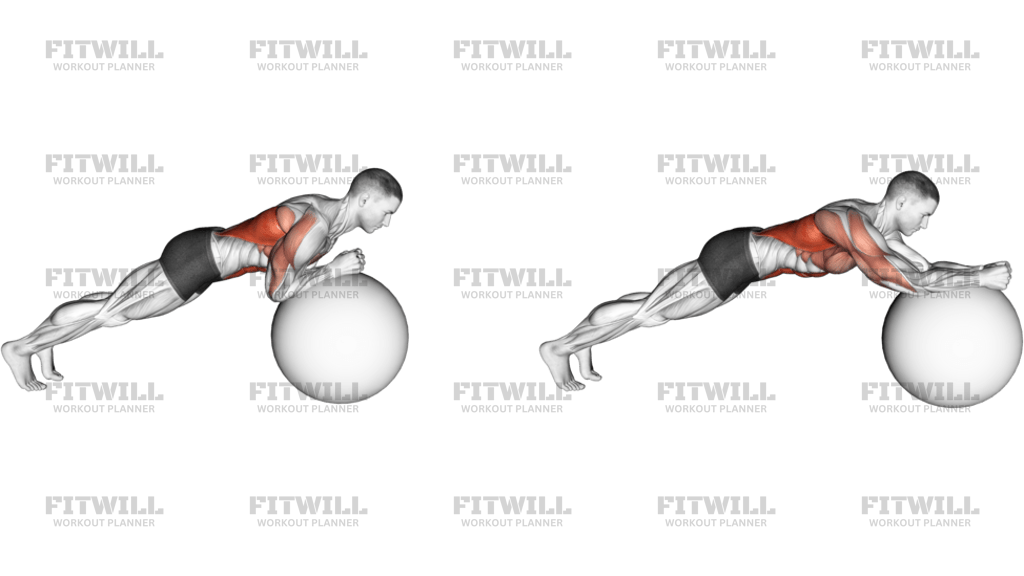
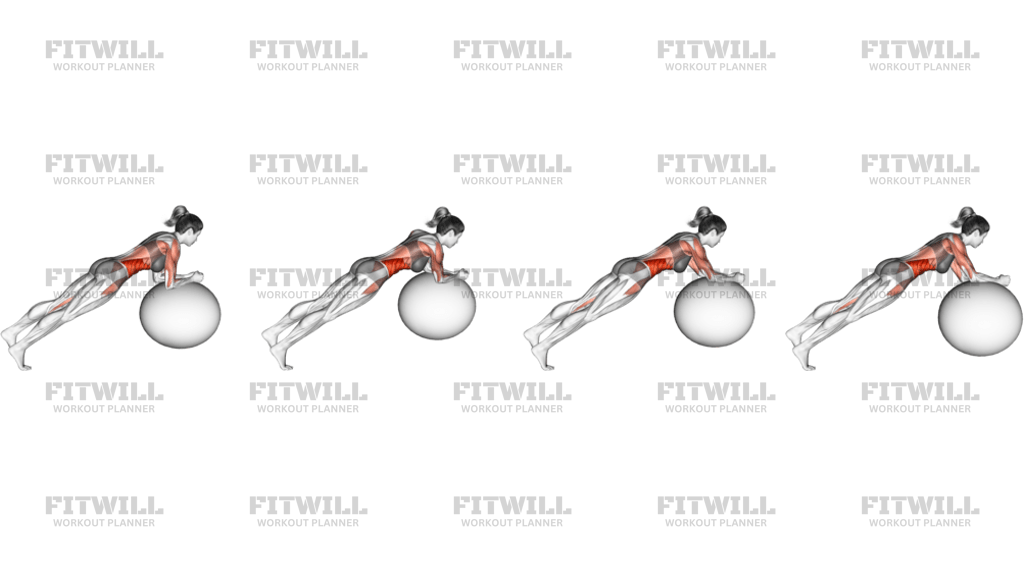
Exercise Ball Serratus Anterior Activation is a low-load, precise drill that targets the serratus anterior, the fan-shaped muscle that wraps around your ribcage and pulls your shoulder blade forward around the ribs. You stand facing a wall with a stability ball between your palm and the wall at about shoulder height, then press through the ball and reach forward so your shoulder blade glides into protraction. The soft ball gives your hand something to press into while still allowing a small, controlled roll along the wall, which is exactly what makes the movement feel active in the side of the ribs rather than in the neck or upper traps.
This exercise is a staple in shoulder warm-ups, rehab-style programming, and overhead athlete preparation. The serratus anterior is one of the main upward rotators of the shoulder blade, so it plays a central role in pressing, punching, throwing, and any overhead reach. When it is underactive, other muscles such as the upper trapezius and pectoralis minor tend to compensate, which often shows up as shrugged shoulders, pinching at the top of a press, or a winged-looking shoulder blade. Working the serratus in isolation first helps you feel it before loading it with push-ups, landmine presses, or overhead work.
The setup matters more than it looks. The ball must be wedged between your palm and the wall with your arm roughly horizontal, elbow nearly straight, and your wrist stacked over the ball so the force travels up a straight line into your shoulder blade. Stand close enough that you can lean slightly into the ball without losing balance, and keep your free hand relaxed at your side or on your stomach as shown in the standard position. If your feet are too far back, you will fight to stay upright instead of focusing on the scapular motion.
Execution should feel like a slow, deliberate reach rather than a push. From the initial contact, press your palm into the ball and let your shoulder blade move forward around your ribcage, as if trying to lengthen your arm another inch. The ball rolls a short distance up and into the wall, and you hold the end range for a moment before easing back with control. The range is small, often just a few centimeters at the hand, which is why so many people rush it or substitute with their chest and shrug instead.
Common use cases include prehab routines for desk workers with rounded shoulders, warm-up circuits for powerlifters and Olympic lifters before benching or snatching, and return-to-pressing progressions after a layoff. Because the load is essentially your own lean and the resistance comes from the ball's cushioned give, the drill is appropriate for most healthy trainees and scales easily by pressing harder, adding a hold, or performing more repetitions per set.
Keep the movement pain-free and precise. If you feel it in your neck, your traps are taking over; lower the ball slightly, soften your press, and think about spreading your shoulder blade forward instead of lifting your shoulder toward your ear. Quality reps with a clear muscular sensation beat high volume every time with this one.
Fitwill
Log Workouts, Track Progress & Build Strength.
Achieve more with Fitwill: explore over 9600 exercises with images and videos, access built-in and custom workouts, perfect for both gym and home sessions, and see real results.
Start your journey. Download today!




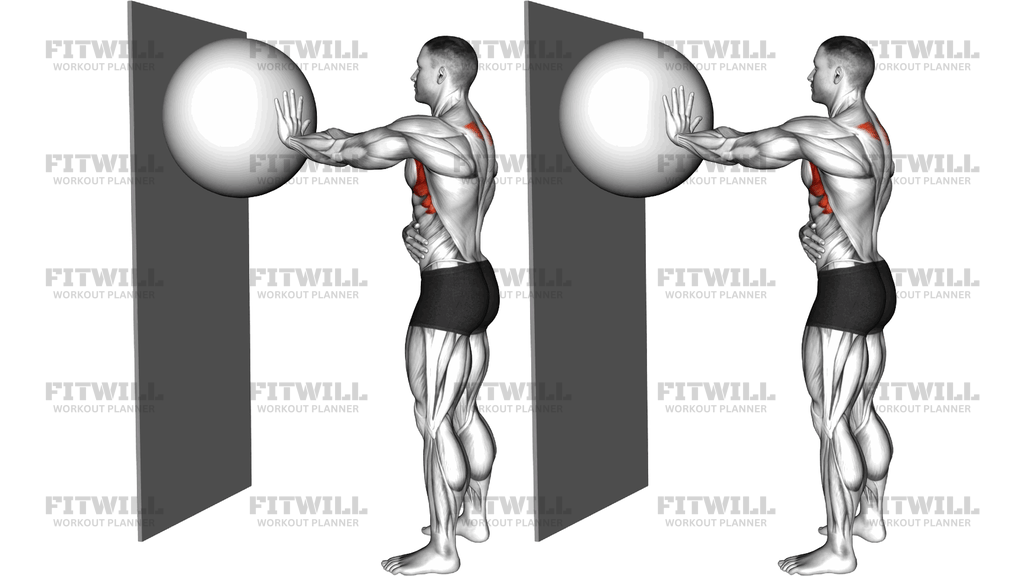
Instructions
- Stand facing a wall and place a stability ball between one palm and the wall at about shoulder height, with your feet roughly hip-width apart and close enough to lean in slightly.
- Extend your arm so the elbow is nearly straight and your wrist sits directly over the center of the ball, fingers spread for a stable contact.
- Rest your free hand lightly on your stomach or let it hang at your side, and settle into a tall posture with ribs stacked over your pelvis.
- Brace your core lightly and keep your neck relaxed so your shoulder stays level and does not creep up toward your ear.
- Press your palm firmly into the ball and reach your arm forward, letting your shoulder blade glide forward around your ribcage so the ball rolls a short distance up the wall.
- Pause for one to two seconds at the end of the reach, feeling the muscle work along the side of your ribs beneath your armpit.
- Slowly release the reach and let the ball roll back to the starting point, allowing your shoulder blade to retract in a controlled way without losing contact with the ball.
- Exhale as you press and reach, inhale as you return.
- Complete your reps on one side, then reset your stance and switch arms, keeping the ball wedged against the wall the whole time.
Tips & Tricks
- If you feel this in your neck or the top of your shoulder, the upper traps are hijacking the movement—drop the ball an inch lower, reduce your press force, and picture your shoulder blade moving forward, not upward.
- The reach is small by design; if the ball is traveling a large distance up the wall, you are likely extending your elbow or leaning with your torso instead of protracting the shoulder blade.
- Keep a slight lean into the ball throughout the set. Once your palm loses pressure, the serratus stops working and the drill becomes a balancing act.
- Spread your fingers and press through the heel of your palm rather than collapsing through the wrist, so the force line runs cleanly from hand to shoulder blade.
- Avoid locking the elbow so hard that the joint feels strained—straight but slightly soft is the sweet spot for directing the movement into the scapula.
- A common mistake is rotating the torso toward the wall to fake extra range; square your shoulders to the wall and let the ribcage stay still while the shoulder blade does the sliding.
- Try alternating reps with your eyes closed or your attention on the side of your ribs—many lifters only truly feel the serratus once they stop chasing distance and start chasing sensation.
- Start with one or two sets of 8-12 slow reps per side in your warm-up; adding a two-second hold at the end range is a simple way to progress without adding load.
- If the ball slips or slides sideways, wipe the wall and ball surfaces and re-center your palm on the ball's midpoint before continuing.
Frequently Asked Questions
What muscles does Exercise Ball Serratus Anterior Activation work?
The primary target is the serratus anterior, which protracts and upwardly rotates the shoulder blade. The pectoralis minor and front delts assist with the press, while the rotator cuff and scapular stabilizers work to keep the shoulder controlled.
Why use a stability ball against the wall instead of just doing a wall push?
Pressing straight into a wall locks your hand in place, so the serratus has to work with almost no sensory feedback. The ball compresses and rolls slightly, which lengthens the range of protraction and gives you a clear feel for when the shoulder blade is actually moving.
How far should the ball roll up the wall during each rep?
Only a few centimeters. The movement comes from your shoulder blade sliding forward around the ribcage, not from extending your arm or leaning your body, so a large roll usually means you are substituting with your torso or triceps.
Is this exercise suitable for beginners?
Yes, the load is minimal and the setup is simple, which makes it a good first introduction to scapular control. Beginners should focus on slow reps and feeling the muscle along the side of the ribs rather than pressing hard.
Where should I feel Exercise Ball Serratus Anterior Activation?
You should feel a working sensation along the side of your ribcage, just below and in front of your armpit. If you feel it mainly in your neck or the top of your shoulder, reduce the force and think about reaching forward rather than shrugging up.
When should I do this exercise—before or after my workout?
It works best as a warm-up drill before pressing, pulling, or overhead movements, when you want the serratus switched on. It can also be done as standalone activation work on rest days or in a shoulder prehab routine.
What can I use if I do not have a stability ball?
A small cushion or folded towel pressed against the wall offers similar feedback, or you can perform the reach on all fours with one hand sliding along the floor. The ball version is preferred because its compression gives a smoother, more graded roll.
How many reps and sets should I perform?
One to three sets of 8-12 controlled reps per side is a practical starting point. Because the drill is about precision, stop the set when you can no longer feel the serratus doing the work rather than when your arm fatigues.
Is it safe if I have shoulder discomfort?
The low-load, pain-free nature of the drill makes it generally gentle on the shoulder, but any exercise should stay within a comfortable range. If pressing the ball reproduces pain, reduce the force, lower the hand position, and check with a qualified professional before continuing.
Why does my elbow want to bend during the reach?
Bending the elbow shortens the lever and shifts work away from the shoulder blade, usually because the reach is too aggressive. Keep the arm straight but relaxed and limit yourself to the range where your elbow stays extended without strain.