Pull In On Stability Ball
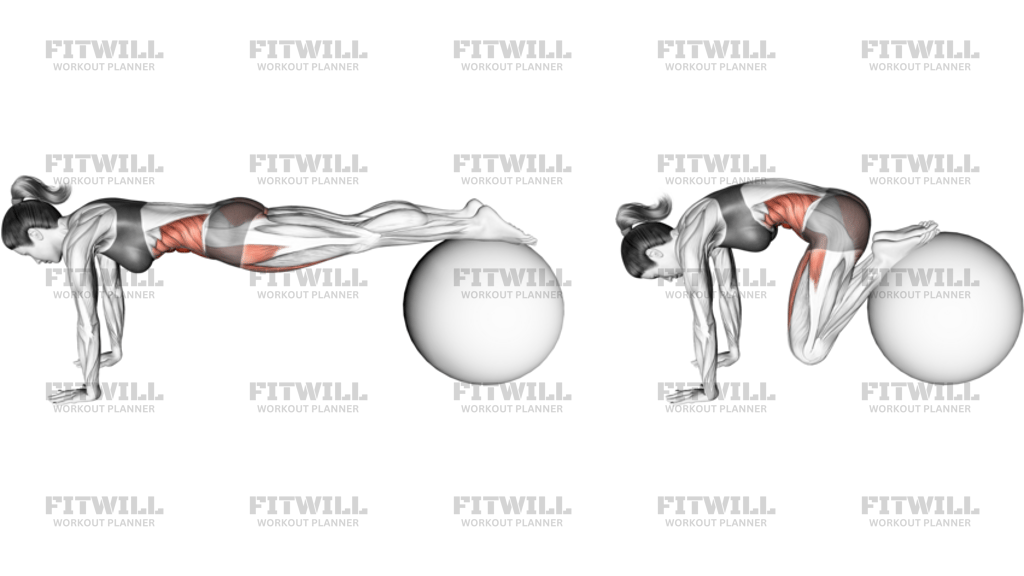
Pull In On Stability Ball is a bodyweight core movement performed from a high plank with the lower legs supported on a stability ball. The image shows the body starting in a long, straight plank and then drawing the ball inward by tucking the knees toward the chest. That makes this a demanding anti-extension and hip-flexion drill that asks the abs, shoulders, and hip stabilizers to work together.
The exercise is most useful when you want a stronger, more controlled trunk rather than a high-speed core burn. It trains the rectus abdominis, obliques, hip flexors, serratus, and shoulder stabilizers while the glutes and upper back help keep the plank from sagging. The movement looks simple, but the ball adds instability that quickly exposes weak bracing, loose shoulders, or a low back that overarches.
Setup matters a lot. Start with your hands under your shoulders, arms straight, and your body in one long line from head to heels or ankles. The ball should begin under the lower shins or ankles so you can hold a steady plank before the first pull-in. If the ball is too far away or your hips start high, the rep turns into a scramble instead of a controlled tuck.
On each rep, pull the ball toward your torso by bending the knees and flexing the hips, then pause briefly when the knees are tucked and the abs are shortened. Keep pressing the floor away so the shoulders stay active instead of collapsing between the ears. Return the ball to the start slowly, keeping tension through the midline and avoiding a hard drop back into the plank.
Pull In On Stability Ball fits well in core-focused sessions, athletic warmups, and accessory work after bigger lifts. It is best treated as a quality drill, not a max-rep exercise. Short, clean sets with full control are far more useful than rushing through sloppy reps, especially if the floor is slick, the ball is oversized, or your wrists and shoulders are already fatigued.
[ Workout Log & Planner ]
Put your next workout in Fitwill
Keep your plan and training log ready when you are.


Instructions
- Place your hands on the floor under your shoulders and set a stability ball under your lower shins or ankles.
- Walk into a strong high plank so your body forms one straight line from your head through your heels.
- Spread your fingers, lock your elbows softly, and press the floor away to keep your shoulders active.
- Brace your abs and glutes before the first rep so your lower back does not sag when the ball moves.
- Exhale as you bend your knees and pull the ball toward your chest with a controlled tuck.
- Keep your hips as level as possible while the knees travel in, rather than snapping the hips high.
- Pause for a beat when the ball is closest to your torso and the abs are fully shortened.
- Inhale and slowly roll the ball back out until you return to a long, stable plank.
- Reset your feet on the ball if it starts drifting, then repeat for the planned reps with the same tempo.
Tips & Tricks
- Start with the ball under your lower shins or ankles, not too far back, so you can stabilize the plank before the first tuck.
- If your shoulders drift behind your wrists, shorten the pull-in range instead of chasing a bigger knee tuck.
- Keep a slight posterior pelvic tilt as the ball comes in so the lower back does not arch and steal the work from the abs.
- A smooth exhale during the pull-in usually helps keep the ribs down and makes the tuck feel more controlled.
- Do not bounce the ball back out; the return should be slower than the pull so your core stays under tension.
- If the ball slips on the floor, use a slower tempo and stop the set before the feet start skating off the surface.
- Hands a little wider than shoulder-width can help if your wrists feel crowded in the plank position.
- Stop the set as soon as the hips pike hard or the shoulders collapse, because those are the first signs the abs are losing control.
Frequently Asked Questions
What muscles does Pull In On Stability Ball work?
It mainly targets the abs and hip flexors while the shoulders, serratus, glutes, and deep trunk stabilizers keep the plank from collapsing.
Is Pull In On Stability Ball the same as a stability-ball knee tuck?
Yes. This movement is commonly described as a knee tuck or pull-in on a stability ball, where you draw the ball toward your chest from a plank.
Where should the stability ball sit at the start?
It should start under your lower shins or ankles so you can hold a straight plank before the first pull. If it starts too far back, the tuck becomes unstable immediately.
Why do my hips shoot up during Pull In On Stability Ball?
That usually means the tuck is coming from momentum instead of the abs. Shorten the range, slow the return, and keep your ribs and pelvis stacked over the ball.
Can beginners do Pull In On Stability Ball?
Yes, but only if they can hold a solid plank first. Start with short sets and a smaller tuck until the shoulders and midsection stay steady.
How far should I pull the ball in?
Pull it in only until you can keep the shoulders stacked and the lower back controlled. A smaller clean tuck is better than forcing the knees far under the chest.
What is the most common mistake on the stability ball?
The biggest mistake is letting the low back sag or the shoulders collapse as the ball rolls in. Both make the abs work less and the exercise feel much harder to control.
How can I make Pull In On Stability Ball harder?
Slow the return, add a brief pause at the tucked position, or use a smaller, more unstable ball once you can keep the plank perfectly steady.