Kettlebell Half Kneeling Side Lunge
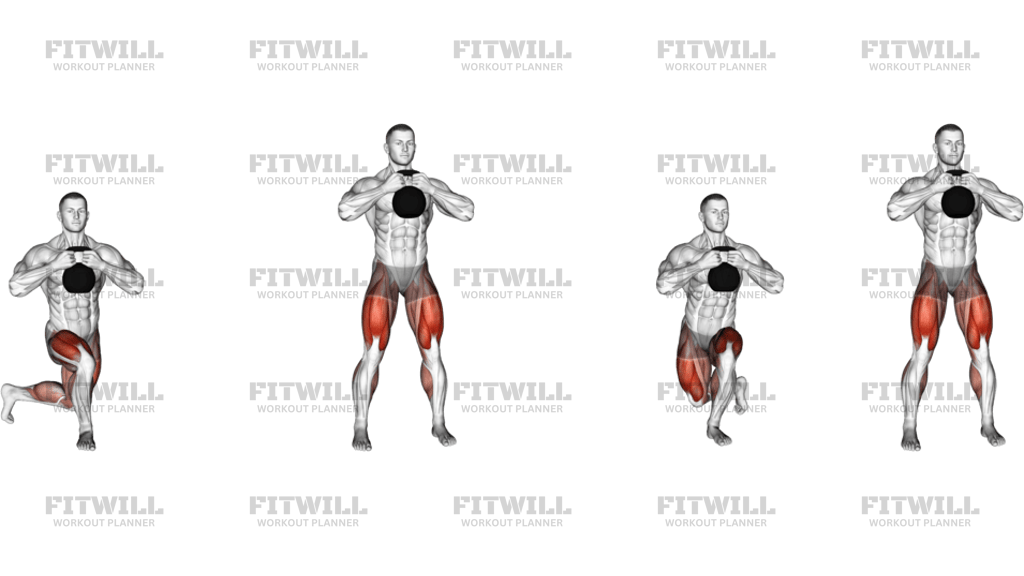
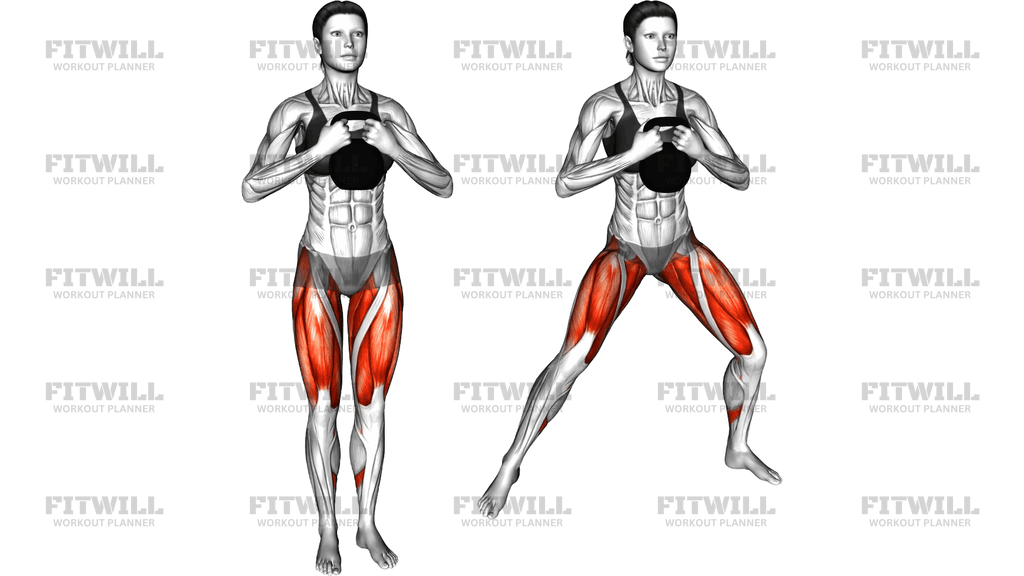
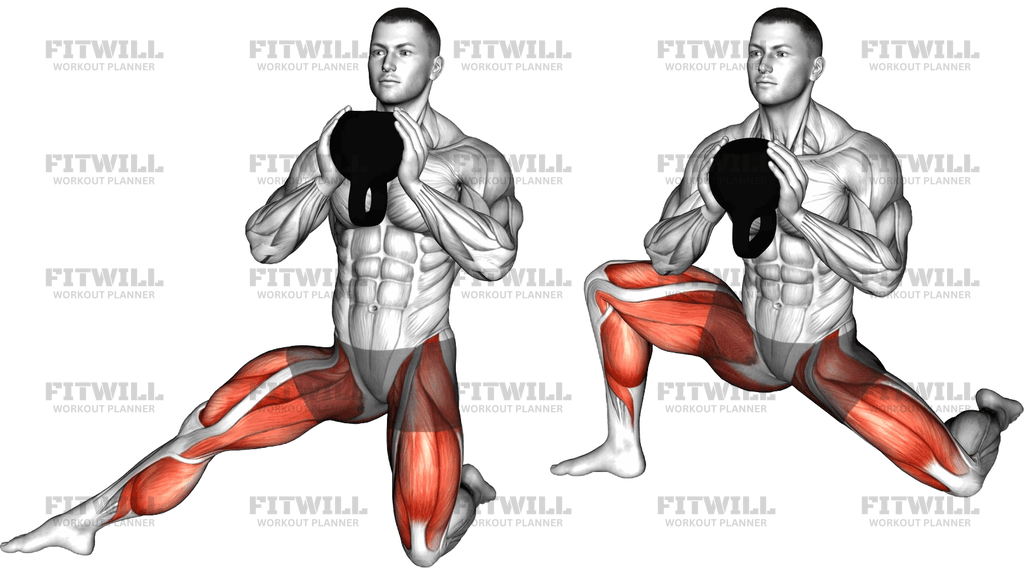
The Kettlebell Half Kneeling Side Lunge is a lateral lunge variation performed from a half-kneeling base instead of a standing stance. You hold a kettlebell in a goblet position at your chest, kneel on one knee with the other foot planted wide out to the side, then shift your hips laterally over the planted foot to load the inner thigh, quad, and glute of that working leg before driving back to center. Removing the standing requirement changes the exercise significantly: you get the same lateral hip shift and adductor loading of a classic side lunge, but with far less balance demand and much easier control of torso position.
This setup makes the movement especially useful for people who want to train the inner thigh through a deep stretch but struggle with the balance, ankle mobility, or hip stability that a standing lateral lunge demands. It is also a strong choice for lifters recovering full confidence after a knee or hip issue, older trainees who want loaded adductor work without fall risk, and athletes who need to rebuild lateral strength after long periods of only forward-and-back training. Because the knee-down side stays anchored, you can focus entirely on the quality of the shift rather than staying upright.
The main work happens in the adductors of the working leg, which control the lateral shift and pull you back to center, with the quads handling the knee bend and the glutes contributing at the hip as you sit sideways into the lunge. The kneeling-side hip flexors get a genuine mobility benefit from the deep, loaded stretch on the down-knee hip, and the core has to brace continuously to keep the kettlebell from dragging your torso into rotation or forward collapse.
Setup details matter more than they might seem. The planted foot should be wide, flat, and turned slightly out, the shin roughly vertical at the bottom of the shift, and the down knee stacked under or slightly behind the same-side hip. Holding the kettlebell at the sternum with both hands keeps the load close to your center of mass, which is what lets the hips move sideways cleanly. Let the bell drift away from the chest and the exercise turns into a torso fight instead of a leg exercise.
Execute the shift by sitting your hips directly toward the planted-side heel, letting the knee travel out over the toes rather than caving inward. Descend until you feel a solid stretch through the inner thigh of the working leg and the front of the down-knee hip, pause briefly, then push through the whole planted foot to return. Move slowly in both directions; this is a control drill as much as a strength drill.
A typical session uses two to three sets of eight to twelve shifts per side, usually placed in a warm-up block or early in a lower-body day as lateral work. Start with a light kettlebell, even a 6 to 8 kilogram bell or a filled water jug, and only add load once you can keep your chest tall and your planted knee tracking out through every rep. If a rep causes pinching at the hip or knee, shorten the range before you abandon the movement entirely.
[ Workout Log & Planner ]
Put your next workout in Fitwill
Keep your plan and training log ready when you are.


Instructions
- Kneel on your right knee with your left foot planted wide out to your left side, toes pointing slightly outward and the whole foot flat on the floor.
- Hold a kettlebell by the horns at your sternum with both hands, elbows tucked so the bell stays close to your chest rather than drifting forward.
- Stack your torso upright over your hips and squeeze your glutes lightly to set your pelvis level before you move.
- Brace your core as if preparing for a light push, and keep that brace through the entire rep.
- Shift your hips sideways toward your planted left foot, bending that knee and letting it travel out over your toes while the shin stays close to vertical.
- Lower until you feel a firm stretch along the inner thigh of the working leg and the front of the kneeling right hip, keeping your chest tall and the bell glued to your sternum.
- Pause for one to two seconds in the stretched position without letting the planted heel lift or the knee collapse inward.
- Press through the entire left foot, especially the heel and mid-foot, to pull your hips back to the centered half-kneeling position.
- Exhale as you shift out, inhale at the bottom, and exhale again on the drive back to center.
- Complete all reps on one side, then re-grip the kettlebell and switch so the opposite leg is planted and the other knee is down.
Tips & Tricks
- The most common mistake is letting the planted knee cave inward as you shift. Cue yourself to spread the floor with that foot and track the knee toward your pinky toe.
- If you feel pinching at the front of the down-knee hip, tuck your pelvis slightly and squeeze the glute on that side before descending; this usually opens the hip flexor stretch immediately.
- Keep the kettlebell pressed gently into your sternum the whole time. When the bell drifts forward, the lower back takes over the bracing work and the torso starts to round.
- A lifted heel on the planted foot means you shifted too far or too fast for your ankle range. Sit slightly less deep and work on keeping that heel glued down before adding load.
- Put a pad or folded mat under the down knee, especially on hard floors. Discomfort there quietly shortens your range of motion over a set.
- Think of sitting sideways onto a low stool beside you rather than leaning sideways. This keeps the movement in the hip instead of turning it into a side bend through the spine.
- Control the return as much as the descent. Bouncing out of the adductor stretch is where most people lose knee position and feel it afterward.
- If one side shifts noticeably deeper or smoother than the other, spend an extra set on the stiff side at the start of your next session instead of just matching reps.
- Start far lighter than a standing side lunge would suggest. The half-kneeling position changes your leverage, and a bell that feels easy to hold often feels heavy to control mid-shift.
Frequently Asked Questions
Which muscles does the Kettlebell Half Kneeling Side Lunge work hardest?
The adductors of the working leg do most of the controlling and pulling, supported by the quads during the bend and the glutes at the hip. The kneeling-side hip flexors also receive a deep loaded stretch, and the core braces throughout.
Why do this from half-kneeling instead of standing?
The kneeling base removes most of the balance and ankle mobility demands, so you can load the inner thigh deeply with a stable, upright torso. It is an easier way to earn the same lateral shift before progressing to a standing lateral lunge.
How heavy should the kettlebell be for the Kettlebell Half Kneeling Side Lunge?
Start with a light bell, roughly 6 to 12 kilograms depending on your background, because the goal is a controlled lateral shift rather than a max load. Go heavier only when your planted heel stays down and your knee tracks out through every rep.
Is this exercise safe for beginners?
Yes, and it is often friendlier to beginners than a standing side lunge because the floor supports the down-knee side. Begin with body weight or a very light bell and master the hip shift before adding load.
What should I do if my down knee hurts on the floor?
Place a pad, folded towel, or mat under the knee and make sure the knee is stacked under your hip rather than splayed out wide. If direct pressure still bothers the knee, choose a standing or supported lateral lunge variation instead.
How deep should I shift during the Kettlebell Half Kneeling Side Lunge?
Descend until you feel a strong but comfortable stretch in the inner thigh of the planted leg and the front of the down-knee hip, with the shin close to vertical and the heel flat. Depth beyond that point usually comes at the cost of knee or heel position.
Can I substitute anything if I do not have a kettlebell?
A single dumbbell held vertically at your chest works almost identically, and a body-weight version is a fine starting point. The key is keeping the load or arms close to the sternum so the torso stays tall.
Should my planted foot point straight ahead or turn out?
Turn it out slightly, around 15 to 30 degrees, so the knee can track outward naturally over the toes. A completely straight-ahead foot tends to force the knee inward and pinch the hip as you shift.
Where should I put this exercise in my workout?
It works well early in a lower-body session as lateral strength work, or as a loaded mobility drill in the warm-up before squats and deadlifts. Two to three sets of eight to twelve controlled shifts per side is a solid dose.