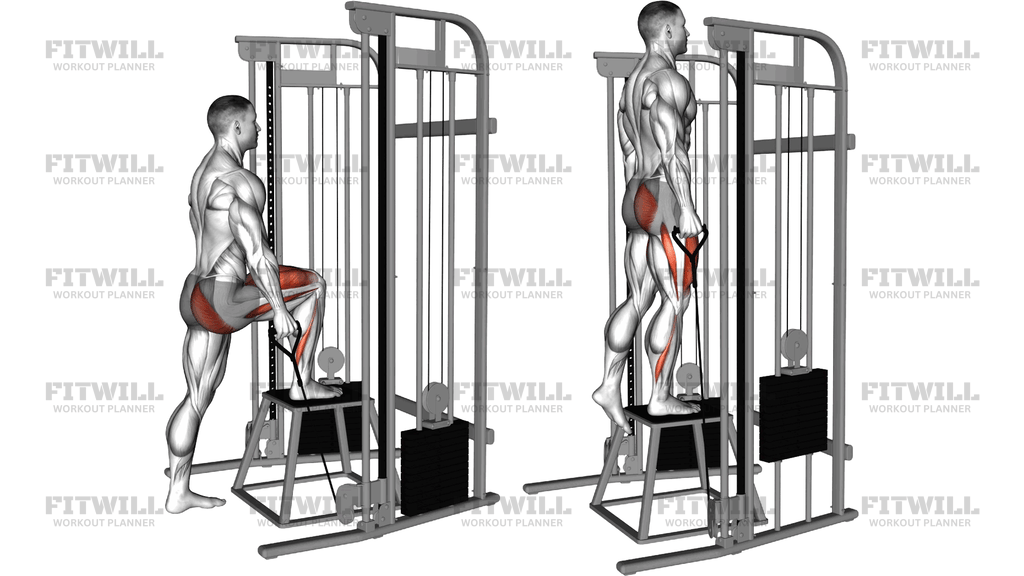
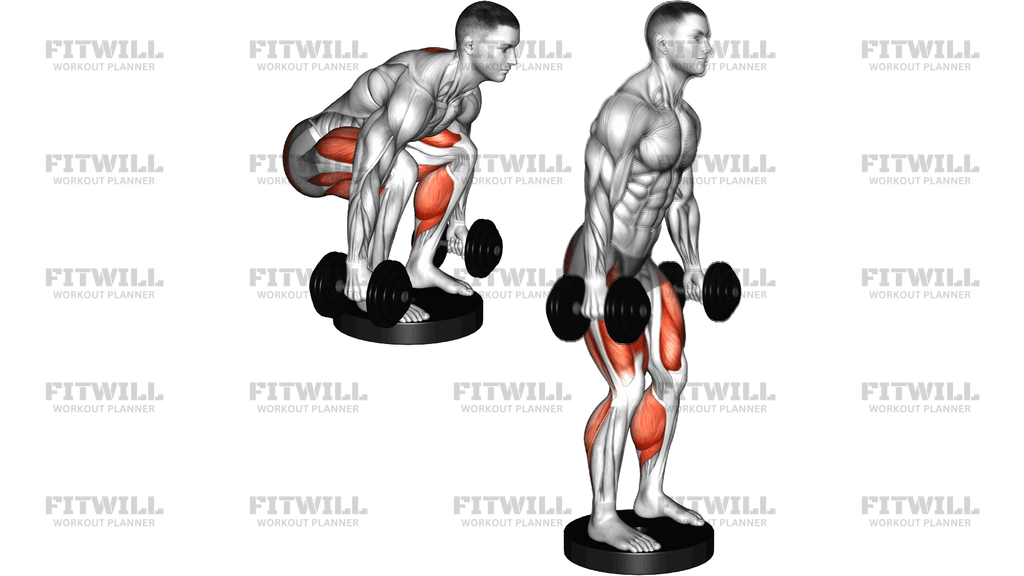
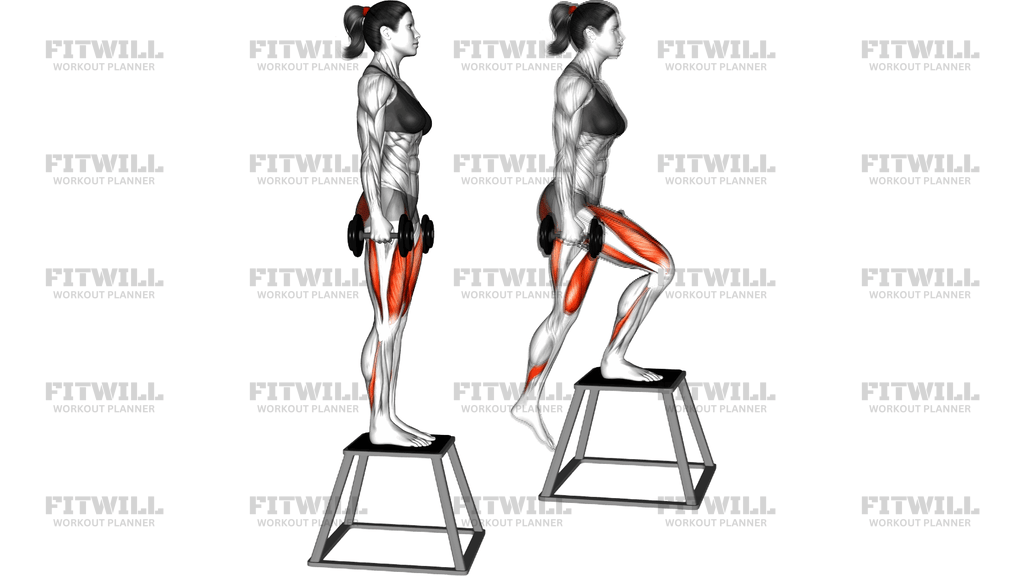
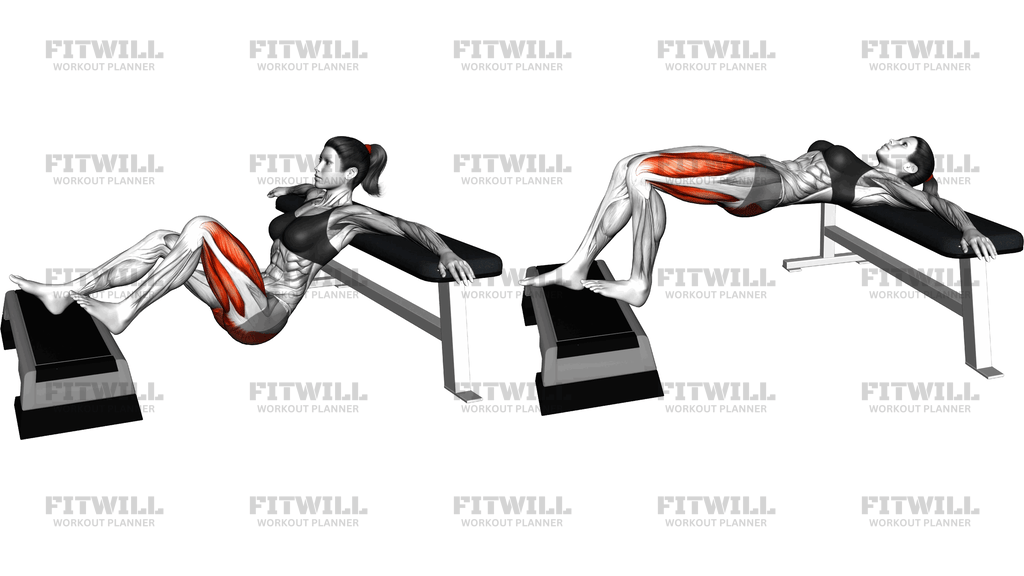
Foot On Stepbox Squat
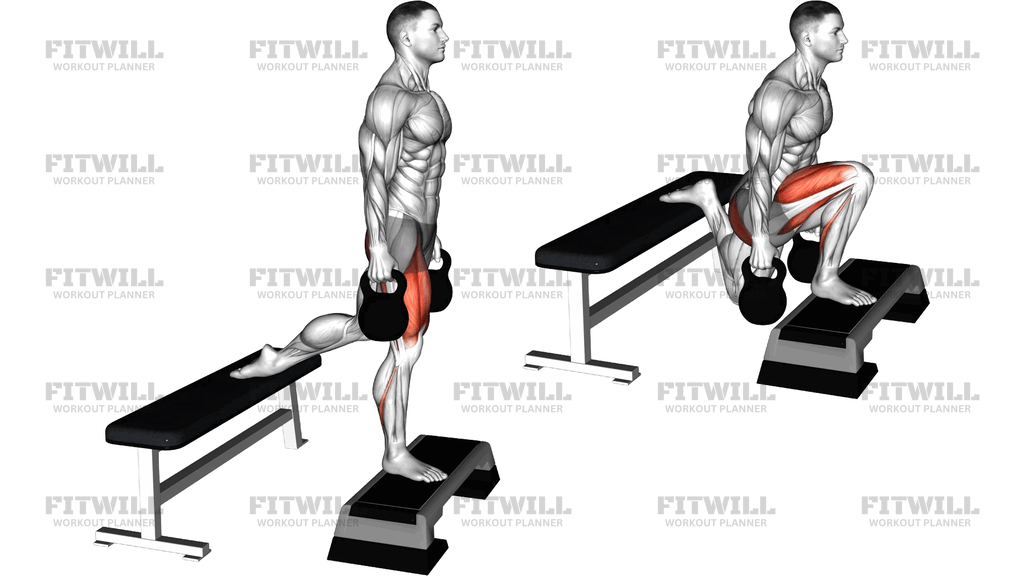
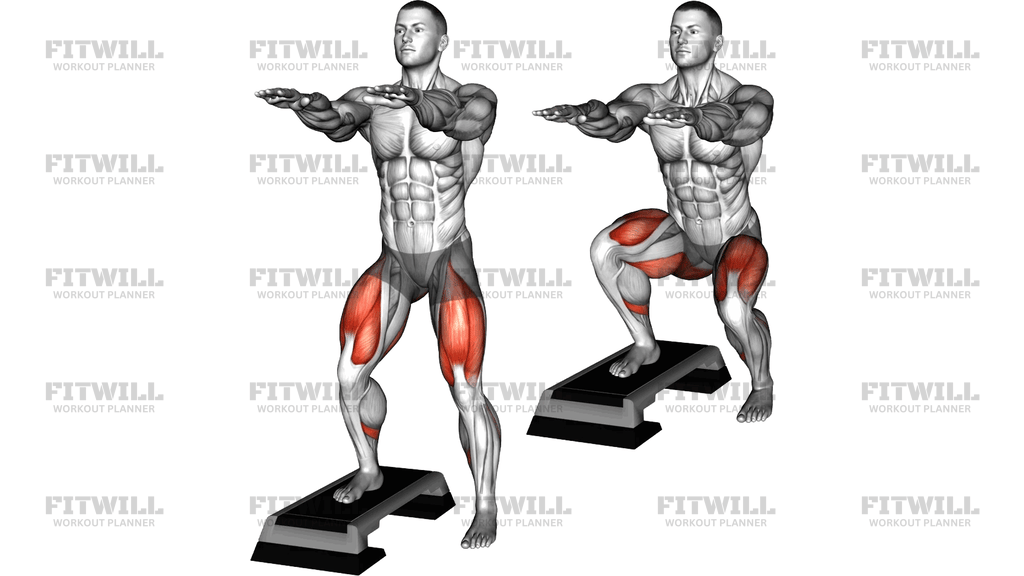
The Foot On Stepbox Squat is a single-leg squat variation where one foot rests on a low step platform while the working leg performs the squat on the floor. Unlike a rear-foot-elevated split squat, where most of the load stays on the front leg with the back leg providing support, this version places the elevated foot lightly on the box for balance and a deeper range of motion, so the floor leg does the bulk of the work. Because you are using only your body weight and a step platform, it fits easily into home workouts, warm-ups, or unilateral leg blocks at the gym.
This movement primarily builds the quadriceps of the working leg, with strong involvement from the glutes and hamstrings as you drive out of the bottom. The elevated rear foot lengthens the hip flexors of that back leg and shifts the squat pattern slightly forward, which lets many people reach a deeper knee bend than they can in a standard two-legged squat. The hip stabilizers of the working leg also get plenty of work, since keeping your pelvis level on one leg is part of the challenge.
Setup matters more than it looks. The height of the stepbox determines how much the rear leg assists and how far forward your torso travels, so a low platform of one to three risers is usually the right starting point. Your front foot should be far enough forward that your knee can track over your foot without your heel lifting, and your arms extended in front of you act as a counterweight to keep your chest up as you descend.
To execute it well, shift nearly all of your weight onto the front leg, bend that knee, and lower until your thigh is roughly parallel to the floor or slightly below if your mobility allows. The rear foot stays in contact with the stepbox but should not push hard off it. Press the floor away through your whole front foot, especially the mid-foot and heel, and stand back up without letting the front knee cave inward.
Common use cases include balancing strength between legs after bilateral squatting, progressing toward a full single-leg squat, rehabbing or retraining one side after time off, and adding quad-focused volume without external load. Because each leg works independently, weaker sides cannot hide behind the stronger one, which makes this a useful diagnostic as well as a builder.
Keep in mind that single-leg work magnifies balance errors. Move deliberately, especially on the way down, and stop the set as soon as your front knee starts drifting inward or your heel lifts. If depth is limited by ankle mobility, widen your stance slightly or lower the stepbox rather than forcing the bottom position.
[ Workout Log & Planner ]
Put your next workout in Fitwill
Keep your plan and training log ready when you are.


Instructions
- Place a low step platform on a flat, non-slip surface and stand facing away from it.
- Reach one foot back and set the top of that foot or toes on the stepbox, with your front foot planted a comfortable stride length ahead and pointing straight forward.
- Extend both arms straight out in front of your chest at shoulder height to counterbalance your torso.
- Brace your core, lift your chest, and shift almost all of your body weight onto the front leg, leaving only light contact on the rear foot.
- Inhale, then bend the front knee and hip to lower your body straight down, letting the rear knee drop toward the floor behind you while the front knee tracks over your toes.
- Descend until your front thigh is about parallel to the floor, or as deep as you can go without your front heel rising or your torso collapsing forward.
- Exhale and drive through the mid-foot and heel of the front leg to stand back up, keeping the rear foot resting lightly on the stepbox rather than pushing off it.
- Complete all repetitions on one side, then step the rear foot down and switch legs, matching the rep count on the second side.
Tips & Tricks
- If your front heel lifts at the bottom, your stance is too narrow or the stepbox is too high — lower the platform or step the front foot slightly further forward.
- The rear foot should touch the stepbox like a kickstand, not push off it; if you feel your back leg driving you up, move more weight into the front leg at the start of each rep.
- Watch your front knee in a mirror: if it dives inward as you tire, shorten the set and consciously press the knee out over your little toe.
- Keep your torso leaning only slightly forward. If your chest drops sharply, raise your arms higher in front of you or reduce your depth until you can stay tall.
- Control the lowering phase for two to three seconds — dropping quickly on one leg is the fastest way to lose balance on this movement.
- Aim to keep your hips square to the front; a rotating pelvis usually means the rear foot is bearing too much load or the stepbox is too tall.
- If you feel a pinch at the front of the rear hip, that leg is stretched too far — bring the rear foot closer to the platform edge or reduce the height.
- Hold a wall or doorframe lightly with one hand on your first sessions if balance fails before your legs do, then wean off the support.
Frequently Asked Questions
What muscles does the Foot On Stepbox Squat work?
The quadriceps of the working leg do most of the lifting, with the glutes and hamstrings driving you out of the bottom. The calves and deep hip stabilizers work to keep you balanced on a single leg.
How high should the stepbox be for the Foot On Stepbox Squat?
Start with one to three risers, roughly 10 to 30 centimeters tall. A higher box increases the rear leg's stretch and changes your balance, so progress the height only once your form is consistent.
Is the Foot On Stepbox Squat suitable for beginners?
Yes, provided you start with a low platform and a modest depth. Beginners can also hold a light support with one hand until single-leg balance feels secure.
How is the Foot On Stepbox Squat different from a Bulgarian split squat?
In a Bulgarian split squat the rear foot is elevated higher and carries a real share of the load. In this variation the rear foot rests lightly on a low stepbox mainly for balance and depth, so the front leg works much closer to single-leg effort.
Why do my arms need to be extended in front of me?
Reaching your arms forward shifts your center of mass over the working leg, which helps you stay upright and counterbalances the backward reach of your rear foot. Lowering them usually makes the torso pitch forward.
Should the rear foot push off the stepbox to help me stand up?
No — keep only light contact so the front leg does the work. If the rear leg is visibly driving the rep, you are turning the exercise into a split squat and reducing the challenge to the working side.
How many reps should I do per leg?
Start with 6 to 10 controlled repetitions per leg for 2 to 3 sets, always matching the weaker side's rep count. As balance improves, you can add reps, slow the tempo, or hold a weight.
My front knee hurts when I do this — what should I check first?
Check that your knee tracks over your toes instead of caving inward, that your heel stays down, and that you are not dropping into the bottom position quickly. Reducing depth and controlling the descent usually resolves it; persistent discomfort should be assessed by a professional.
What can I use if I don't have a step platform?
Any stable, low, non-slip surface works — a low bench, a stair step, or a stacked aerobic step. Avoid anything that can slide or tip, since your rear foot will bear some of your balance.
Can I add weight to the Foot On Stepbox Squat?
Yes. Once you can control 10 to 15 clean reps per leg, hold a dumbbell or kettlebell at your chest. Keep the rear foot's contact light so the added load still goes through the working leg.