Sitting Isometric Hamstring Curl Hold With Exerci
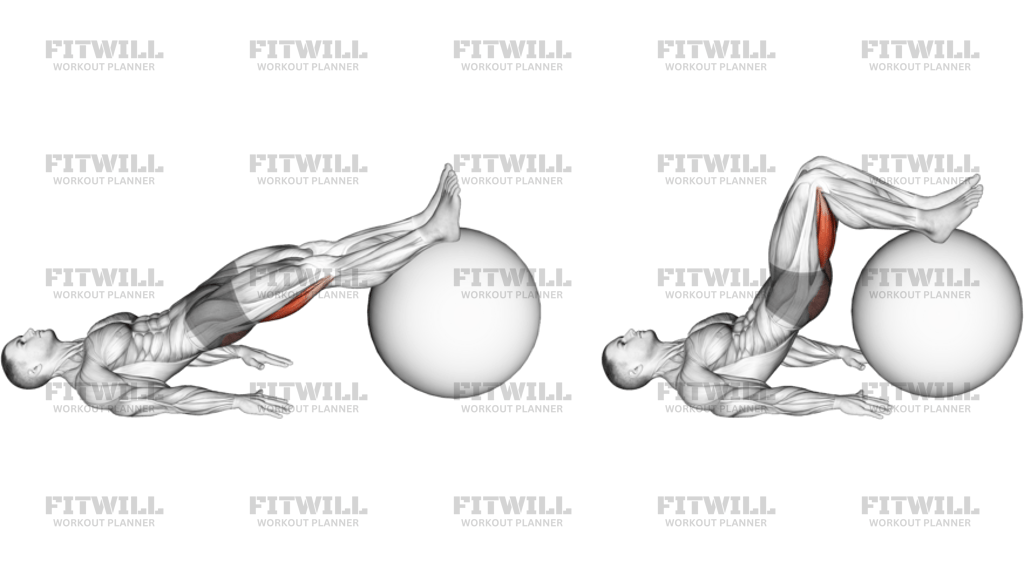
The Sitting Isometric Hamstring Curl Hold With Exercise Ball is a low-equipment hold that trains the hamstrings through sustained tension rather than movement. You sit on a flat bench, hook your heels over the top of a stability ball positioned in front of you, and then press your heels down and back into the ball as if trying to drag it toward the bench. Instead of the ball actually moving, you hold that pulling effort for time, keeping the hamstrings contracted against the ball's resistance the entire set.
This is a practical choice for people who want hamstring work without a leg curl machine, cables, or loaded equipment. Because the effort is isometric, the angle of your knee at setup determines where in the hamstring's range you train, and the ball provides just enough give that you can fine-tune the intensity by pressing harder or softer. It suits beginners learning to feel their hamstrings contract, lifters looking for a finisher after heavier leg work, and anyone rehabbing or returning from time off who needs controlled, joint-friendly tension.
The primary muscle at work is the hamstring group on the back of the thigh, which flexes the knee and assists in extending the hip. Your calves and the muscles around the ankle help stabilize the foot on the ball, while the glutes and core keep your torso upright on the bench so the pulling force goes into the ball rather than into your lower back. Done well, the whole leg works together to anchor the ball in place.
Setup matters more than it looks. The ball needs to be close enough that your knees stay bent at roughly 90 degrees, and your heels should rest on the upper front surface of the ball, not the sides. If the ball is too far away, you straighten the leg and shift tension toward the hip; too close, and the knee angle becomes so compressed that the hold loses meaningful resistance. Sit tall on the front edge of the bench with your feet clear of the floor once your heels are on the ball.
To execute it well, brace your core, rest your hands on your thighs for balance, and build the pull gradually. Press your heels into the ball and attempt to slide them backward under the bench, squeezing the hamstrings for the length of the hold without letting your hips rock or your lower back arch. Breathe steadily throughout, and release the pressure slowly rather than dropping it abruptly so the ball does not shoot away from you.
You will see this movement used as a warm-up primer before squats or deadlifts, as a burnout at the end of a leg session, or as a standalone hamstring exercise in minimal-equipment programs. Keep the effort at a level you can sustain with clean posture, and progress by lengthening the hold or increasing the pressing force rather than rushing into longer sets with poor positioning.
[ Workout Log & Planner ]
Put your next workout in Fitwill
Keep your plan and training log ready when you are.


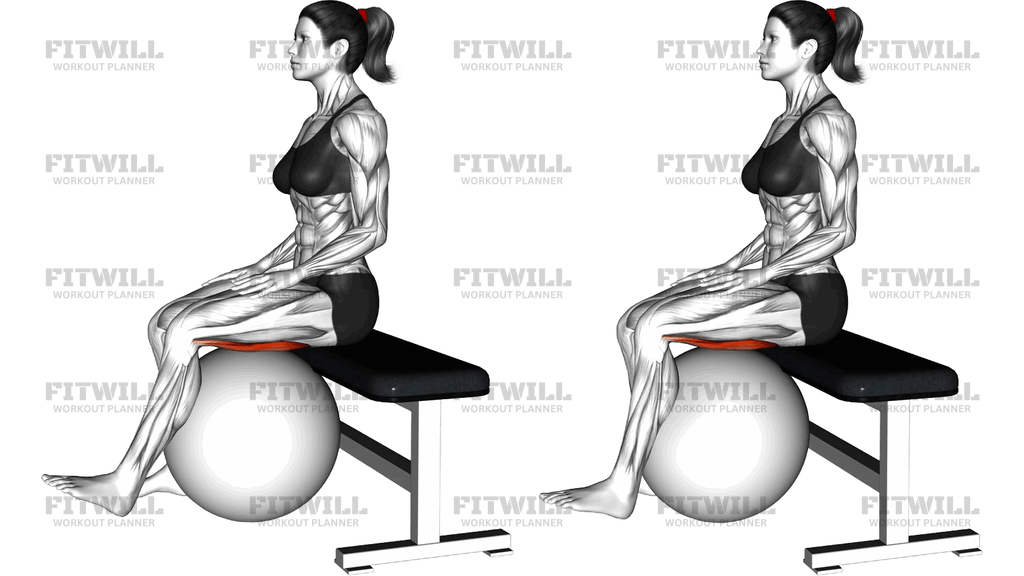
Instructions
- Place a stability ball directly in front of a flat bench, close enough that your shins stay roughly vertical when your heels rest on top of the ball.
- Sit tall on the front edge of the bench with your spine neutral, then hook both heels over the upper front surface of the ball so your knees are bent around 90 degrees and your feet hang clear of the floor.
- Rest your hands on your thighs beside your knees for balance, and brace your core lightly to keep your torso from rounding.
- Take a breath in, then begin pressing both heels down and back into the ball, as if trying to drag it underneath the bench.
- Build the pressure over two to three seconds until your hamstrings are working hard, and hold that effort without letting the ball slip or your feet roll off.
- Keep your hips planted on the bench and your lower back in its neutral curve; do not lean back or hunch forward to generate extra force.
- Breathe smoothly throughout the hold, exhaling steadily instead of holding your breath.
- Sustain the pull for the planned time, typically 10 to 30 seconds, keeping the pressing intensity consistent from start to finish.
- Ease off the pressure gradually, let your feet settle, and reposition your heels on the ball before starting the next hold.
Tips & Tricks
- The most common mistake is letting the ball drift forward mid-hold, which straightens the knees and drains tension from the hamstrings; nudge the ball back to the starting distance between sets.
- If you feel the work in your calves or the front of your shins instead of the back of your thighs, you are pointing your toes too hard; keep the foot relatively flat and drive through the heel.
- A knee angle much tighter than 90 degrees makes the hold feel easy but cramped; if tension feels weak, move the ball slightly farther away to lengthen the hamstring's working angle.
- Do not let your hips slide forward off the bench as you pull; sliding means the force is shifting into your hip flexors and lower back instead of staying in the hamstrings.
- Build intensity in stages during each hold rather than maxing out instantly; a controlled ramp lets you find the highest effort you can hold without form breaking down.
- If the ball slides on a smooth floor, perform the exercise on a surface with more grip or place a mat under the ball to give it traction.
- Keep your neck and shoulders relaxed; shrugging or straining your upper body adds nothing to the pull and usually signals you are holding your breath.
- For a harder set, extend the hold time or add brief pulses of extra pressure on top of your baseline squeeze rather than only increasing duration.
Frequently Asked Questions
What muscles does the Sitting Isometric Hamstring Curl Hold With Exercise Ball work?
The hamstrings on the back of the thigh do the primary work as they attempt to flex the knee against the ball. The calves and ankle stabilizers help anchor the feet, while the glutes and core keep your torso steady on the bench.
How bent should my knees be during this hold?
Aim for roughly 90 degrees of knee bend at setup. This angle puts the hamstrings in a strong working position; much straighter and the glutes take over, much tighter and the resistance feels weak.
Why does the ball need to be so close to the bench?
The ball's position sets your knee angle and the direction of the pull. Placing it close enough that your shins stay vertical keeps the tension in the hamstrings and stops your hips from sliding forward as you press.
Is this a good hamstring exercise for beginners?
Yes. The isometric format lets you control intensity simply by pressing harder or softer, and many beginners find it easier to feel their hamstrings contracting here than during dynamic leg curls.
How long should I hold each repetition?
Start with holds of 10 to 20 seconds where you can maintain firm pressure and upright posture. As that becomes comfortable, lengthen toward 30 seconds or add a second and third set.
What is the most common mistake with this exercise?
Letting the ball roll forward, which straightens the knees and shifts effort away from the hamstrings. Reset the ball to the same distance from the bench before every set so each hold starts from the same position.
Can I substitute anything for the stability ball?
A towel laid on a slippery floor under your heels can replicate the drag-back effort, or you can hook your heels under a fixed object like a heavy machine frame. The ball is convenient because its give lets you fine-tune the pressure.
Is this exercise safe for the knees or lower back?
The load is self-regulated and no weight moves through the joints, which makes it a gentle option for most people. Keep the knee bend moderate, avoid arching your lower back to generate force, and stop if you feel sharp joint pain.
Where does this fit in a leg workout?
It works well as a warm-up primer before squats or deadlifts, or as a finishing hold at the end of a leg day when the hamstrings are already fatigued and heavy equipment is no longer needed.
Should my feet stay in contact with the floor during the hold?
No. With your heels resting on top of the ball and knees bent near 90 degrees, your feet should hang clear of the floor. If your toes touch the ground, the ball is likely too close or too small for your leg length.