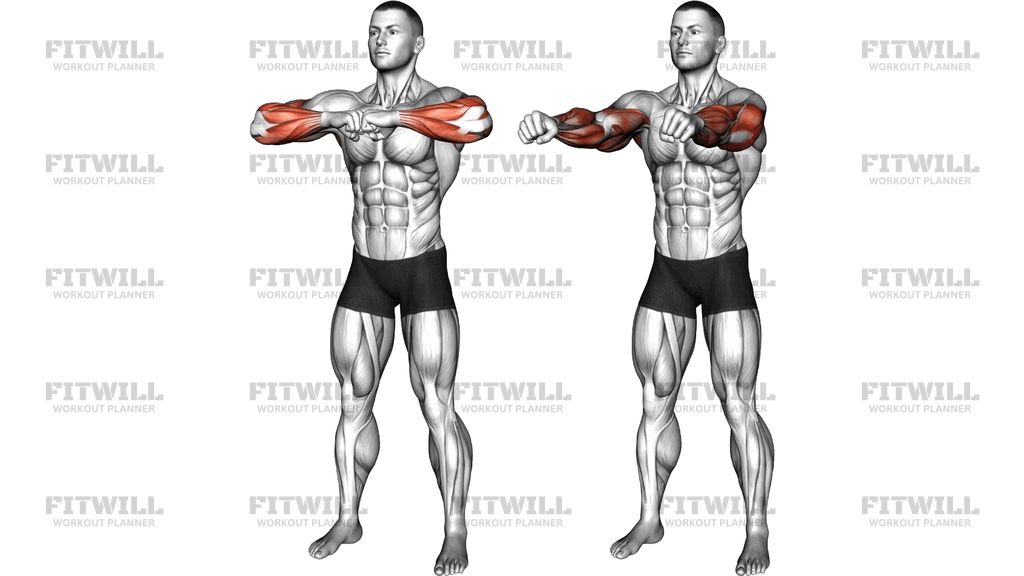
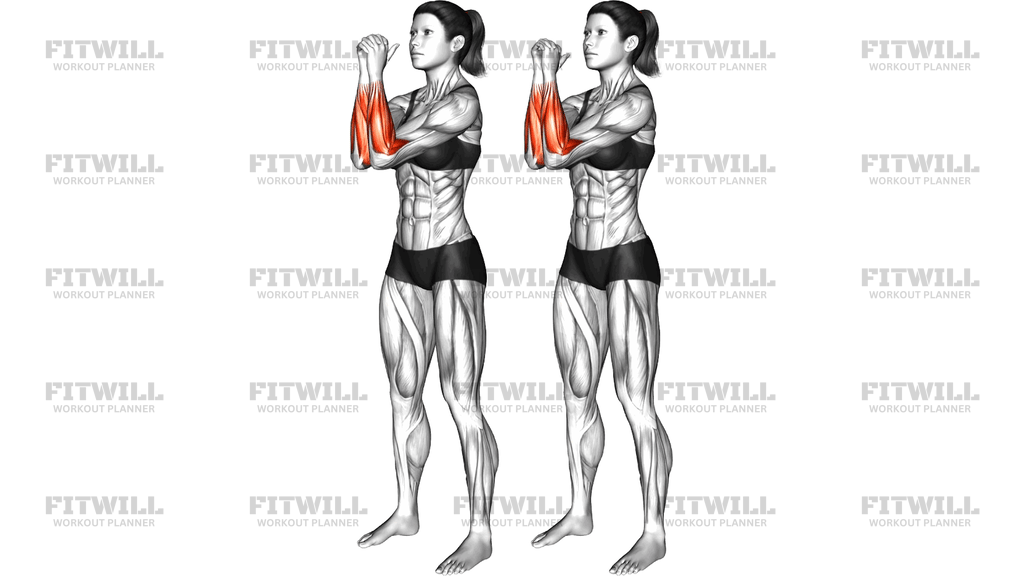
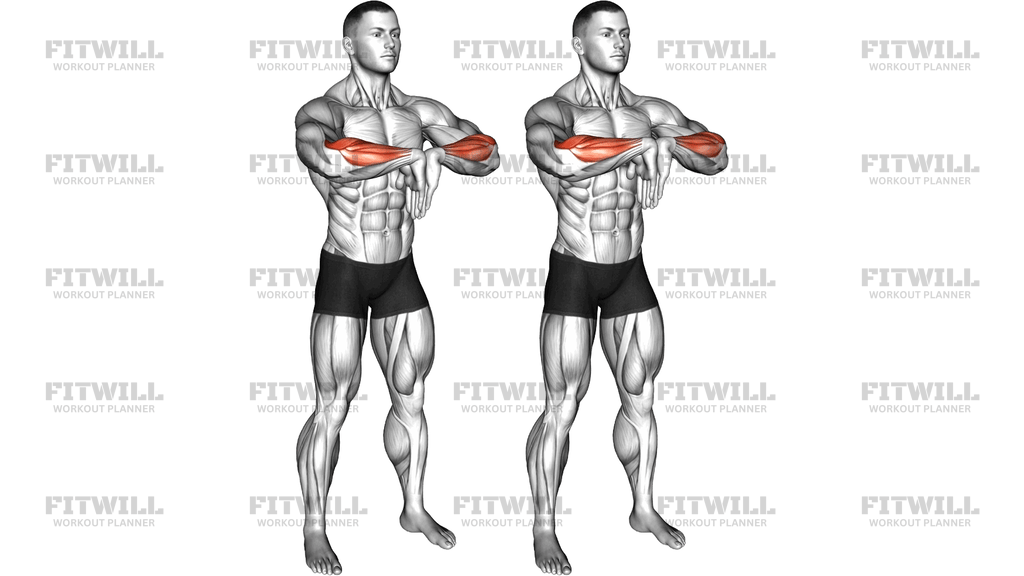
Standing Radial Nerve Mobilization
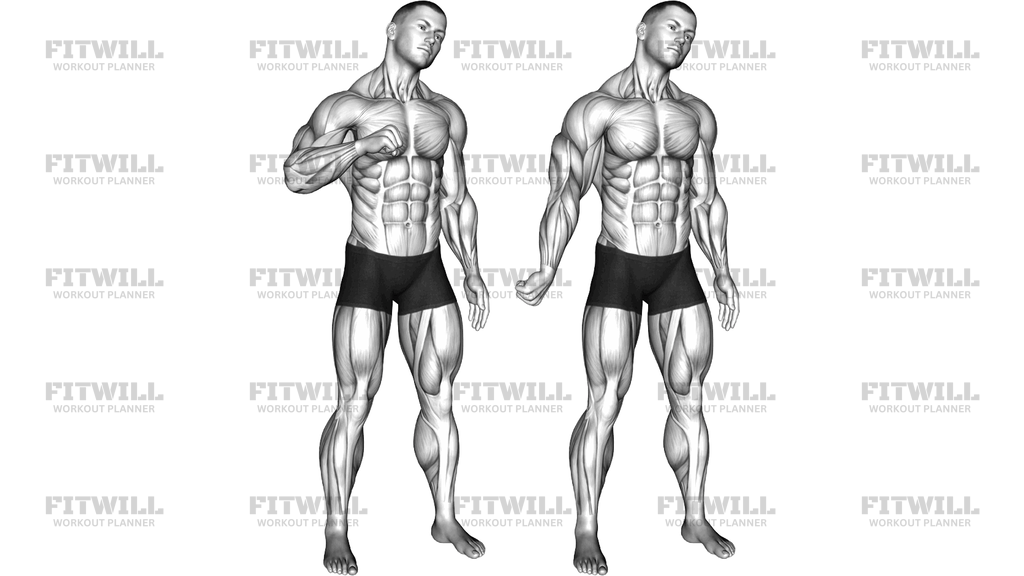
The Standing Radial Nerve Mobilization is a gentle nerve glide performed standing with no equipment. You move the arm from a bent-elbow position with the hand near your chest and the wrist curled, down to a straightened arm at your side, coordinating the motion with a slight head tilt. The goal is not to stretch a muscle or build strength, but to help the radial nerve slide smoothly through the tissues it passes on its way from the neck, across the shoulder, and down the back of the arm into the forearm and hand.
This movement is most useful for people who feel tightness, tingling, or vague ache along the back of the forearm, the outside of the elbow area, or into the back of the hand, especially after long hours of typing, mouse work, gripping tools, or lifting. Office workers, manual laborers, climbers, and lifters who do a lot of heavy gripping often include nerve glides like this alongside their regular wrist and forearm stretches.
Because a nerve is not a muscle, the setup and coordination matter more than effort. The head and neck position influences how much tension is on the nerve from above, while the elbow, forearm, and wrist position control tension from below. By bending one joint while easing the other, you create a flossing effect, where the nerve glides rather than being stretched taut at both ends at once. That is why the exercise is done slowly, with small ranges, and never pushed into sharp tingling.
To execute it well, stay tall and relaxed, keep the moving arm close to your body, and let the hand stay gently curled as the elbow straightens. The motion should feel like a faint pull or mild stretch somewhere along the arm, rated low on any discomfort scale. If you feel strong pins and needles, numbness, or symptoms that linger after you finish, you have gone too far and should reduce the range or the head tilt.
A typical session is five to ten smooth repetitions per side, once or twice a day, often as part of a warm-up or a desk-break routine. It pairs well with gentle wrist extensor stretching and posture work for the neck and upper back. If symptoms are persistent, worsening, or follow an injury, get assessed by a qualified health professional before continuing any self-mobilization routine.
Fitwill
Log Workouts, Track Progress & Build Strength.
Achieve more with Fitwill: explore over 9600 exercises with images and videos, access built-in and custom workouts, perfect for both gym and home sessions, and see real results.
Start your journey. Download today!




Instructions
- Stand upright with your feet about hip-width apart, weight even on both feet, and your shoulders relaxed down away from your ears.
- Bend the elbow of the arm you are mobilizing to roughly 90 degrees and bring your loosely closed hand up near your chest, letting the wrist curl downward so the back of your hand faces outward.
- Set your head in a neutral position, gaze forward, and take a slow breath in to settle your posture before starting the glide.
- As you exhale, lower your arm away from your chest and straighten the elbow so the hand travels down toward your side, keeping the wrist curled and the palm facing inward or backward.
- At the same time, tilt your head gently toward the opposite shoulder to add light tension from the top of the nerve pathway.
- Hold the end position for one to two seconds, stopping at the first hint of a pull rather than pushing into tingling or numbness.
- Reverse the motion smoothly: bring the hand back up toward your chest, bend the elbow, and return your head to neutral as you inhale.
- Continue this out-and-back cycle for five to ten controlled repetitions, keeping the movement fluid rather than jerky.
- Repeat on the other arm if both sides need work, and rest briefly between sets if any mild symptoms briefly increase.
- Finish by shaking out the arms and doing a few relaxed wrist circles to let the area settle before moving on.
Tips & Tricks
- The most common mistake is cranking the head tilt hard while forcing the elbow dead straight; that stretches the nerve at both ends at once instead of gliding it, which usually provokes tingling.
- Keep the fist soft. Clenching hard recruits the forearm muscles and defeats the purpose, since a relaxed hand lets the nerve move more freely.
- If straightening the arm fully causes symptoms, stop short of a locked elbow and work in the smaller range where you only feel a faint pull.
- Move at roughly one full cycle every three to four seconds; rushing turns a nerve glide into an aggressive ballistic stretch.
- Watch your shoulder: many people shrug the working shoulder toward the ear as the arm lowers. Keep the shoulder blade settled to keep tension where you intend it.
- Expect the sensation to show up in odd places, such as the back of the hand or the outside of the elbow, rather than in one spot like a muscle stretch would.
- Symptoms that persist for more than a minute or two after you stop are a sign the dose was too high; reduce repetitions, range, or the head tilt next time.
- Do these before gripping-heavy training or after long desk sessions, but avoid doing them aggressively right after an acute flare-up.
- Symmetry matters less than people assume. It is normal for one side to feel tighter; work each side to its own comfortable range rather than matching the other arm.
Frequently Asked Questions
What does the Standing Radial Nerve Mobilization actually target?
It targets the radial nerve, which travels from the neck down the back of the arm into the forearm and hand. The movement is a glide for that nerve, not a strength exercise for the muscles around it.
Is this the same as a wrist extensor stretch?
No. A wrist extensor stretch holds the wrist in one lengthened position to stretch the muscles. The Standing Radial Nerve Mobilization moves the elbow, wrist, and neck together so the nerve slides through the tissues rather than any single muscle being stretched hard.
Who benefits most from the Standing Radial Nerve Mobilization?
People who spend long hours typing, gripping tools, climbing, or lifting often use it when they feel vague forearm tightness or tingling into the back of the hand. It is also a common addition to desk-break and warm-up routines.
Why does my head tilt matter during this exercise?
The radial nerve originates from nerves in your neck, so tilting your head changes tension from the top of the pathway. Coordinating the tilt with the arm motion is what creates the flossing effect instead of a static stretch.
Is it normal to feel tingling in my fingers during the Standing Radial Nerve Mobilization?
Mild awareness of a pull is fine, but real tingling or numbness means you are overdoing it. Ease off the range, reduce the head tilt, and stay at an intensity where symptoms settle quickly once you stop.
How many repetitions should a beginner do?
Start with five slow repetitions per arm, once or twice a day. If the movement feels completely comfortable, you can build to ten repetitions, but more is not automatically better with nerve glides.
Can I do this exercise with a straight arm the whole time?
The bent-elbow start position is what allows the nerve to slacken and then glide as the arm lowers. If you keep the arm fully straight the entire time, you lose the flossing action and simply load the nerve statically.
What is the most common mistake with this movement?
Pushing into maximum head tilt and a locked elbow at the same time, which traps the nerve at both ends. Stay gentle, keep the fist relaxed, and stop at the first sensation of stretch.
Is the Standing Radial Nerve Mobilization safe to do every day?
For most people, gentle daily glides are fine and often more effective than occasional aggressive sessions. If symptoms are persistent, worsening, or follow a known injury, get assessed by a health professional before continuing.
Can I substitute anything if standing is uncomfortable?
The same glide can be performed seated with your feet flat and torso tall, which is a reasonable substitute if balance or standing comfort is an issue. Keep the same arm path and head coordination.