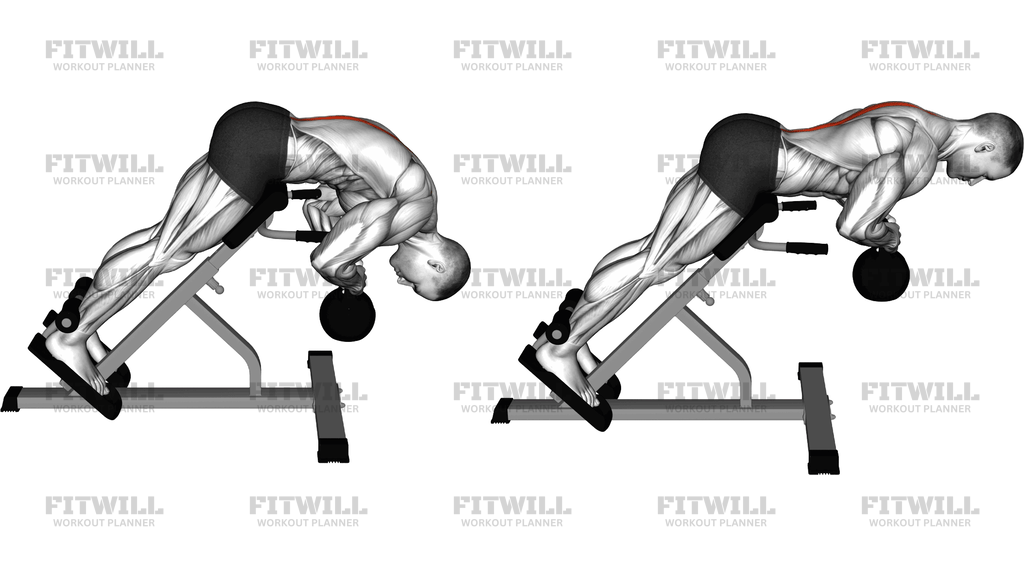
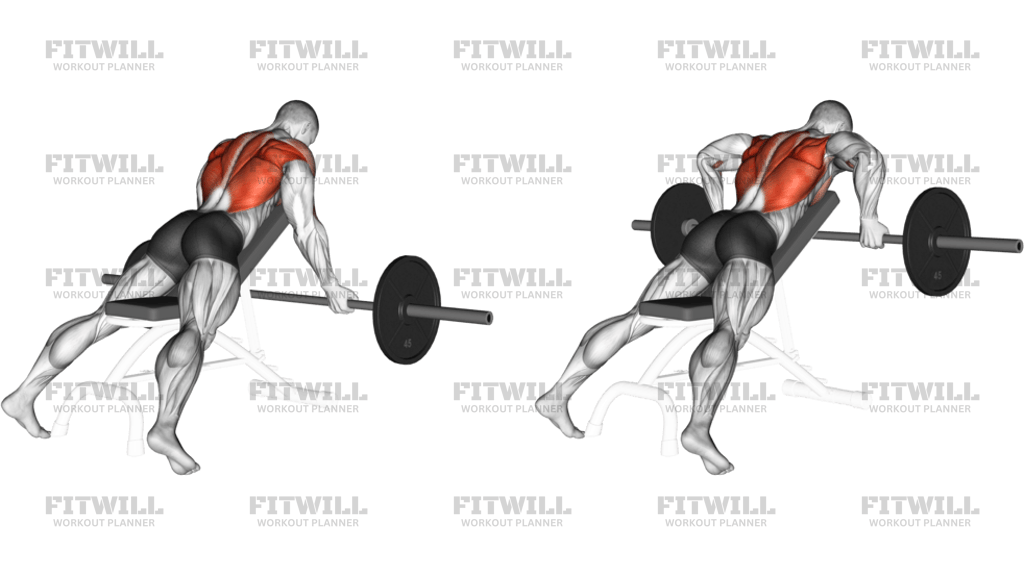
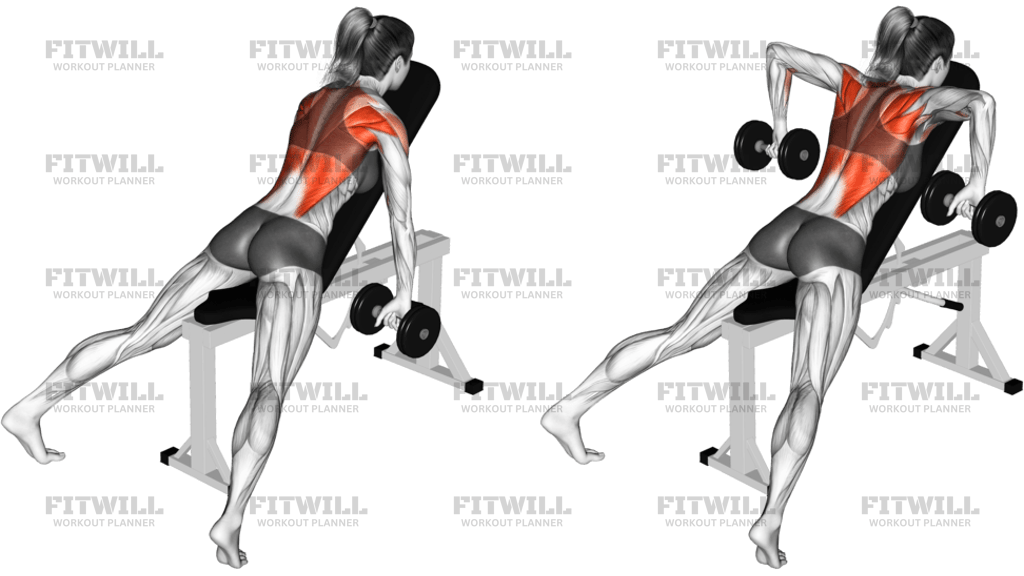
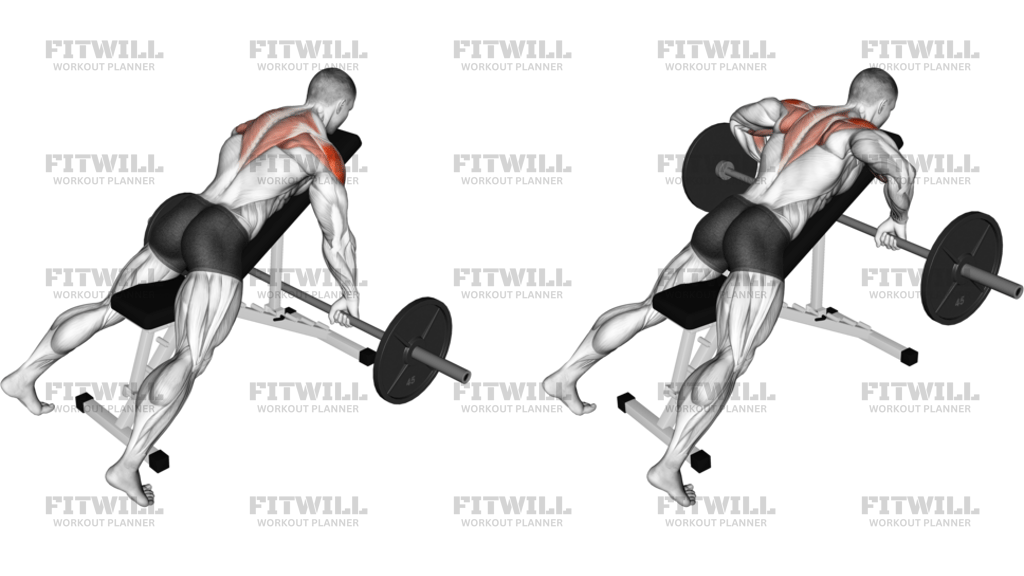
Prone Incline Ywat
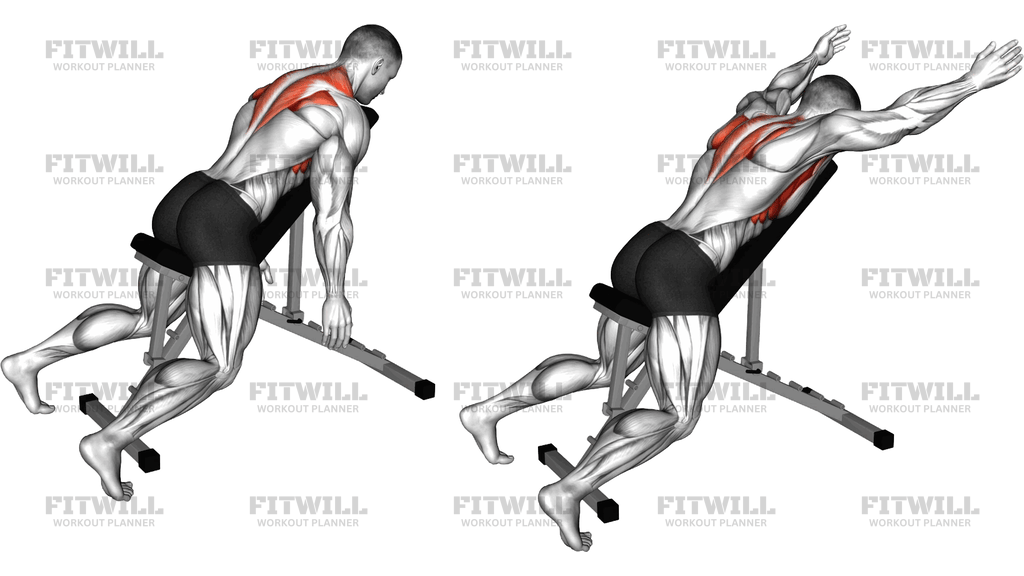
The Prone Incline Ywat is a bodyweight scapular exercise performed lying face down on an incline bench, where you move your arms through four distinct positions that resemble the letters Y, W, A, and T. Because the bench supports your torso, your lower back stays protected and your upper traps, rhomboids, and rear shoulders have to do the work of lifting and controlling the arms in every direction. The movement is completely equipment-light — just an adjustable or fixed incline bench and your own arms — yet it challenges the mid-back and shoulder blade muscles more precisely than most pulling exercises.
This drill is especially useful for people who spend long hours sitting at a desk, lifters whose pressing volume outweighs their pulling volume, and anyone rebuilding shoulder blade control after time away from training. The four letter positions each bias a slightly different area: the Y reaches the lower and upper traps, the W emphasizes the mid-traps and rhomboids with the elbows bent, the A targets the mid-back with the arms low and slightly angled out, and the T hits the rear shoulders and mid-traps at shoulder height. Training all four in one set gives the upper back balanced work through a wide arc of motion.
The incline bench setup is what makes this exercise work. With your chest and the front of your shoulders supported on the pad and your legs providing a stable base behind you, momentum is essentially removed from the equation. You cannot swing or cheat the arms up, so every degree of lift has to come from an honest contraction between the shoulder blades. That makes the bench angle important: high enough that your arms can move freely without grazing the floor, but not so steep that your shoulders shrug up toward your ears under gravity's pull.
To execute it well, think about initiating each letter from the shoulder blade first, then letting the arm follow. The arms stay relatively relaxed — you are not reaching hard with your hands, you are drawing the shoulder blades together, down, and up depending on the position. Keep the back of the neck long and the chin slightly tucked so the upper traps don't take over by default. Move slowly enough that you could pause at the top of every letter; if the arm drops back down in a rush, the set was too fast.
You will see this exercise used as a warm-up before pressing or pulling days, as a standalone high-rep finisher for posture work, and as a low-load reintroduction to training after long breaks. Because there is no external load, the safest progression is more control and a brief hold at the top of each letter rather than added weight. If holding all four letters in a row is too demanding at first, perform them one at a time with a short reset on the bench between positions.
[ Workout Log & Planner ]
Put your next workout in Fitwill
Keep your plan and training log ready when you are.


Instructions
- Set an incline bench to roughly 30-45 degrees and lie face down on it with your chest and the fronts of your shoulders supported on the pad.
- Position your feet on the floor behind the bench with legs mostly straight and toes grounded, so your body forms one stable line from head to heels.
- Let your arms hang straight down toward the floor on both sides, palms facing each other or in, and draw your chin in slightly so the back of your neck stays long.
- Brace your midsection lightly and squeeze your glutes to lock in your base before the first rep.
- For the Y, raise both arms up and out overhead so they form a wide V, thumbs pointing up, and lift by pulling the shoulder blades down and together.
- For the W, bend your elbows about 90 degrees and drive them back and out, rotating the upper arms so your hands rise level with or slightly above the elbows.
- For the A, keep the elbows nearly straight and sweep the arms down and slightly outward by your hips, squeezing the shoulder blades together low on your back.
- For the T, lift straight out to the sides at shoulder height with arms nearly locked, palms down or thumbs up, until the arms are level with your torso.
- Lower each position under control over two to three seconds rather than letting gravity dump the arms back down, and exhale as you lift, inhale as you lower.
- Complete the four letters in sequence for the planned reps, then rest lying still on the bench before the next set.
Tips & Tricks
- If your shoulders shrug toward your ears during the Y, consciously reach long through the fingertips first — the lift should come from the blade sliding down the back, not the shoulder riding up.
- On the W, a common error is flaring the elbows without actually squeezing the blades together; focus on pinching the space between your shoulder blades, not just moving your hands.
- Keep your forehead hovering just off the bench or resting lightly on it — craning the chin up to watch your arms turns this into a neck exercise.
- If your arms are too heavy to lift cleanly in the Y position, bend the elbows slightly and shorten the range rather than swinging them up.
- Stop each letter at the highest point you can hold for a one-count; chasing extra height usually just rotates the torso and shifts work away from the mid-back.
- Do not let your lower back arch and chest lift off the pad as you fatigue — that is a sign the set is over or the reps should slow down.
- Press your toes into the floor to stop the hips from rocking side to side, especially during the T where the wide arm position pulls the body off balance.
- Squeeze the pads of the bench lightly with your upper arms and chest to stay anchored, so the arms move independently of the torso.
- Because this is a bodyweight drill, progress with slower lowers, two-second holds at the top of each letter, or more reps — not by turning it into a loaded movement too early.
Frequently Asked Questions
Which muscles does the Prone Incline Ywat work?
The primary work comes from the trapezius across its middle and lower fibers, along with the rhomboids that pull the shoulder blades together. The rear shoulders and rotator cuff assist as the arms move through the Y, W, A, and T positions.
Why is the Prone Incline Ywat done on an incline bench instead of flat on the floor?
The inclined, chest-supported position lets the arms travel through a full arc overhead and out to the sides without hitting the floor, and it supports the torso so momentum cannot substitute for real scapular muscle work.
Is the Prone Incline Ywat suitable for beginners?
Yes, and it is actually a good first upper-back exercise because there is no external load. Beginners should start with fewer reps, slower tempos, and shorter holds at the top of each letter rather than trying to lift the arms as high as possible.
What is the difference between the Y, W, A, and T positions?
The Y has straight arms overhead in a wide V, the W has elbows bent at roughly 90 degrees pulled back and out, the A has straight arms sweeping low by the hips, and the T has straight arms lifted straight out to the sides at shoulder height.
Should my palms face down or thumbs up during the Prone Incline Ywat?
Thumbs-up rotation generally feels more comfortable in the Y and T positions and favors the lower traps and rotator cuff, while palms-down works fine in the W and A. Switch between them if one direction pinches at the shoulder.
How many reps and sets should I do?
A common starting dose is 6-10 controlled cycles through all four letters for 2-3 sets, resting about a minute between sets. Because the load is low, quality and tempo matter far more than total volume.
My upper traps burn more than my mid-back — what am I doing wrong?
That usually means the shoulders are shrugging instead of the blades pulling down and together. Lower the height of each position, tuck the chin slightly, and think about drawing the shoulder blades toward your opposite back pocket before lifting.
Can I do the Prone Incline Ywat without a bench?
A similar version can be done lying face down on the floor, but the arms will be blocked overhead and the range shrinks. If no incline bench is available, a stability ball under the chest or a slightly elevated position on a padded box are reasonable stand-ins.
Is it safe if I have shoulder discomfort with overhead positions?
If the Y position provokes discomfort, skip it and work the W, A, and T only, keeping the range below shoulder height. Persistent or sharp pain should be assessed by a qualified professional before continuing.
When is the best time to use this exercise in a workout?
It works well as a warm-up before pressing or pulling sessions to wake up the shoulder blade muscles, or as a controlled high-rep finisher dedicated to posture and mid-back endurance on upper-body days.