Suspender Assisted Shoulder Abduction Side Step
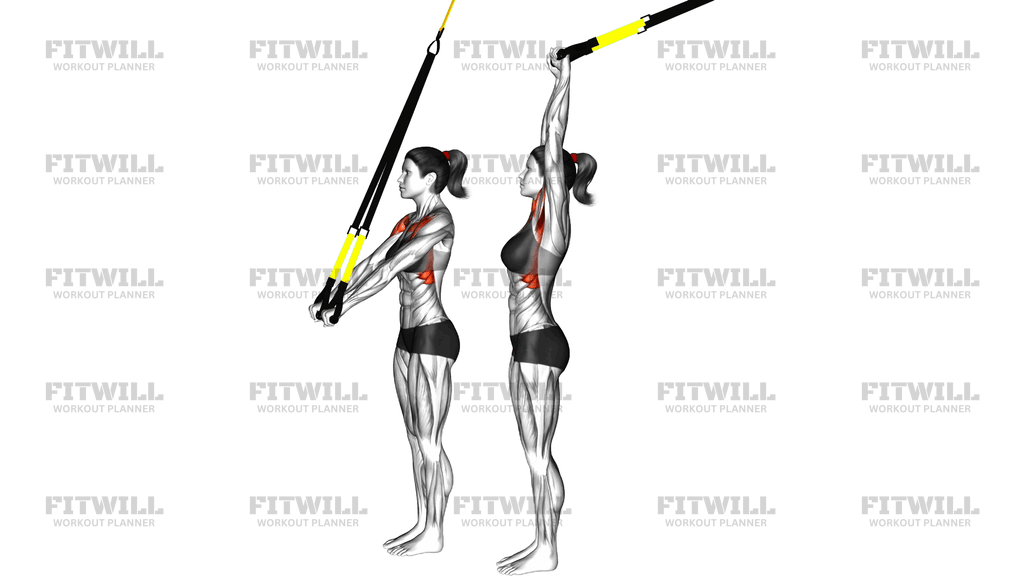
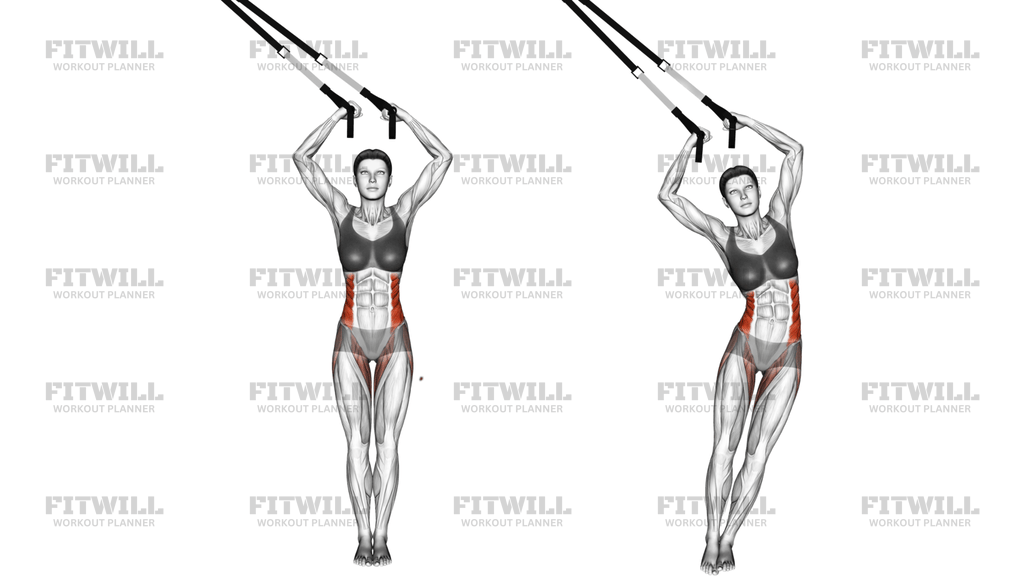
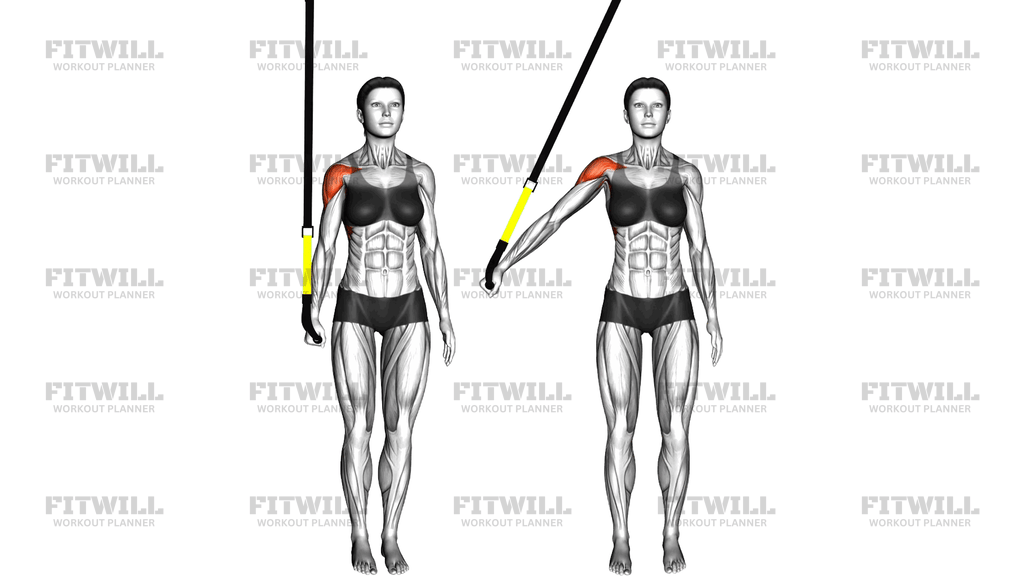
The Suspender Assisted Shoulder Abduction Side Step combines a band-assisted arm lift with a controlled lateral step, all from a tall standing position. One hand grips the handle of a suspension band anchored overhead, so the band's tension helps support the arm as it travels out and up to the side. As the arm rises, you take a deliberate step sideways, which turns a simple shoulder movement into a coordinated full-body drill.
This setup is especially useful if you struggle with strict dumbbell side raises or you're rebuilding shoulder abduction after a layoff. Because the band is pulling upward, your delt doesn't have to lift the full weight of the arm on its own, which lets you focus on a smooth, pain-free arc. The side step adds demand for the hips — particularly the glute medius on the working leg — and forces your core to keep your torso upright while you move off your base of support.
Setup matters more than it looks. The anchor point should be directly above or slightly outside your working hand, and the strap length should let your arm hang relaxed at your side with light tension already on the band. If the band is slack at the bottom, the first part of the lift gets no help; if it's too tight, the arm gets yanked up and you lose control of the descent. Take a moment to dial in the distance before your first rep.
To execute well, keep your gripping hand relaxed, your shoulders level, and your ribs stacked over your pelvis. Lead the lift with the elbow, letting the hand trail, until the arm reaches roughly shoulder height or a comfortable endpoint. Step sideways as the arm rises, land softly with a slight knee bend, and avoid leaning away from the working arm to cheat the lift. Lower the arm back down under control before stepping back to the start.
You'll see this movement used in warm-ups, shoulder-friendly hypertrophy work, and return-to-training programs where loaded dumbbells feel too aggressive. It's also a neat option for older trainees or anyone who wants overhead-shoulder conditioning without pressing. Keep the tempo slow, treat the band as assistance rather than momentum, and stop the range short of any pinching at the top of the shoulder.
[ Workout Log & Planner ]
Put your next workout in Fitwill
Keep your plan and training log ready when you are.


Instructions
- Anchor the suspension band securely overhead and adjust it so the handle hangs at about hip height when your arm is relaxed at your side.
- Stand tall facing forward and grip the handle with one hand, palm turned toward your thigh, with a small amount of tension already on the band.
- Brace your core lightly, soften your knees, and set your feet hip-width apart with your weight even.
- Begin lifting your arm out to the side, leading with the elbow and keeping the hand relaxed rather than squeezing the handle hard.
- As the arm rises past waist height, take a controlled side step away from your start point, landing with a soft knee bend.
- Continue until your arm reaches about shoulder height or the highest point that feels smooth, and pause briefly at the top without shrugging.
- Lower the arm back down along the same arc, resisting the band's pull rather than letting it snap your arm down.
- Once the arm is back at your side, step back to your original stance to complete one rep.
- Exhale as you lift and step, inhale as you lower and return, and keep breathing steadily throughout.
- Complete all reps on one side, then re-grip with the other hand and repeat on the opposite side.
Tips & Tricks
- If your shoulder shrugs toward your ear as the arm rises, the upper traps are taking over — lower the endpoint a few inches and keep the shoulder blade quietly settled before lifting again.
- A common mistake is stepping too wide on the side step, which collapses your knee inward; take a shorter step and land with the knee tracking over the foot.
- Keep your grip on the handle light. Squeezing hard recruits the forearm and biceps and dulls the feel of the delt doing the abduction.
- Don't let the band do the lowering for you. If the arm drops in the last third of the return, slow the descent and own that range.
- Watch for torso lean away from the working arm — that's a sign the lift is too hard or the range is too high. Stand taller and shorten the arc instead.
- Set the strap length so there's mild tension at the bottom; a slack start means no assistance where you need it most, and an over-tight start pulls the arm up before you're ready.
- If you feel a pinch at the top of the shoulder, turn your palm slightly forward (thumb up) and lift a little short of shoulder height.
- Alternate sides without long rests to keep the hips and core evenly loaded, since the side step is unilateral by nature.
- Progress by slowing the tempo or adding a brief hold at the top rather than shortening the band, which changes the assistance curve unpredictably.
Frequently Asked Questions
Which muscles does the Suspender Assisted Shoulder Abduction Side Step work?
The primary work comes from the side delts lifting the arm away from the body, with the upper traps assisting near the top. The side step also engages the glute medius and outer hips of the stepping leg, and your core stabilizes the torso throughout.
Is the band in this exercise helping me or resisting me?
Both, at different points. Because the suspension band is anchored overhead, it assists the arm on the way up by reducing the effective load, but you must actively control the arm against that same tension on the way down.
Is the Suspender Assisted Shoulder Abduction Side Step suitable for beginners?
Yes, it's a beginner-friendly way to train shoulder abduction because the band reduces how much strength the delt needs to lift the arm. Start with a modest range — up to about shoulder height — and prioritize a slow, controlled return.
How high should I raise my arm during the Suspender Assisted Shoulder Abduction Side Step?
Aim for roughly shoulder height, where the arm is about parallel to the floor. If you feel pinching or your shoulder shrugs up, stop a few inches lower and build the range gradually over sessions.
Why does this exercise include a side step instead of staying in place?
The side step adds balance and hip-stabilizer demand, especially for the glute medius, while the band supports the arm. It also trains coordination between the shoulder and lower body, which carries over to walking, carrying, and lateral movement in daily life.
What's the most common mistake with this movement?
Letting the band snap the arm back down and letting the upper traps shrug during the lift. Fix both by slowing the descent and intentionally keeping the shoulder blade settled as the elbow leads the arc.
Can I substitute anything if I don't have a suspension anchor point?
A resistance band looped over a sturdy overhead attachment works the same way, or you can do a standard standing side raise with very light dumbbells, though you'll lose the assistance and the side-step component becomes harder to balance.
How many reps and sets should I do?
For a warm-up or shoulder-friendly volume work, 2 to 3 sets of 10 to 15 reps per side at a slow tempo works well. Since the band assists the lift, err on the side of more controlled reps rather than pushing to failure.
Is this exercise safe if my shoulders hurt during regular side raises?
The overhead band assistance makes this noticeably easier on the shoulder than a strict dumbbell raise, and many people tolerate it better. Stay short of any pinching range, keep the palm neutral or slightly thumb-up, and stop and reassess if discomfort persists.