Dumbbell Incline Rear Fly
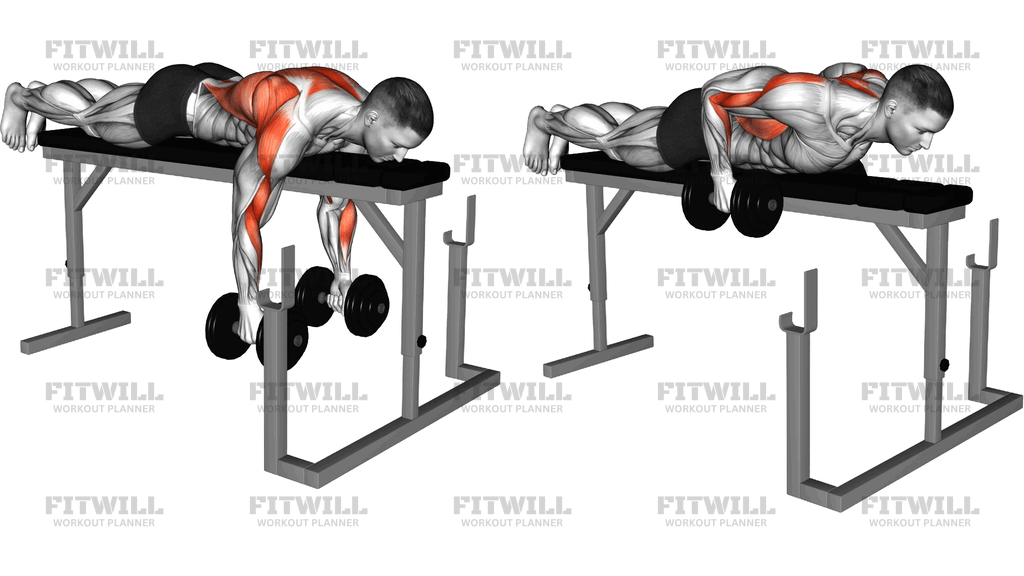
Dumbbell Incline Rear Fly is a chest-supported rear delt exercise that asks you to keep your torso fixed while the arms sweep out and back under control. The incline bench takes the lower back and hip swing out of the equation, so the shoulders and upper back have to do the work without much help from momentum. That makes it a strong choice when you want clean rear-shoulder training instead of a full-body heave.
The movement is especially useful for the rear delts, rhomboids, and mid-trap area, with the upper back and arm stabilizers helping to keep the path smooth. Because your chest stays on the bench, the exercise rewards precision more than load. If you let the shoulders shrug or the elbows bend and straighten too much, the tension shifts away from the rear shoulder line and the reps stop looking like a true fly.
The setup matters a lot. Lie face down on an incline bench with your chest supported and your feet planted wide enough to keep you steady. Let the dumbbells hang straight down from the shoulders, palms facing each other or slightly turned in, and keep a soft bend in the elbows before you start the rep. From there, the job is to open the arms in a controlled arc rather than yank the weights upward.
At the top, the upper arms should come out roughly in line with the torso or a little below shoulder height, depending on your shoulder comfort and the bench angle. Squeeze briefly without shrugging, then lower the dumbbells slowly until the arms are hanging again. The return phase should stay deliberate, because the rear delts usually lose tension the moment the descent gets sloppy or too fast.
Dumbbell Incline Rear Fly fits well in upper-body accessory work, shoulder-focused sessions, or any program that needs more rear-delt volume to balance pressing and front-delt dominance. It is also a good option for lifters who struggle to keep their torso quiet during bent-over rear flys, since the bench gives a clear reference point for body position. Treat it as a controlled isolation drill: light to moderate weight, clean path, and no body swing.
Used well, Dumbbell Incline Rear Fly builds better shoulder balance and cleaner scapular control without asking you to support the torso for the whole set. Keep the neck long, the chest anchored, and the movement smooth from rep to rep. When the weights get so heavy that you have to jerk them off the bench, the exercise has already turned into a different lift.
[ Workout Log & Planner ]
Put your next workout in Fitwill
Keep your plan and training log ready when you are.


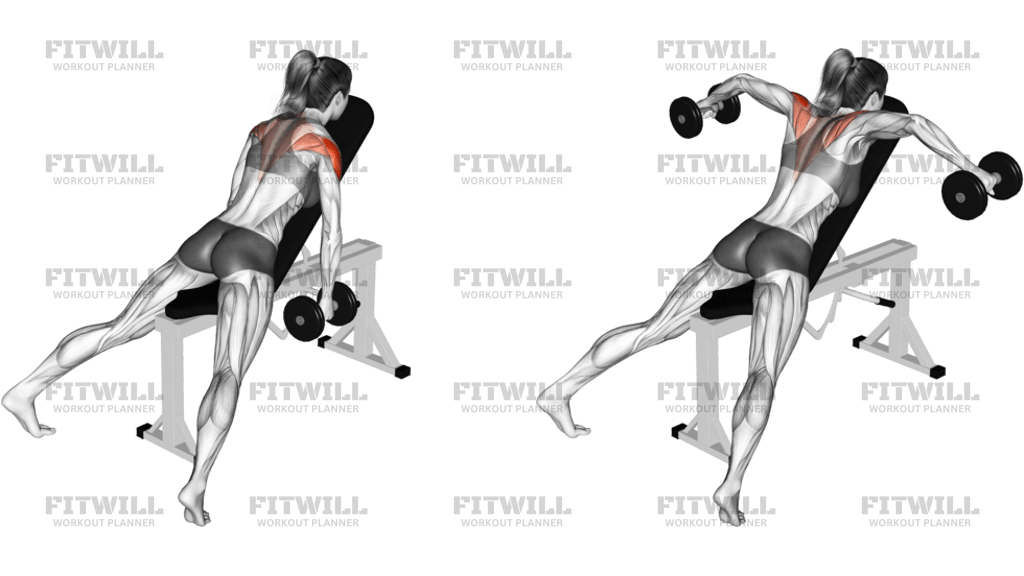
Instructions
- Set an incline bench to a moderate angle and lie chest-down with your sternum and upper ribs supported.
- Plant your feet wide on the floor so your body stays still while the arms move.
- Hold a dumbbell in each hand and let them hang straight below your shoulders with a soft bend in the elbows.
- Set your neck long and keep your chest pressed into the pad before the first rep.
- Lift the dumbbells out and slightly back in a wide arc until the upper arms are near torso height.
- Squeeze the rear shoulders for a moment without shrugging the shoulders toward the ears.
- Lower the dumbbells slowly until the arms hang again under the shoulders.
- Keep the ribs down, breathe out as you lift, and inhale as you lower for each repetition.
Tips & Tricks
- Choose a bench angle that lets the dumbbells travel just below shoulder height without forcing the shoulders into a shrug.
- Keep the elbows softly bent and nearly fixed; turning the rep into a press removes tension from the rear delts.
- Stop the raise when the upper arms line up with the torso instead of chasing extra height with the traps.
- Use a load that lets you pause at the top without rocking the chest off the pad.
- Think about moving the elbows out and back rather than swinging the hands up.
- Let the shoulder blades move naturally, but do not jam them together so hard that the neck tightens.
- Lower the dumbbells on a slow count to keep the rear shoulder under tension.
- If the lower back arches or the hips bounce, lighten the weight and reset your body against the bench.
Frequently Asked Questions
What muscles does Dumbbell Incline Rear Fly work most?
It mainly trains the rear delts, with help from the rhomboids, mid traps, and upper-back stabilizers.
How high should I raise the dumbbells on Dumbbell Incline Rear Fly?
Raise them until the upper arms are about level with the torso or slightly below shoulder height. Going higher usually turns the rep into a shrug.
Should my chest stay on the incline bench the whole time?
Yes. Keeping the chest anchored removes body swing and makes the rear delts do the work instead of your lower back.
Why do my traps take over on Dumbbell Incline Rear Fly?
Usually the weights are too heavy or the arms are coming up too high. Lower the load and stop the raise when the shoulders stay down and wide.
Can I bend my elbows more during the fly?
Keep only a slight bend. Too much elbow bend shortens the lever and turns the movement into a different shoulder drill.
Is Dumbbell Incline Rear Fly good for beginners?
Yes, if the load is light and the bench is set so the chest feels stable. Beginners often benefit from the bench support because it simplifies the body position.
How should I breathe during Dumbbell Incline Rear Fly?
Exhale as you lift the dumbbells out and inhale as you lower them back under control.
What is the most common mistake on the incline rear fly?
Rushing the reps and swinging the dumbbells is the biggest issue. A slow lowering phase and a quiet torso usually fix it.