Sitting W Pose On A Chair
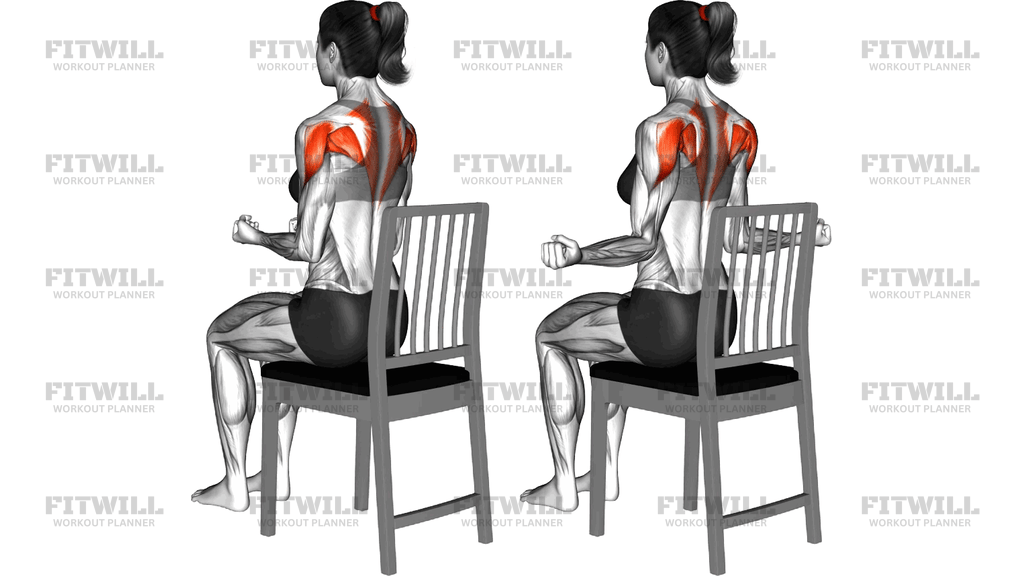
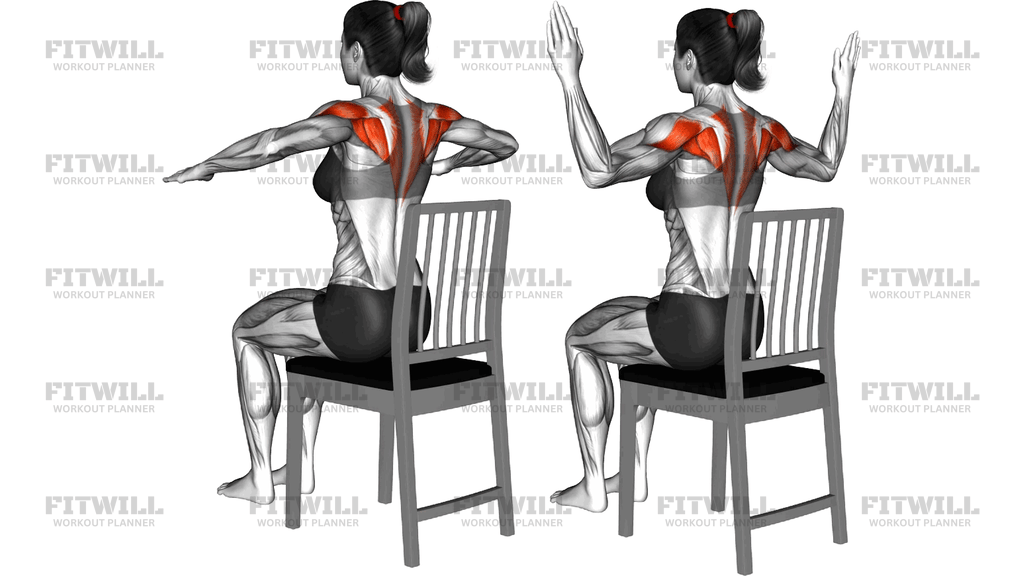
The Sitting W Pose On A Chair is a simple upper-back and shoulder movement performed entirely with your own body weight while seated. You start with your arms extended forward at shoulder height, then draw your elbows back and down so your upper arms drop toward your ribs and your hands point toward the ceiling, forming a clear W shape with both arms. The return travels back along the same path until your arms are extended in front of you again.
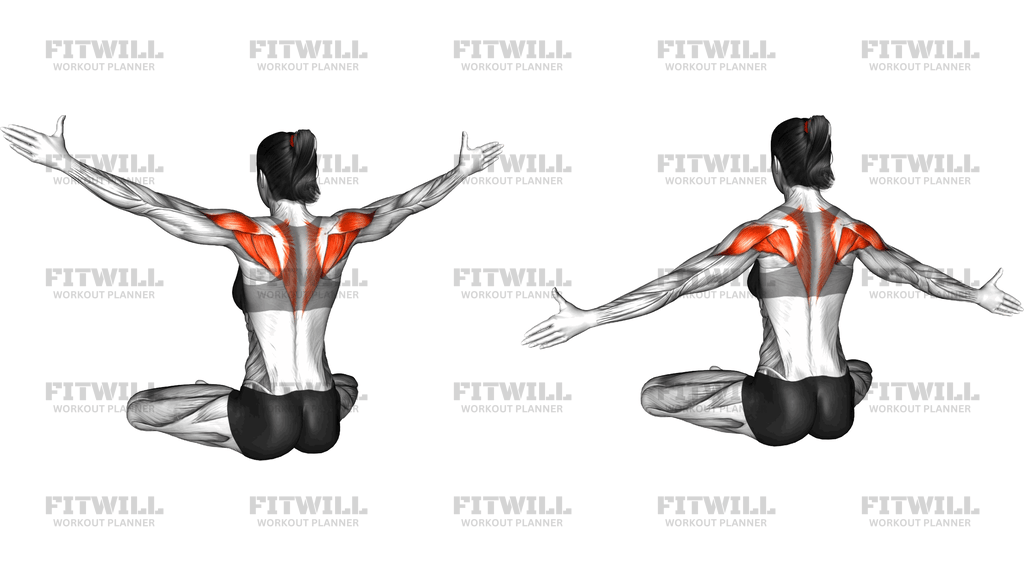
Because you are seated, the exercise removes almost all momentum from the lower body and forces the work into the rear shoulders, the muscles between the shoulder blades, and the small rotator cuff muscles that steady the upper arm in its socket. The highlighted areas in this movement are the back of the shoulder and the mid-back, which is exactly where most people who sit at a desk all day are weakest.
This is an excellent low-load drill for anyone rebuilding shoulder posture, warming up before pressing or pulling workouts, or dealing with long hours of typing and driving that leave the shoulders rolled forward. Office workers, older trainees, and people recovering general shoulder control all benefit from it because the resistance comes only from moving your own arms, so the load is naturally modest and repeatable.
Setup matters more than it looks. Sitting tall on the front half of the chair with feet flat keeps your spine neutral and prevents you from leaning back to cheat the elbows behind your torso. If your torso tips backward during the pull, the shoulder blades stop doing the work and the lower back picks it up instead, which defeats the purpose of the drill.
To execute it well, think of leading with the elbows rather than the hands. The arms stay at shoulder height as they travel back, the wrists stay neutral, and the squeeze happens between the shoulder blades at the W position, not by shrugging the shoulders toward the ears. Two to three sets of ten to fifteen slow repetitions is usually plenty, and the whole set should feel like a deliberate posture exercise rather than a maximum effort.
Keep the movement pain-free. If pinching occurs at the front of the shoulder, lower the working height of the arms slightly and reduce how far back the elbows travel until the arc feels smooth and quiet.
[ Workout Log & Planner ]
Put your next workout in Fitwill
Keep your plan and training log ready when you are.


Instructions
- Sit on the chair facing forward with your feet flat on the floor, hip-width apart, and sit up tall on the front half of the seat so your torso is supported by its own posture rather than the backrest.
- Extend both arms straight out in front of you at shoulder height, palms facing each other or down, with your elbows straight but not locked.
- Draw your shoulder blades gently down and together and brace your trunk so your ribs stay stacked over your pelvis.
- Exhale as you bend your elbows and pull them back toward your sides, keeping your upper arms at shoulder height as they travel backward.
- Finish in the W position: elbows bent and tucked near your ribs, forearms vertical or slightly back, and hands pointing toward the ceiling.
- Pause for one second at the W and squeeze your shoulder blades together without shrugging your shoulders up toward your ears.
- Inhale as you slowly reverse the path, straightening your elbows and bringing your arms forward until they are again extended at shoulder height.
- Keep your wrists neutral and your neck relaxed throughout so the tension stays in the mid-back and rear shoulders.
- Complete your repetitions with the same tempo, then rest and reset your seated posture before starting the next set.
Tips & Tricks
- The most common cheat is leaning the chest backward as the elbows come back, which lets the arms travel without the shoulder blades retracting; if you catch yourself tipping, sit a little more upright and imagine a string pulling the crown of your head toward the ceiling.
- Keep the upper arms at shoulder height for the whole arc. Letting the elbows sink toward your waist turns the exercise into a lat-dominant pull and takes work away from the rear shoulders.
- If you feel your upper traps bunching up near your neck, you are shrugging. Consciously press your shoulder blades toward your back pockets before each repetition.
- Slow the return down. Most people snap their arms forward after the squeeze, but the eccentric part of the pull is where the mid-back muscles do a lot of their work.
- Your hands do not need to go higher than head level. Chasing extra height usually costs you elbow position and shoulder comfort.
- Sit far enough forward on the chair that the backrest does not block your elbows. If the backrest is in the way, rotate your position on the seat until your arms swing freely.
- Breathe out on the pull back and in on the return. Holding your breath while seated tends to create neck and jaw tension.
- If your shoulders click or pinch at the top of the arc, reduce the range slightly and keep the movement in the zone that feels smooth instead of forcing the full W.
Frequently Asked Questions
What muscles does the Sitting W Pose On A Chair work?
It primarily targets the rear shoulders, with strong involvement from the rhomboids and mid-traps as they pull the shoulder blades together. The rotator cuff muscles work to keep the upper arm stable throughout the arc.
Why is this exercise done seated instead of standing?
Sitting removes momentum from the legs and hips, so you cannot swing your arms back. That forces the rear shoulders and mid-back to do the work and makes the movement very easy to control.
Is the Sitting W Pose On A Chair suitable for beginners?
Yes. The load is just your own arms and the seated position makes the form easy to feel, so it is a common starting point for people learning to retract their shoulder blades before progressing to band or cable versions.
How many repetitions should I do?
Two to three sets of ten to fifteen slow repetitions works well. Because the resistance is light, the focus should be on a one-second squeeze at the W position rather than adding speed or load.
My shoulders shrug up toward my ears during the W. How do I fix that?
Set your shoulder blades down and together before you start each repetition, and keep the pull at shoulder height. If shrugging persists, use a smaller range and rebuild the movement gradually.
Can I do this exercise without a chair?
Yes, any stable seat works, including a bench. You could also perform the same arm pattern standing, but you lose the built-in stability that makes the seated version so effective for learning the movement.
Should my palms face forward or down in the W position?
Either is acceptable. Palms facing forward with fingers up gives most people the clearest W shape, while palms facing each other can feel friendlier if you have cranky shoulders.
Is it normal to feel this between the shoulder blades rather than in the arms?
Yes, that is the intended sensation. You may feel a light burn in the backs of the shoulders, but the dominant working area should be the muscles between and just below the shoulder blades.
When should I avoid the Sitting W Pose On A Chair?
Skip it if you have an acute shoulder injury or feel sharp pain, clicking with discomfort, or pinching during the arc. In that case, reduce the range, see a qualified professional, or use a pain-free variation such as a lower-arm retraction drill.