Incline Diamond Push Up
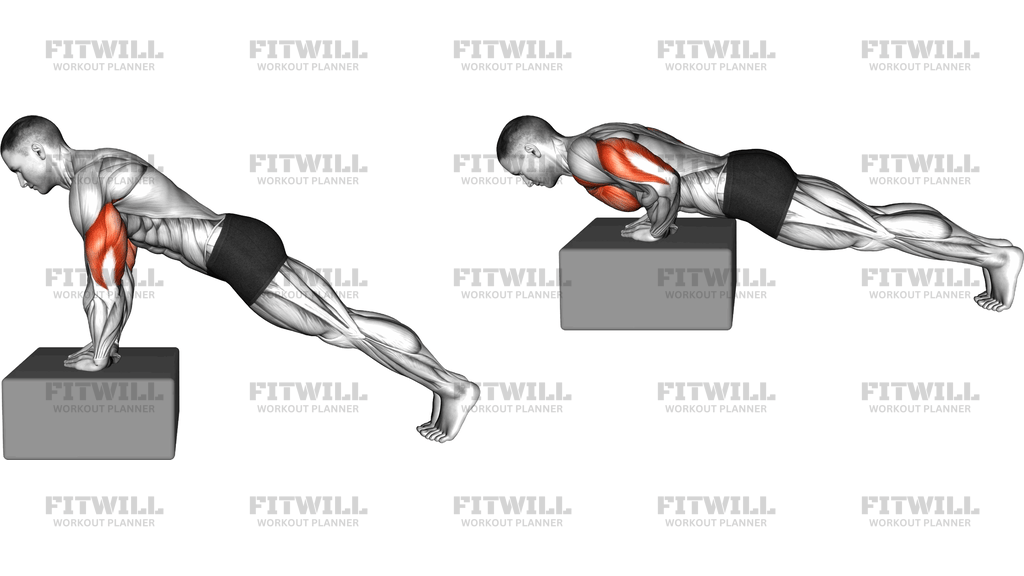
The Incline Diamond Push Up is a close-grip push-up performed with your hands elevated on a stable surface such as a bench, box, or step. Your hands come together so your thumbs and index fingers form a diamond or triangle shape, and your feet stay on the floor behind you, putting your body on a downward slope. This combination shifts most of the work onto the triceps while making the pressing pattern easier than a floor-based version, because the higher your hands are, the less of your bodyweight you have to lift.
This exercise is especially useful for two groups of people. First, lifters who struggle with strict diamond push-ups on the floor get a scaled version that still teaches the narrow hand position and elbow tuck without overwhelming the triceps. Second, more experienced trainees use it as a high-volume or finishing movement to pump the back of the arms after heavier pressing work, or to accumulate quality reps when the shoulders or chest are already fatigued.
The main muscles worked are the triceps, which extend the elbows as you press up. The chest, particularly the sternal portion, assists on every rep, and the front delts help drive the press. Because the narrow hand position changes the pressing angle, you will feel this more behind the arm and less across the pecs than a standard push-up. Your core, glutes, and legs work isometrically the entire time to keep your body in a straight line from heels to head.
Setup matters more here than in most push-up variations. The diamond hand position puts the elbows close to the torso, which loads the elbow joints differently than a wide-grep press, so your wrists and elbows should stay stacked and comfortable. The elevated surface must be solid and non-slip; a wobbling bench or a slick box top forces you to waste energy stabilizing and can cause a hand to slide out mid-rep.
To execute it well, lower your chest toward the edge of the surface while keeping your elbows tracking back at roughly 45 degrees to your ribs, not flaring wide. Touch or come close to the surface with your lower chest, then press away until your elbows are straight without snapping the joint into lockout. Move as one rigid piece; if your hips sag or your head drops, you lose the tension that makes this variation effective.
A practical safety note: if you feel pinching in the wrists or the backs of your elbows, lower the surface height or narrow your diamond slightly less aggressively. Progress by lowering the incline over time—box, then low step, then floor—until you can perform full Diamond Push Ups with clean form.
[ Workout Log & Planner ]
Put your next workout in Fitwill
Keep your plan and training log ready when you are.


Instructions
- Place a sturdy bench, box, or step against a wall or other fixed object so it cannot slide backward during the set.
- Kneel in front of the surface and set both hands on its edge so your thumbs and index fingers touch, forming a diamond shape directly under the center of your chest.
- Walk your feet back until your legs are straight and your body forms one straight line from heels to head, with your weight on your toes and the balls of your feet.
- Squeeze your glutes and brace your abdominals so your hips do not sag toward the floor or pike upward.
- Inhale, then bend your elbows and lower your chest toward the edge of the surface, keeping your elbows tucked close to your ribs rather than flaring out wide.
- Continue down until your lower chest is just above or lightly touching the elevated surface, with your upper arms angled back at roughly 45 degrees to your torso.
- Exhale and press through your palms to extend your elbows, pushing your body back up as one solid unit until your arms are straight.
- Pause briefly at the top, keeping your shoulder blades flat against your ribcage instead of shrugging up toward your ears.
- Reset your brace before each rep if you feel your line breaking, and stop the set as soon as your hips start to sag or your elbows drift outward.
Tips & Tricks
- If your wrists ache at the top of the diamond, rotate your hands slightly outward so your fingers angle forward a few degrees instead of forcing a perfect triangle.
- The most common mistake is letting the elbows flare toward the shoulders, which turns the set into a sloppy incline push-up and strains the shoulder joints; cue yourself to brush your ribs with your elbows on every rep.
- A sagging or piked hip line is the second most common fault—film one set from the side, because from your own viewpoint the line is hard to judge while fatigued.
- Lower the surface height gradually across weeks: a high bench is much easier, so only drop to a lower step once you can complete all planned reps without your hips dropping.
- Do not bounce your chest off the surface; the rebound hides how deep your triceps actually work and makes depth inconsistent between reps.
- Keep your head neutral by looking at a spot on the floor just ahead of your hands—craning the neck up is a telltale sign the rest of your line is breaking down.
- Place the bench against a wall so the whole setup cannot slide away from your feet as you press; a sliding box is dangerous precisely when your arms are most tired.
- If your toes hurt from pressing into the floor, wear shoes or pad the tops of your feet—discomfort there causes people to shift their weight back and shorten the range.
- Pair this movement with a wider-grip incline push-up in a superset if your goal is arm size; the diamond grip alone will limit your total volume once the triceps fatigue.
Frequently Asked Questions
Which muscles does the Incline Diamond Push Up work the most?
The triceps are the primary movers because the diamond hand position keeps your elbows tucked and forces them to extend against resistance. The chest and front delts assist, and your core holds your body rigid throughout the slope.
How is the Incline Diamond Push Up different from a regular Diamond Push Up on the floor?
Elevating your hands on a bench or box reduces the percentage of bodyweight you press and angles the torso downward, making the movement easier on the triceps and shoulders. The floor version is a direct progression from it.
Is the Incline Diamond Push Up good for beginners?
Yes, it is one of the best ways to learn the diamond push-up pattern, because the narrow hand position is demanding and the incline lets you practice it with a manageable load. Start with a higher surface and lower it as your strength improves.
How high should the bench or box be for the Incline Diamond Push Up?
Pick a height that lets you complete your target reps with a straight body line and full depth—waist height is a common starting point. As a rule, the higher the surface, the easier the rep, so adjust based on your current strength.
Why do my elbows flare during the Incline Diamond Push Up?
Flaring usually happens when the triceps fatigue or the hands are set wider than a true diamond. Narrow the hand gap slightly, slow the lowering phase, and stop the set once you can no longer keep the elbows brushing your ribs.
Can I use the Incline Diamond Push Up if I have wrist discomfort with push-ups?
The elevated angle often feels better for the wrist than floor push-ups because it reduces extension at the bottom. If discomfort persists, try angling your fingers slightly outward, gripping the edge of the bench, or using push-up handles placed in the diamond position.
What can I substitute if I do not have a bench or box?
Any stable elevated surface works—a sturdy table edge, a stair step, or even a kitchen counter for the easiest version. Just make sure it will not slide and that your diamond hand position fits comfortably on it.
How do I progress from the Incline Diamond Push Up to full Diamond Push Ups?
Lower the surface height in stages, only dropping down once you hit your target reps with clean form and no hip sag. When you reach a very low step, test a set on the floor and expect the triceps to fail before your form does, so keep early floor sets short.
Should my chest touch the surface at the bottom of each rep?
Touching or coming within an inch of the surface with your lower chest confirms a full range, but do not slam into it. If your elbows pass your torso level before your chest gets close, the surface is likely too high for you to benefit fully.