Superman Swing
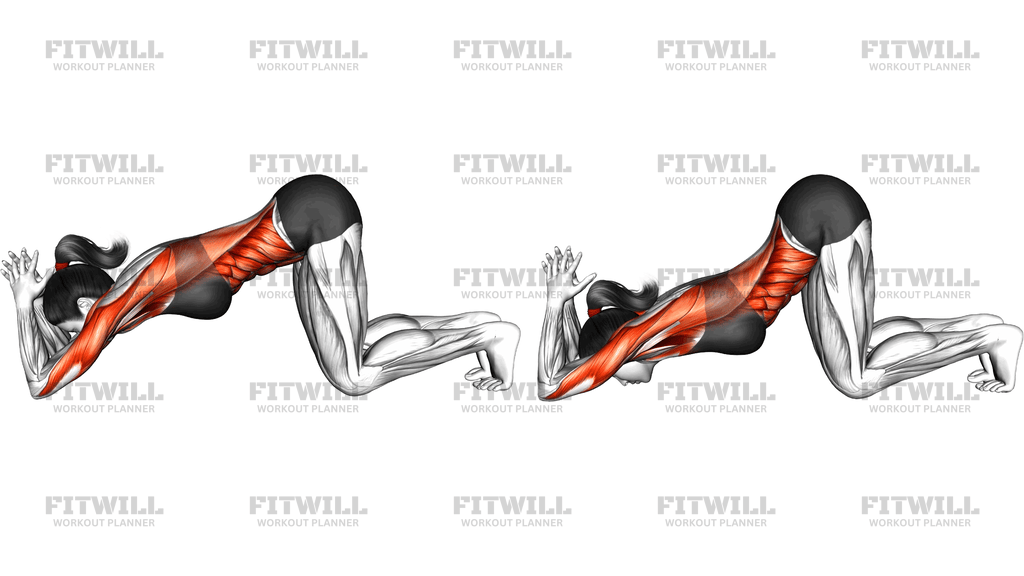
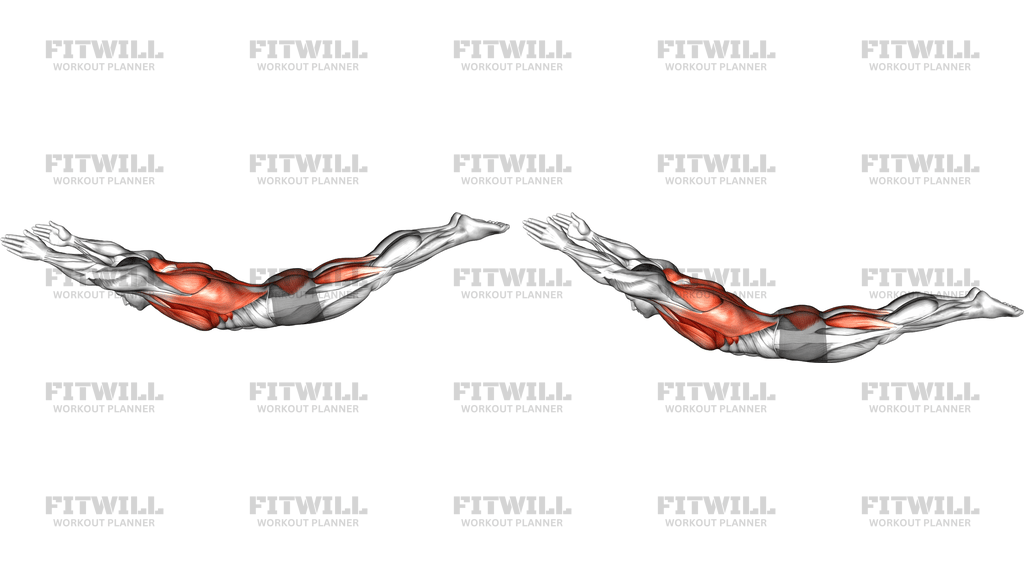
The Superman Swing is a bodyweight back extension exercise performed face down on a mat. You start in the classic Superman position, lying prone with your arms stretched out overhead and your legs straight behind you. From there, you lift your chest, arms, and legs off the floor into a long, arched position, then lower partway down and rise again in a smooth, continuous swinging rhythm rather than holding the top position statically.
This movement is a step up from the basic Superman hold because the repeated lift-and-lower cycle forces the muscles of the lower back to work through a range of motion instead of just contracting once. It targets the erector spinae along the spine, with strong contributions from the glutes and hamstrings as they raise the legs, and from the muscles between the shoulder blades as they keep the arms lifted and controlled overhead.
The Superman Swing is useful for anyone building posterior chain endurance: desk workers dealing with a slouched posture, lifters who want more resilient spinal extensors for squats and deadlifts, and athletes who need a stronger, more responsive back for running, swimming, and throwing. Because it requires no equipment beyond a mat, it fits easily into warm-ups, home workouts, and rehabilitation-style training blocks.
Setup matters more than most people expect. Your arms should reach fully overhead with the biceps near your ears, and your legs should stay long and together. If your arms pull back toward your shoulders or your legs drift apart, the shoulders and hips stop doing their share of the work and the lower back compensates. A long, narrow body line spreads the effort evenly across the whole back side of the body.
To execute it well, think of lengthening before lifting: reach your fingertips and toes away from each other, then float the whole body up as one piece. The swinging rhythm should come from controlled muscle work, not momentum or bouncing off the floor. Keep your neck neutral by looking at the mat rather than craning upward, and keep the arch in your mid and upper back rather than hinging sharply at one spot in your lower spine.
A practical safety note: this exercise should feel like muscular effort across the back and glutes, not a pinching sensation in the lower spine. If you feel joint compression, reduce the height you lift to, slow the tempo down, or start with a standard Superman hold before progressing to the swinging version.
[ Workout Log & Planner ]
Put your next workout in Fitwill
Keep your plan and training log ready when you are.


Instructions
- Lay an exercise mat on the floor and lie face down on it with your legs straight and together behind you.
- Extend both arms overhead so your biceps end up alongside your ears and your palms face each other, forming one long line from fingertips to toes.
- Lightly brace your abdominals to protect your lower back and let your forehead rest just above the mat so your neck stays neutral.
- Exhale and lift your chest, arms, and legs off the floor at the same time, reaching your fingertips forward and your toes backward to lengthen the body.
- At the top, keep the arms fully extended overhead and the legs straight; avoid pulling the arms back toward your shoulders.
- Lower about halfway down under control, stopping before your chest and thighs fully touch the mat, and immediately rise back up into the lifted position.
- Continue this lift-and-lower swinging rhythm, keeping each rep smooth and even rather than bouncing off the floor.
- Breathe steadily throughout, exhaling as you rise and inhaling as you lower.
- After your final rep, lower completely to the mat, press your hips into the floor for a moment, and gently stretch your lower back before standing up.
Tips & Tricks
- The most common mistake is jerking the arms and legs up with momentum. If your body clangs back down between reps, slow the tempo so each lift is driven by your back and glute muscles.
- Watch where your arms travel. If your hands drift back toward your hips mid-set, your shoulder fatigue is stealing work from your upper back; reset them alongside your ears before continuing.
- Keep your neck long by fixing your gaze on the mat a few inches in front of you. Lifting your head high adds strain to the neck without improving back activation.
- Aim for a long, low arch rather than a sharp crimp at one spinal segment. Reaching your fingertips and toes away from each other naturally distributes the extension along the whole spine.
- If your lower back pinches at the top, lift a little less aggressively and squeeze your glutes harder to raise the legs. The glutes should share the load, not leave it all to the spinal extensors.
- A rhythmic breathing pattern keeps the swinging tempo honest. Holding your breath usually means you are grinding out reps that are too fatiguing.
- Stop the set when your form shortens, such as legs bending or arms dropping. Shorter, cleaner sets build more back endurance than a few sloppy extra reps.
- Start with a static Superman hold for a few sessions if the continuous swing tires your lower back too quickly; the swing is simply that hold put into motion.
Frequently Asked Questions
Which muscles does the Superman Swing work?
The primary movers are the erector spinae of the lower back, supported by the glutes and hamstrings lifting the legs and the upper back and rear shoulders keeping the arms extended overhead.
How is the Superman Swing different from a regular Superman hold?
Instead of holding the lifted position, you repeatedly rise and lower through a partial range in a controlled swinging rhythm, which trains the back muscles through movement and builds endurance rather than just isometric strength.
Is the Superman Swing safe for beginners?
Yes, if you keep the lift modest and the tempo slow. Beginners often progress faster by starting with a static Superman hold or gentle lifts of just the chest and legs before adding the continuous swing.
Why do my arms keep dropping toward my shoulders during the swing?
That usually means your shoulder and upper back muscles are fatiguing, so the arms default to a resting position. Consciously keep your biceps near your ears, and shorten the set if you cannot hold that line.
Should I lift as high as possible at the top of the Superman Swing?
No. A moderate, evenly distributed arch with long limbs is more effective and easier on the spine than forcing maximum height. If you feel pinching in your lower back, reduce the lift.
Can I do the Superman Swing if my lower back feels sore after deadlifts?
It depends on the type of soreness. Mild muscle fatigue is usually fine, but skip the exercise if you feel sharp or joint-related discomfort, and let your back recover before training it again.
How many reps and sets of the Superman Swing should I do?
Two to three sets of 10 to 15 smooth swings works well for most people. Because the goal is endurance and control, prioritize even tempo over maximum reps.
What can I use instead of a mat for the Superman Swing?
Any firm, comfortable surface such as carpet works. Avoid doing it on a bed or soft couch, since an unstable surface makes it harder to control the lift and keep your body aligned.
Where should I look while performing the Superman Swing?
Keep your gaze on the mat just in front of you so your neck stays in line with your spine. Craning the head upward shifts strain into the neck muscles.