Kettlebell Sitting Tibialis Press
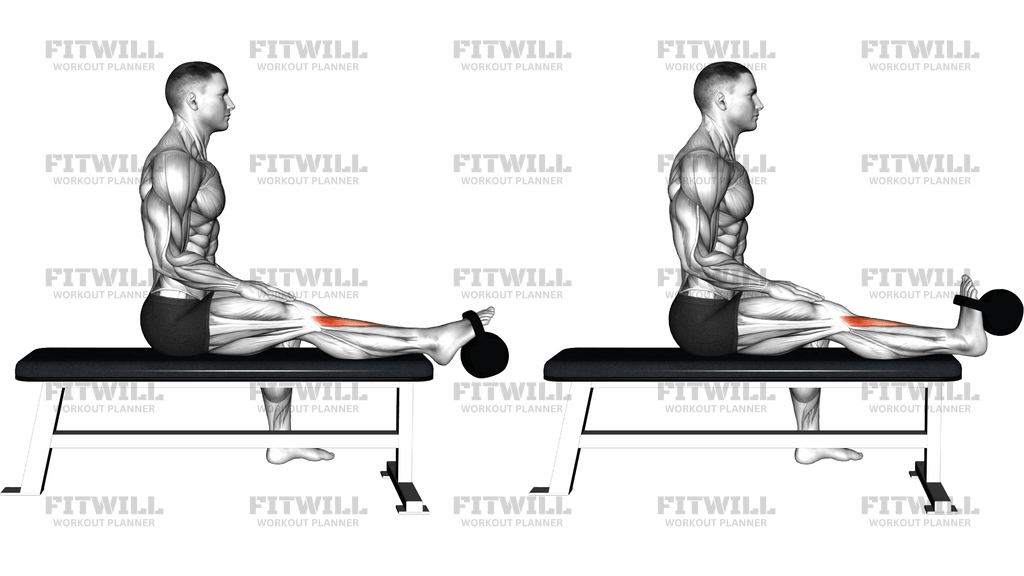
The Kettlebell Sitting Tibialis Press is a seated ankle exercise that targets the tibialis anterior, the muscle running along the front of your shin. You sit on a flat bench with one leg extended straight out in front of you, hook the handle of a kettlebell over your foot, and repeatedly pull your toes up toward your shin against the weight, then lower it back down under control. It is essentially a reverse calf raise: instead of pointing the toes away, you lift them upward against resistance.
This movement fills a gap in most training programs. Calves get plenty of work from walking, running, and standing calf raises, but the muscles on the front of the shin are rarely loaded directly. That imbalance can show up as weak ankle dorsiflexion, which matters for squatting depth, running mechanics, and general foot and ankle resilience. People recovering toward normal ankle function, desk workers with stiff or underused ankles, and lifters who struggle to keep their heels down or knees tracking well over their toes often benefit from adding direct tibialis work.
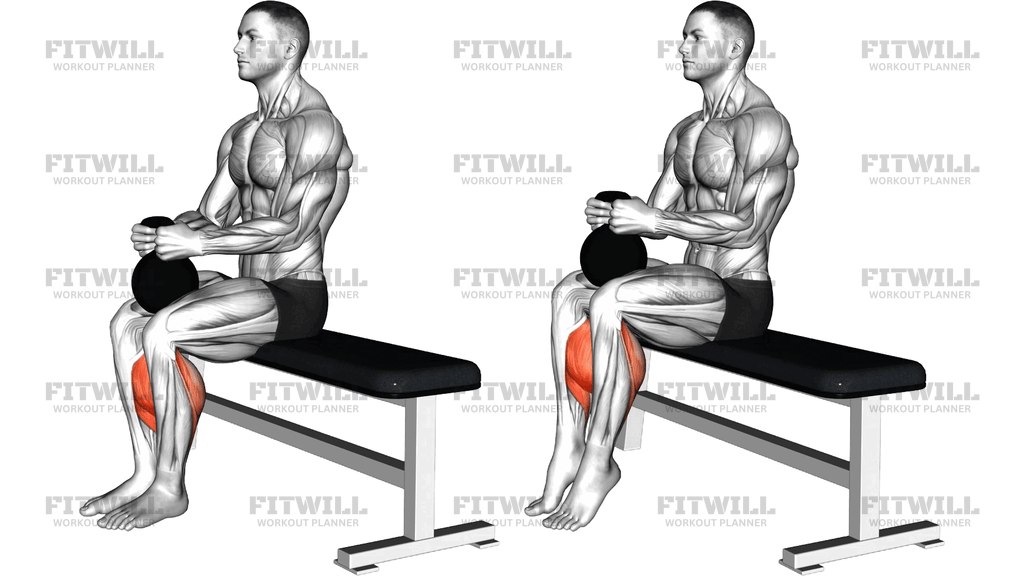
The setup is simple but the details matter. Sitting on a bench with the leg extended keeps the knee straight, which places the tibialis anterior in a long, fully stretched starting position when the foot hangs down. The kettlebell handle rests across the top of the foot, usually near the base of the toes, so that pulling the toes upward lifts the bell. Keep your torso upright, hands resting on your thighs, and the working heel resting lightly on the bench edge or held just off it so the ankle is free to hinge.
Execution should feel deliberate and small. The range of motion is only a few inches: the foot drops down so the kettlebell hangs, then the toes pull up toward the shin until the front of the shin contracts fully. Because the tibialis anterior is a relatively small muscle, use a light kettlebell, typically in the 4 to 12 kilogram range depending on your strength, and keep the reps smooth. Letting the weight yank the foot down too fast or jerking the leg to help lift the bell turns a precise ankle exercise into a sloppy one.
Common use cases include warming up the ankles before squats or running sessions, using it as accessory work on leg days, and strengthening the shins for people who spend long hours on their feet or in stiff shoes. It pairs naturally with seated or standing calf raises to balance the front and back of the lower leg.
Safety-wise, the main risks are dropping the kettlebell off the foot and overloading a small joint. Start light, keep the bench clear of anything the bell could land on, and stay with a range you can move through without the ankle rolling sideways. A mild burn in the shin is normal; sharp pain along the shinbone or inside the ankle joint is a signal to stop and reassess the weight or range.
[ Workout Log & Planner ]
Put your next workout in Fitwill
Keep your plan and training log ready when you are.


Instructions
- Sit sideways or lengthwise on a flat bench with one leg extended straight out in front of you, so your foot projects past the bench edge.
- Hook the kettlebell handle over the top of your working foot, seating it just behind the toes so it hangs securely when the foot relaxes downward.
- Rest your hands on your thigh or the bench beside you, sit tall, and brace your trunk lightly so your torso stays still throughout the set.
- Allow your foot to slowly hang down, pointing the toes toward the floor until the kettlebell pulls gently on the front of your shin; this is the starting position.
- Pull your toes up toward your shin, hinging only at the ankle and keeping the knee locked straight so the lower leg does not swing.
- Lift until the foot is pulled back as far as the kettlebell allows and you feel a strong contraction along the front of the shin.
- Lower the foot back down slowly over two to three seconds, letting the kettlebell hang again at the bottom without dropping it abruptly.
- Exhale as you pull the toes up and inhale as the foot lowers back down.
- Complete all reps on one leg, then carefully guide the kettlebell off your foot with your hand, switch legs, and repeat.
- Set the kettlebell on the floor between sets rather than leaving it hanging on your foot when you rest.
Tips & Tricks
- A common mistake is choosing a kettlebell that is too heavy, which forces the calf and arch to clamp down just to hold the bell; start with a light bell and prioritize a full, slow pull.
- If the kettlebell slips off your foot, it is usually seated too far forward over the toes; slide the handle back so it rests across the midfoot behind the toes.
- Keep the working knee straight throughout; bending the knee lets the hamstrings and calf slack off and shortens the stretch on the tibialis anterior at the bottom.
- Resist the urge to lean back or lift the leg to help the foot up; if the torso moves, the weight is too heavy for the ankle to lift alone.
- Control the bottom position deliberately; letting the kettlebell drop the last few inches robs you of the loaded stretch that makes this exercise effective.
- Point the toes slightly inward or keep them neutral rather than letting the ankle roll outward, so the tension stays on the front of the shin instead of the outside of the ankle.
- If your heel wants to lift off the bench edge, let it rest lightly on the bench or stabilize it with the other foot's position; a floating heel usually means the setup is too far back on the bench.
- A moderate burn along the shin after 10 to 20 reps is the expected response; stop short of a range that causes pinching at the front of the ankle.
- Place a mat or soft surface under the foot in case the kettlebell slides off, especially when first learning where the handle should sit.
Frequently Asked Questions
What muscles does the Kettlebell Sitting Tibialis Press work?
It primarily targets the tibialis anterior on the front of the shin, which lifts the foot upward at the ankle. The muscles and stabilizers of the foot and ankle work to keep the kettlebell seated and the ankle tracking straight.
Why is there a kettlebell hanging on my foot in this exercise?
The kettlebell handle hooks over the foot so that every time you pull your toes up toward your shin, you lift the bell against gravity. This provides direct resistance for ankle dorsiflexion, which is hard to load with most other equipment.
Is the Kettlebell Sitting Tibialis Press suitable for beginners?
Yes, as long as you start with a very light kettlebell, even a 4 to 6 kilogram bell. The movement is low-skill, but the tibialis anterior is small, so beginners often find even light weights challenging for higher reps.
How heavy should the kettlebell be?
Use a weight you can lift through the full toe-up range for 10 to 20 controlled reps without your torso or knee moving to assist. If you cannot complete the pull without jerking, drop down a size.
What is the most common mistake in this exercise?
The most common mistakes are letting the kettlebell drop quickly at the bottom and bending the knee to make the lift easier. Both cut off the loaded stretch and reduce the work the shin muscles actually do.
Why does my knee need to stay straight?
A straight knee keeps the tibialis anterior in its longest position when the foot hangs down, which increases the stretch and makes the exercise more effective. Bending the knee shortens the working distance and reduces the load on the target muscle.
Can I do the Kettlebell Sitting Tibialis Press without a bench?
You can sit on a sturdy chair, box, or the edge of a bed as long as your extended leg is supported high enough that the foot hangs past the edge. The key requirement is that the ankle can hinge freely with nothing blocking the foot's path.
What can I use instead of a kettlebell?
A small dumbbell held vertically can be hooked over the foot in the same way, or a weight plate can be balanced across the toes. Resistance bands anchored low and attached over the foot also work for a similar pulling motion.
Is it safe if I have shin or ankle discomfort?
Mild muscle fatigue along the front of the shin is normal, but sharp pain along the shinbone, arch cramping, or pinching inside the ankle joint means you should stop. Reduce the weight and range first, and if the pain persists, get it assessed before continuing.
How often should I include this exercise in my routine?
Two to three sessions per week is a practical starting point, either as an ankle warm-up before lower body training or as accessory work afterward. Because the load is light and the muscle is small, it recovers quickly compared to larger leg exercises.