Torso Twist In Plank On Elbows Position
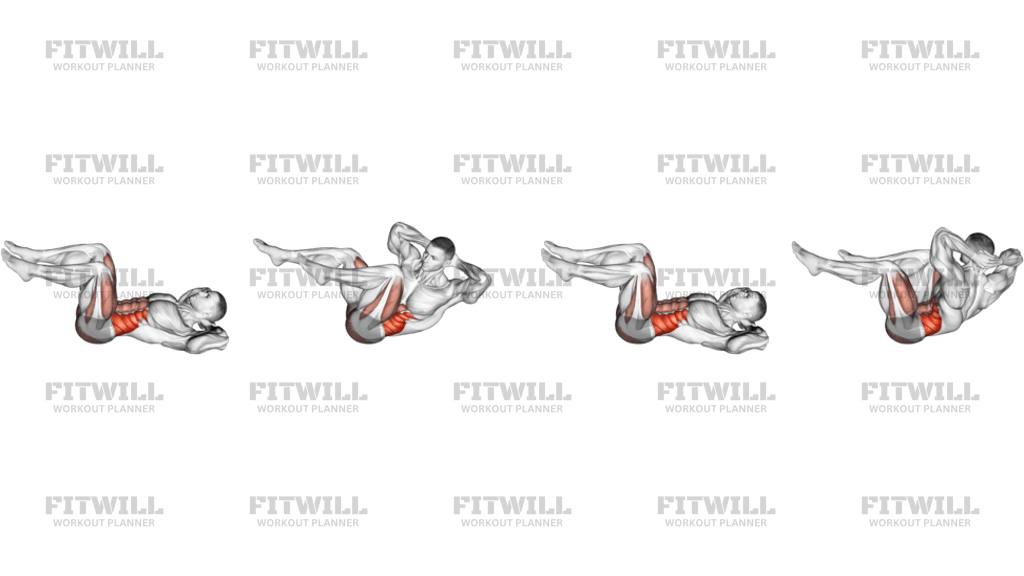
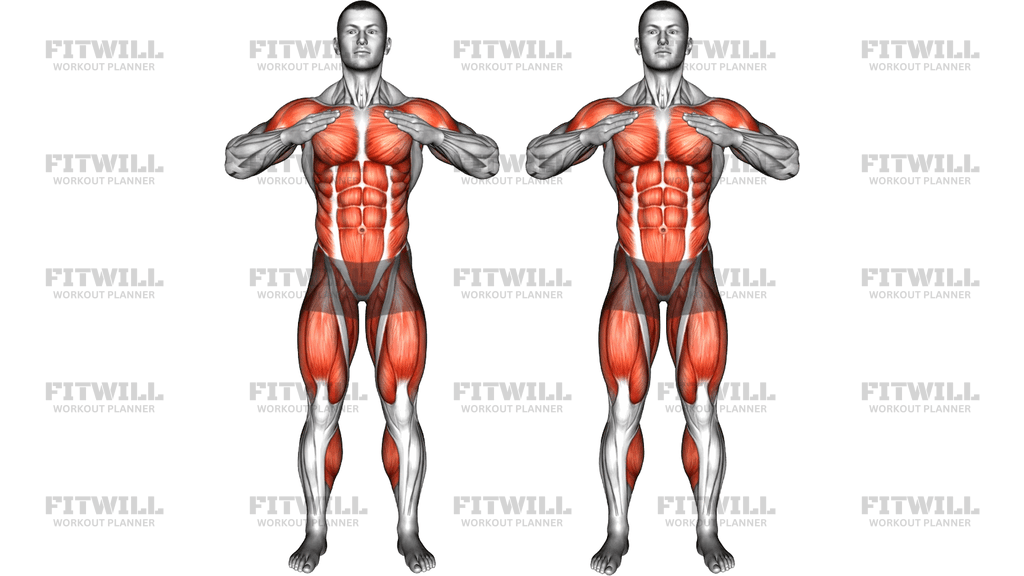
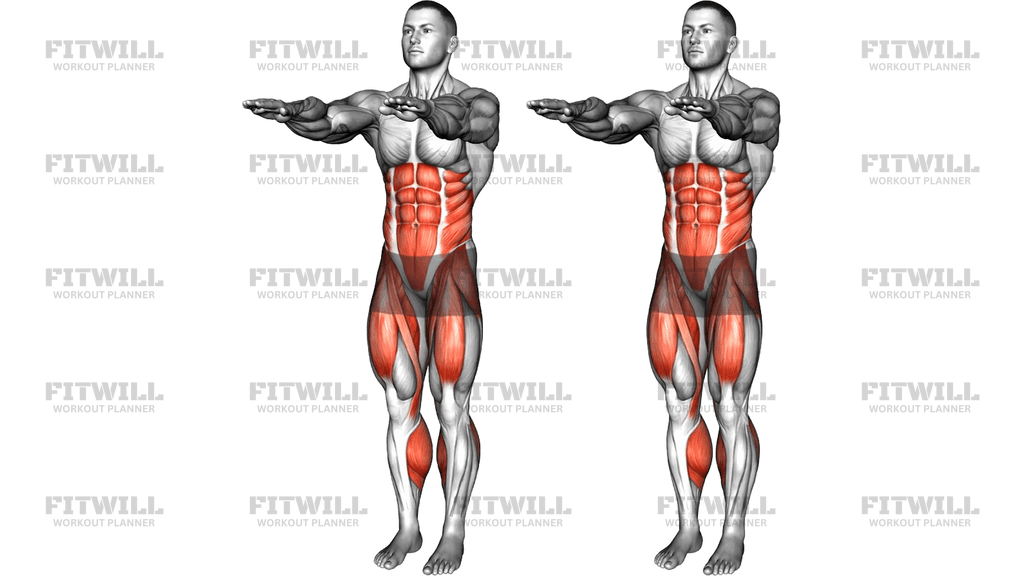
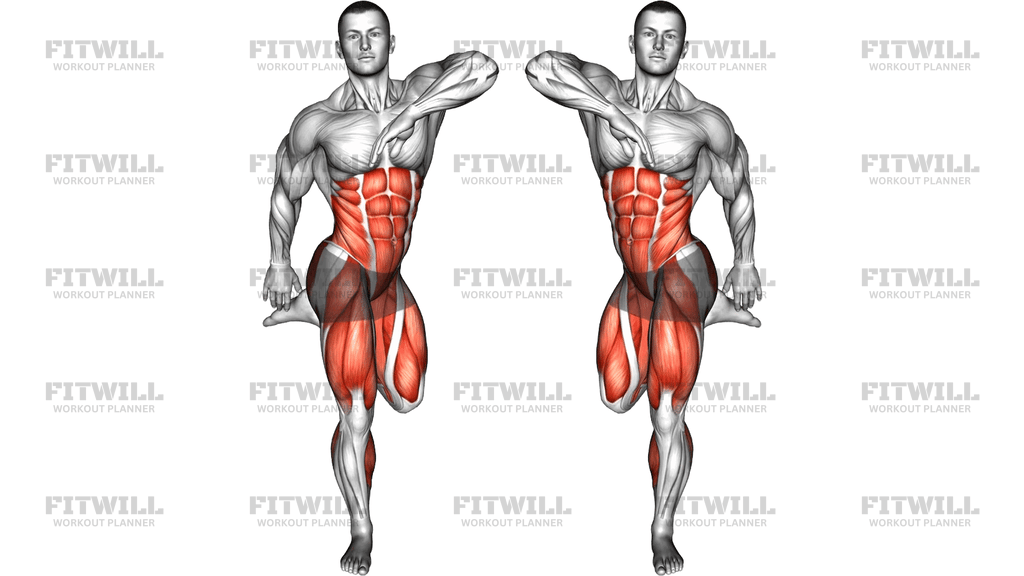
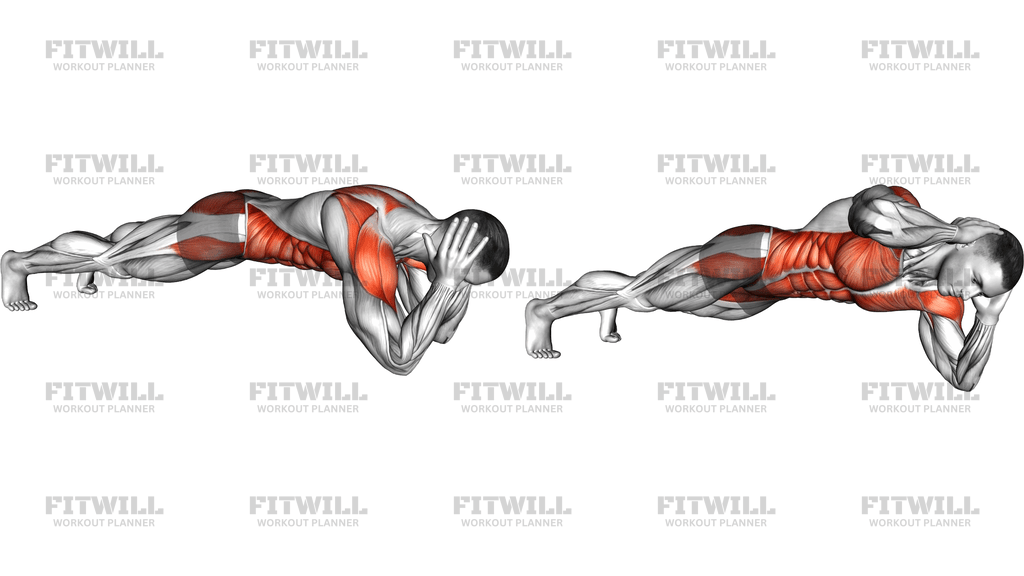
The Torso Twist In Plank On Elbows Position is a rotation drill built on top of a forearm plank. You hold a stable elbow plank, place one hand behind your head, and repeatedly rotate your torso so that the free shoulder dips down toward the floor and then rotates back up toward the ceiling. The image shows exactly that setup: forearms stacked under the shoulders, body in one straight line from heels to head, and the non-supporting hand resting lightly against the side of the head rather than pulling on the neck.
This movement is mainly an oblique exercise, but the rotation only happens cleanly when the rest of the body resists collapsing. The supporting shoulder, chest, and front delt take on serious isometric work, the transverse abdominis braces to keep the trunk from sagging, and the glutes and quads hold the hip position steady. Because one contact point effectively leaves the floor, the demand on the stabilizing side of the trunk is noticeably higher than in a standard plank.
The setup matters more here than in most core drills. A forearm plank already shortens the lever compared to a straight-arm plank, which is deliberate: it lets you focus on clean thoracic rotation instead of fighting to hold a straight-arm position. Your elbows should sit directly under your shoulders, feet can be slightly wider than hip width to give you a steadier base, and the ribs should stay stacked over the pelvis before any twisting begins. If you start with a sagging or piked plank, every repetition just reinforces that fault.
To execute it well, think of the rotation as coming from the ribcage, not from the elbow swinging down or the hips dropping. Exhale as you turn down, let the free elbow lower toward the inside of the supporting arm, pause briefly, then rotate the torso open until the chest faces more toward the side, keeping the hand parked behind the head the whole time. The tempo should be slow enough that you could stop at any point without losing the plank line.
This exercise fits well into core circuits, warm-ups for rotational sports like tennis, golf, or throwing events, and conditioning finishers where you want anti-extension control plus rotation in one movement. It is a reasonable step up for anyone who finds standard planks easy but is not yet ready for loaded rotational work such as cable chops.
Form-wise, the two most important safety points are protecting the lower back and the supporting shoulder. Stop the twist at whatever range keeps your hips level and your spine long, and if the supporting shoulder starts shrugging up toward the ear or rolling backward, that is the signal to finish the set rather than push through another rep.
[ Workout Log & Planner ]
Put your next workout in Fitwill
Keep your plan and training log ready when you are.


Instructions
- Set up in a forearm plank on an exercise mat with both elbows directly under your shoulders, forearms flat and pointing forward, and feet about hip-width to slightly wider apart.
- Lift one hand and place it lightly behind the side of your head with the elbow pointed out to the side, keeping the other forearm planted as your support.
- Check your plank line before moving: heels, hips, and head in one straight line, ribs drawn down, glutes engaged, and neck neutral with your eyes on the floor.
- Brace your midsection as if bracing for a light punch, and take a breath in.
- Exhale as you rotate your torso downward, lowering the raised elbow toward the floor on the inside of your supporting arm while keeping the hand behind the head.
- Pause for a beat at the bottom of the twist when the elbow has reached its low point without your hips dropping or sagging.
- Reverse the rotation, turning the torso open toward the ceiling until your chest faces more sideways and the raised elbow points up, still holding the hand at the head.
- Continue moving between the dipped and opened positions in a slow, controlled rhythm, keeping the hips as level as possible throughout.
- Breathe steadily, exhaling on each twist down and inhaling as you rotate open.
- Complete your repetitions on one side, then lower the hand, reset your plank position, and switch so the opposite forearm supports and the other hand goes behind the head.
Tips & Tricks
- If your hips rock from side to side with each twist, widen your feet slightly; a wider base gives the obliques a stable platform to rotate from.
- Do not let the hand behind your head pull or crank the neck forward — the hand is a spacer for the head, and the rotation should come from the ribcage.
- Watch for the supporting elbow drifting out from under the shoulder as you fatigue; walk it back into place or end the set, because a drifting elbow loads the shoulder joint awkwardly.
- A common mistake is dropping the free elbow all the way to the floor to 'touch down' at any cost. Lower only as far as your hips stay level, even if that is half the range at first.
- Keep your glutes lightly squeezed for the entire set. When the glutes switch off, the lower back starts arching and the twist becomes a spinal sag instead of a rotation.
- Slow the opening phase down especially. Most people control the dip but snap back up, which turns a rotation drill into a momentum exercise.
- If holding the full plank on elbows is too demanding, drop to your knees for support while keeping the torso rotation identical, then progress to the full version.
- Aim for the same range and rep count on both sides; the weaker or tighter side dictates your working range, not the looser side.
- Keep your gaze toward the mat rather than craning forward to watch the moving elbow, which helps the neck stay neutral through the whole twist.
Frequently Asked Questions
Which muscles does the Torso Twist In Plank On Elbows Position work the most?
The obliques on both sides do the rotating and resisting, while the deep core stabilizes the trunk. The supporting shoulder, chest, and front delt also work hard isometrically to hold the plank position.
Why is the hand placed behind the head during this exercise?
It lengthens the lever of the rotating arm and encourages rotation from the ribcage instead of the elbow. It also removes the temptation to press into the floor with the free hand.
Is the Torso Twist In Plank On Elbows Position suitable for beginners?
It can be, provided you can first hold a solid forearm plank for 30 seconds or so. Beginners should use a smaller twisting range or support from the knees until the hips stay level throughout.
How is this different from a regular elbow plank?
A regular plank is a static anti-extension hold, while this version adds active rotation, which raises the demand on the obliques and on the shoulder supporting you. Losing one stable contact point makes the same plank feel considerably harder.
How many repetitions should I do on each side?
Around 8 to 12 controlled twists per side works well for most people. Stop when your hips start rocking or your supporting shoulder position breaks down, rather than counting to a fixed number.
My lower back aches when I do this movement — what am I doing wrong?
That usually means the hips are sagging or the twist is turning into a spinal collapse instead of a rotation. Squeeze the glutes, shorten the range, and reset the plank line between reps if needed.
Can I substitute another exercise for the Torso Twist In Plank On Elbows Position?
Yes — cable or band chops, dumbbell plank rotations, or slow bicycle crunches train similar rotation. The plank-based version is unique in combining rotation with a shoulder-dominant isometric hold.
Should my feet stay together or apart?
Feet slightly wider than hip width give you a steadier base, which makes it easier to keep the hips level while twisting. As you get stronger you can bring the feet closer together to increase the challenge.
Is it safe for my shoulders if I have had shoulder issues?
The supporting arm carries substantial load with one hand off the floor, so check with a qualified professional first if you have a history of shoulder problems. Keep the elbow stacked under the shoulder and stop if you feel pinching rather than muscular effort.