Dumbbell Banded Hip Thrust
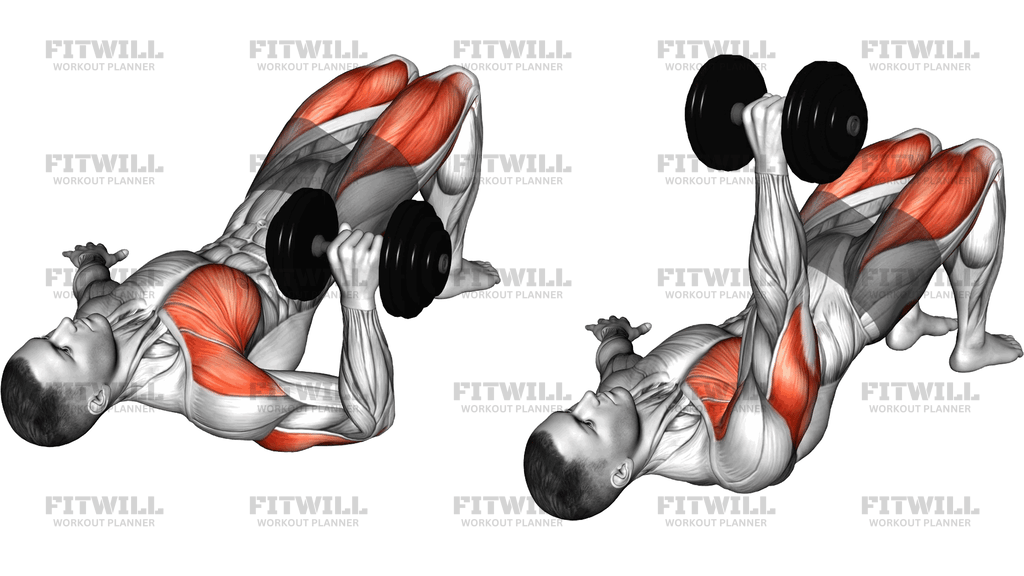
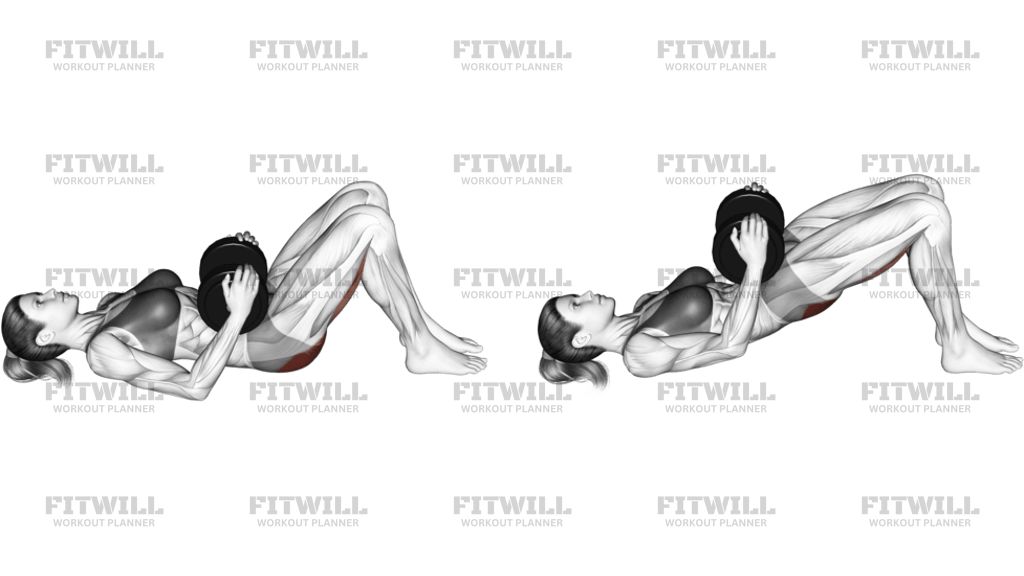
The Dumbbell Banded Hip Thrust is a horizontal hip extension exercise that loads the glutes with a dumbbell placed across the hips while a loop resistance band sits just above or below the knees. Your upper back stays supported on a flat bench, your feet stay planted on the floor, and every rep is driven by pushing the hips upward until the torso reaches parallel with the ground. The band adds an outward-pull component, so your knees want to cave inward unless you actively press them apart, which turns each rep into a glute and hip-stability exercise rather than a simple lift.
This movement suits a wide range of lifters. Beginners can start with a light dumbbell or even just the band to learn the hip hinge pattern with back support, while more experienced trainees can load it heavily to build strength and size in the glutes. It is especially useful for people who feel back squats more in their quads or lower back, since the bench support and horizontal torso angle shift the demand squarely onto hip extension.
The setup matters more here than in most exercises. The bench edge should sit just under your shoulder blades at the base of the shoulder blades, the dumbbell should rest centered on the crease of the hip with your hands holding it steady, and your shins should be close to vertical at the top of the rep. If the bench is too high or too low, or your feet drift too far out or tuck in too close, the leverage changes and other muscles start doing the glutes' job. The band position also matters: just above the knees gives the strongest abduction demand, while around the mid-thigh is slightly gentler on the knees.
To perform it well, brace your ribs down and keep your chin tucked, then drive through your heels and squeeze the glutes to lift the hips. At the top, your torso and thighs should form a straight line with a clear glute squeeze, not an overarched lower back. Pause briefly, then lower under control until the plates nearly touch the floor before starting the next rep. Keep constant outward pressure against the band throughout, both at the bottom and at the top.
Common use cases include glute-focused lower body days, home training where a barbell and plates are not available, and warm-up or activation work before heavier lifts. Because the dumbbell sits low and stable across the hips, setup is quick and the weight is easy to adjust between sets, making this a practical alternative to barbell hip thrusts without a bar pad or dedicated setup.
[ Workout Log & Planner ]
Put your next workout in Fitwill
Keep your plan and training log ready when you are.


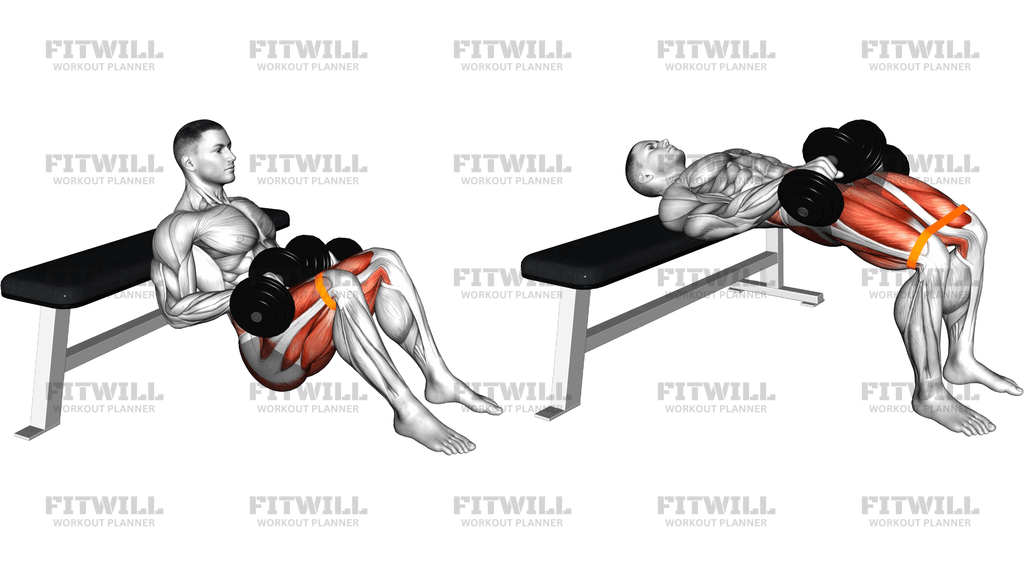
Instructions
- Sit on the floor with a flat bench behind you and position the edge of the bench directly under your shoulder blades, just below the base of the shoulder blades.
- Slide a loop resistance band up both legs and place it just above your knees, then roll a dumbbell over your hips and let it settle into the crease of the hip.
- Walk your feet in so they sit flat on the floor about hip-width apart, then grip the dumbbell with both hands to hold it centered and prevent it from rolling.
- Lean back so your upper shoulders and head rest on the bench, brace your core, and pull your ribs down so your lower back is not arched before you move.
- Press your knees outward against the band to engage the outer glutes, then exhale and drive through your heels to push your hips straight up toward the ceiling.
- Finish with your torso and thighs in one line, knees bent roughly 90 degrees and stacked over your ankles, and squeeze the glutes hard for a one-second pause.
- Inhale and lower your hips under control until the dumbbell nearly touches the floor, keeping tension against the band the whole way down.
- Reset your brace at the bottom, press the knees out again, and repeat for your target repetitions.
- At the end of the set, hold the dumbbell steady with both hands, sit forward off the bench, and slide the band off before standing up.
Tips & Tricks
- If the dumbbell digs into your hip bones, fold a small towel or pad around it before it rests on your hips; discomfort at the hip crease is the most common reason people cut hip thrust sets short.
- Watch for knees caving inward as fatigue sets in, especially at the top of the rep. The band only helps if you actively press against it, so cue yourself to push the knees apart on every rep.
- If your lower back arches at the top instead of your glutes finishing the lift, you are going too heavy or extending too far. Shorten the range slightly and focus on a hard glute squeeze at parallel, not on lifting higher.
- Keep your chin tucked and eyes forward rather than craning your neck back over the bench; pushing with the head often coincides with losing rib and core position.
- Check your shin angle at the top: shins near vertical means the foot placement is right. If your heels are far ahead of your knees, shift your feet closer in and repeat.
- Drive through your whole foot with a slight bias toward the heels. Lifting your toes or rolling onto the balls of your feet shifts work toward the quads and away from the glutes.
- Do not let the dumbbell roll toward one hip mid-set. Keep a firm two-handed grip on it, or clamp your forearms against your thighs to pin it in place.
- Lower slowly instead of dropping the hips between reps. A two-second descent keeps the glutes under tension and stops the band from snapping your knees inward at the bottom.
- When progressing, increase the dumbbell weight before tightening the band; adding band tension first makes knee positioning harder before the glutes are strong enough to control it.
Frequently Asked Questions
Which muscles does the Dumbbell Banded Hip Thrust work?
The gluteus maximus is the primary mover, with the hamstrings and adductors assisting hip extension. The band also challenges the gluteus medius and other outer hip muscles as they work to keep the knees pressed outward.
Why use a band around the knees for a hip thrust?
The band pulls your knees toward each other, so you must actively press them apart to keep them tracking over your feet. This adds outer glute involvement and reinforces good knee alignment under load.
Is the Dumbbell Banded Hip Thrust good for beginners?
Yes. The bench supports your upper body, the setup is simple, and you can start with just the band or a light dumbbell to learn the pattern before adding load. It is one of the more approachable ways to train the glutes hard.
Where exactly should the bench sit during this exercise?
The bench edge should sit just under your shoulder blades so your upper back and head rest on it comfortably. Too low and your shoulders round forward; too high and your hips cannot reach a full lockout position.
How do I stop the dumbbell from rolling off my hips?
Hold the dumbbell with both hands and keep it centered in the hip crease, pinning it against your thighs with your forearms. Wrapping a towel around it also adds grip and padding so it stays put through the set.
Should my hips go as high as possible at the top?
No. Lift until your torso and thighs form a straight line and squeeze the glutes. Extending beyond that point usually means arching the lower back, which does not improve glute work and can irritate the lumbar area.
What can I use instead of a dumbbell for the Dumbbell Banded Hip Thrust?
A kettlebell, weight plate, or barbell all work in the same position across the hips. You can also perform the movement with body weight and just the band, which still trains hip extension and knee control effectively.
How many sets and reps should I do?
For strength and muscle, 3 to 4 sets of 8 to 15 reps with a one-second pause at the top works well. For activation before squats or deadlifts, 2 lighter sets of 12 to 15 reps is enough.
Is it safe to do this exercise if my knees are sensitive?
The knees stay bent and stacked over the ankles with no twisting, so the joint is under relatively stable conditions. If band pressure above the knees bothers you, move the band to mid-thigh or reduce its tension, and keep the range pain-free.