Dumbbell Glute Bridge Single Arm Chest Press
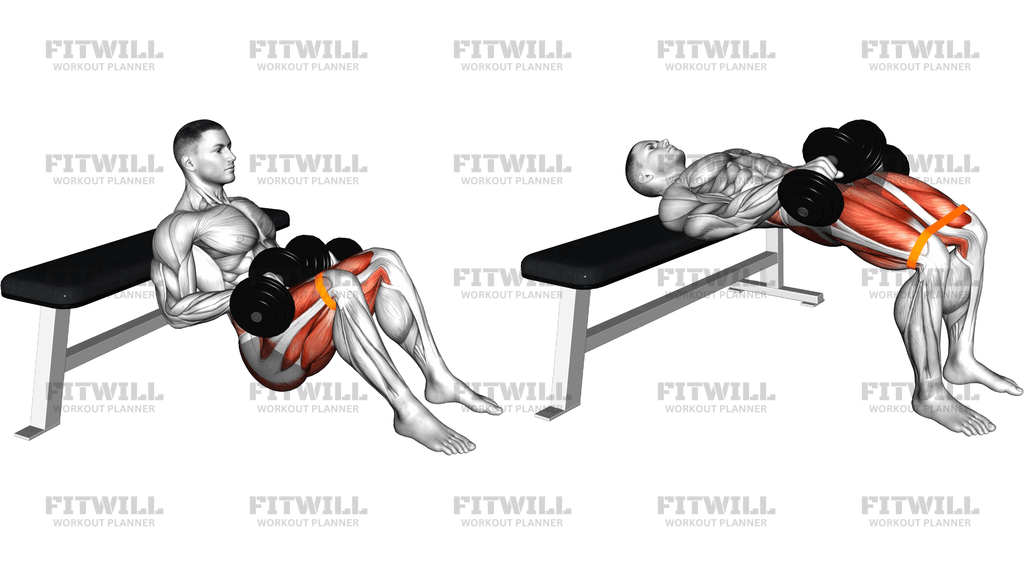
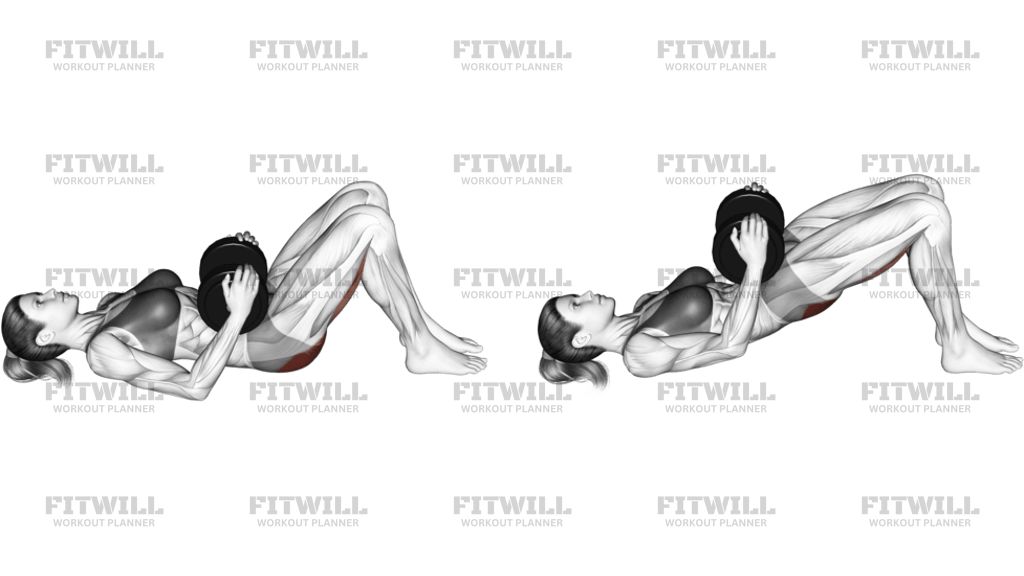
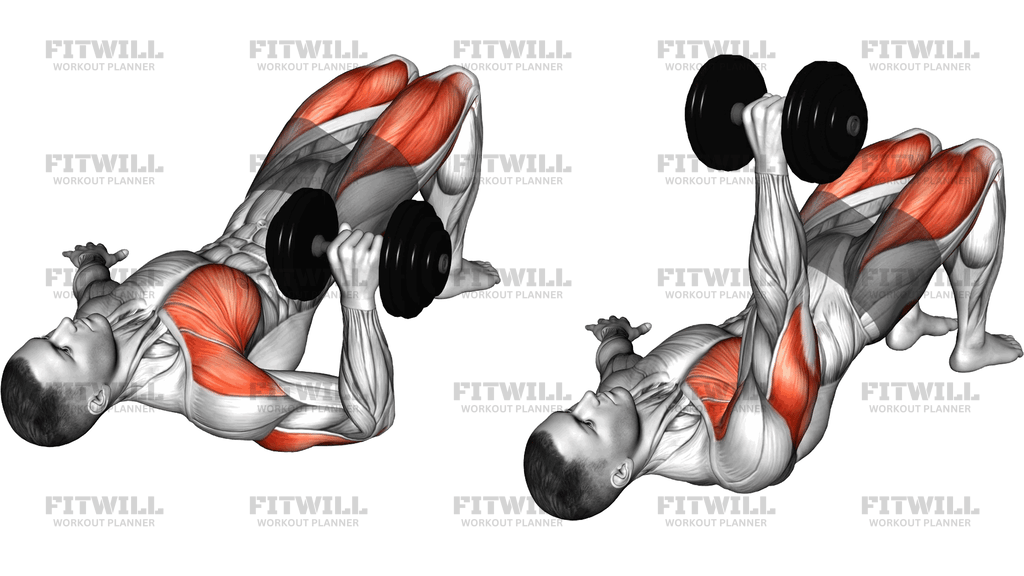
The Dumbbell Glute Bridge Single Arm Chest Press is a hybrid floor exercise that combines two movements most people train separately: a hip bridge and a one-arm dumbbell press. You lie on your back with your knees bent and feet flat, drive your hips up into a full bridge, and while holding that position, press a dumbbell from your chest toward the ceiling with one arm. The result is a lift that trains your posterior chain and your pressing muscles at the same time, while your trunk works overtime to keep everything stable.
The primary work comes from the glutes and hamstrings, which hold the hips extended against the weight of your body and the offset load in your hand. The pressing arm targets the chest, front delts, and triceps through a standard horizontal-to-vertical press path. Because you are only pressing with one side while your hips stay elevated, your core, especially the obliques and deep trunk stabilizers, has to resist rotation the entire time. That anti-rotation demand is one of the main reasons this exercise is worth doing instead of simply stacking a bridge set and a press set back to back.
Setup matters more here than in either movement alone. Your feet position, hip height, and wrist position all need to be established before you start pressing, because once the dumbbell is moving overhead you have limited ability to correct a sloppy base. Feet planted roughly hip-width apart and close enough to your body that your hips can reach full extension, shoulders pressed down and back into the floor, and the dumbbell racked at your chest with a firm neutral grip give you a stable platform to press from.
To execute it well, think of the bridge as your foundation and the press as the movement on top of it. Lock in the bridge first, squeeze the glutes to lift the hips until your body forms a straight line from shoulders to knees, and only then begin pressing. Press the dumbbell up until the arm is extended over your chest, lower it back to the rack position with control, and finish all your presses before lowering the hips. Holding the bridge isometrically while the arm works is what makes the exercise demanding; letting the hips sag turns it into an ordinary floor press.
This lift suits lifters who want efficient full-body work with minimal equipment, home trainees with nothing but a dumbbell and floor space, and anyone programming functional or hybrid-style training. It is also useful as a warm-up primer or a finisher, where the moderate pressing load and sustained glute contraction reinforce hip extension without heavy spinal loading. Because one arm works at a time, it can help expose and address left-right differences in both pressing strength and hip stability.
Practically, start with a dumbbell noticeably lighter than your normal one-arm floor press weight, since the bridging position changes your leverage and adds a stability cost. If your hips drop, your lower back starts to arch aggressively, or you feel the work shifting into your lower back rather than your glutes, reduce the load or the number of presses per bridge. Keep the movement controlled, avoid bouncing the dumbbell off your chest, and lower the hips deliberately at the end of the set rather than collapsing down.
[ Workout Log & Planner ]
Put your next workout in Fitwill
Keep your plan and training log ready when you are.


Instructions
- Lie on your back on an exercise mat with your knees bent and feet flat on the floor, about hip-width apart, positioned close enough that your shins are roughly vertical at the top of a bridge.
- Place a dumbbell in one hand and rack it against the front of your shoulder with your elbow bent and tucked near your ribs; extend your free arm out to the side at roughly shoulder height for balance.
- Grip the dumbbell firmly with a neutral palm-facing-inward hold and brace your core as if preparing for a light punch to the stomach.
- Drive through your heels and squeeze your glutes to lift your hips until your body forms a straight line from your shoulders to your knees, and hold that height.
- Keeping your hips elevated and square, press the dumbbell straight up until your arm is fully extended over your chest, with the wrist stacked over the elbow.
- Lower the dumbbell back down under control until the back of your upper arm touches the floor lightly or the dumbbell returns to your shoulder rack position.
- Complete the desired number of presses on one side while maintaining the bridge, exhaling as you press and inhaling as you lower.
- After finishing the reps, carefully set the dumbbell on the floor or transfer it to your other hand before lowering your hips.
- Repeat the entire sequence on the opposite side, re-establishing the bridge from the floor before pressing.
- Between sets, reset your foot position and brace again from scratch rather than pressing from a half-built bridge.
Tips & Tricks
- The most common mistake is pressing before the hips are fully extended, which turns the set into a floor press with bent hips. Build the bridge first and hold its height before the first rep.
- If your hips sag as fatigue builds, that is the signal to end the set. Sagging shifts load into the lower back exactly when your stabilizers are tired.
- Keep the pressing wrist straight and stacked over the elbow. A cocked or bent-back wrist is more likely under this exercise because your attention is split between hips and arm.
- Do not let the pelvis rotate toward the pressing side. Picture a glass of water balanced on your hip bones and keep it level throughout each press.
- Push evenly through both feet, especially the heel on the non-pressing side. Many people unconsciously shift weight to the opposite heel to counterbalance the dumbbell.
- Choose a lighter dumbbell than your usual one-arm floor press, because your trunk is spending stability on holding the bridge rather than supporting the press.
- Lower the dumbbell all the way to the rack position each rep instead of doing short, bouncy half reps at the top; the controlled descent is where the chest and triceps get their stretch.
- If your neck strains, keep the back of your head relaxed on the mat and your gaze straight up rather than craning to watch the dumbbell.
- For an easier version, keep both hips down in a relaxed floor position and just press, or hold the bridge without any weight; progress to the combined version once the bridge feels solid for 30 seconds.
Frequently Asked Questions
Which muscles does the Dumbbell Glute Bridge Single Arm Chest Press work the most?
The glutes and hamstrings hold the bridge, while the chest, front delts, and triceps handle the press. Your core, especially the obliques, works continuously to keep your hips level against the single-sided load.
Is it safe to press a dumbbell while holding a glute bridge?
Yes, as long as you use a moderate weight, keep the bridge fully extended, and stop the set when your hips start to drop. The position is low to the ground with no bench required, so there is little risk if you lose control, but avoid pressing to failure here.
Can beginners do the Dumbbell Glute Bridge Single Arm Chest Press?
Beginners can, but they should first own a bodyweight glute bridge and a light one-arm floor press separately. Once both feel comfortable, combine them with a very light dumbbell and fewer reps per bridge.
Why do my hips drop when I press the dumbbell?
This usually means the load is too heavy, your glutes are not actively squeezed, or you are rushing the press. Re-squeeze the glutes, slow the pressing tempo, and if the hips still sag, reduce the weight or the reps per bridge.
How many presses should I do per bridge before lowering my hips?
Start with 6 to 10 presses per side while holding one bridge. If you cannot maintain full hip extension for that many, do fewer presses per bridge and add more bridges instead.
Should my feet be close to my body or further away?
Place your feet close enough that your shins are near vertical at the top of the bridge, which lets your glutes reach full extension. Feet too far forward shift the work toward the hamstrings and make it harder to hold the hips up.
What can I substitute if I only have one lighter dumbbell or no equipment?
You can perform the bridge and press alternately with the same dumbbell, hold the bridge while pressing a lighter object such as a filled water bottle, or simply do a bodyweight glute bridge with an isometric hold. The hip-hold-plus-press pattern is the part worth preserving.
Does the Dumbbell Glute Bridge Single Arm Chest Press replace regular bench pressing?
No, it is not a substitute for heavier pressing work since the floor limits your range of motion and the stability demand limits the load. Treat it as a complementary movement for unilateral pressing and trunk stability.
How do I switch sides without dropping the dumbbell awkwardly?
Finish your reps on the first side, lower the dumbbell to rest on your torso or place it on the floor beside you, lower your hips, then reposition it in the other hand and build a fresh bridge before pressing again.
Should I feel this more in my glutes or my chest?
Both, by design: the glutes should burn from holding the bridge, and the pressing arm should fatigue from the reps. If you feel only your chest, your hips have likely dropped; if you feel only your glutes, the dumbbell is probably too light to challenge the press.