Dumbbell Single Arm Wrist Curl
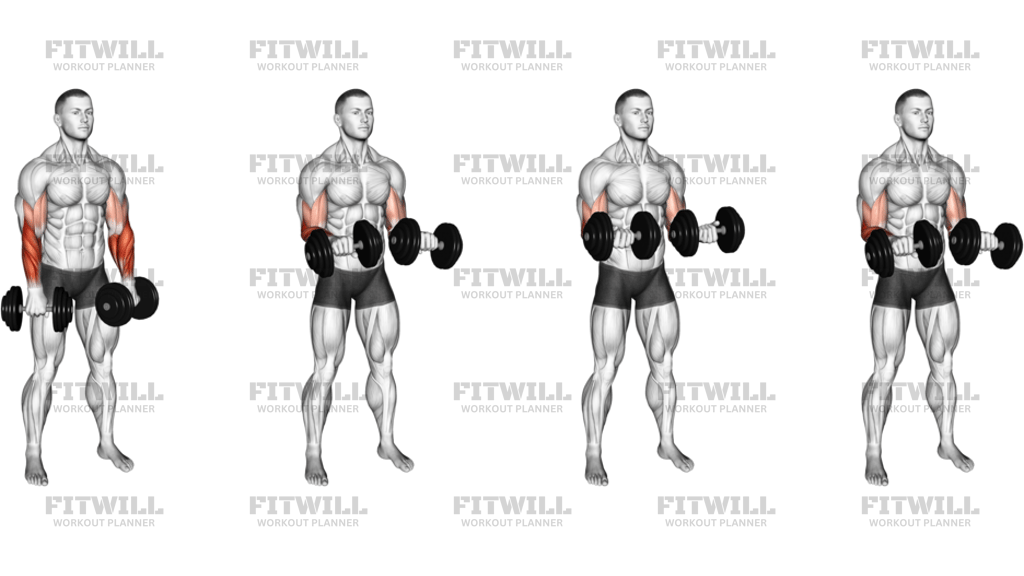
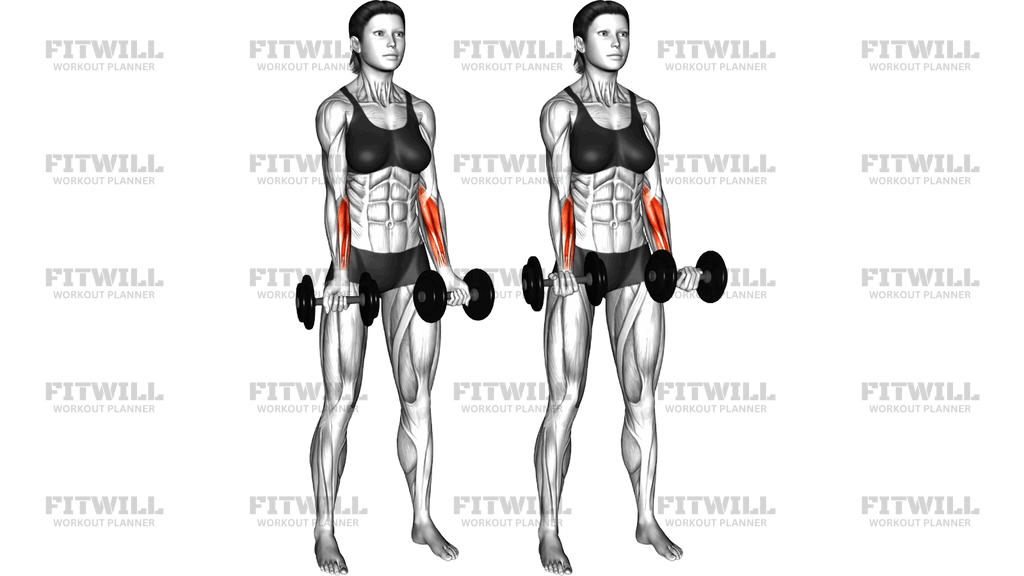
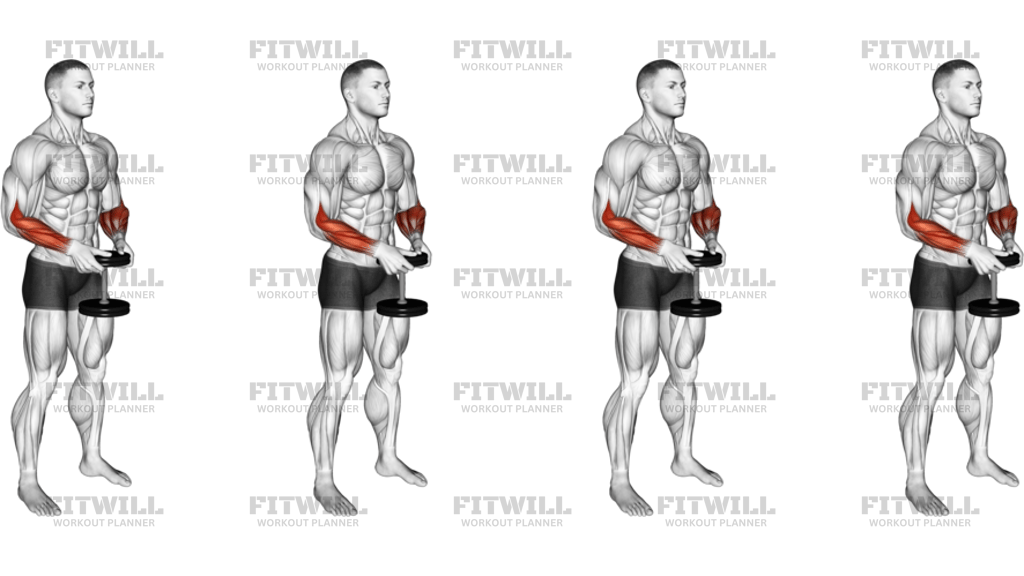
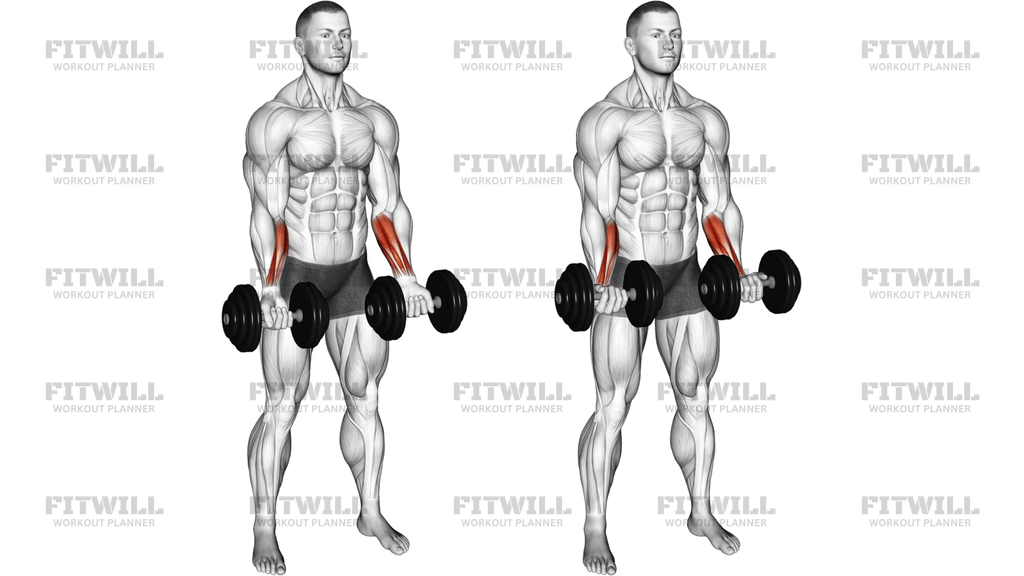
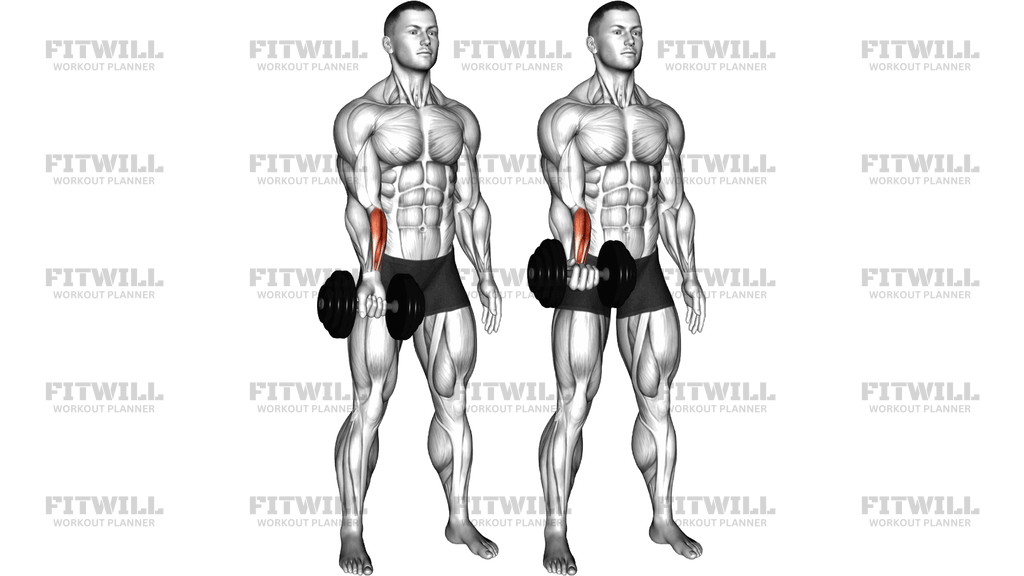
The Dumbbell Single Arm Wrist Curl is a standing forearm isolation exercise performed with one dumbbell held at your side. Your working arm stays fully extended straight down, and all of the movement happens at the wrist joint: you let the dumbbell roll down toward your fingertips as the wrist bends backward, then curl it back up by flexing the wrist as far as it will comfortably go. The forearm flexors on the inside of your forearm do the work, which is why they light up so clearly during each rep.
This movement is most useful for anyone whose grip or forearm strength is holding back the rest of their training. Deadlifts, pull-ups, rows, and heavy carries all depend on the flexors that this exercise targets directly. It is also a go-to for climbers, golfers, tennis players, and combat athletes, since wrist flexion strength and forearm endurance translate straight into holding, gripping, and controlling objects under load.
The standing, single-arm setup matters for a few reasons. Working one side at a time lets you focus completely on the target forearm and exposes left-to-right differences that often hide when both arms train together. Because you are standing with the arm hanging naturally at your side rather than resting on a bench, the shoulder and upper back stay relaxed, and the only joint moving should be the wrist. That simplicity is the appeal, but it also means you have to police your own form, since there is no bench locking your forearm in place.
Execution is straightforward but easy to rush. Hold the dumbbell with a firm grip, keep the arm straight and still, and let the weight roll down your fingers until your wrist reaches its extended position. From there, curl the weight up by pulling your palm toward the inside of your forearm, squeezing the flexors hard at the top. The fingers open and close slightly during the movement, which adds a small grip-training effect that seated bench-supported versions do not always provide.
Because the forearms are a small muscle group with a short range of motion, use light to moderate dumbbells and higher repetitions, typically 12 to 20 per side. Heavy weights tend to turn this into a jerky, momentum-driven swing that stresses the wrist and elbow without challenging the flexors properly. Keep the reps smooth and controlled, breathe steadily, and treat this as a precision exercise rather than a brute-force one.
[ Workout Log & Planner ]
Put your next workout in Fitwill
Keep your plan and training log ready when you are.


Instructions
- Stand upright with your feet about hip-width apart, knees soft but not bent into a squat, and your core lightly braced.
- Hold a dumbbell in one hand with your palm facing forward, letting your arm hang fully straight down at your side.
- Set your shoulders in a relaxed, neutral position and keep your free arm loose at your other side for balance.
- Inhale, then slowly open your fingers slightly and allow the dumbbell to roll down toward your fingertips as your wrist bends backward.
- Stop at the point where the dumbbell sits securely in your curled fingers and your wrist is fully extended, without letting the weight drop.
- Exhale and curl the weight back up by flexing your wrist, pulling your palm toward the inside of your forearm as far as it will go.
- Squeeze the forearm flexors hard at the top for a brief moment before starting the next rep.
- Keep the entire arm still throughout; only the wrist joint moves, and the dumbbell travels in a short vertical arc at your side.
- Complete all repetitions on one arm, then re-grip the dumbbell and perform the same number of reps on the other side.
- After the final rep, lower the dumbbell to the floor with a hinge at the hips rather than bending over with a rounded back.
Tips & Tricks
- The most common mistake is swinging the dumbbell with the shoulder or elbow; if your arm moves at all, the weight is too heavy or you are rushing the tempo.
- Do not let the dumbbell slip past your fingertips at the bottom of the rep. Control the descent so the fingers never have to catch the weight in a panic.
- If your grip fails before your forearm flexors feel worked, grip the handle a little less tightly at the bottom and focus on the wrist curl itself rather than clamping the handle the whole time.
- Keep your torso upright and still. Leaning or twisting toward the working side usually means the weight is too heavy for a controlled wrist curl.
- A full wrist range matters here. Short, partial reps at the middle of the range are a common reason people feel this exercise in their fingers instead of their forearms.
- Standing with nothing supporting your forearm means fatigue shows up as sloppy form fast. Stop the set as soon as your wrist starts drifting side to side.
- Use a smooth tempo, roughly two seconds down and one second up, because fast reps at this joint angle put unnecessary stress on the wrist and elbow.
- Train both sides equally, and start with your weaker arm so the stronger side does not quietly accumulate more volume.
- If your wrist feels pinched at full extension, shorten the bottom range slightly rather than forcing the joint deeper.
Frequently Asked Questions
Which muscles does the Dumbbell Single Arm Wrist Curl work?
The primary movers are the wrist flexors on the inside of the forearm, including the flexor carpi radialis and flexor carpi ulnaris. The finger flexors and grip also work hard to hold onto the dumbbell as it rolls through your fingers.
Is this exercise done standing or seated?
The Dumbbell Single Arm Wrist Curl is performed standing with the arm hanging straight down at your side. There is no bench support, so your torso has to stay still while only the wrist moves.
Is the Dumbbell Single Arm Wrist Curl suitable for beginners?
Yes, it is a simple movement with a short range of motion, making it beginner-friendly. Start with a very light dumbbell, even 2 to 5 kg, until you can keep your arm completely still through every rep.
Why does the dumbbell roll down into my fingers during the movement?
That roll is intentional. Allowing the weight to travel from your palm toward your fingertips as the wrist extends lengthens the range of the wrist flexors and adds a grip component when you curl the weight back up.
What is the most common mistake with this exercise?
Using too much weight and turning the rep into an arm or shoulder swing. If your elbow bends or your torso twists, drop the load and let the wrist joint do the only moving.
How does this differ from a seated wrist curl over a bench?
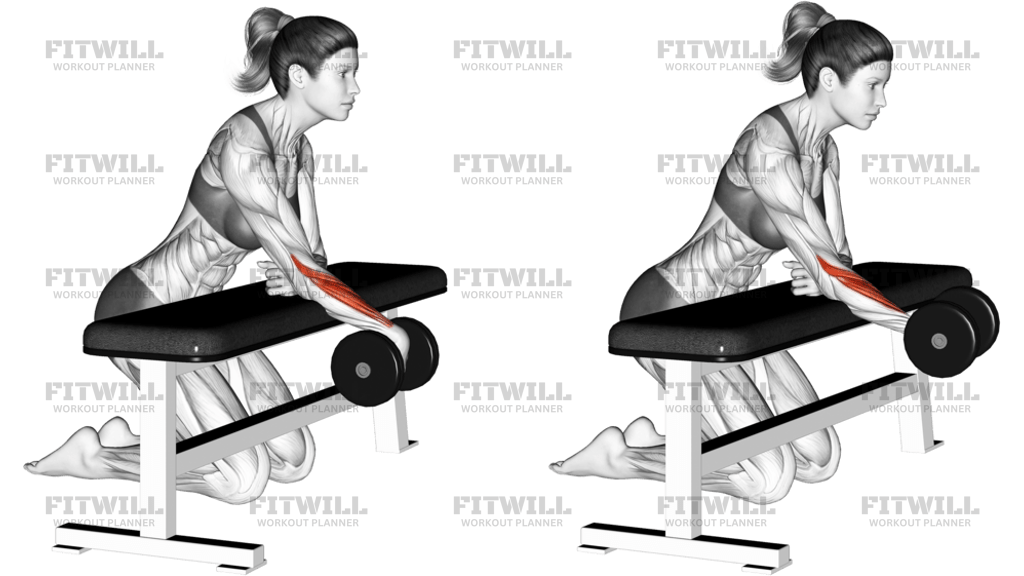
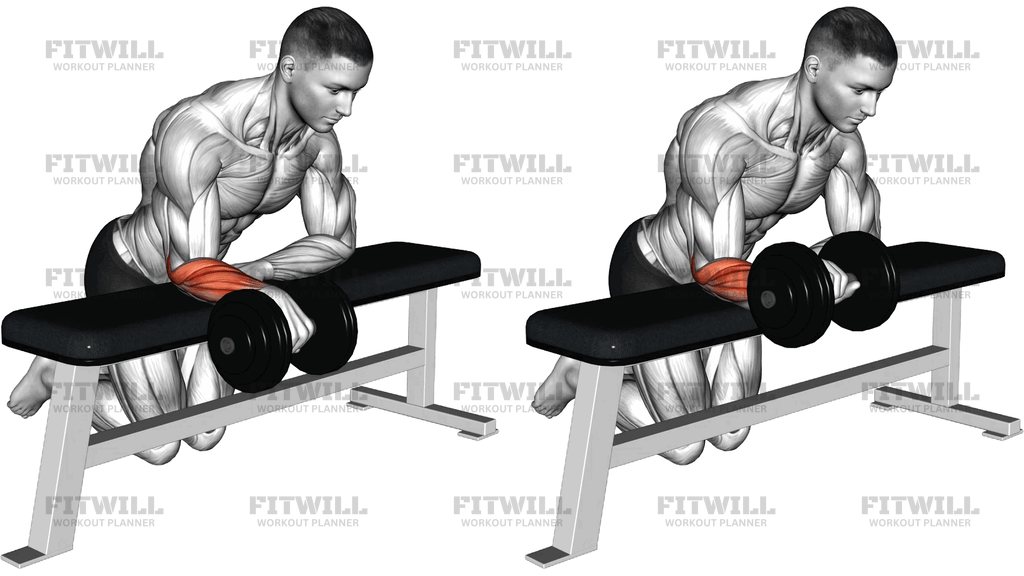
The seated version supports your forearm on a bench or thigh, which removes any balance demand. The standing single-arm version keeps the arm free at your side, so it also challenges you to stay braced and still, and the grip works slightly differently.
How many reps and sets should I do?
Because the forearms respond well to volume, 2 to 4 sets of 12 to 20 reps per arm works well. Go lighter and higher rather than heavy and low for this joint.
Can I use this exercise to improve my deadlift or pull-up grip?
It can help, since it directly strengthens the wrist and finger flexors involved in holding a bar. Pair it with heavier grip work like farmer's carries or hangs for the best carryover.
Is the Dumbbell Single Arm Wrist Curl safe for my wrists?
It is generally safe when the weight is light and the tempo is controlled. If you feel sharp pain rather than muscle fatigue, shorten the range, reduce the load, or stop and have the wrist assessed before continuing.
Should I do both arms in the same set or one arm at a time?
Complete all reps on one arm, then switch to the other without resting long between sides. Starting with your weaker arm keeps the workload balanced between the two forearms.