Seated Row On A Chair
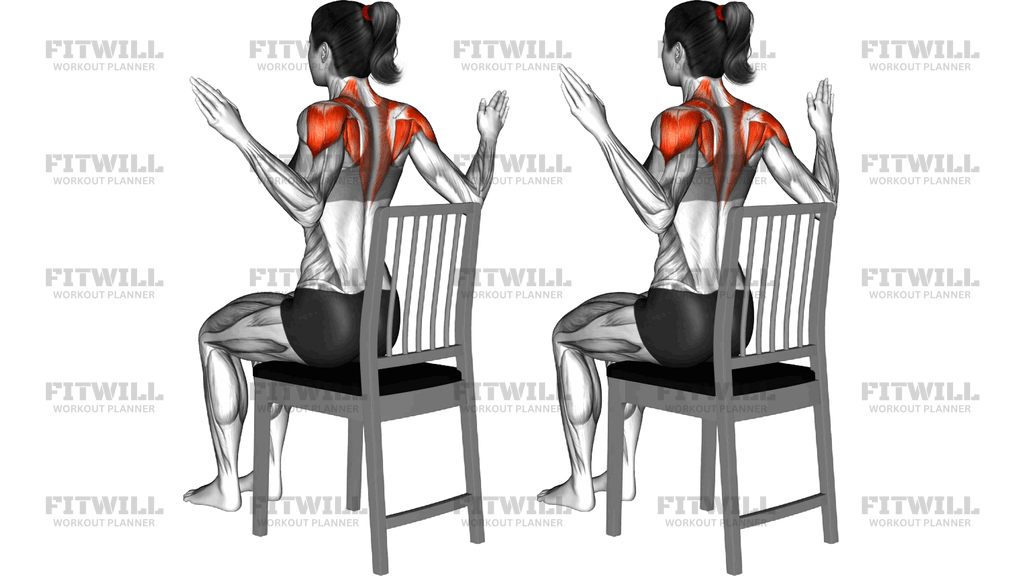
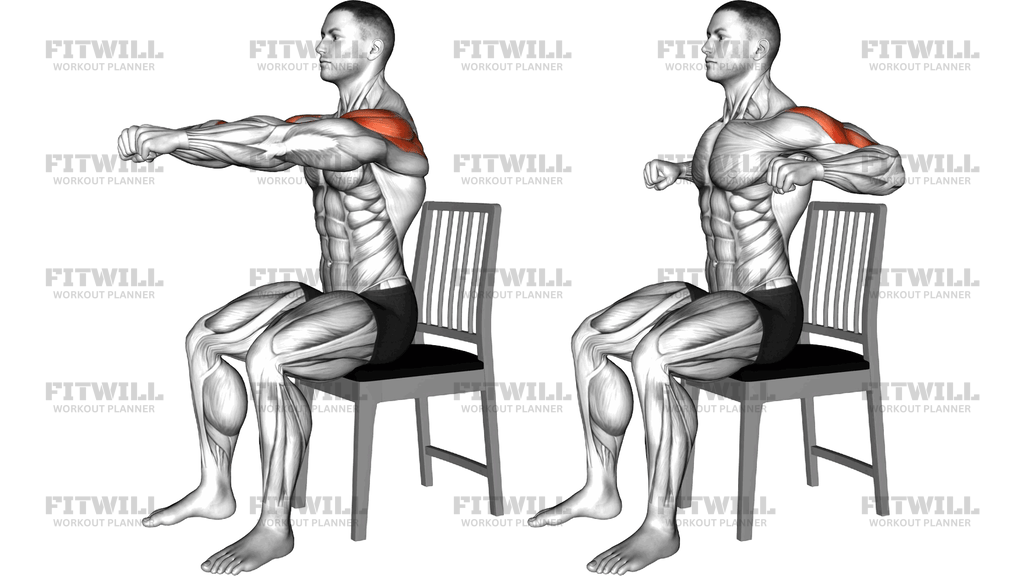
The Seated Row On A Chair is a simple bodyweight rowing pattern performed sitting upright on a standard chair. You sit tall with your feet flat on the floor, extend both arms straight out in front of you at shoulder height, and then pull your elbows straight back until your hands end up beside your torso, squeezing your shoulder blades together before extending your arms forward again. Because there is no external load, the movement works as a controlled activation drill for the rear shoulders and the muscles that pull the shoulder blades back and down.
This exercise is especially useful for people who spend long hours sitting at a desk, since the seated posture it trains against is the same one that usually rounds the shoulders forward. Office workers, beginners, older adults, and anyone recovering range of motion after time away from training can use it to wake up the rear deltoids, rhomboids, and mid-traps without needing weights, bands, or a cable station.
The main muscles working are the rear shoulders, which drive the elbows back, and the rhomboids and middle trapezius, which retract the shoulder blades. The biceps and forearms assist as the elbows bend, while the core and upper back stay quietly busy keeping your torso upright and still throughout each rep.
Setup matters more than it looks with this movement. Sitting too far forward or slumping into the back of the chair lets your lower back do the work instead of your shoulders. Plant your feet about hip-width apart, sit on the middle of the chair seat with an upright torso, and keep your ribs stacked over your hips so the pulling comes from the upper back rather than momentum from the trunk.
To execute it well, reach your arms forward at shoulder height with a soft elbow, then lead the pull with your elbows rather than your hands. Draw them back until they are roughly in line with your sides, pause for a beat to feel the squeeze between the shoulder blades, and return the arms forward under control instead of letting them drop. The tempo should stay slow enough that you could stop at any point of the rep.
A common use case is as a warm-up before pressing or pulling days, or as a micro-break exercise performed several times during a workday. Because it is low load and joint-friendly, it also pairs well with band pull-aparts or wall slides in a posture-focused routine. Keep the repetitions smooth and the shoulders relaxed away from your ears, and stop if you feel any pinching at the front of the shoulder.
[ Workout Log & Planner ]
Put your next workout in Fitwill
Keep your plan and training log ready when you are.


Instructions
- Sit on a sturdy chair with your feet flat on the floor about hip-width apart and your weight spread evenly across both sitting bones.
- Sit up tall on the middle of the seat without leaning against the backrest, and let your arms hang relaxed at your sides for a moment to set your shoulder position.
- Extend both arms straight out in front of you at shoulder height, palms facing down or slightly inward, with a small bend in the elbows.
- Brace your core lightly and keep your ribs stacked over your hips so your torso stays upright and facing forward.
- Pull your elbows straight back toward your sides, leading with the elbows rather than the hands, until your upper arms are roughly in line with your torso.
- Squeeze your shoulder blades together and down at the back of the movement, and hold that position for one to two seconds.
- Extend your arms forward again slowly until they are straight out in front of you, keeping them at shoulder height the whole time.
- Breathe out as you pull your elbows back and breathe in as you return your arms to the starting reach.
- Complete your set, then lower your arms to your lap and roll or shrug your shoulders gently to reset before the next set.
Tips & Tricks
- Do not let your hands travel higher than your elbows as you pull; if they do, the front shoulders and upper traps take over from the rear shoulders.
- Avoid leaning your torso backward as the elbows come back — if you catch yourself rocking, slow the tempo down and imagine a string holding your chest upright.
- Shrugging toward your ears is the most common fault here; consciously press your shoulder blades down as you squeeze them together.
- Keep the reach forward honest: many people shorten the front position, which cuts the range the rear shoulders get to work through.
- If you feel this only in your biceps, think about dragging your elbows back through thick mud instead of curling your hands toward you.
- A chair without wheels is essential; a rolling office chair will slide and steal stability from the movement.
- Adding a one-to-two second pause at the fully pulled-back position makes the drill far more effective than rushing extra repetitions.
- If your shoulders sit forward at the start, do a couple of slow shoulder blade squeezes with arms at your sides before beginning the set.
- Stop the set when your reach forward starts to drop below shoulder height; fatigue usually shows up as a lowering arm path before you notice it.
Frequently Asked Questions
What muscles does the Seated Row On A Chair work?
The rear shoulders do most of the pulling, supported by the rhomboids and middle trapezius, which squeeze the shoulder blades together. The biceps and forearms assist as the elbows bend.
Is the Seated Row On A Chair suitable for complete beginners?
Yes, it is one of the gentlest ways to learn the rowing pattern because there is no external load. Beginners should focus on slow tempo and a clear squeeze between the shoulder blades rather than high reps.
Why should I sit away from the backrest during this exercise?
Leaning into the backrest rounds your upper back and switches off the muscles the exercise is meant to target. Sitting upright on the front half of the seat keeps your torso engaged and forces the rear shoulders and upper back to do the work.
My shoulders shrug up when I pull back — how do I fix that?
Shrugging means the upper traps are compensating for tired or inactive rear shoulders. Lighten the effort, press your shoulder blades down before each rep, and think about leading with the elbows instead of the hands.
Can I do the Seated Row On A Chair every day?
For most people, yes — it is a low-load activation drill rather than a heavy strength lift. One or two short sets during a workday or before upper body training is a practical way to use it.
What can I use instead of a chair?
Any stable seat works, including a bench or the edge of a sturdy bed, as long as your feet can rest flat on the floor. The key requirement is a firm, non-rolling surface that lets you sit upright.
How many repetitions should I do?
Ten to fifteen controlled repetitions with a short pause at the pulled-back position works well for activation. Two to three sets is enough, since the goal is quality of the squeeze rather than exhaustion.
Is this exercise safe for my lower back?
When performed sitting tall with your core lightly braced, it places very little demand on the lower back. Problems usually come from slouching or rocking the torso, so keep your trunk still and stop if you feel any strain.
How is the Seated Row On A Chair different from a cable row?
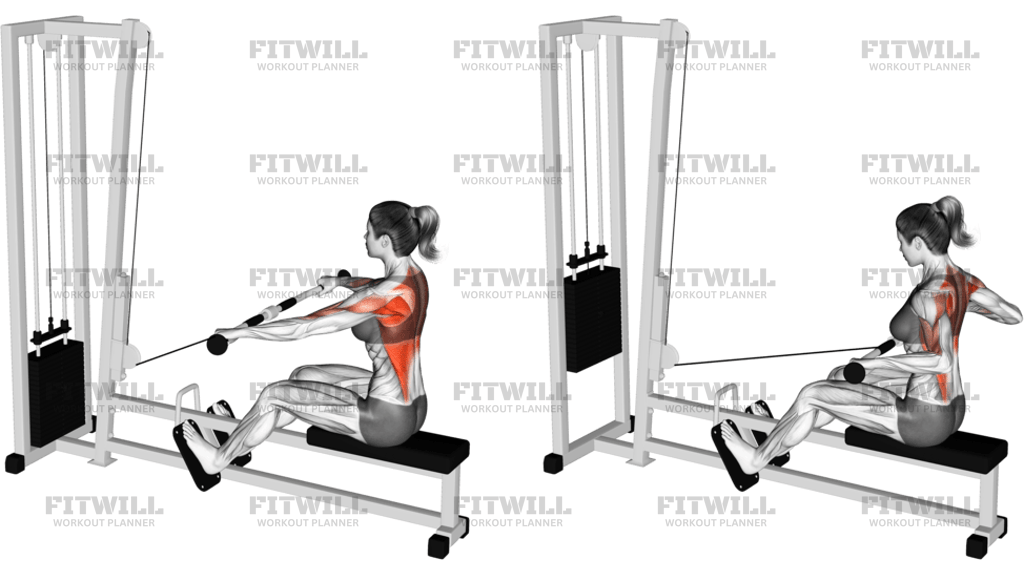
A cable row loads the pulling muscles with resistance, while this version is a bodyweight pattern focused on movement quality and activation. It is a good teaching drill before progressing to bands or cable rows.