Seated Reverse Fly On Chair
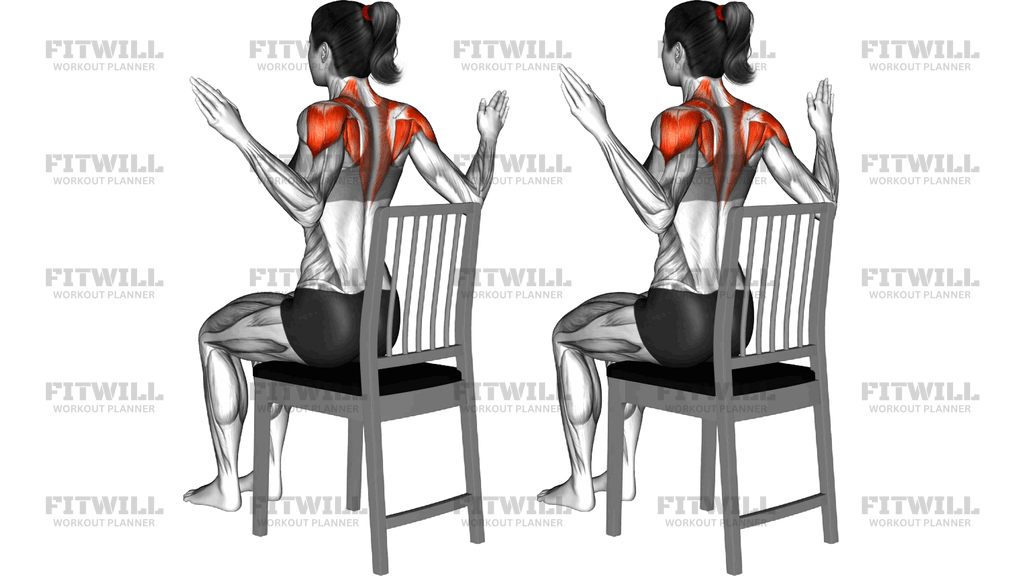
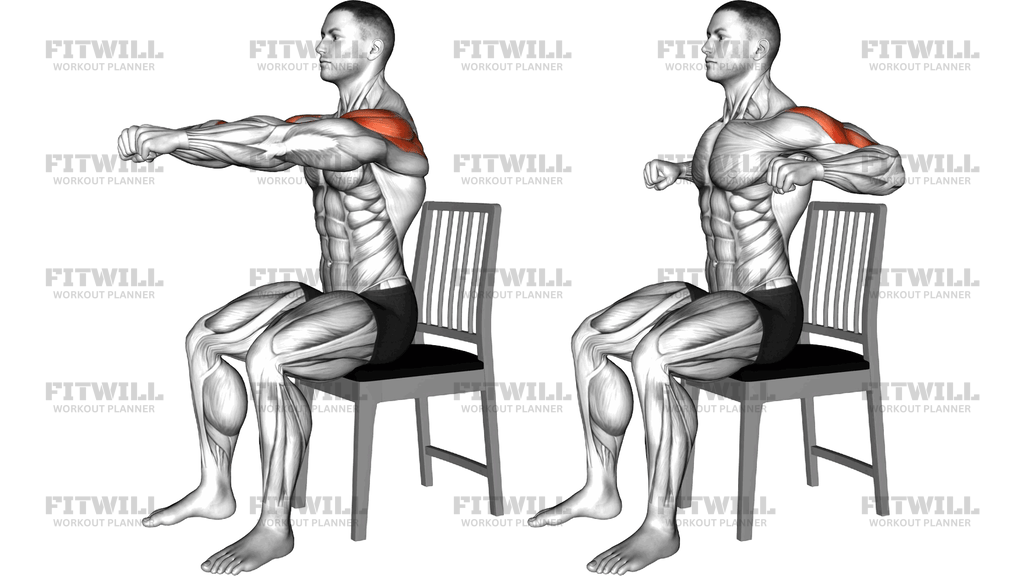
The Seated Reverse Fly On Chair is a bodyweight mobility and activation exercise performed sitting upright on a chair. You start with both arms extended straight out in front of you at shoulder height, hands overlapping or clasped together, then sweep them apart in a wide arc until they open out to the sides at shoulder level, before bringing them back together. The rear portion of the shoulders, highlighted as the working area in this movement, drives the opening phase while the muscles between the shoulder blades control and stabilize the arms.
Because it requires no weights, this version of the reverse fly works well as a warm-up before pressing or pulling sessions, as a low-load activation drill for people whose rear shoulders are undertrained, or as an accessible option for beginners, older adults, and anyone rehabbing general shoulder stiffness who has been cleared for light movement. Sitting on a chair removes the balance and hip demands of a bent-over reverse fly, so you can focus entirely on moving the arms cleanly at shoulder height.
The setup matters more than it might seem. A firm, stable chair with your feet flat on the floor and an upright torso gives the arms a fixed reference point. If you lean back or shrug as the arms open, the upper traps take over and the rear shoulders stop doing the work. Keeping the arms at shoulder height throughout the arc is what keeps the tension on the intended muscles rather than letting the movement drift into a low, uncontrolled swing.
To execute it well, extend both arms forward at shoulder height with hands overlapping, then open them out to the sides as if pushing the air apart, finishing with arms wide, elbows soft but straight, and palms facing forward or slightly up. The path should feel like a smooth horizontal arc, not a lift from the lap. Move at a moderate tempo, pause briefly at the wide position, and bring the hands back together with the same control.
A practical dose is 10 to 15 controlled repetitions, often for one to three sets. Since there is no external load, the value comes from precision and range rather than effort, so treat it as a quality drill. If the shoulders feel pinched at the wide position, reduce the arc slightly and work within a range that feels smooth and comfortable.
[ Workout Log & Planner ]
Put your next workout in Fitwill
Keep your plan and training log ready when you are.


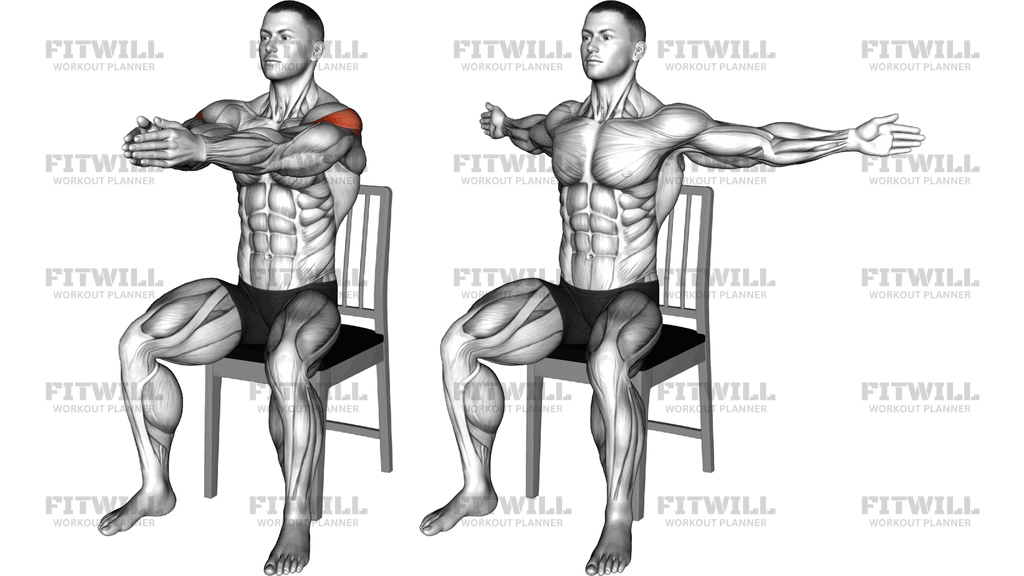
Instructions
- Sit upright on a firm chair with your feet flat on the floor about hip-width apart and your back tall, not slumped against the backrest.
- Extend both arms straight out in front of your chest at shoulder height and place one hand over the other, keeping the elbows soft but nearly straight.
- Brace your core lightly and draw your shoulder blades down so your upper traps stay relaxed before you start the movement.
- Exhale as you sweep both arms apart to the sides in a wide horizontal arc, keeping them at shoulder height the entire time.
- Open until the arms are fully out to the sides, in line with or slightly behind your shoulders, with palms facing forward and no shrugging.
- Pause briefly at the wide position and feel the rear of the shoulders and the area between the shoulder blades engage.
- Inhale as you slowly bring the arms back along the same arc until the hands overlap in front of your chest again.
- Keep your torso upright and square to the front throughout; avoid rocking, leaning back, or twisting to help the arms open.
- Complete your repetitions with even tempo, then lower your arms to your lap and roll or shake out the shoulders between sets.
Tips & Tricks
- The most common mistake in this exact setup is shrugging as the arms open, which shifts work to the upper traps; reset your shoulder blades down before each rep.
- If the arms drift below shoulder height during the arc, the rear shoulders are being bypassed — imagine sliding your arms along a shelf set at collarbone height.
- Do not lock the elbows hard at the wide position; keep a small bend so the joint stays comfortable through the end range.
- Bending the elbows even slightly as fatigue builds turns this into a rowing motion; straighten the arms each rep to keep it a true fly pattern.
- A slouched seated posture tilts the chest down and shortens the arc; sit tall on your sit bones so the arms can travel horizontally at shoulder level.
- Control the closing phase just as much as the opening — letting the hands crash together removes the tension the rear shoulders need on the way back.
- If the front of the shoulder feels pinched at the wide position, shorten the arc a few degrees instead of forcing full range.
- Move no faster than about two seconds out and two seconds back; this exercise has no load, so tempo and precision are what make it effective.
Frequently Asked Questions
What muscles does the Seated Reverse Fly On Chair work?
The rear shoulders are the primary muscle, with the rhomboids and mid-traps between the shoulder blades assisting and stabilizing. The core works lightly to keep your torso upright on the chair.
Is the Seated Reverse Fly On Chair suitable for beginners?
Yes. With no external load and a supported seated position, it is one of the safest ways to learn the horizontal arm-opening pattern before progressing to banded or dumbbell reverse flys.
Why are the hands clasped together in front at the start?
Starting with the hands overlapped in front of the chest sets a precise reference point and ensures the arms travel a full horizontal arc rather than a short, loose swing.
How is this different from a bent-over reverse fly?
A bent-over reverse fly uses gravity or weights pulling down on the arms, while this seated version relies on muscular effort through the horizontal arc. The chair removes hip and lower back demands, making it easier to keep the torso upright.
How many reps of the Seated Reverse Fly On Chair should I do?
Ten to fifteen smooth repetitions per set works well, usually one to three sets. Since there is no weight, prioritize tempo and arm height over squeezing out extra reps.
Can I use this as a warm-up before shoulder training?
Yes, it is an effective activation drill before pressing or pulling workouts. A set or two of 12 to 15 reps preps the rear shoulders and shoulder blade muscles without fatiguing them.
What kind of chair works best for this exercise?
A stable, armless chair that lets you sit with feet flat on the floor and thighs roughly parallel to the ground. Avoid rolling chairs or anything with armrests that would block the arm path.
My upper traps feel this instead of my rear shoulders — what am I doing wrong?
You are most likely shrugging as the arms open or letting them drift above shoulder height. Lower the shoulder blades before each rep and keep the arc at collarbone level so the rear shoulders stay in charge.
Can I add resistance to the Seated Reverse Fly On Chair?
Once you control the bodyweight version, progress to a resistance band or light dumbbells in the same seated position. Keep the same upright torso and horizontal arm path so the pattern carries over.
Is it safe if I have a shoulder injury?
Work only within a pain-free arc and stop if you feel pinching at the wide position. If you are recovering from a specific injury, clear the movement with a qualified professional first.