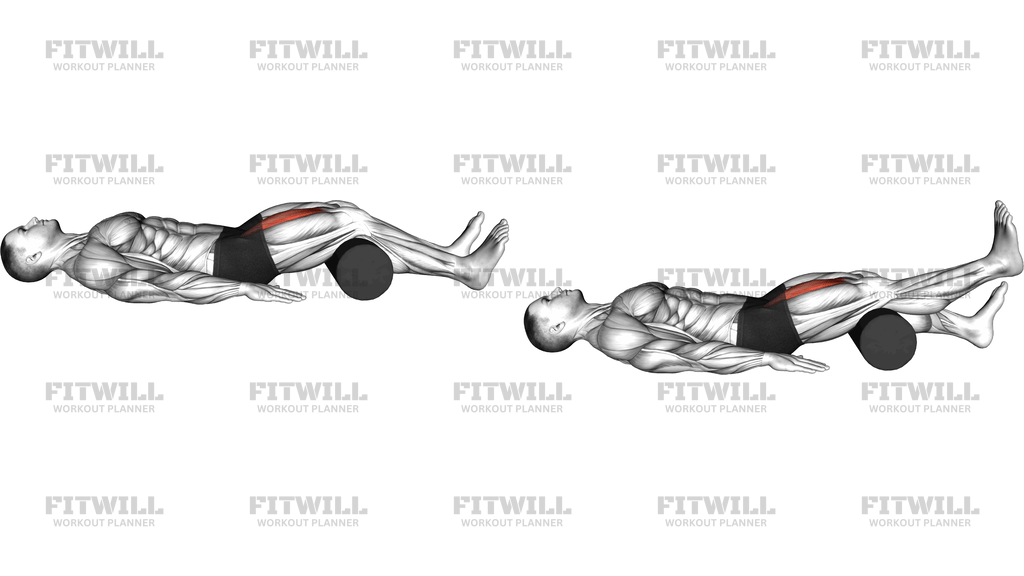
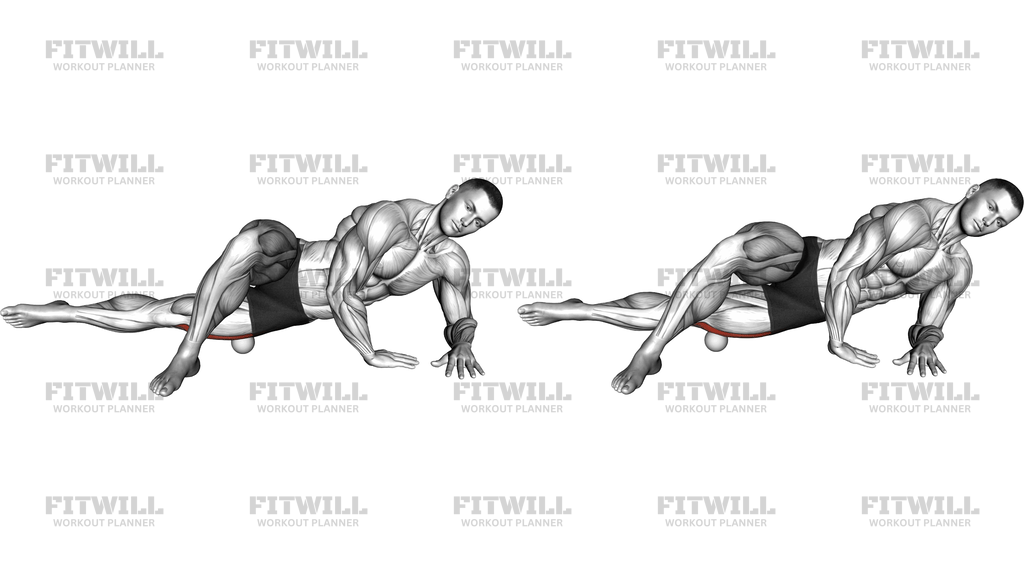
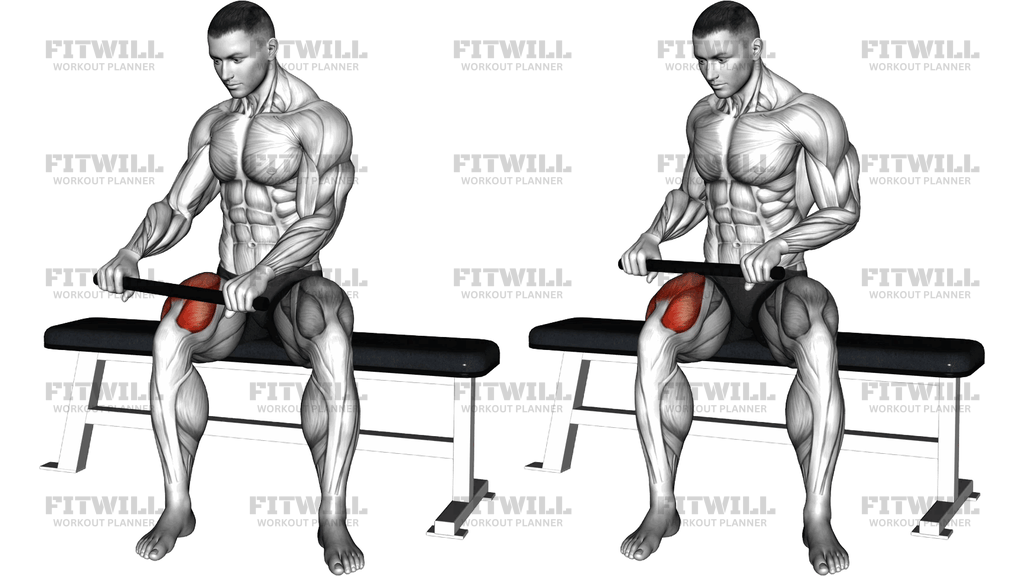
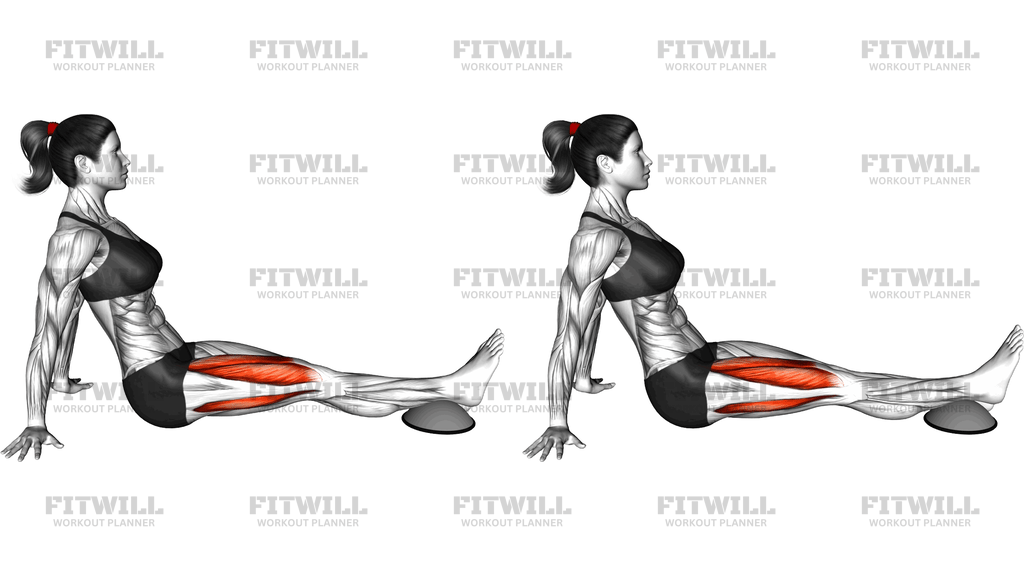
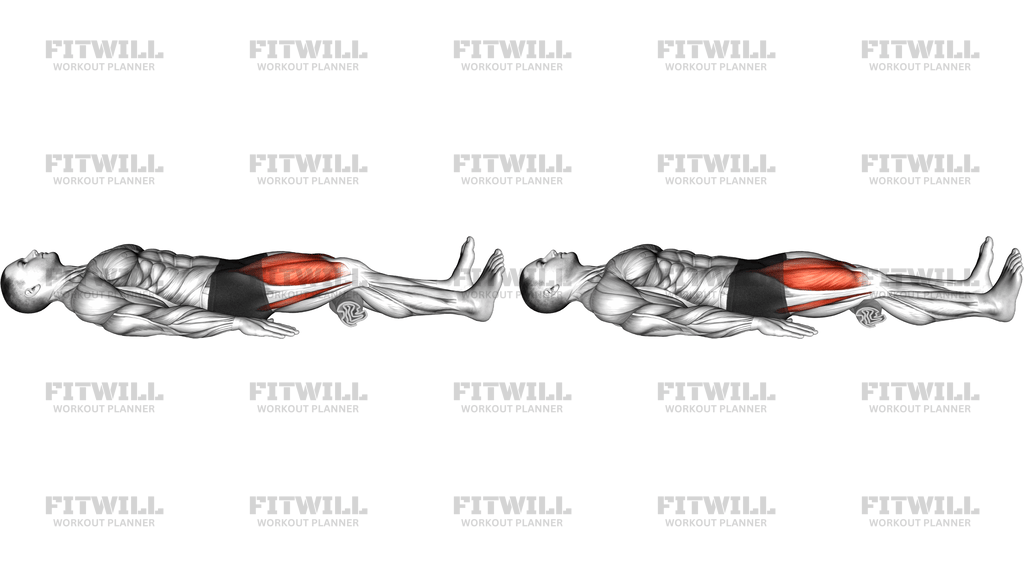
Seated Single Leg Knee Extension
The Seated Single Leg Knee Extension is a simple quad-strengthening exercise performed on the floor with a foam roll placed under the knee as a fulcrum. You sit upright with your hands planted behind your hips, rest the back of one knee on top of the roller, and straighten that knee to lift your heel off the floor. The roller supports the thigh and gives the lower leg a clear arc to travel through, so the quadriceps do the work without any machine, band, or added load.
Because the hip stays extended while the knee straightens, this position places a strong demand on the rectus femoris, the quad muscle that crosses both the hip and the knee. The vasti muscles work alongside it to lock the knee out. This makes the movement especially useful for people rebuilding quad strength after time off, lifters who want better mind-muscle connection with the quads before squats or leg presses, and anyone who needs a low-load knee extension they can do at home with minimal equipment.
The setup matters more than it looks. The roller should sit directly under the knee joint so the thigh rests on it and the lower leg hangs free in front. Sit tall with a long spine rather than slumping, and keep your weight supported through your hands and the opposite hip. If the roller drifts up the thigh or down toward the shin, the leverage changes and the quad loses tension at the start of the rep.
Execution is deliberately slow. Extend the knee until the leg is straight, pull the kneecap toward the hip by squeezing the quad hard at the top, hold briefly, then lower the heel back down under control instead of letting it drop. One leg works at a time, which lets you compare sides, notice asymmetries in strength or control, and give the weaker leg extra attention without the stronger side compensating.
This exercise fits well as a warm-up activation before lower-body training, as a rehab-style strength builder when machines are unavailable or too aggressive, and as a finisher to flush the quads with high-rep, low-load work. Keep the effort at a level where the knee feels supported and stable; the goal is clean, controlled extensions with a strong squeeze at the top, not forcing range or speed.
[ Workout Log & Planner ]
Put your next workout in Fitwill
Keep your plan and training log ready when you are.


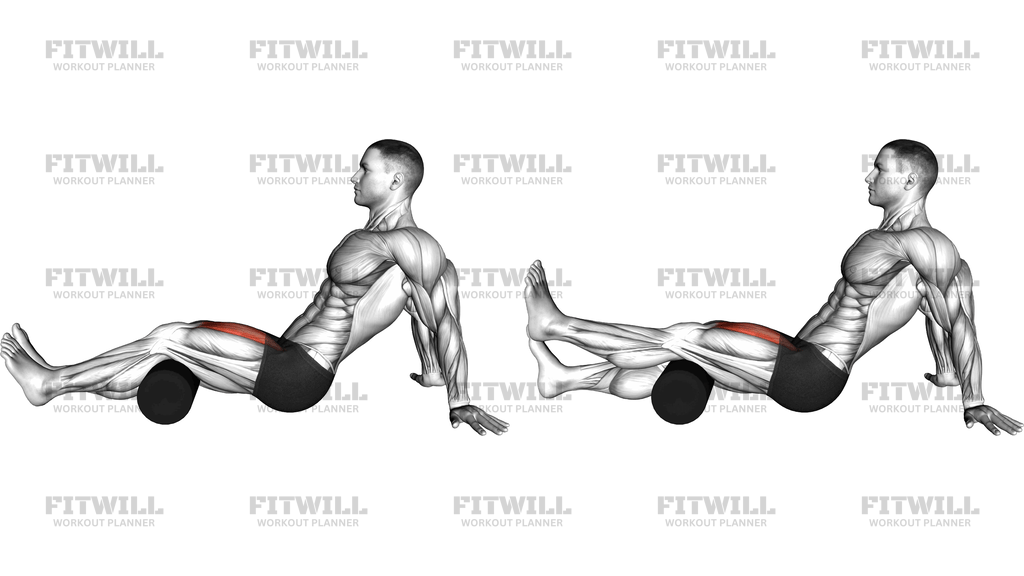
Instructions
- Sit on the floor with both legs extended in front of you and place a foam roll under one knee so the back of the knee rests on top of it.
- Plant your palms on the floor just behind your hips with fingers pointing backward and lean back slightly so your hands and opposite hip share your body weight.
- Let the working knee bend a little so the heel rests on or just above the floor, with the thigh in full contact with the roller.
- Sit tall, brace your abdominal muscles lightly, and keep your hips square and level.
- Exhale and straighten the working knee, lifting your heel up and forward until the leg is fully extended and the quad is visibly contracted.
- Squeeze the quadriceps hard at the top for one to two seconds, pulling the kneecap up toward the hip.
- Inhale and lower the heel back down slowly, bending the knee over the roller without letting the leg collapse.
- Keep your torso still throughout; avoid pushing harder through your hands or rocking your hips to help the leg up.
- Complete all repetitions on one leg, then reposition the roller under the other knee and repeat.
- Stand up or roll the leg out gently between sets if the knee feels compressed against the roller.
Tips & Tricks
- The most common mistake is placing the roller under the calf or too far up the thigh. Position it directly under the knee joint so the lower leg moves freely and the quad works from a stable base.
- Do not slam into full extension. Straighten the knee with intent, then own the locked-out position with a hard squeeze rather than snapping the joint open.
- Because your hip is extended in this seated position, the rectus femoris works harder than it does in a seated leg extension machine. Keep the torso tall to preserve that benefit; slumping backward shortens the muscle and reduces the demand.
- If your heel drags on the floor, lift it slightly before extending or place a small towel under it so the arc stays smooth.
- Keep the opposite leg relaxed and still. Tensing or lifting the non-working leg usually means you are straining through the trunk instead of isolating the quad.
- Slow down the lowering phase. Most people get value from the concentric lift but drop the heel; a two-to-three-second negative builds control through the same range.
- If pressure on the back of the knee from the roller is uncomfortable, use a softer roller or fold a towel over it rather than shifting the roller position.
- Stop and reduce the range if you feel pinching at the front of the knee. Work within the arc you can extend smoothly and build up gradually.
- Use your hands for balance only. If you find yourself pressing down hard to lift the leg, the weight is too much on your arms and the rep is no longer quad-driven.
Frequently Asked Questions
Which muscles does the Seated Single Leg Knee Extension work?
The quadriceps are the primary movers, straightening the knee against the lever of your lower leg. Because the hip stays extended, the rectus femoris in particular works hard alongside the vasti muscles.
Why is a foam roll placed under the knee for this exercise?
The roll acts as a fulcrum that supports the thigh and lets the lower leg arc freely through extension. It keeps the knee in a supported position and ensures the quadriceps, not momentum or body leverage, produce the movement.
Is the Seated Single Leg Knee Extension suitable for beginners?
Yes, it is one of the most accessible quad exercises because it uses only your lower leg as resistance and requires no machine. Beginners should focus on slow tempo and a firm squeeze at the top rather than high reps.
How does this differ from a seated knee extension machine?
The machine adds external load and a backrest, while this version uses only leg weight and forces you to control the arc yourself. The extended hip position here also shifts more demand onto the rectus femoris than a typical machine setup.
How many reps should I do per leg?
Start with 10 to 15 controlled repetitions per leg for two to three sets. Because the load is light, quality of the top-end squeeze matters more than the number of reps.
What is the most common mistake in this exercise?
Letting the heel drop quickly on the way down, which turns a strength exercise into a ballistic swing. Lower the heel under control and keep the thigh glued to the roller throughout.
Can I do the Seated Single Leg Knee Extension without a foam roll?
Yes. A firmly rolled towel, a small cushion, or even the edge of a low, stable surface under the knee works, as long as the thigh is supported and the lower leg can swing free.
Why do I feel the front of my hip working during this exercise?
With the leg extended in front of you, the rectus femoris and other hip flexors help hold the thigh position. Mild involvement is normal, but sharp or pinching sensations in the hip or knee mean you should shorten the range.
Is it safe to lock the knee out completely?
For most people, full extension with an active quad squeeze is safe and beneficial, since it trains terminal knee control. If you have a current knee injury or recent surgery, follow the guidance of your physical therapist on whether to work to full lockout.