Lying Supine Knee Extension
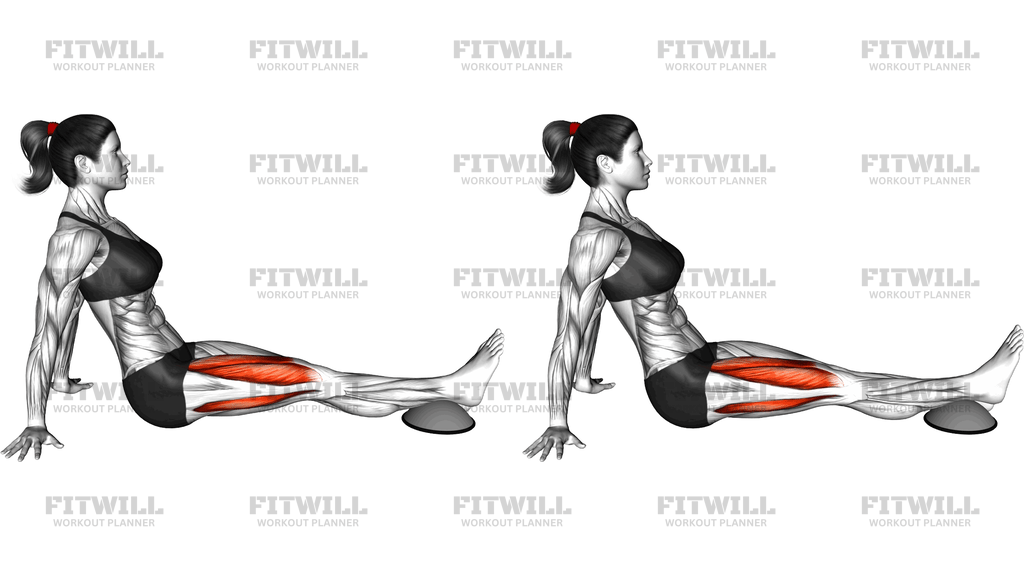
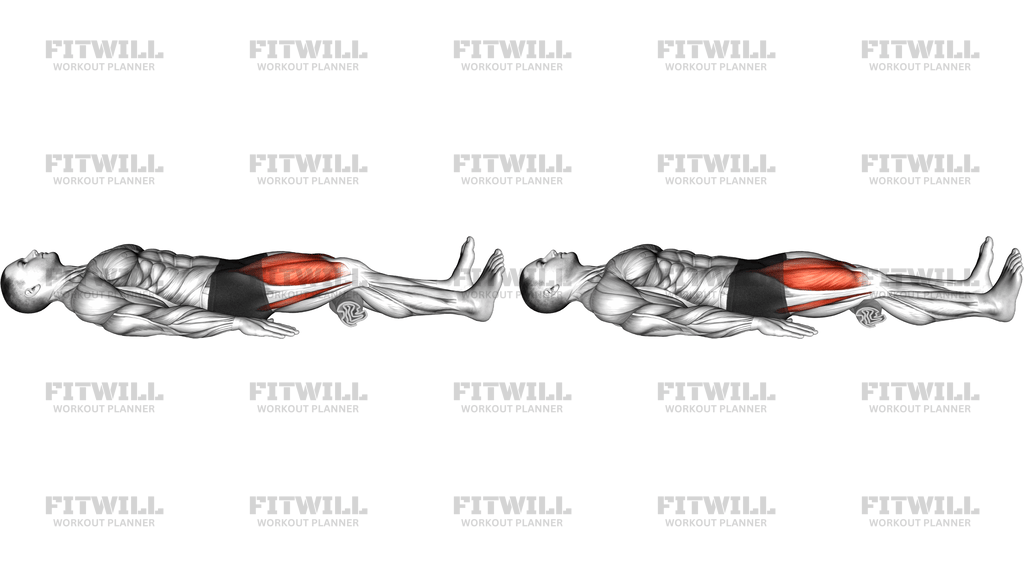
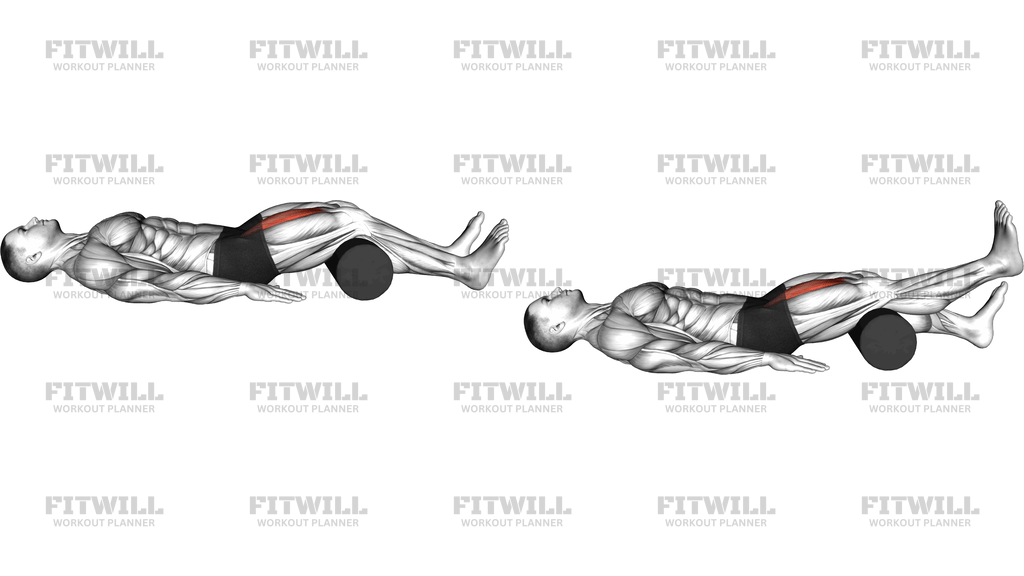
Lying Supine Knee Extension is a simple, low-load movement performed on your back with a foam roller placed underneath your knees. From that position you straighten your legs by pressing the backs of your knees down into the roller and extending your knees fully until your heels rest on the floor. The roller acts as a fixed pivot point, which makes the knee joint move through its extension range in a supported and predictable arc.
This exercise primarily works the quadriceps, the group of muscles on the front of the thigh responsible for straightening the knee. Because the hip stays relatively relaxed and the knee bends over the roller, the emphasis falls on the lower portion of the quadriceps, especially the vastus medialis near the inside of the knee. That makes the movement a staple in knee-friendly training, where the goal is to wake up and strengthen the quads without compressing the joint or loading it with external weight.
The supine setup matters more than it might seem. Lying on your back removes the demand of holding your bodyweight upright, so the quadriceps only have to work against the weight of your own lower leg. The roller under the knees also cushions the joint at the bent position and gives you a clear physical target to press into, which helps you feel the contraction rather than just swinging the leg straight. Keep your lower back in contact with the floor and your arms relaxed at your sides so the trunk stays quiet while the knees do the work.
To execute it well, extend your legs with a deliberate, steady press rather than a quick flick. Pause briefly at full extension, squeeze the thigh, then lower the feet back to the floor under control by bending the knees over the roller. The tempo should be slow enough that you could stop the movement at any point; if your foot slaps down or your hips lift, you are rushing. Breathe out as you straighten the knees and in as you return.
This exercise suits a wide range of situations. It is commonly used as a warm-up activation before squats or leg presses, as a reintroduction to knee extension after periods of reduced activity, and as a first stepping stone toward more demanding quad work such as leg extensions or supported knee bends. Beginners can learn what a proper knee extension feels like here, and more advanced lifters can use it for high-rep quad pumping on recovery days.
From a safety standpoint, the movement is gentle, but full extension should still feel comfortable rather than forced. If straightening the knee produces pinching or discomfort at the joint, reduce the range slightly and work within a pain-free arc. Move in a controlled way, keep the roller stable under the knees, and let the quadriceps, not momentum, drive every repetition.
[ Workout Log & Planner ]
Put your next workout in Fitwill
Keep your plan and training log ready when you are.


Instructions
- Lie flat on your back on an exercise mat with your arms relaxed at your sides and your palms facing down.
- Position a foam roller underneath both knees so the knees are bent over it and your feet are flat on the floor, roughly hip-width apart.
- Let your head and shoulders rest comfortably and draw your ribs down slightly so your lower back stays in contact with the mat.
- Take a breath in and gently brace your trunk to keep your pelvis steady before starting the movement.
- Exhale as you press the backs of your knees down into the foam roller and straighten both legs at the same time.
- Continue extending until your knees are fully straight and your heels rest lightly on the floor in front of the roller.
- Pause for one to two seconds at the top and squeeze the front of your thighs to reinforce the contraction.
- Inhale as you slowly bend your knees and draw your feet back toward the roller until they are flat on the floor again.
- Keep the roller stationary under your knees throughout the set; if it drifts, reset it before continuing.
- Complete your repetitions with an even tempo, then remove the roller and gently roll or shake out your thighs to finish.
Tips & Tricks
- A common mistake is lifting the hips or arching the lower back as the legs straighten; keep your pelvis heavy on the mat and think of lengthening the legs away from you rather than reaching with the feet.
- If your heels crash onto the floor, the lowering phase is too fast; bend the knees as if you are lowering the feet in slow motion so the quadriceps work on the way back as well.
- Press evenly through both knees into the roller; many people extend one leg harder than the other, which hides a side-to-side difference in strength or control.
- The foam roller should sit directly under the knee crease, not behind the calves; if it is too low, the leg has no pivot and the movement becomes a loose leg lift.
- Do not force the knee past a comfortable straight position; a firm squeeze at full extension is enough, and jamming the joint adds stress without extra benefit.
- Keep your toes relaxed and pointing up; curling or pointing the feet shifts attention away from the knee extension and makes the contraction harder to feel.
- If your thighs cramp during the pause at the top, shorten the hold to one second and reduce the squeeze intensity until the muscle adapts.
- Slow the tempo before adding reps; two to three seconds out and two seconds back builds more control in this position than rushing through a high number of quick reps.
Frequently Asked Questions
Which muscles does the Lying Supine Knee Extension work?
The quadriceps on the front of the thigh are the primary movers, with particular emphasis on the portion of the muscle close to the knee. The core contributes lightly to keep your trunk and pelvis stable on the mat.
Why is a foam roller placed under the knees for this exercise?
The roller acts as a cushioned pivot point that supports the knee in a bent starting position and gives you a surface to press down into. This makes the extension path consistent and keeps pressure off the joint itself.
Is the Lying Supine Knee Extension suitable for beginners?
Yes, it is one of the most beginner-friendly quad exercises because your bodyweight is supported on the floor and the only resistance is the weight of your lower legs. Focus on smooth tempo and a clear squeeze at full extension.
Should my heels touch the floor at the end of the extension?
Allowing the heels to rest lightly on the floor with the knees fully straight is the standard end position, and it confirms you have completed the range. If full extension feels uncomfortable, extend to the point just before discomfort and build from there.
What is the most common mistake in this movement?
Rushing the return so the feet drop back to the floor is the most frequent error. Control the bending phase by lowering the feet slowly over the roller so the quadriceps stay engaged throughout the repetition.
Can I do the Lying Supine Knee Extension without a foam roller?
Yes, a rolled towel or a firm cushion placed under the knees works in the same way. The support just needs to be stable and high enough to hold the knees in a comfortably bent starting position.
How many repetitions should I perform?
Start with two to three sets of ten to fifteen slow repetitions, pausing briefly each time the knees reach full extension. Because the load is light, quality of tempo and contraction matters more than the total number of reps.
When is the best time to use this exercise in a workout?
It works well as an activation drill before squats, leg presses, or lunges, and it is also a useful standalone exercise on easy training days. Performing it early in the session helps you establish the knee extension feeling before heavier loading.
Is it safe if I feel pinching at the front of the knee?
A pinch at end range is a signal to ease off rather than push through. Reduce the extension range slightly, slow the tempo, and if the sensation persists, stop the exercise and consult a qualified professional before continuing.