Sitting Rest Pose
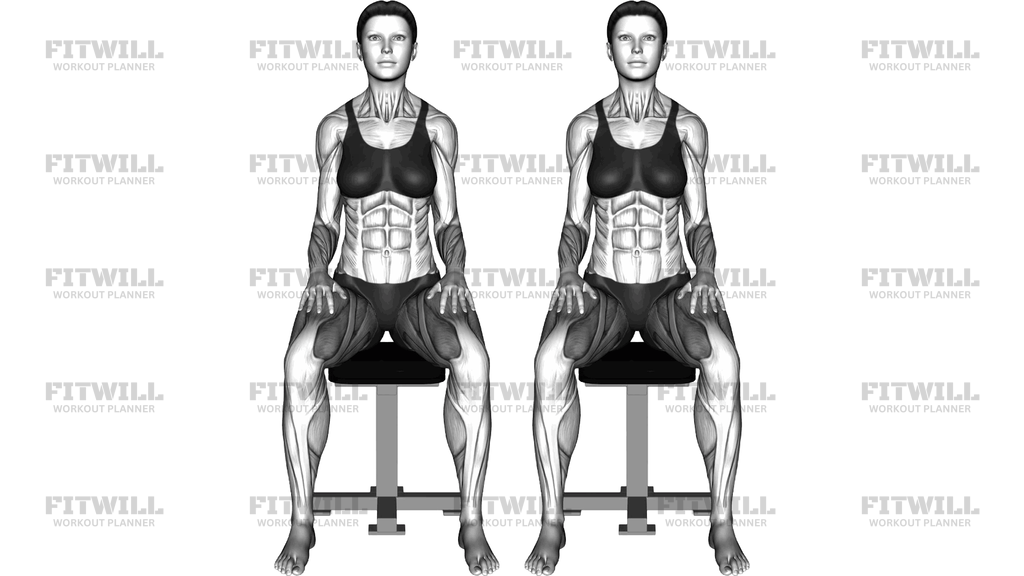
The Sitting Rest Pose is a seated recovery position performed on a flat bench or sturdy seat, with the feet planted flat on the floor and the hands resting lightly on the thighs. It is not a strength or stretching exercise in itself; it is the deliberate posture you hold between hard sets or exercises so your breathing, heart rate, and focus can settle before the next effort.
This position is useful for anyone training with straight sets, supersets, or circuits. Instead of pacing around, leaning on a machine, or slumping over between sets, you sit down with intention. The upright torso keeps your spine supported and your airway open, which makes your rest periods genuinely restful and helps you start the next set in a good position rather than a folded-over one.
Even as a rest position, the Sitting Rest Pose trains a quiet kind of body control. Sitting tall with the hands relaxed on the thighs requires light activity from the core and the muscles along the spine, while the hips and thighs support a stable, even stance with both feet grounded. Practicing it teaches you to recognize and reset your posture during a workout, which carries over to how you set up for seated presses, rows, and other seated movements.
Setup matters more than it might seem. A bench at a height that lets both feet rest flat keeps the hips and knees at comfortable angles and prevents the legs from swinging or crossing. Hands on the thighs rather than gripping the bench edge or a phone encourages the shoulders to stay relaxed and the upper back to stay open rather than rounding forward.
To execute it well, sit with your weight spread evenly over both sitting bones, place the feet hip-width apart, and let the hands rest gently on the tops of the thighs. Breathe through the nose where possible, letting the belly and ribs expand, and avoid slumping or arching excessively at either end of the spine.
You will see this pose used between heavy lower-body sets, after conditioning intervals, and as the default recovery posture in beginner programs where learning to rest calmly is part of the skill. It is also a sensible place to check in with yourself: notice your breathing rate, any tightness, and whether you actually feel ready for the next set. There are no special safety risks, but if sitting aggravates a hip or lower-back issue, stand and recover in a comfortable position instead.
[ Workout Log & Planner ]
Put your next workout in Fitwill
Keep your plan and training log ready when you are.


Instructions
- Choose a flat bench or stable seat that allows both feet to rest flat on the floor with the knees roughly bent at a right angle.
- Sit down and center your weight over both sitting bones, leaving a small gap of air between your lower back and the backrest or back edge if there is one.
- Place the feet hip-width apart, toes pointing forward, and press them lightly into the floor so the legs stay quiet and still.
- Let the hands rest on the tops of the thighs with the fingers relaxed and the elbows soft, not locked or braced.
- Stack the ribcage over the pelvis so the torso sits upright without forcing the chest out or slumping back.
- Release the shoulders away from the ears and let the neck stay long, with the gaze level and forward.
- Breathe slowly through the nose, letting the belly and lower ribs expand on each inhale and the breath settle naturally on each exhale.
- Hold the position for your planned rest interval, checking in with your breathing rate rather than the clock alone.
- To leave the pose, lean slightly forward, press through the feet, and stand up smoothly before setting up for the next exercise.
Tips & Tricks
- The most common mistake is sliding forward onto the tailbone, which rounds the lower back; scoot back until you feel your sitting bones bearing the weight evenly.
- Crossing the ankles or legs feels casual but shifts your weight to one hip; keep both feet planted so the recovery posture stays symmetric.
- If the bench is too high and your feet dangle, choose a lower seat or place both feet firmly on the floor in front of you rather than letting them hang.
- Resist scrolling or checking a phone during the pose; hands on the thighs keeps the shoulders down and helps you gauge when your breathing has recovered.
- Let the exhales be slightly longer than the inhales during the Sitting Rest Pose; this simple pattern usually helps the heart rate come down faster between sets.
- If you catch yourself leaning heavily onto your hands, treat it as a sign the set was genuinely hard and extend the rest a little rather than propping up.
- Avoid over-arching into a military posture; a tall but relaxed spine with a soft belly breath is the goal, not a rigid one.
- Use the pose as a form check between exercises: reset your foot stance and torso position here, then carry that setup into your next seated movement.
Frequently Asked Questions
What does the Sitting Rest Pose actually train?
It is primarily a recovery position, but it lightly engages the core and spinal support muscles as you sit upright without leaning back. Its main value is helping your breathing and heart rate settle between sets while keeping your posture intact.
How long should I hold the Sitting Rest Pose between sets?
Match it to your training goal: roughly 1-2 minutes for lighter or technique work, and 2-4 minutes after heavy compound lifts. Let your breathing return to a comfortable, conversational pace before starting the next set.
Is the Sitting Rest Pose suitable for beginners?
Yes, it is one of the simplest things to learn and is especially useful for beginners who are still discovering how to pace a workout. Sitting with feet flat and hands on the thighs also builds awareness of upright posture that transfers to seated exercises later.
Why do the hands rest on the thighs instead of gripping the bench?
Hands on the thighs keeps the shoulders relaxed and prevents the torso from twisting or propping to one side. Gripping the bench edge tends to hike the shoulders and pull you out of the upright position.
What is the most common mistake in the Sitting Rest Pose?
Slumping forward onto the tailbone with a rounded lower back, usually while looking at a phone. Scoot back onto your sitting bones, stack the ribs over the pelvis, and keep the hands resting on the legs.
Can I use the Sitting Rest Pose if I have lower-back discomfort?
Sitting upright with the feet planted is generally a low-load position, but if sitting itself aggravates your back, stand and recover instead. Choose whatever position lets you breathe calmly without discomfort, and avoid long static sits if symptoms persist.
What can I use if no bench is available?
Any stable chair or sturdy seat of similar height works, as long as both feet can rest flat on the floor. You can also recover standing with the hands on the thighs and the knees slightly soft.
Should I close my eyes during the Sitting Rest Pose?
Closing the eyes can help you focus on the breath if the environment is calm, but keep them open in a busy gym for safety. Either way, keep the head level rather than dropping it toward the chest.
Does the Sitting Rest Pose replace active recovery like walking between sets?
No, they serve different purposes. Seated rest keeps the heart rate elevated slightly, which suits strength work, while easy walking helps clear fatigue after dense conditioning circuits. Pick based on what the next set demands.